





Curator’s statement
Rome can be overwhelming, fascinating, beautiful, chaotic, and deeply rewarding—sometimes all within the same hour. Across two trips, our AuDHD and gender-expansive family learned that experiencing the city well meant paying attention to energy, sensory needs, identity, and pacing rather than trying to conquer every famous sight. This guide brings together the places, strategies, and moments that helped us connect with Rome on our own terms. It is less about seeing everything and more about making space for curiosity, rest, flexibility, and genuine delight.
The Fora Difference
Book with Bonnie Walker to access exclusive perks and experiences on your trip.

Killer perks
Free upgrades, spa credits and more—we got you

Personalized recs
Customized travel planning for your style

Insider knowledge
Expert advice from people who’ve actually been there
Where to stay
Unlock perks by contacting Bonnie Walker to book your trip.
Who should visit “Rome AuDHD Style”?
Rome is especially rewarding for curious travelers who are willing to experience the city at a flexible pace rather than race through a checklist. It can be a wonderful destination for neurodivergent travelers, gender-expansive families, and anyone who benefits from planning around sensory needs, energy levels, rest, and personal comfort. The city offers extraordinary history, art, food, and public life, but it is best approached with realistic expectations, adaptable plans, and permission to step away when the intensity becomes too much.
Where to stay
For a first trip to Rome, we highly recommend staying in or near Piazza Barberini. It is slightly removed from the busiest tourist corridors while still placing you within easy reach of the Centro Storico, the Metro, and plenty of restaurants and sights. For our AuDHD family, we usually choose a vacation rental with a full kitchen and two bathrooms, and I would be happy to help you find one that fits your needs. The neighborhood also has several excellent hotels for travelers who prefer a more full-service stay.
Stay in Rome for at least three days
Rome rewards time. We stayed for a full week because we only had a short vacation window and wanted to savor the city rather than rush from one landmark, or one city, to the next. Even with a shorter itinerary, give Rome at least three days so you have room to slow down, follow your curiosity, and recover when the city’s intensity catches up with you.
Locals appreciate it, too, when they hear you are not simply rushing through a Rome checklist. They know how much history, culture, and everyday life their city contains, and the idea that Rome can be “done” in a day can feel almost insulting. Staying put and taking a deeper, slower dive into the Eternal City is a wonderful way to show respect—and it can earn you some serious goodwill along the way.
Making Rome work for you
We stumbled into many of our best Rome strategies rather than planning them deliberately—but looking back, a clear pattern emerged. The experiences that worked best gave us room to follow our curiosity, change course, take breaks, and avoid forcing the day into an overly ambitious itinerary. These are the approaches that helped our neurodivergent family experience Rome with more ease, flexibility, and genuine enjoyment.
“AuDHD Style” is …
... Planning only one attraction each day. Leaving room to rest, wander, change your mind, and enjoy “la dolce vita.” That is how Italy is meant to be experienced, even in Rome, and it is wonderfully neurodivergent-friendly.
Let jet lag lead the way
From Piazza Barberini, you can turn your jet-lag day into an easy, unstructured tour of the Centro Storico. We simply started walking and somehow found ourselves at Trevi Fountain, the Pantheon, the Spanish Steps, and even Rome’s stock exchange—all while tired, slightly disoriented, and repeatedly saying, “Wait, really? We’re there? That’s really it? That was easy.” The major sights are surprisingly close together, so this is a perfect first-day approach: follow your curiosity, keep expectations low, and let Rome reveal itself.
If your jet lag wakes you up early one day, follow it and go back to Trevi Fountain. Early morning actually does work at Trevi Fountain. You will still have to wait your turn, but you will be able to sit in front of the fountain and get a photo that makes it look like you are the only one there…just like we did!
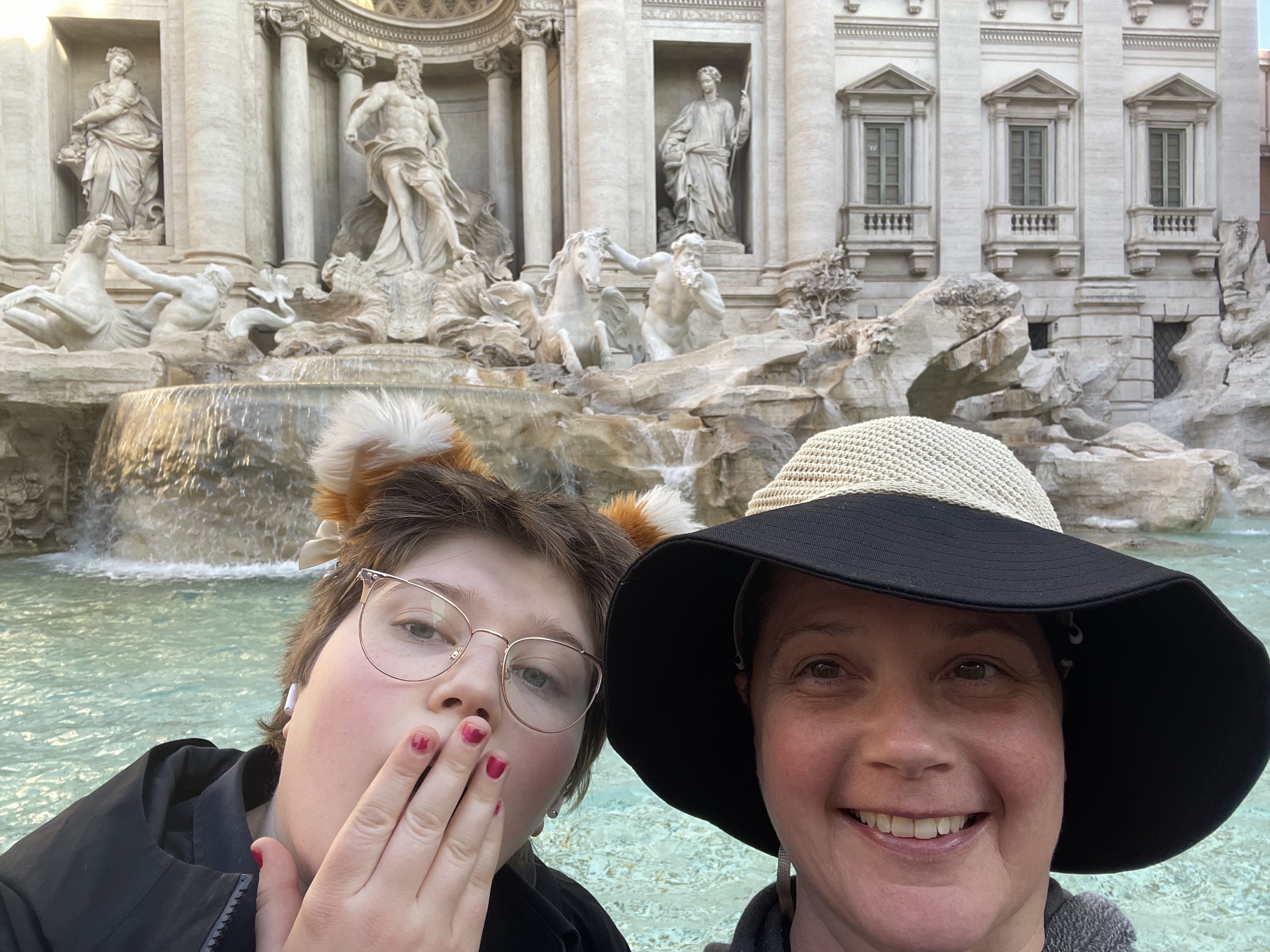
Yes, of course we were the only ones at Trevi Fountain!
Take the Metro to the Colosseum
The Colosseum has its own Metro stop, making it one of Rome’s easiest major sights to reach. From Piazza Barberini, transfer at Termini and continue to Colosseo. Book tickets or a guided tour in advance if you want to go inside, but even without them, you can learn quite a bit by walking around the exterior and reading the free interpretive panels. We were doing exactly that when the tour guides became so annoyed that they insisted we join their tour—and tickets for an otherwise “completely sold-out day” somehow became available.
That said, I now recommend arriving with a structured visit and tickets already purchased. On our second trip, our vacation-rental manager told us she had just helped the previous guests locate a police station after their passports were stolen at the Colosseum. Crowded attractions create ideal conditions for pickpocketing, so bring only what you need and keep passports, money, and other valuables in an inside pocket or secure bag held close to your body.
Once you are inside, give the Colosseum the time it deserves. It is genuinely fascinating, and rushing through means missing some of the best details. One very practical tip: carry a small change purse or pouch that closes completely. Security does not provide airport-style trays, so you will need somewhere to put coins and other small items when emptying your pockets—or risk watching them fall through the X-ray conveyor belt.
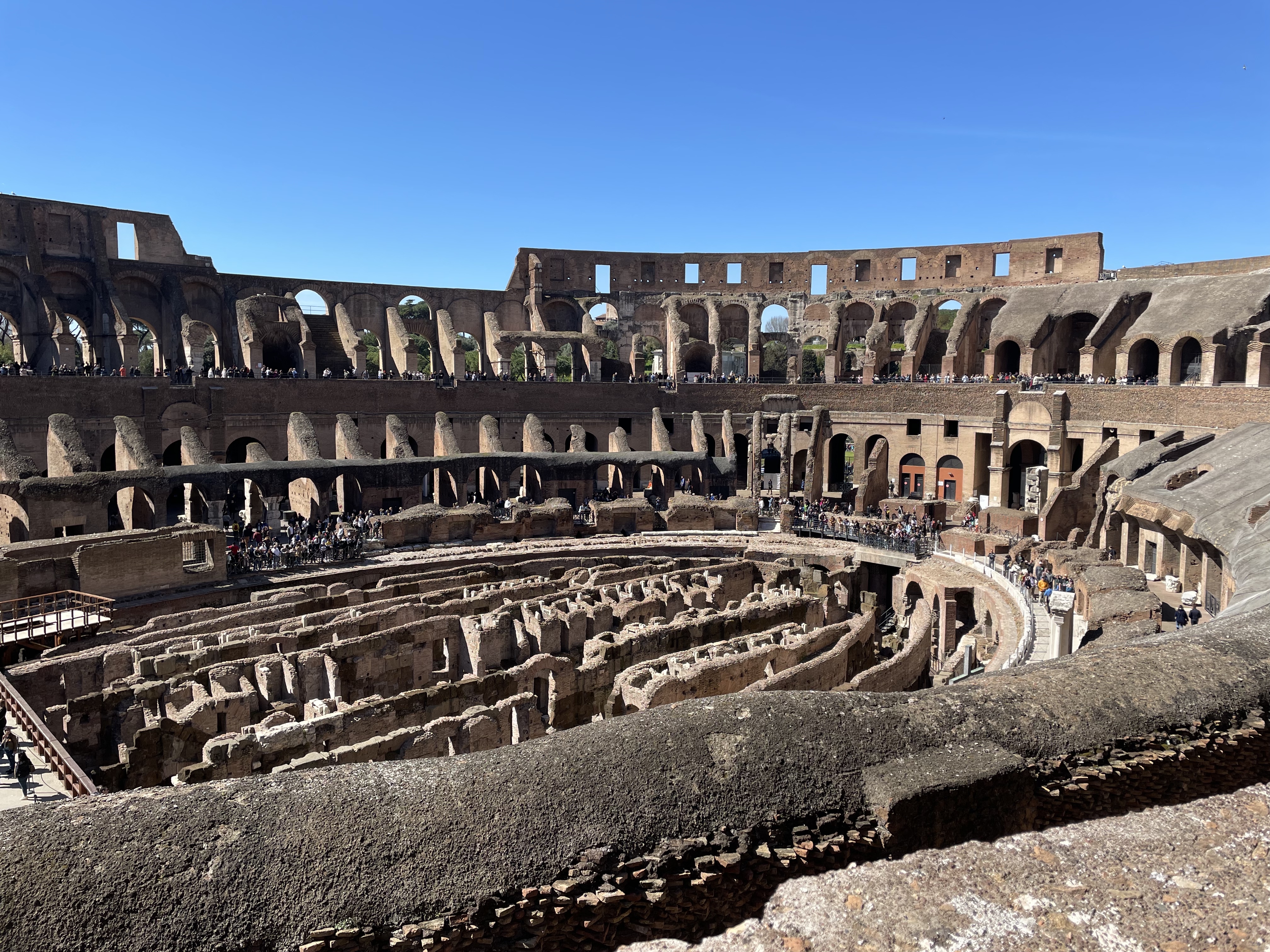
Inside the Colosseum, where layers of arches, passageways and ancient engineering reveal just how vast—and intricate — the amphitheater really is.
Feel free to skip the Vatican & the Sistine Chapel
Not just “skip the line.” Skip it entirely. From one neurodivergent family to another, I am officially giving you permission to skip the Sistine Chapel and the Vatican Museums. They can be overwhelmingly crowded. We even tried the “early morning” tours marketed as entering before regular opening hours. Except every tour operator, and their fratello, does them, so it’s still wall-to-wall tourists to the point you can’t even see the artwork. For many neurodivergent travelers, the experience may not be worth the sensory and emotional cost.
The Sistine Chapel is undeniably impressive, but its soaring ceiling also makes the masterpieces surprisingly difficult to see in detail. The room is crowded, visitors keep talking despite the rules, and every few minutes guards interrupt over the loudspeaker to demand silence in multiple languages. Rather than feeling peaceful or contemplative, the experience can become loud, tense, and overstimulating.
Before our first trip, a friend confided in us that she was more impressed by the ceiling frescoes at the Galleria Borghese than by the Sistine Chapel—and we agreed. Then we also visited Palazzo Barberini and were even more impressed with that than the Borghese (read on to find out why!). Michelangelo unquestionably set the bar high with the Sistine Chapel. But, in my opinion, artists working in the centuries that followed raised it even higher.
Our Vatican experience also began with our first close encounter with an aggressive street hawker in St. Peter’s Square. We nearly got pulled into the interaction before realizing what was happening, which added another layer of stress to an already crowded and overstimulating visit. For neurodivergent travelers especially, it helps to expect persistent vendors, keep moving, and avoid engaging—unless you are genuinely interested and have some cash tucked into an easy-to-reach pocket so you do not have to pull out your entire wallet.
You can still visit Vatican City. It is an easy Metro ride from Piazza Barberini. Walk through St. Peter’s Square and admire the basilica from outside without committing to long security lines or crowds inside the museums.
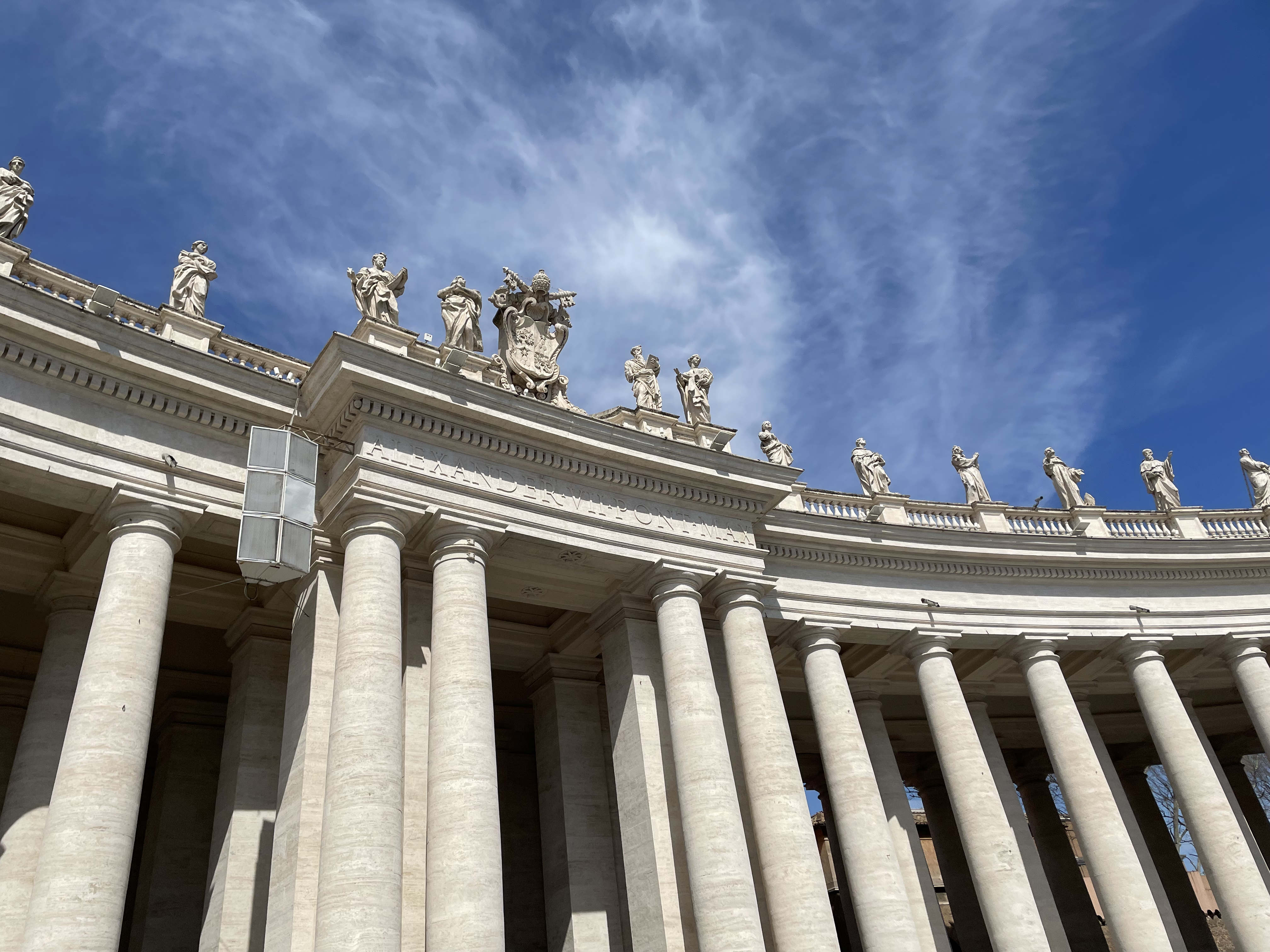
You don’t have to visit the Vatican Museums to appreciate the grandeur of St. Peter’s Square.
Check out the Leonardo Experience instead
For a smaller, more manageable alternative, stop at the Leonardo da Vinci Experience on Via della Conciliazione, the broad avenue leading toward the Vatican. It offers interactive exhibits and reproductions of Leonardo’s inventions just a short walk from St. Peter’s Square. For everyone who likes to get their hands on things without getting in trouble, this will be more enjoyable anyway!
Then wander around outside, take in the setting, and call it complete. You have seen the Vatican; you do not have to conquer it!
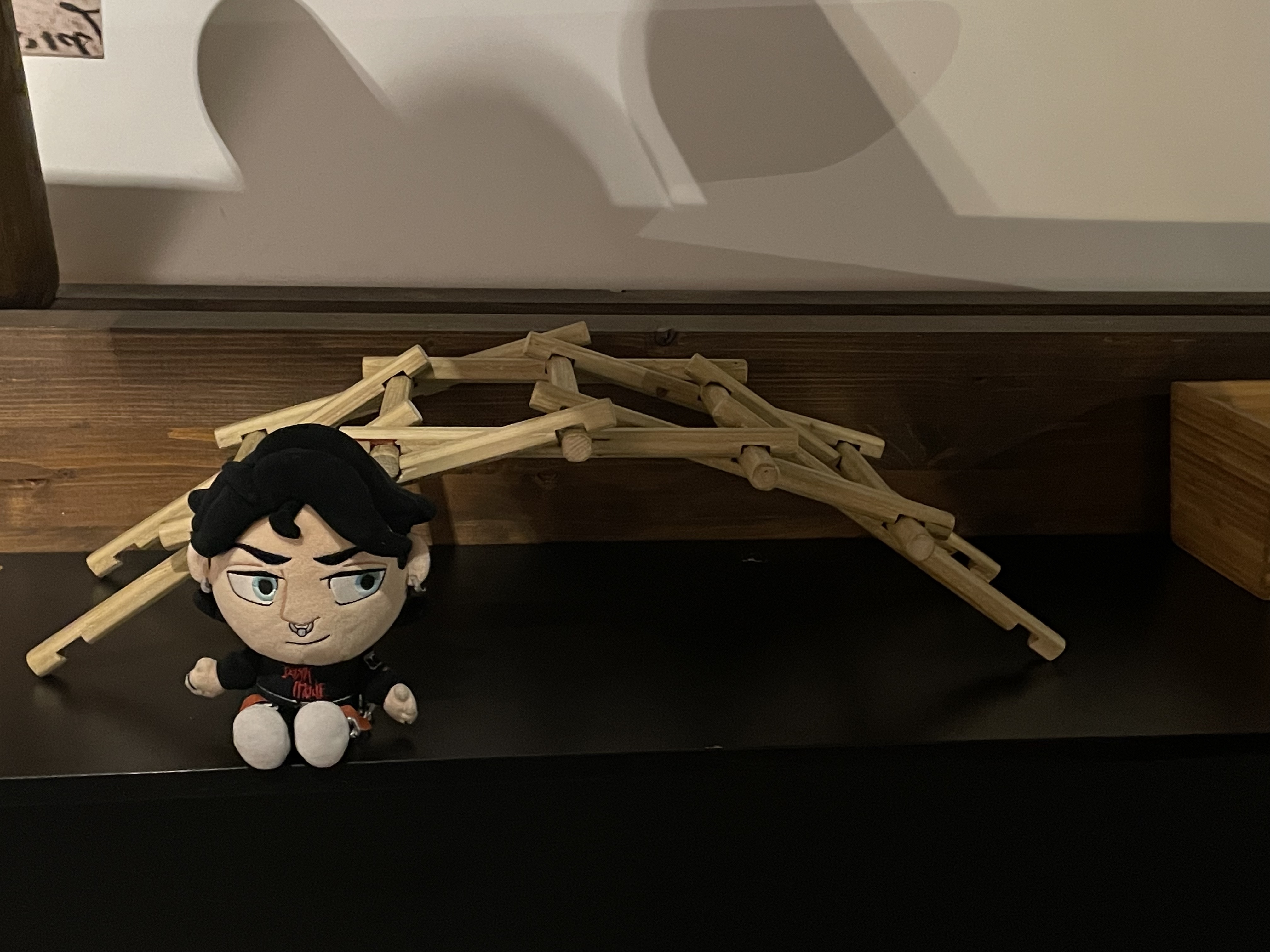
Hands-on at the Leonardo da Vinci Experience: build your own bridge, add your comfort plushie to the photo, and enjoy a museum where interaction is not just allowed—it is encouraged.
Walk through Villa Borghese and visit the Galleria
Give yourself plenty of time to walk from Piazza Barberini to the Galleria Borghese. Along the way, pass through Porta Pinciana in the ancient Aurelian Walls. Stroll through the gardens of Villa Borghese and pause at the overlook above the Spanish Steps for a beautiful view across Rome. Then continue through the trees, fountains, and landscaped paths until you find your way to the gallery.
Purchase tickets in advance; reservations are required, and timed admission keeps the number of visitors inside relatively small. That means you are not viewing the collection from behind a wall of people—you are right there among extraordinary paintings, sculptures, and frescoes. Very right there, apparently: one of our younger family members was scolded for getting too close to one of the statues. In fairness, they were attempting to pose their comfort plushie on an ancient Roman statue for a photograph.
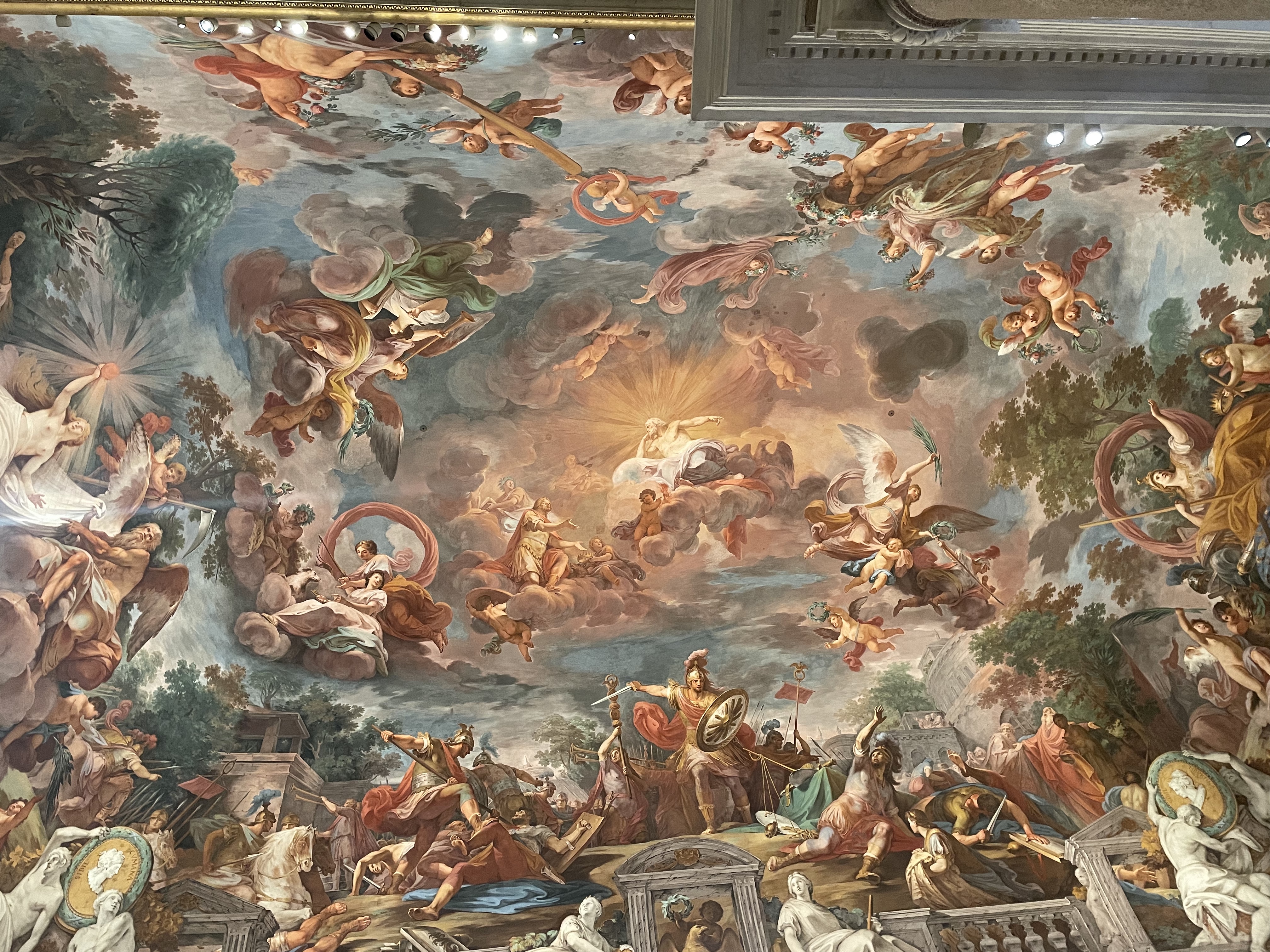
Galleria Borghese ceiling fresco, captured on my iPhone—with no crowds blocking the view and no guards shouting for silence. Sorry, Michelangelo, but in person, the Sistine Chapel just could not compete.
Slow down at Palazzo Barberini
Palazzo Barberini is an easy walk from Piazza Barberini, yet it feels far less crowded and much more manageable than Rome’s best-known museums. Pay particular attention to the artwork connected to the Capuchins and the nearby Capuchin Crypt, and take any photographs you want here. Photography is not permitted inside the crypt, so Palazzo Barberini is your best opportunity to capture some of that visual context before you go.
Best of all, the Barberini has reclining chairs set beneath the ceiling frescoes so you can lie back, rest, and actually enjoy the artwork without straining your neck. It is a wonderfully AuDHD-friendly touch: less rushing, less physical discomfort, and more time to notice what is above you.
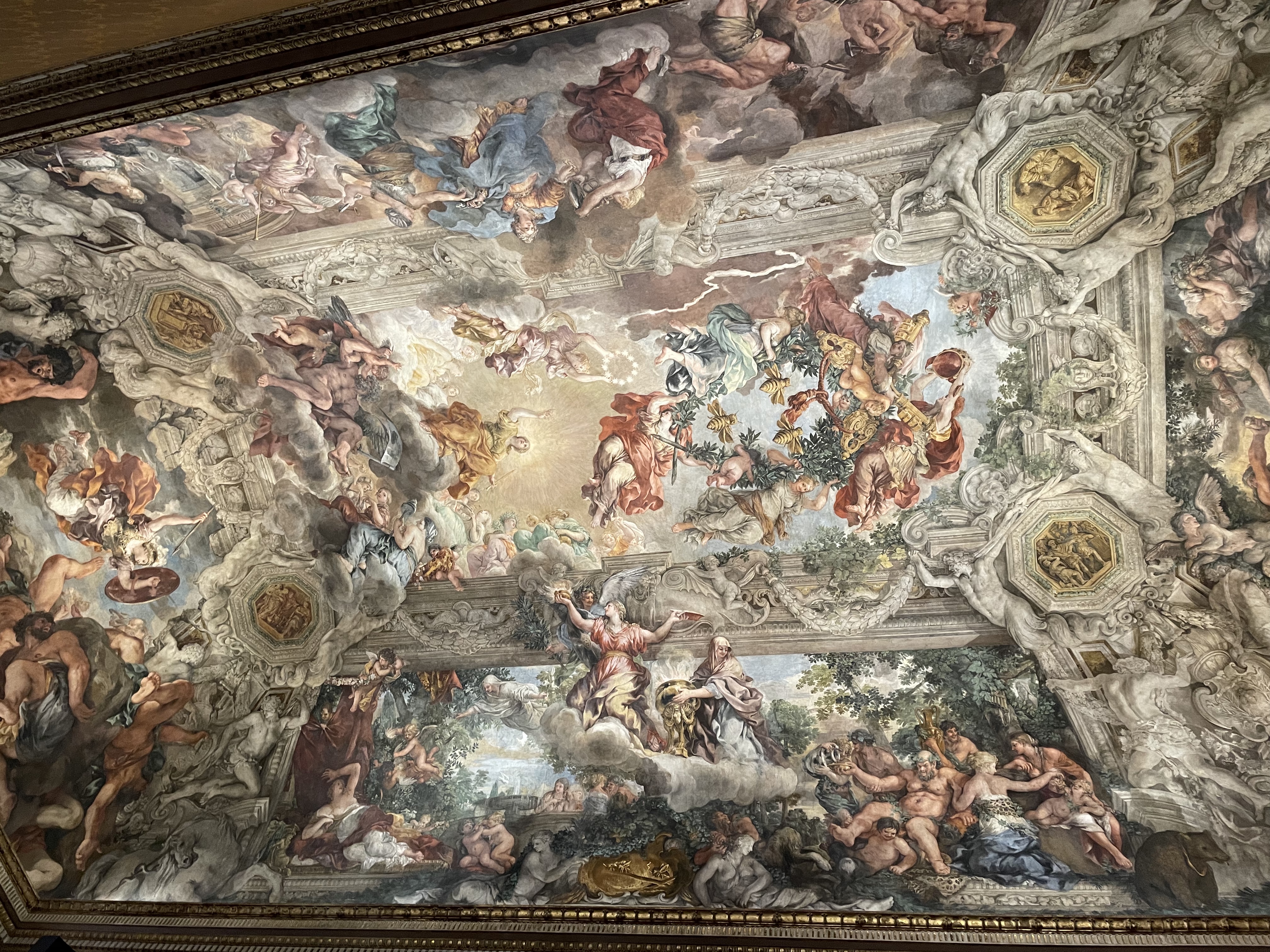
This is the ceiling—not the floor or a wall— best enjoyed while reclining in one of Palazzo Barberini’s beach chairs.
Don’t be afraid of the Capuchin Crypt
No travel guide of mine would be complete without something mysterious, macabre, or historically unsettling. To that end, the Capuchin Crypt, just off Piazza Barberini, will not disappoint. It contains a series of chapels decorated with the bones of thousands of Capuchin friars. It is eerie, intricate, and unexpectedly contemplative rather than simply gruesome.
The site is small, centrally located, and easy to pair with other nearby stops, making it an excellent choice for travelers who want something memorable without committing to another enormous museum—and who, like me, enjoy things that are a little historically weird.
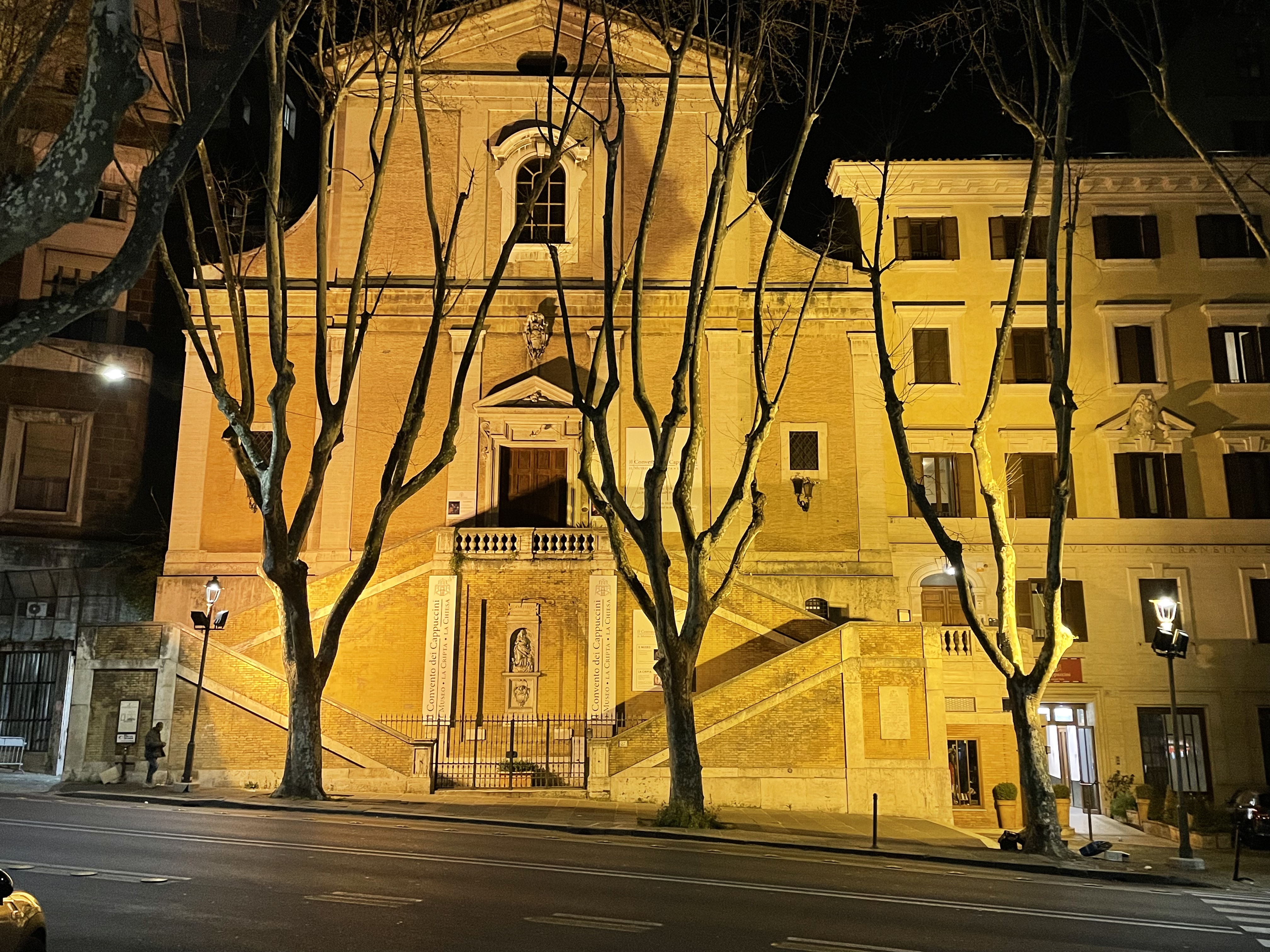
The Capuchin Crypt after dark—because no travel guide of mine would be complete without something beautifully, historically creepy.
Et tu Bruté?
For something that is both historically macabre and unexpectedly delightful, visit Largo di Torre Argentina. The archaeological site includes the remains of four Roman temples and part of Pompey’s complex, near the place where Julius Caesar was assassinated. Today, the ruins are also home to a well-known cat sanctuary, so you can contemplate one of ancient Rome’s most infamous political murders while watching cats sun themselves among the stones. It is a wonderfully strange, low-pressure stop—and exactly the kind of place that belongs in one of my travel guides.
Pair it with Campo de’ Fiori
Largo di Torre Argentina and Campo de’ Fiori are close enough to visit on the same day without turning the outing into an exhausting itinerary. Neither requires a long, structured visit, so you can enjoy the ruins and cats, then wander over to Campo de’ Fiori for the market, cafés, and everyday street life. It is an easy pairing that still leaves plenty of room to slow down.
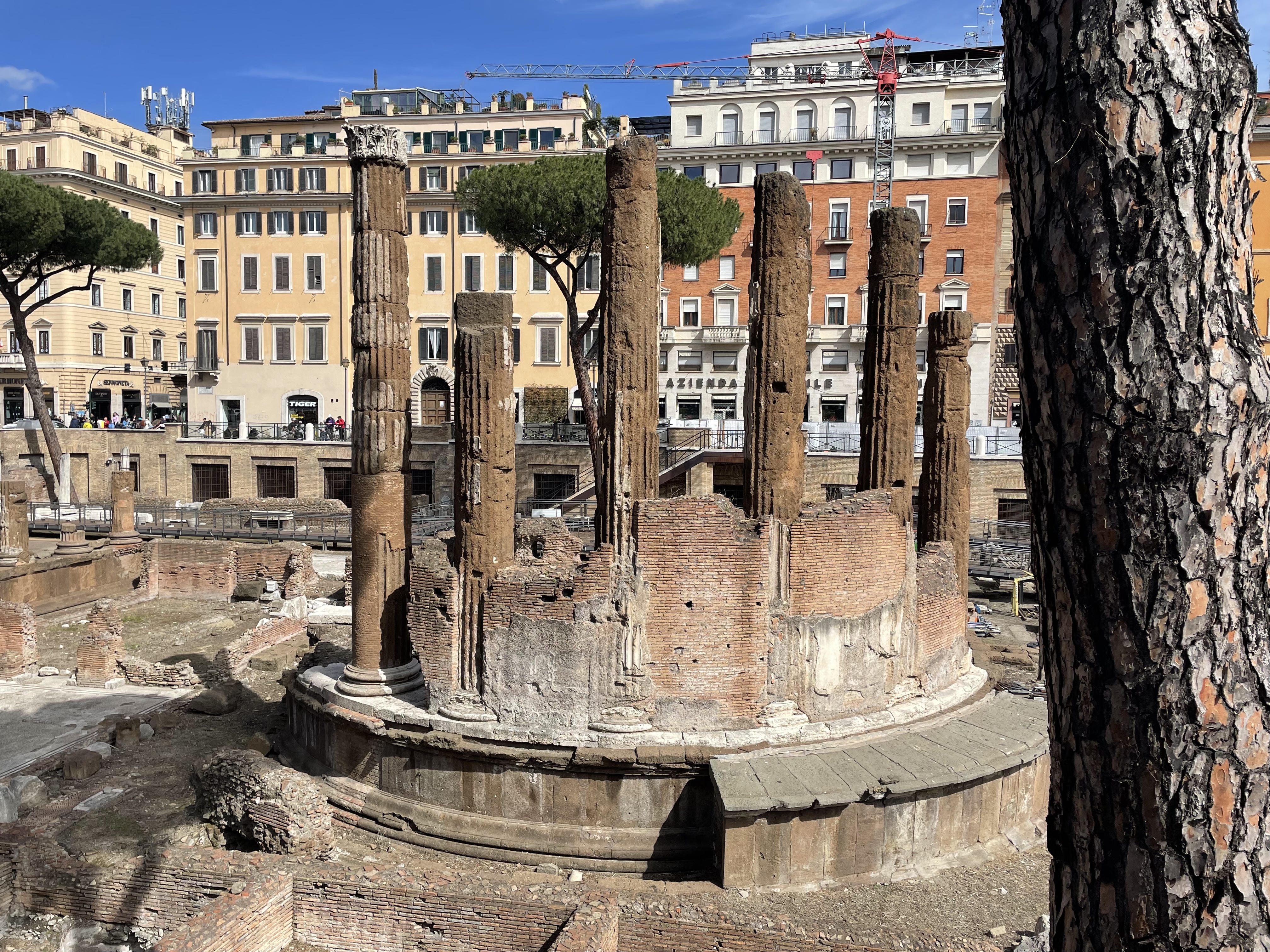
Largo di Torre Argentina: ancient temple ruins, the site of Julius Caesar’s assassination—and, just out of frame, Rome’s famously pampered archaeological cats.
Go shopping on Via del Tritone
Step outside Piazza Barberini and head down Via del Tritone for an easy shopping break. Bring your passport if you plan to make tax-free purchases, since stores may need it to prepare your IVA refund paperwork. Then browse, wander, and have fun. There is everything from clothes to souvenirs and even anime, art-toy, and collectibles shops.
Need to know
Food, wine, and more food & wine… It’s Italy!
Our hands-down favorite restaurant in all of Italy just happens to be in Piazza Barberini. But, first off, in Centro Storico, even in Piazza Barberini, ignore anyone standing outside of a restaurant claiming that his wife handmakes the pasta every day. Especially if the menu is 10 pages long in 5 different languages. It’s a tourist trap. You can move on.
Cacio e Pepe
If you can tolerate gluten and dairy (or even if you can cheat just once), Cacio e Pepe is a traditional Roman dish that really can only be found in Rome and Italy. We tried it at most of the restaurants we ate at, and it was almost always delicious!
Where to eat in Piazza Barberini
Fraschetteria Roma: This tiny “hole in the wall” restaurant was such an amazing find. You definitely need reservations to get a table, but that is relatively easy through their site on The Fork. We have eaten at this restaurant “every time” we’ve been to Rome. The owner/head chef even remembered us the second time (18 months later) and was very happy we had come back.
Rossini: This restaurant is considered part of the Albergo Ottocento and does not have a separate website of its own. They are really accommodating and family-friendly. We went there when we just couldn’t make it until 8 p.m. for dinner (mostly from being tired). There were local families dining there, in addition to everyone else speaking French, so I guess it was the French tourist trap? It was delish, so I guess the French aren’t easily fooled!
Vladimiro: This is where we had dinner on the night before we left in 2023. I suspected there was a “tourists” dining room and a locals' dining room, but never got to the bottom of it! When I asked to speak in Italian, they were very helpful. The food was really yummy. Order the house wine, even though it still comes in a bottle.
Where to eat near The Leonardo Experience (Fine, the Vatican)
V Bistrot Wine Bar: This restaurant had just opened when we arrived in September 2024, so we were there for their grand opening! We went for a nightcap after an afternoon and evening of really bad thunderstorms, and the owner fed us anyway (of course!). It was the end of the night, and she didn’t want to let the food from the grand opening go to waste. It was fabulous! I even ate prosciutto and liked it (although my own personal tummy wasn’t happy about that later).
L’Isola Della Pizza: We got stranded during a surprise thunderstorm that flooded the Metro, which in turn caused impossible lines for the bus or taxis. When we couldn’t get to Fraschetteria Roma, we found L’Isola Della Pizza. The name sounded touristy, but the staff and owners were very genuine, and we really enjoyed the food. Yes, including the Cacio e Pepe.
Contorno Self Bistrot: This place saved my digestive system on our first trip to pasta heaven—I mean, Rome. We were visiting Vatican City when I spotted fresh artichokes and other vegetables on display, so the entire family took an immediate detour because I said so. Be prepared for neurodivergent family members to inadvertently move backward through the “poke-bowl-style” vegetable line; it is entirely salvageable, and the “veggie side dish only” food is delicious.
One final note about traveling while neurodivergent: Meds
If you or a family member use prescription ADHD medication—or medication for anxiety, depression, or another condition—plan ahead before traveling. We brought ours in the original prescription vials with the full pharmacy labels intact, and we had no difficulty entering Italy. Because some ADHD and anti-depression medications are controlled substances, travelers should confirm the current EU/EAA/Italian requirements for their specific prescriptions before departure; Italy may require a valid prescription and, for certain medications, additional documentation.
To avoid carrying our entire supply, we saved a couple of labeled pharmacy vials ahead of the trip. We packed only what we needed, plus a few extra doses in case any were lost or dropped, and left the rest safely at home. Never combine medications in an unlabeled container, and keep them in your carry-on rather than checked luggage.
For more inspiration and insider recommendations, visit our Rome page.


Travel Advisor
Bonnie Walker

Bonnie Walker

Get in touch with Bonnie Walker
Did you like this guide? Reach out to customize and book your own experience. Or, just to chat about travel in general.