



Curator’s statement
South India is not the India most travel advisors sell, and it is certainly not the India most Westerners picture. It is where 10th-century engineering still defies explanation, where merchant families built mansions with Venetian chandeliers and Birmingham cast iron, and where a single week at a wellness resort will leave you genuinely recalibrated and rested. This is the circuit for travelers who think they have seen everything, and for Indian-Americans ready to see the country they left with completely fresh eyes.
The Fora Difference
Book with 50FlyingFish to access exclusive perks and experiences on your trip.

Killer perks
Free upgrades, spa credits and more—we got you

Personalized recs
Customized travel planning for your style

Insider knowledge
Expert advice from people who’ve actually been there
Where to stay in South India
Unlock perks by contacting 50FlyingFish to book your trip.
Chennai: Where elite India does business
The trip begins at the Leela Palace Chennai, and it sets the tone immediately. During the cricket IPL (Indian Premier League) season, the Leela is one of the most powerful addresses in the city. The lobby hums with the quiet energy of people who don't need to announce themselves: cricketers, celebrities, executives, the kind of crowd that values privacy as much as luxury. The Royal Club lounge shifts the experience into something more private. And then there's the Arq by Leela. If you haven't heard of it, that is by design. Arq is an invite-only tier with its own lounge, concierge, and world.
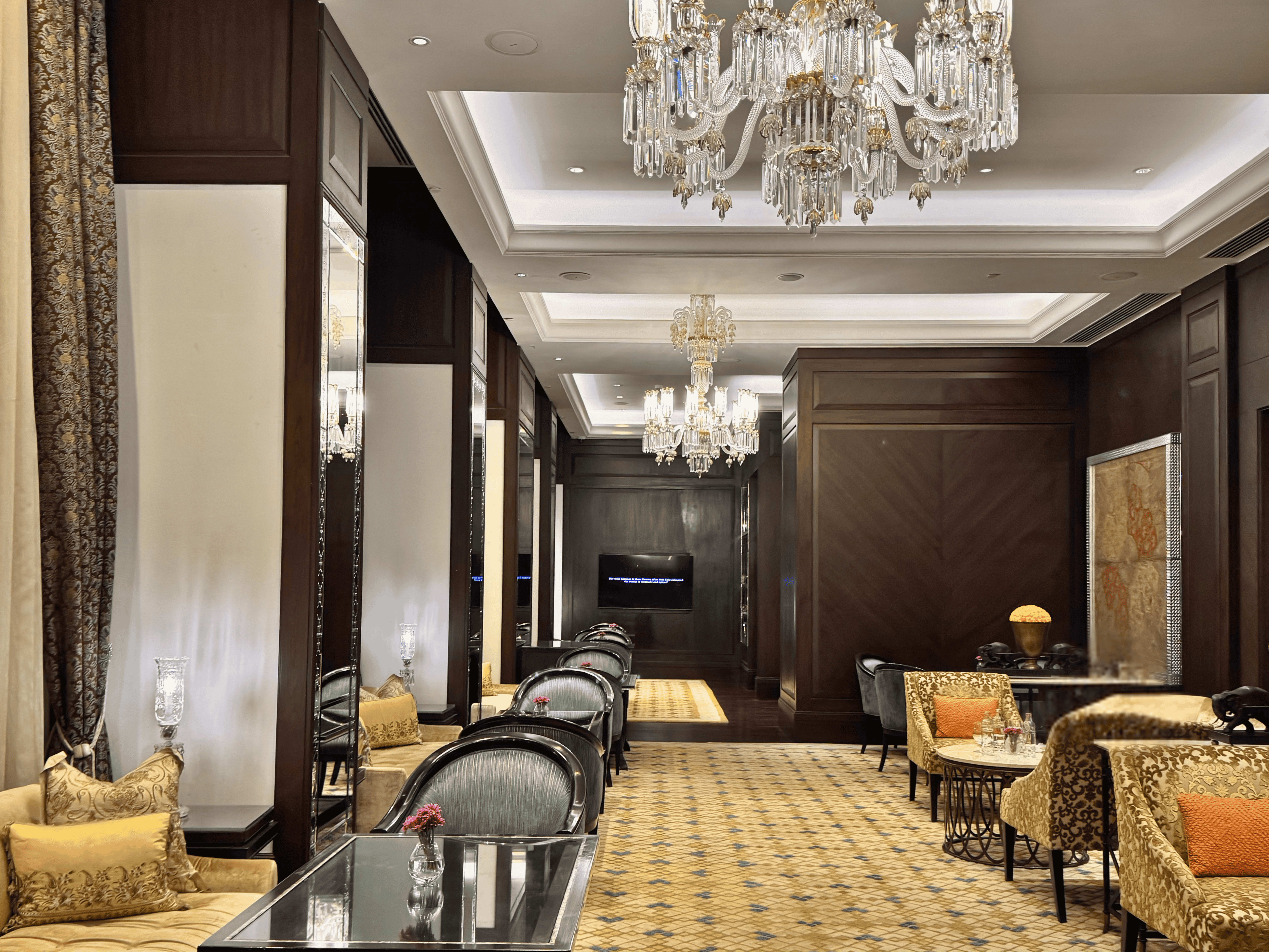
Leela Palace Chennai—luxury hotel lobby, Chennai, India
Chennai is not meant to be a soft landing. The traffic is kinetic, the temples are alive with rituals and sound, and Kapaleeshwar will overwhelm a first-timer within minutes. This is not a warning; this is the point.
By the time you leave Chennai, you start to understand that India is neither a museum nor an "emerging" country. It is a fully built, highly functional civilization that has been running continuously for over a thousand years.
On the way out, Mahabalipuram offers a gentler entry into that history. A 1,300-year-old granite boulder that hasn’t budged despite repeated attempts to move it, and bas-reliefs the size of a building carved directly into rock. Engineers still debate exactly how it was balanced. You don’t need to understand it. You just need to stand next to it and take it in.
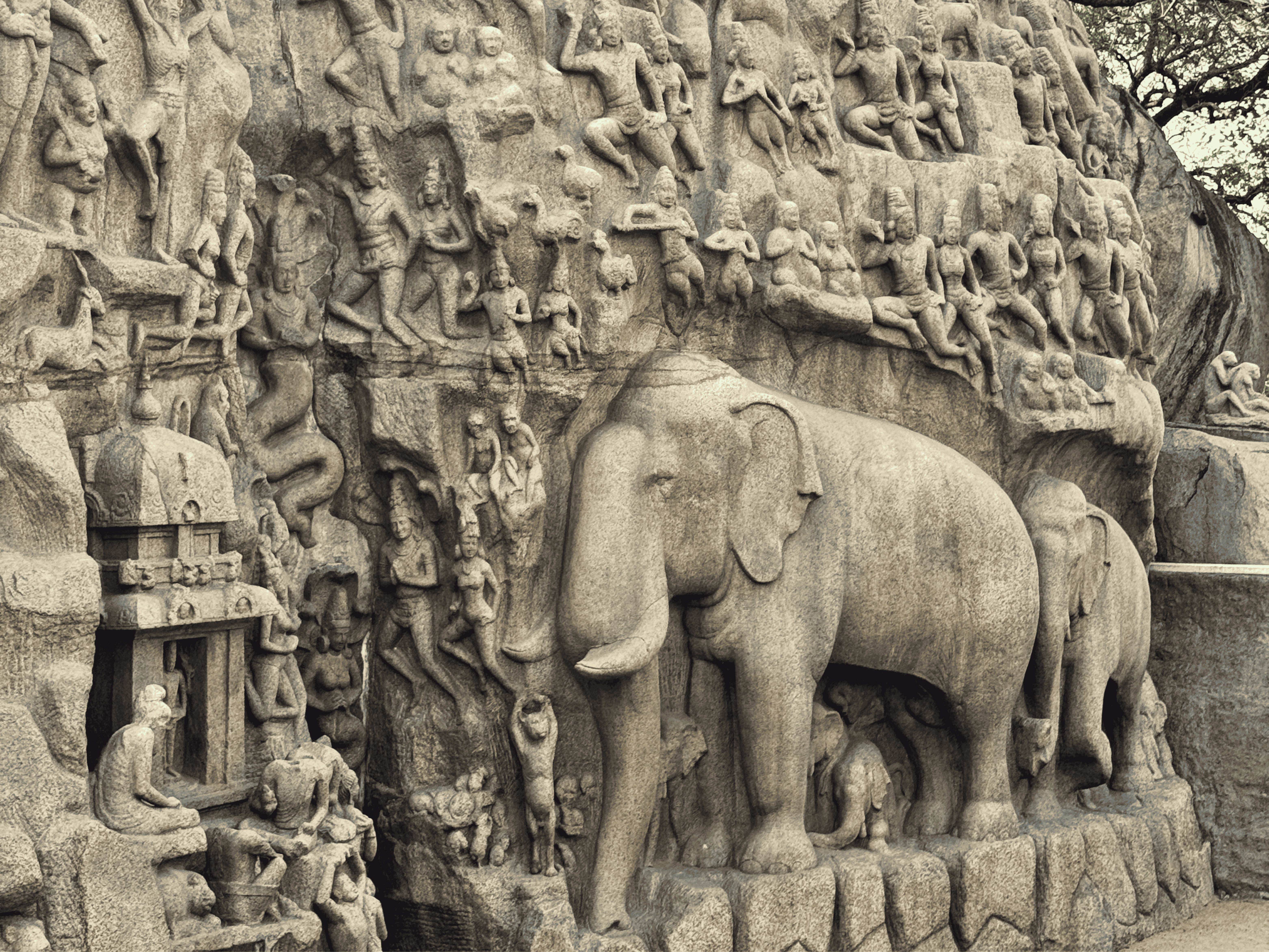
Arjuna's Penance, Mahabalipuram—UNESCO World Heritage Site, Tamil Nadu, India
Pondicherry/Puducherry: The town that quietly decided to be two things
Pondicherry slows you down immediately. It's a glaring contrast to the busy streets of Chennai and the culturally rich temple circuit, and that contrast is the shift. Locals call this town Pondy, and it will remind you of Córdoba with its aesthetic and European vibe, but this town is not performing Europe for tourists. The French legacy here is real, descended from colonial-era residents who never left. The town is technically made up of four non-contiguous territories scattered across three Indian states, a colonial patchwork that explains, historically, why it feels so distinct from everything surrounding it. Walk it in the morning before the heat and tourists arrive.
Where you stay will decide the vibe entirely. Sanctuary Amaidiyana is a world-class wellness retreat in its own right. Their signature water shiatsu—90 minutes in 35-degree water, no swimming ability required—is unlike anything available in the West. Clients who travel here for wellness have no comparison point. Pair it with the Japanese plunge pool suite and the resort becomes a destination, not just an overnight. Meanwhile, Palais de Mahé conjures the heart of Spain: yellow and white facades, bougainvillea climbing the narrow lanes, the absence of traffic. Close to the promenade and the Bay of Bengal, you forget you're still in India.
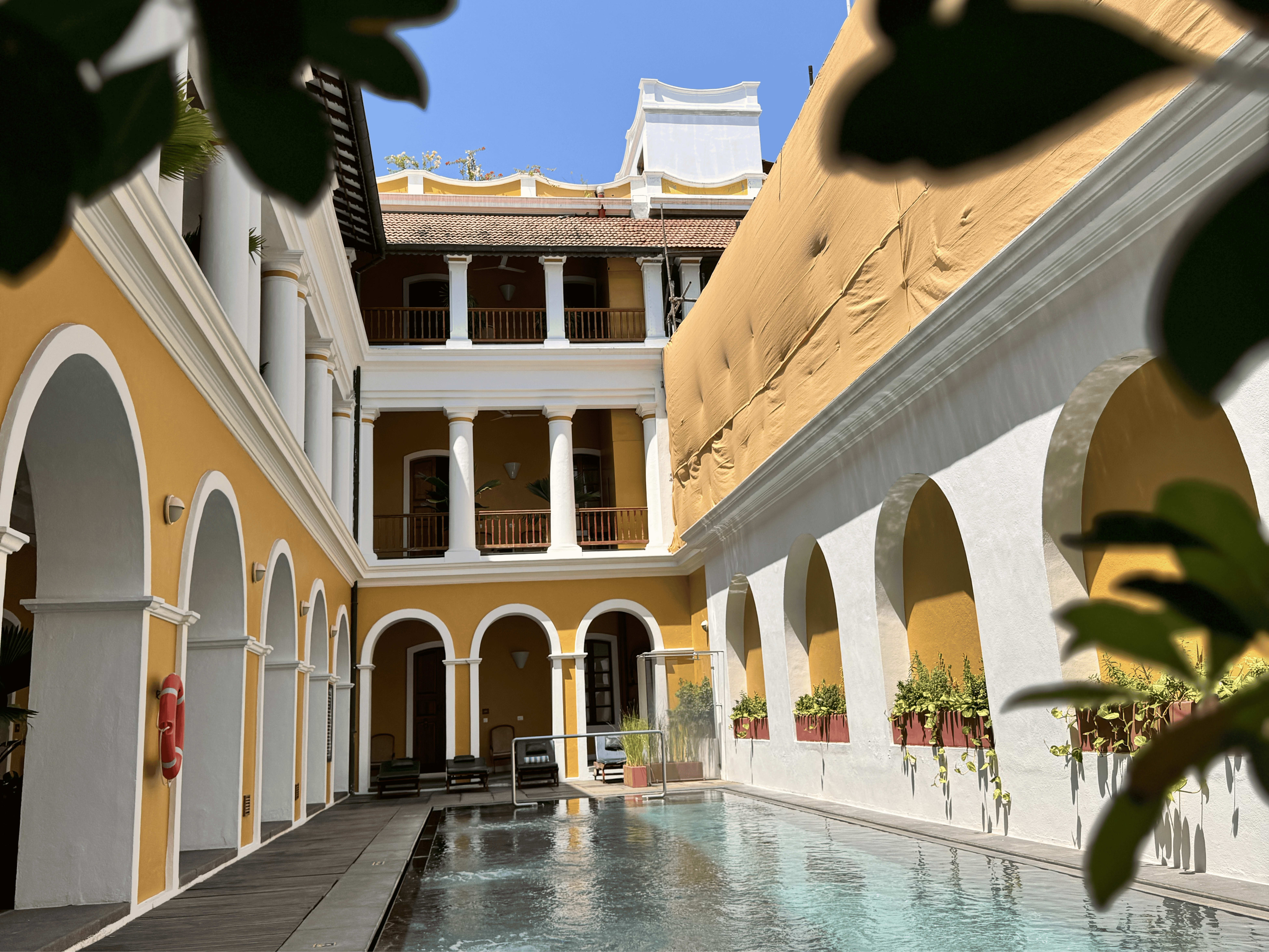
Palais de Mahé, Pondicherry—boutique luxury hotel, French Quarter, Puducherry, India
Kumbakonam & the Chola Dynasty: History as a living thing
The drive from Pondicherry passes through Gangaikonda Cholapuram, an 11th-century Chola temple that very few Indians and almost no Western tourists have heard of. Low crowd, extraordinary scale, and a contemplative energy completely unlike the sensory intensity of Chennai. The figurines here are not gods or sensual figures; they are almost entirely soldiers, carved at the height of an empire that extended to Southeast Asia. A good guide unlocks this site completely. It resembles Angkor Wat in construction and in feeling, and clients who have traveled widely will immediately recognize that comparison.
Kumbakonam is home to the art of bronze casting—a living tradition that may not survive another generation. Master craftsman Suresh Kumar at Swamimalai has been making these sculptures his entire life. Every mold is destroyed after casting, making each piece one of a kind and never to be replicated. Clients can commission custom work from photographs. A one-foot statue takes 45 to 60 days.
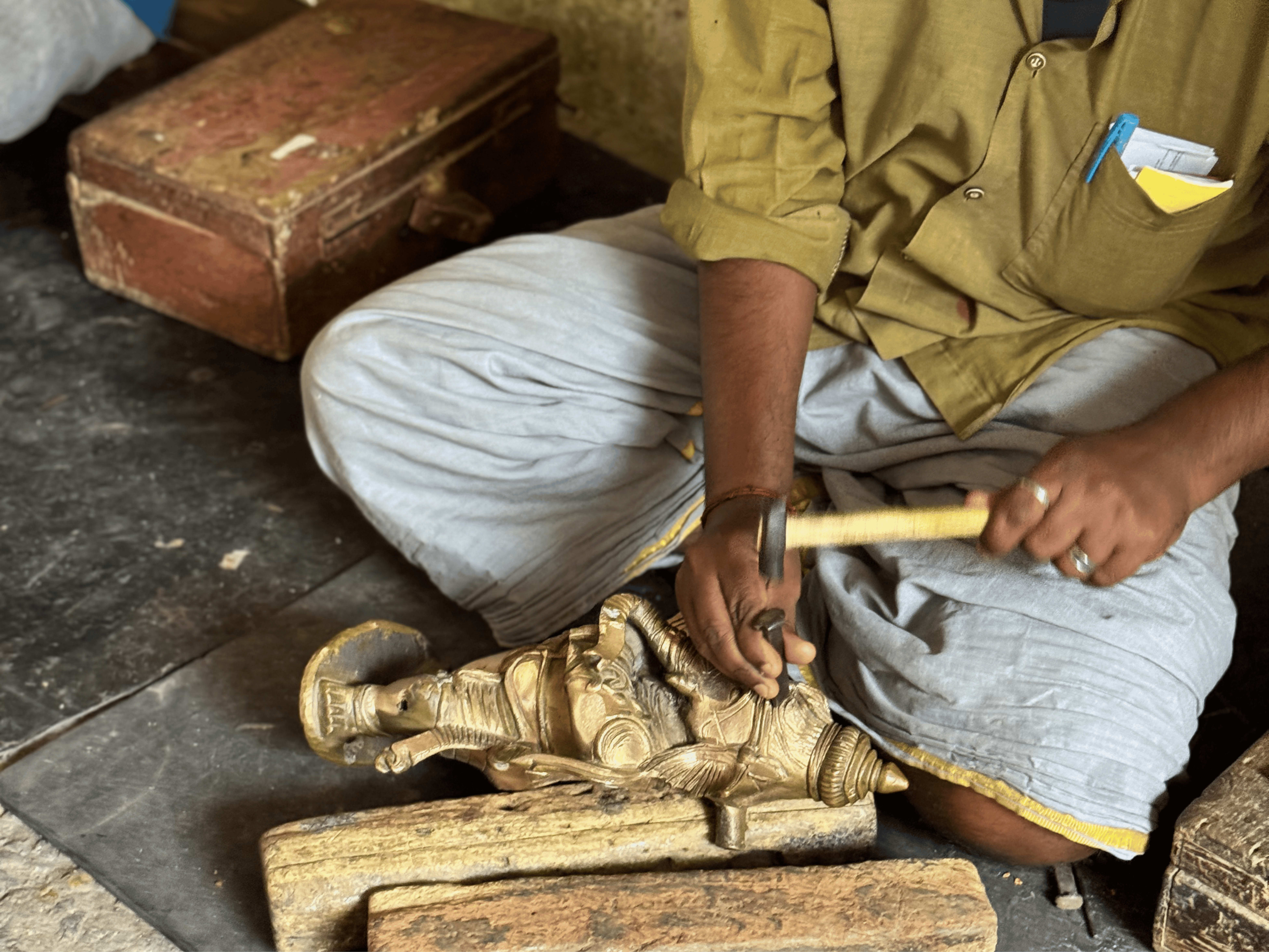
Lost-wax bronze casting, Swamimalai—traditional Chola bronze craft, Tamil Nadu, India
The CGH Earth property here, Mantra Koodam, sits on 15 acres of quiet. The brass key on arrival, your name on the room door, and the Dhanvantari figure on the veranda are all design choices made with intent. They signal a genuine Ayurvedic tradition practiced from the inside. The Panchakarma treatments here are the real thing.
Peacock mating and dancing season runs July through September for clients who want a nature angle alongside the temples.
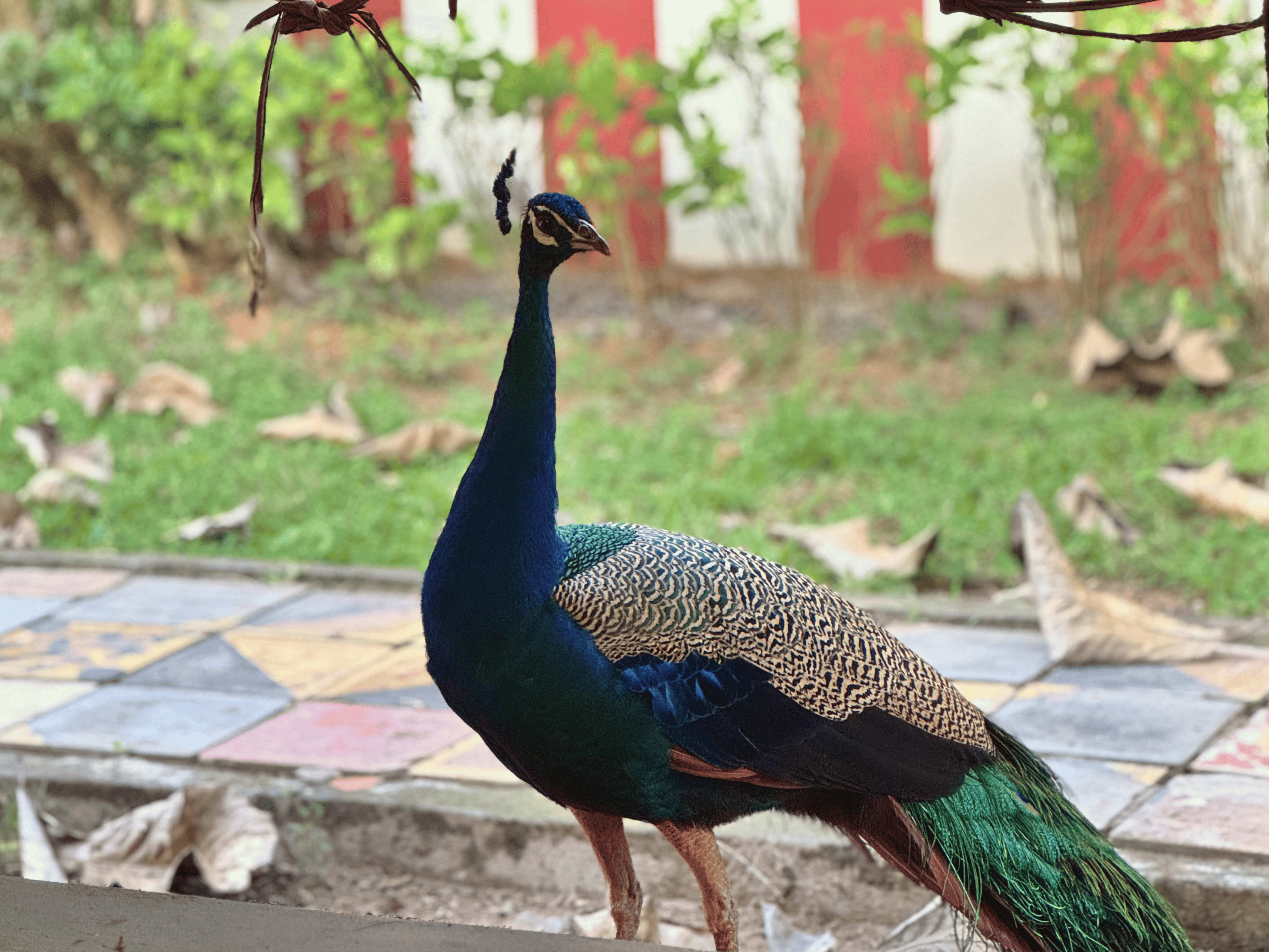
Mantra Koodam, Kumbakonam—CGH Earth eco-luxury resort, Tamil Nadu, India
Pro tip: The town itself is very popular across South India for "degree coffee," a ritual that has nothing to do with espresso and everything to do with purity, patience, and precision (a specific arc of the wrist). Do not miss tea time, where you get to share your space with curious peacocks and flavorful coffee.
Chettinad: The ghost town that isn't
Nothing quite prepares you for Chettinad. The best way to see it is by bicycle in the early morning, riding through the streets of abandoned mansions, each one built by merchant-banking families who once ran the financial infrastructure of colonial India. At their peak, these families built 11,000 houses across the region. Thirty percent have been destroyed. Most of the rest stand empty, opened only for weddings and family functions. These could not be sold, even if the families desired to. The deeds require signatures from every living family member, spanning generations and now scattered across the globe.
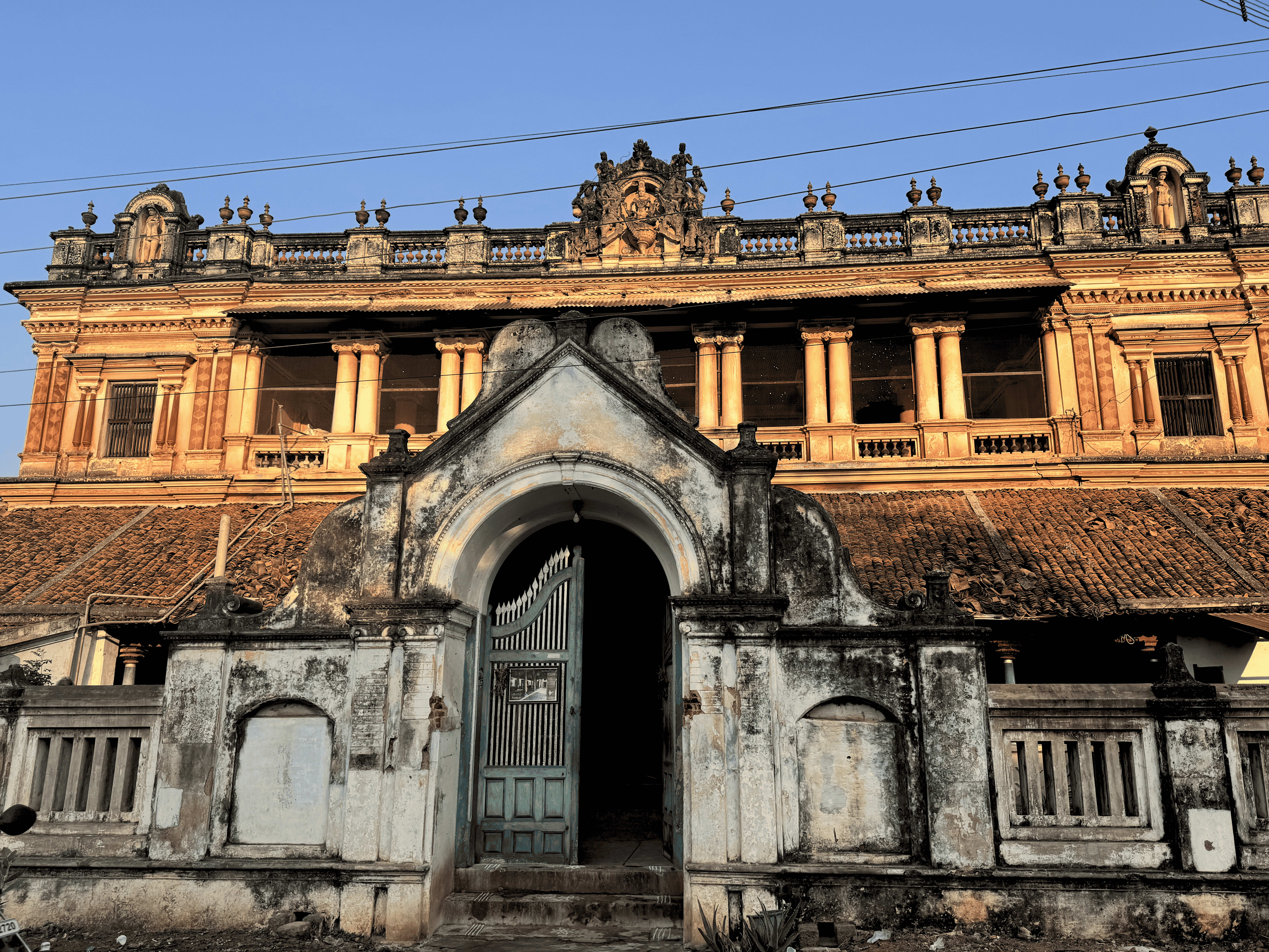
Chettinad heritage mansion—abandoned merchant family home, Tamil Nadu, India
Inside these mansions, the scale of the merchant's reach is visible in every detail: Italian marble floors, Venetian chandeliers, Birmingham cast-iron roof rafters, and Japanese tiles on the walls. A formal invitation I found in one private home was dated January 1946 for a tea ceremony celebrating the knighthood of a Chettinad merchant, held one year before Indian independence. The complexity of that single document contains the entire history of this community. And then, quietly, running underneath all of this abandonment: more than 150 tile manufacturing businesses, many exporting Athangudi tiles globally, operating out of the same village that supplies the floors of those empty mansions. Chettinad is transforming so quietly that most visitors never see the transformation at all.
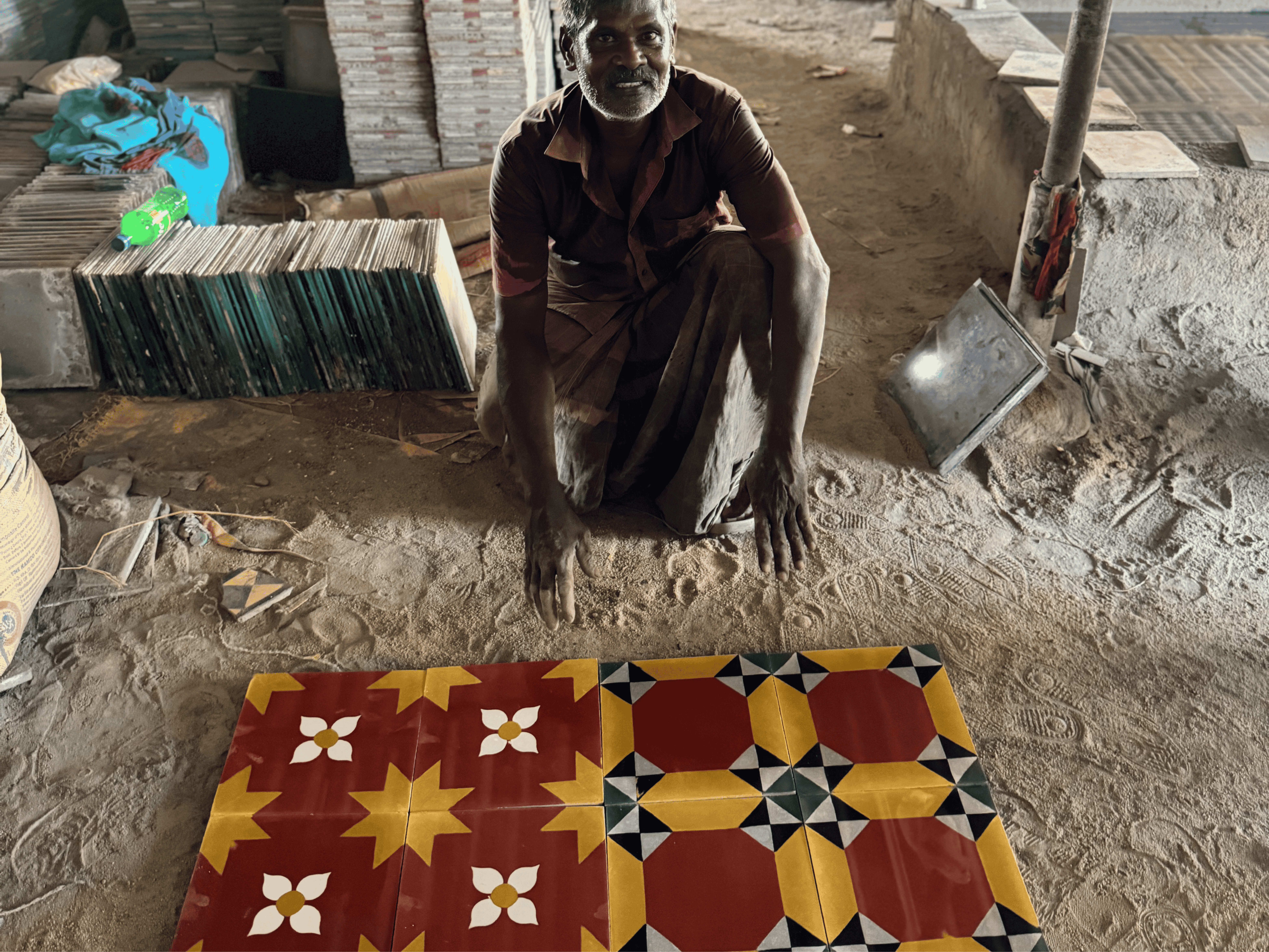
Athangudi tile maker, Chettinad—handmade encaustic tiles, Tamil Nadu, India
Mumbai: The exhale
Landing in Mumbai after eight days in Tamil Nadu is a genuine culture shift. The city catches you immediately—the scale, the velocity, the layering of colonial Gothic and 1930s Art Deco, glass towers, Dhobi ghat, and the juxtaposition between the working and the elite, all operating simultaneously. The Oberoi Mumbai absorbs this energy and holds it at a distance. Butler service from arrival, a foot washing ritual before every spa treatment, and a concierge team that has been doing this longer than most of the city's luxury hotels have existed. The on-site restaurant Ziya, helmed by Michelin-starred chef Vineet Bhatia, is for clients who want to stay in and still eat well, too.
My favorite part of this trip was sitting at the outdoor bar of Oberoi at sunset, with the Arabian Sea and city skyline in front of me. This is where the entire trip lands. Not the temples, not the mansions. The stillness of that view after everything that came before it.
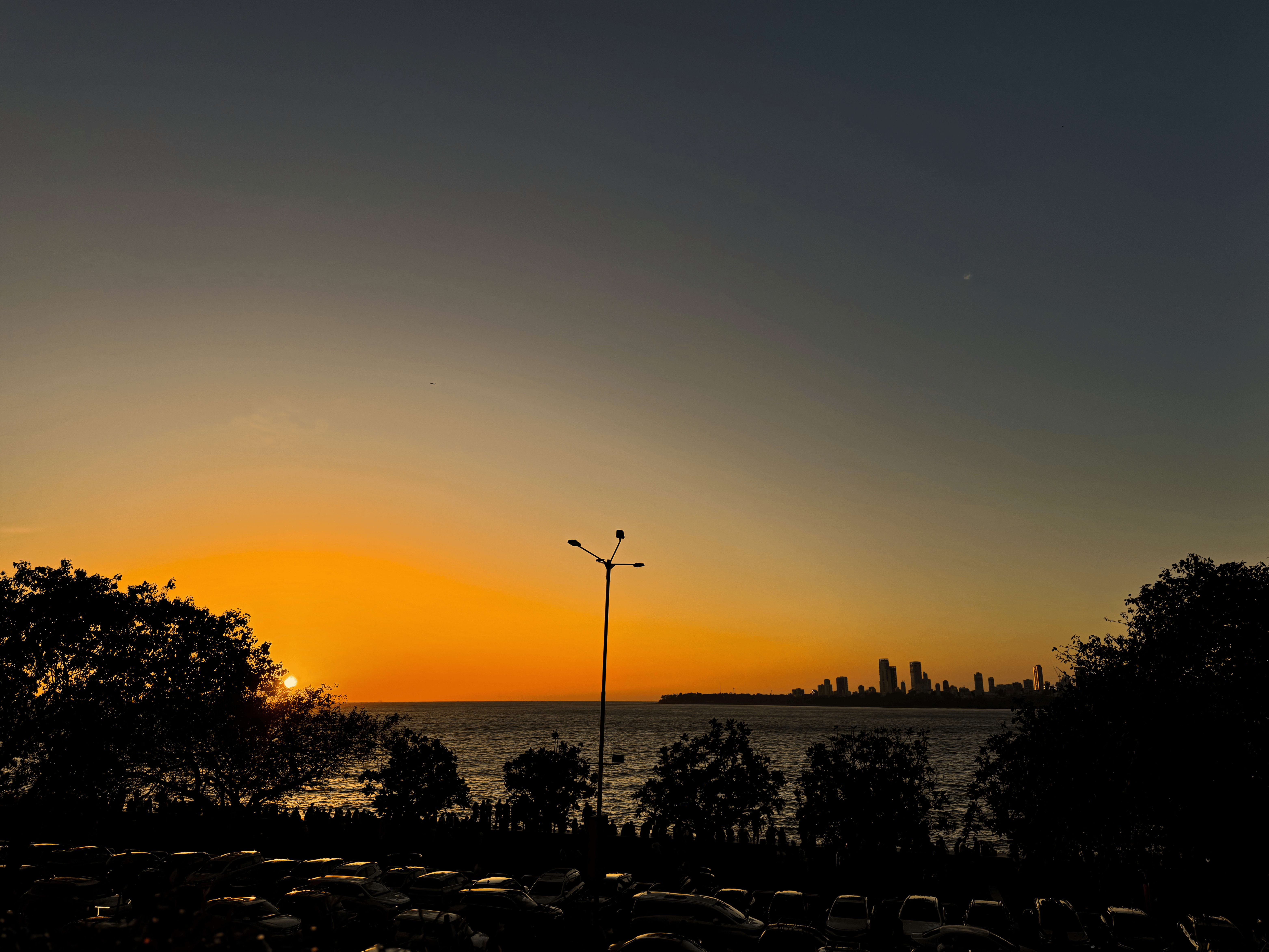
Arabian Sea sunset from The Oberoi Mumbai—luxury hotel, Marine Drive, Mumbai, India
Need to know
One logistical note: The distances between stops are real, and the sequencing is not intuitive. Getting that right is what separates this trip from a punishing itinerary.
Seasonality
The circuit runs best from October through March. September is the sweet spot for Pondicherry specifically. If peacocks in mating season sound like your kind of detour, Kumbakonam in July through September delivers that. Avoid April through August—the heat is not incidental.
The advisor advantage
Most India itineraries are built around the Golden Triangle. This one deliberately avoids it. Private mansion visits, artisan workshops, and peak-season room access at CGH properties are the details that set a curated South India experience apart from a generic tour. I have traveled this circuit firsthand and have direct relationships with the properties and operators. If you are considering India and want something beyond the obvious, it's time we talk.
For more inspiration and insider recommendations, visit our India page.


Travel Advisor
50FlyingFish


Niriha Kadambi

Get in touch with 50FlyingFish
Did you like this guide? Reach out to customize and book your own experience. Or, just to chat about travel in general.