

Curator’s statement
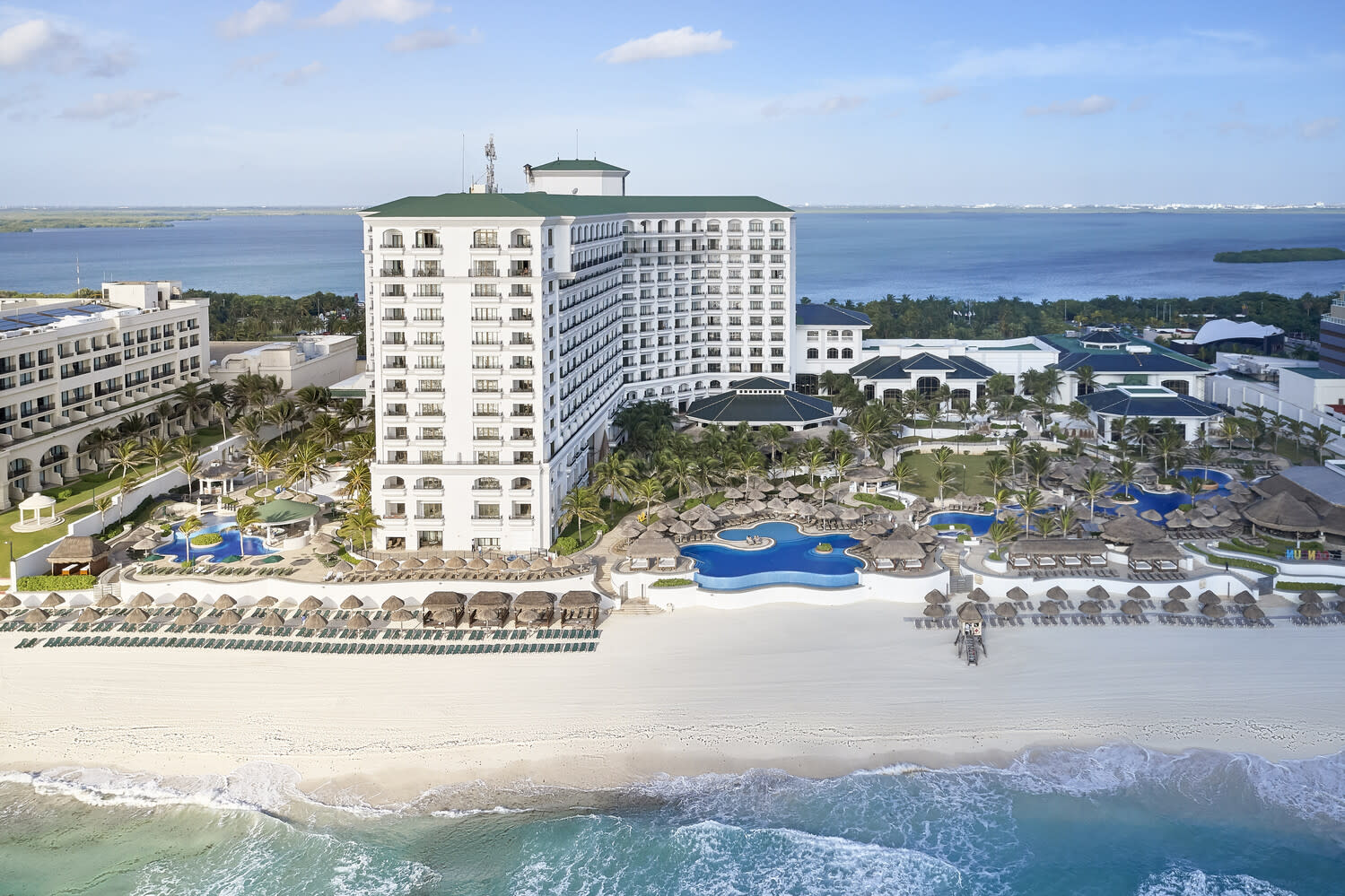
Since 2001, JW Marriott Cancún has been building an identity entirely its own: five restaurants, each with its own time of the day it does best; a tower shaped like a Y so that almost no room misses the water; a spa built around Mayan tradition rather than borrowed ritual. In the years since, nothing here has been treated like a milestone. Instead, the hotel just keeps quietly refining itself, one small change at a time: a reworked lobby bar, a new Mediterranean table, a sharper club floor. Here’s the detail that tends to surprise people: New Year’s Eve here comes in more than one register—a black-tie countdown in the ballroom for those who want the full production, and quieter, restaurant-side tables for anyone who’d rather watch midnight arrive over dinner than a gala. What hasn’t moved since day one is the decision that matters most: Every room here faces the water.
The Fora Difference
Book with Juan Jose to access exclusive perks and experiences on your trip.

Killer perks
Free upgrades, spa credits and more—we got you

Personalized recs
Customized travel planning for your style

Insider knowledge
Expert advice from people who’ve actually been there
Where to stay in Cancún
Unlock perks by contacting Juan Jose to book your trip.
Where to stay
JW Marriott Cancún sits roughly at the midpoint of the Hotel Zone, a 14-story tower with the beach on one side and Nichupté Lagoon within view on the other. Everything here is booked à la carte, restaurant by restaurant, night by night. The concierge remembers an anniversary from three years back. The bartender already knows the order.
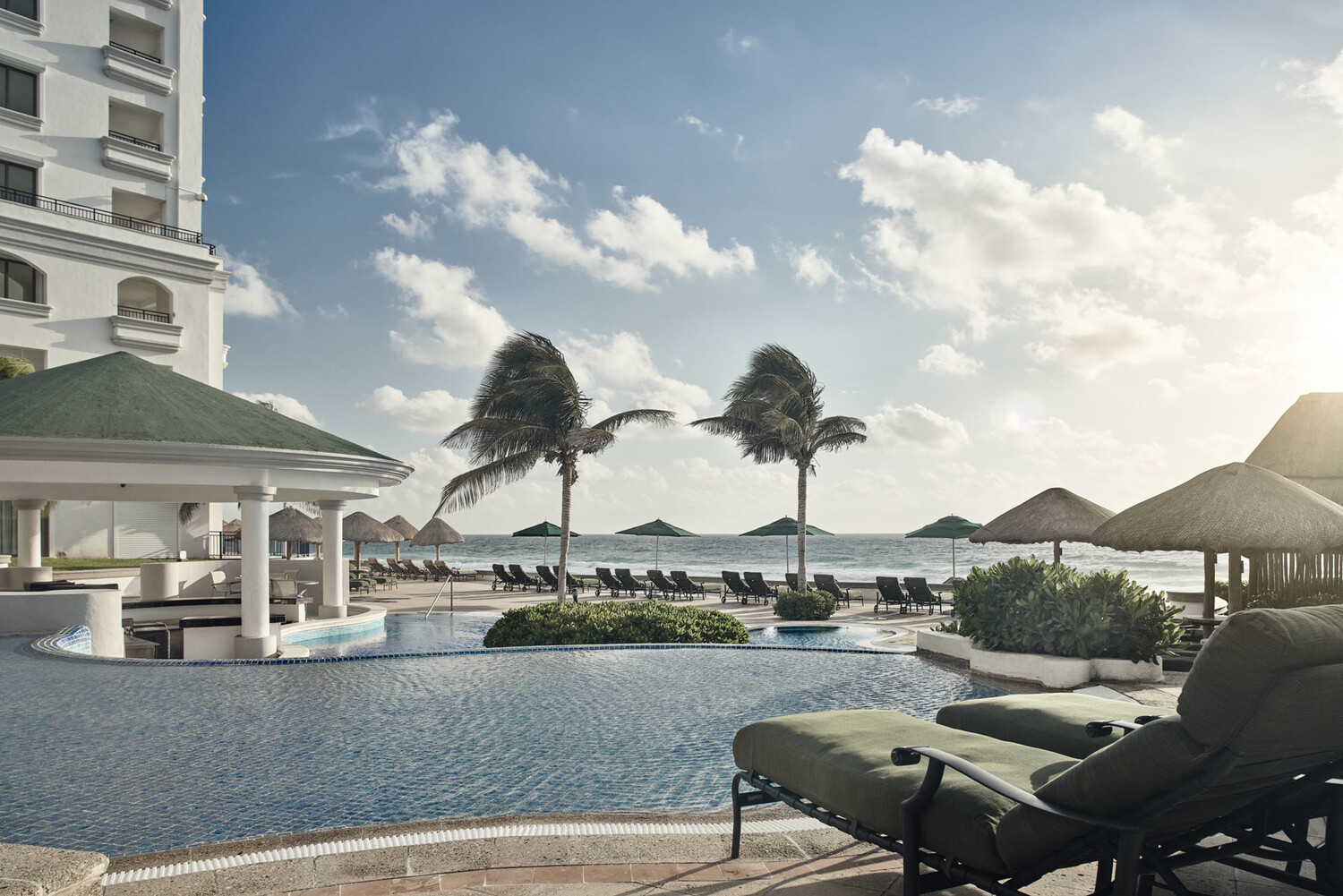
Poolside at golden hour—the Y-shaped tower behind, palms bending toward the Caribbean.
The property
The tower is shaped like a Y, which means almost every room gets a corner view rather than a flat, one-direction-facing one. The lobby bar recently got a full overhaul—more glass, more terrace, less enclosure—and the room now does double duty without ever changing its personality: coffee at 9, cocktails by 4, the same low light and the same view of the water either way. Arrive midmorning and you’ll find someone lost in a crossword over coffee; come back at 6 and it’s the same table, different drink, and probably the same person.
The clientele skews multigenerational and unhurried through most of the year—Christmas, Easter, and midsummer bring the family reunions, three generations to a cabana—before the mood turns quieter and a touch more buttoned-up each January and February, the kind of stretch where a morning meeting and an afternoon by the water aren’t mutually exclusive.
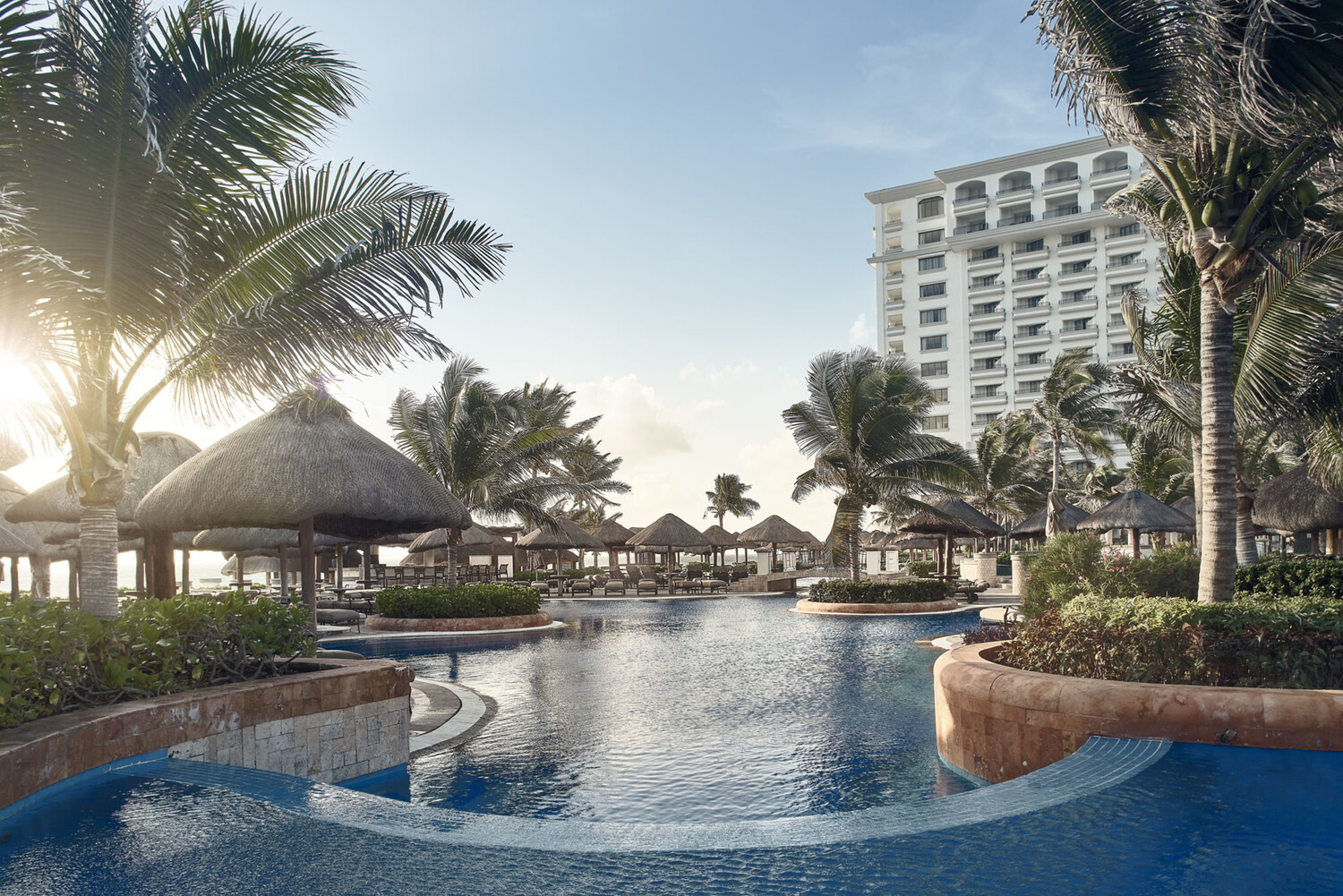
The signature curved pool at first light, built to spread guests out rather than crowd them together.
Food & drink
Let’s be clear about the format first: Everything here runs à la carte, restaurant by restaurant, plate by plate—the anti-buffet, in a city built almost entirely on the opposite idea. Five restaurants anchor the property, each with a fixed identity and, in most cases, a live soundtrack:
Gustino: Northern Italian, pasta rolled tableside, a violinist working the room most evenings. Order the culurgioni, hand-stuffed with lobster and burrata, or the agnolotti filled with braised short rib.
Sasi Thai: Best at sunset, when the bungalow seating catches the last light over the water. The lobster spring rolls and the crab fried rice are both worth ordering without hesitation.
Sybil: The newest addition, Mediterranean—all olive oil and citrus in a room done in white.
Bravío: Spanish, breakfast through dinner. Order the charcuterie and cheese board, which is generous and consistent—and more reliable, if we’re being honest, than the paella the menu leads with.
La 16: Mexican, built entirely around agave, and the hardest of the five to actually find. That's because La 16 doesn’t really have a front door. The entrance sits behind Bravío's wine cellar, marked only by a hand-painted pair of coconuts—say what the picture is so obviously telling you to say, and the door opens. Inside: mezcal flights, a full Mexican menu, cognac and small-batch whisky on the side, low light doing exactly what low light is supposed to do.
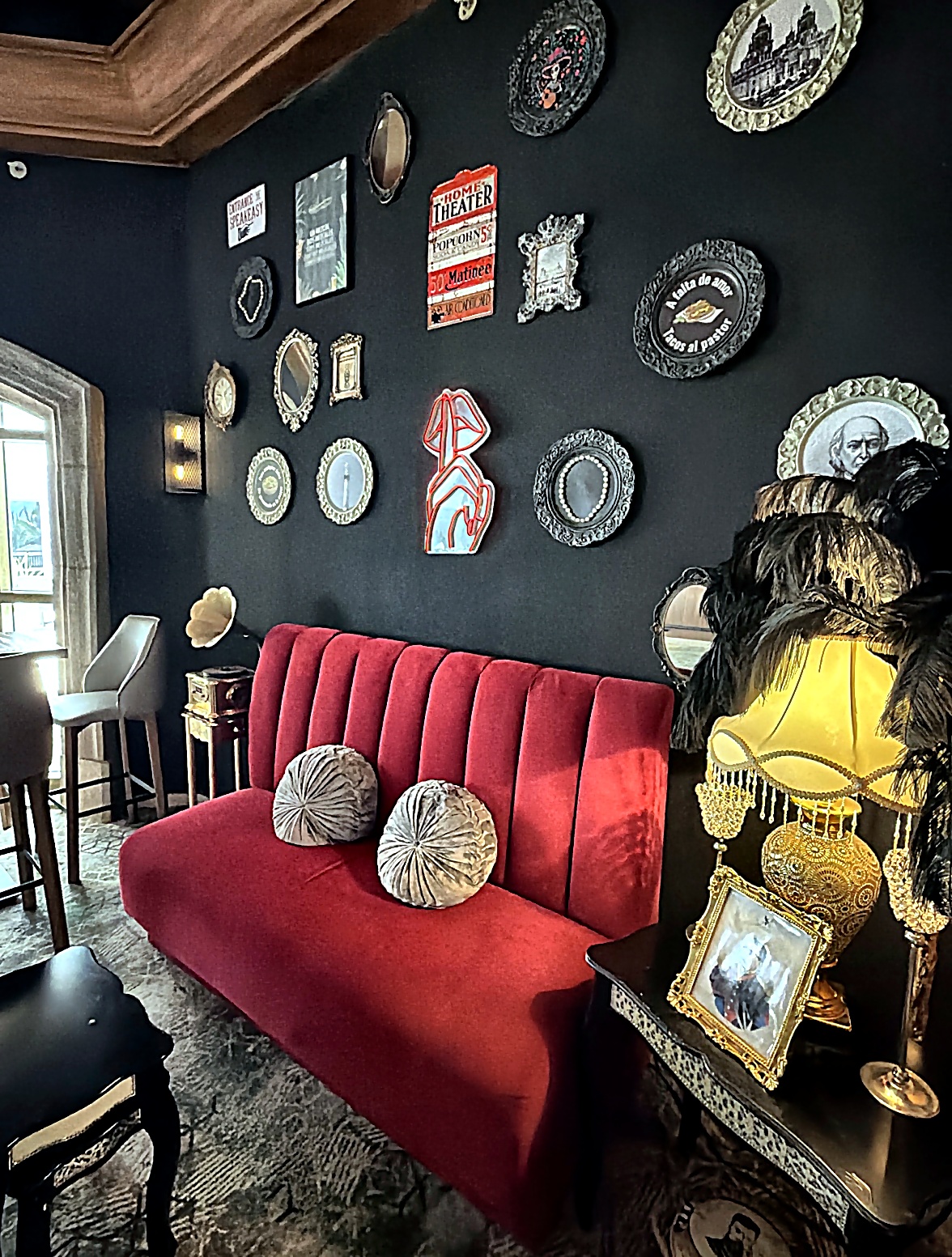
Inside La 16, the hidden agave speakeasy behind Bravío's wine cellar.
For everything after, there’s the Lobby Bar—floor-to-ceiling windows on the water, a genuinely 50-strong margarita menu, and enough tequila and mezcal expertise behind the counter to make the choosing part of the fun. It’s less a nightcap than the room where the evening actually resolves itself.
Breakfast, for what it’s worth, is worth setting an alarm for—not because it needs defending, but because the earliest seating, just past seven, catches the sunrise over the water in a way the later crowd simply doesn’t get to see.
The dress code stays simple: no flip-flops, no swim shorts after dark. During the quietest stretch of the year, typically September, a restaurant or two may close for a few weeks—worth checking before a trip gets built around one in particular.
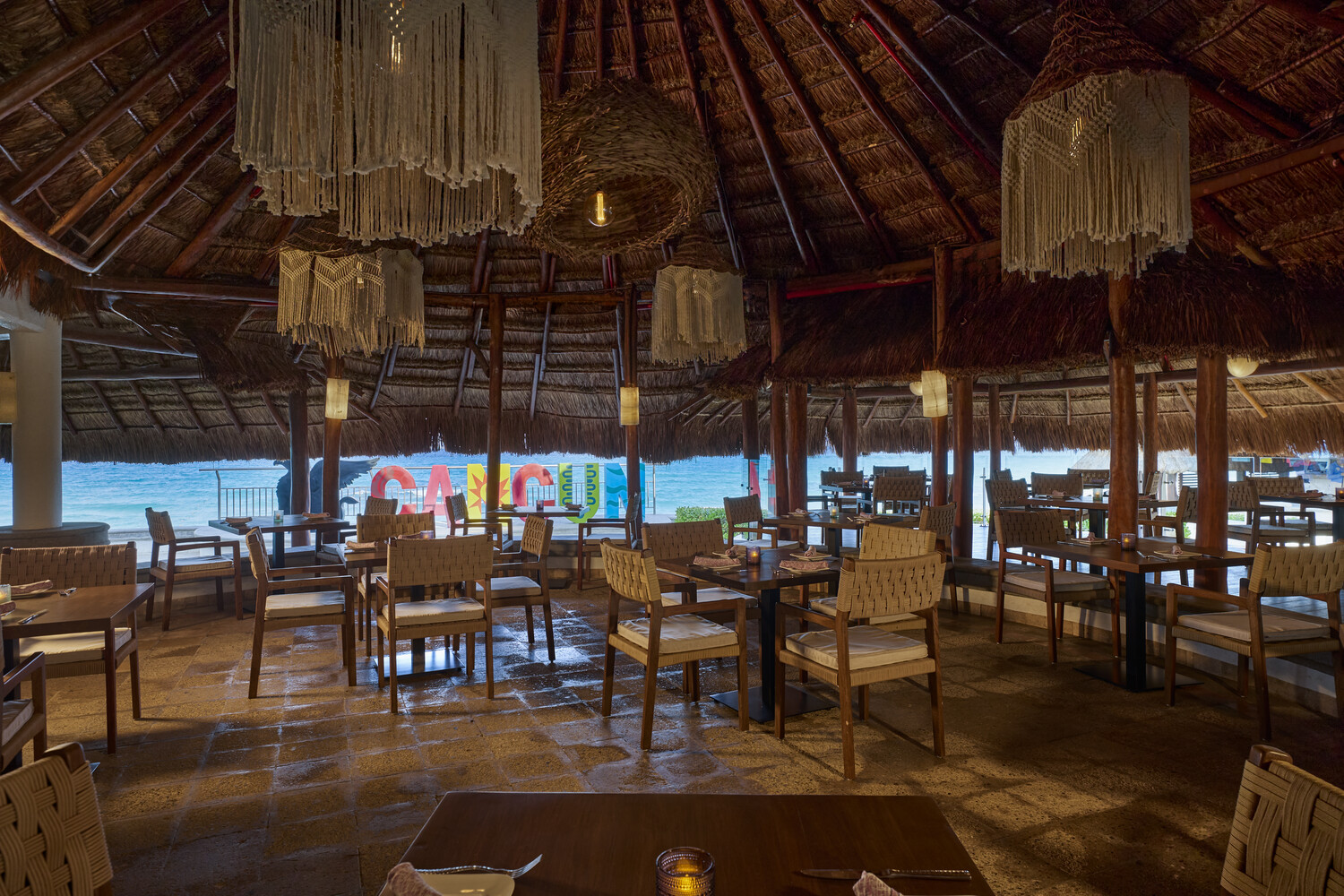
Sasi Thai's oceanfront bungalow seating, best at sunset when it catches the last light over the water.
Accommodations
Rooms stack by floor, not by wing. Deluxe holds floors one through seven. Premium Ocean View takes the higher ground. Every room faces water—some just get a straighter shot at it than others, so ask which is which before you book. Kings sleep three. Double-bed rooms sleep four. About 80 rooms connect, including all 74 suites paired to a standard room, plus a smaller run of king-to-twin combinations concentrated on the lower floors. Worth locking in months ahead, not days, if your group is five or more—the specific connections don’t always match what a family assumes going in.
The 2019 renovation gave every room the same visual language: blue and white standing in for ocean, sand-textured floors standing in for sand itself. It's the kind of design that could feel gimmicky anywhere else. Here, with the real thing right outside the window, it just reads as intentional. The bathrooms carry their own quiet weight—marble, freestanding soaking tubs, rainfall showers, dual vanities in chrome-detailed granite—the kind of detail nobody photographs but everybody remembers. The Presidential Suite, for anyone traveling to mark something big, runs close to 3,000 square feet—its own dining room, its own unmistakable sense that the trip has become an occasion rather than a vacation.
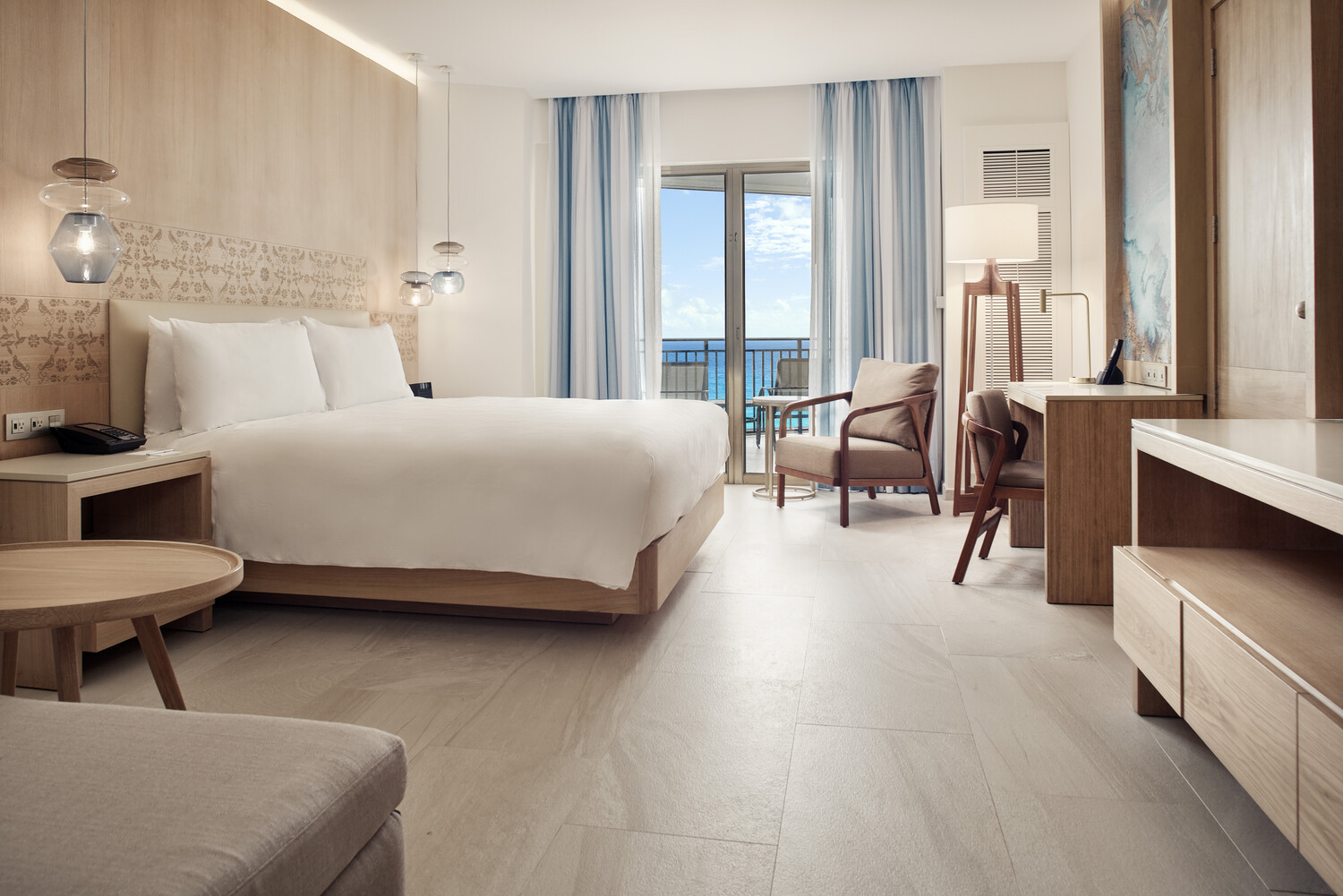
A king room from the last renovation: blue-and-white palette, sand-textured floors, private balcony on the water.
Club 91 takes floors 12 and 14: bigger balconies, guaranteed height, and a private lounge running full breakfast, lunch, and dinner for a nightly supplement—ask me for current pricing, since it moves with the season and is worth weighing against a standard room rather than assumed as essential. Afternoons bring guacamole classes, wine tastings, margarita-making—the kind of programming that turns an upgrade into its own small itinerary. It carries no extra booking privilege beyond what's listed here. It buys a better lounge, not a better deal.
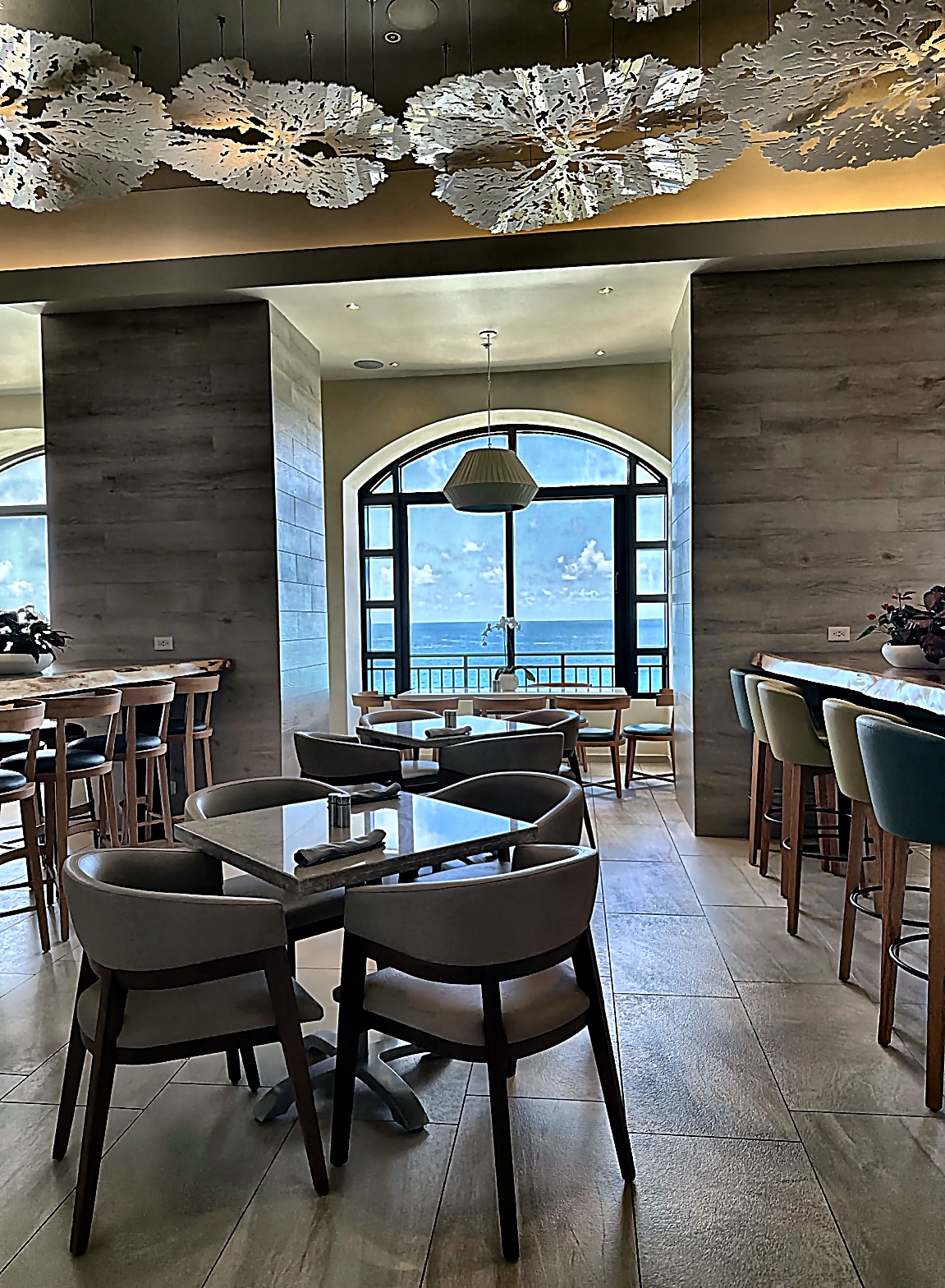
Club 91's private lounge, with floor-to-ceiling ocean views—the elevated experience floors 12 and 14 buy.
Exemplary stays
The real strength here is celebration, and the property doesn’t do it halfway. Eight venues and close to 45,000 square feet of event space mean an anniversary dinner for two and a wedding reception for 1,400 can both happen in the same week without either feeling like an afterthought—an oceanfront gazebo for the ceremony itself, the Tulum Ballroom for the ones that need real scale.
The hotel has also built a genuine specialty in South Asian weddings: Mehndi ceremonies staged in the gardens, a Sangeet that fills the ballroom, a culinary team that works directly with couples on an authentic Indian menu rather than a diluted one.
The service
JW Marriott Cancún holds a AAA Five Diamond rating, one of only a handful of properties in this part of Mexico that can claim it, and the distinction shows up less in any single grand gesture than in how consistently the small things get handled. Independent reviews cluster around the same detail again and again: a staff that remembers a name by the second day and keeps remembering it on the fifth visit, sixth year running. It consistently ranks among the highest-rated hotels on this stretch of the Hotel Zone—an unusual feat for a resort of this size.
That kind of continuity doesn’t happen by accident. It comes from a team that stays—long enough to actually know a hotel rather than simply work in it—and it shows up in the specifics guests bring home afterward: a breakfast server who’s worked the same section for years, a pool attendant guests ask for by name on their next visit, a hotel that manages to feel intimate despite being one of the largest towers on this stretch of beach.
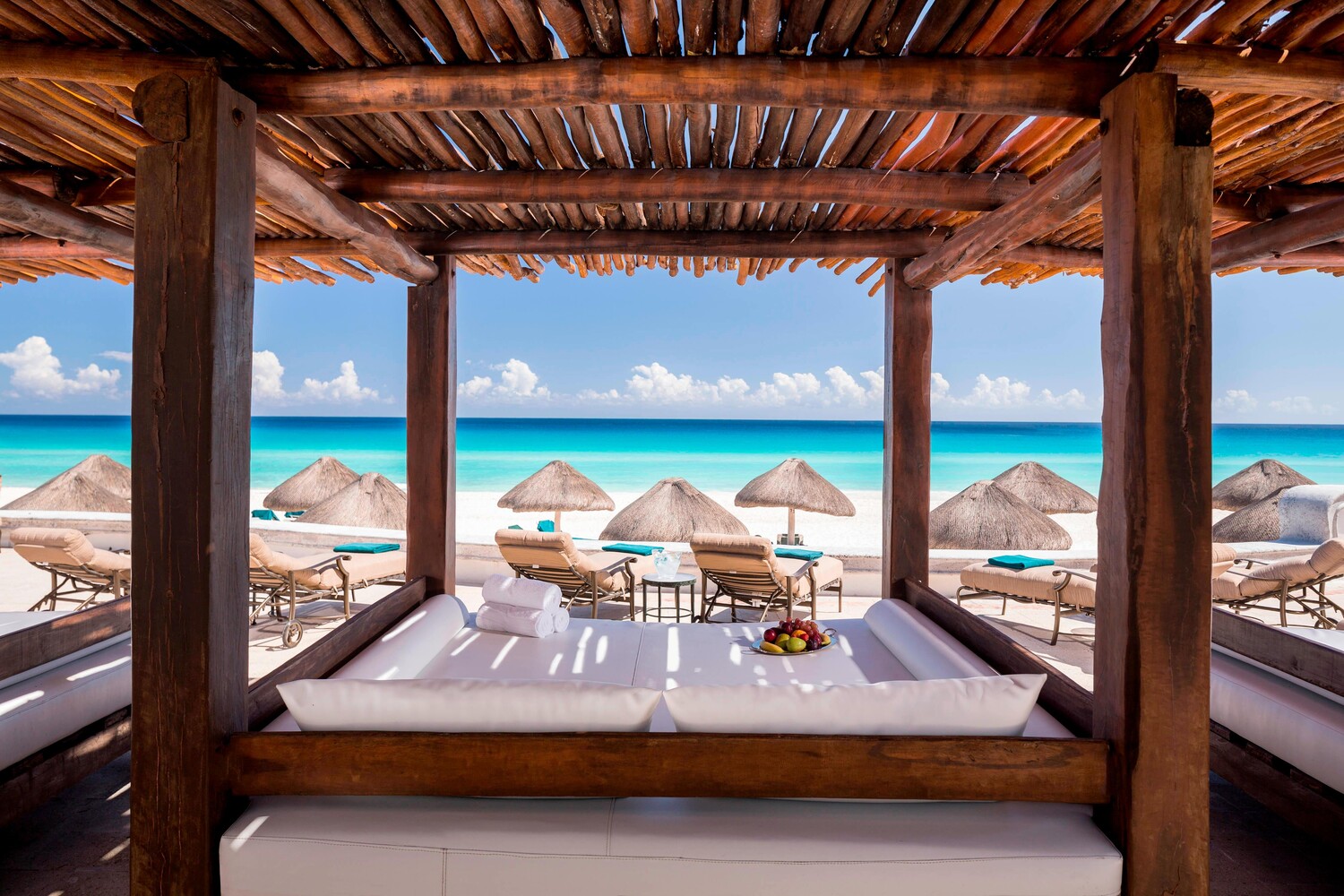
Oceanfront daybeds on the beach itself—a spot for wading and admiring, with the pool just behind for real swimming.
The grounds & wellness
One big pool, built to spread people out rather than crowd them together. A second, adults-only pool, with its own swim-up bar and its own kitchen. Beyond it, the beach itself: powder-white sand and genuinely turquoise water, the kind that photographs even better than it looks in person. Worth knowing honestly: The surf here runs rougher than the postcards suggest, and red flags fly often enough that this is a beach for wading and admiring more than serious swimming; the pool is where the actual swimming happens.
The spa runs three signature rituals built on Mayan tradition rather than borrowed wellness trends, each one opening with a prayer spoken in a Mayan language before a single hand touches skin. The Xaman Ek treatment works a nutrient-rich mud over the entire body; the Hunab Ku is a traditional Mayan massage built around an unconventional abdominal technique still practiced in local communities today; the Ichtaca—the name means “secret”—opens with an herbal scrub before the massage even begins. None of it reads as a spa-menu gimmick, because none of it was invented for one. A thermal circuit of dry and wet saunas comes free with any treatment; hydrotherapy costs extra if you skip the massage entirely. Time it right, and you’ll catch the jets meeting the sunset—the moment the whole thing stops feeling like a spa and starts feeling like the actual point of the trip.
Sargassum runs longer here than most of the Caribbean—April clear through November—and the beach team fights it daily rather than pretending it isn’t happening. They even employ a falcon, four or five days a week, for the sole job of keeping birds off the sand—a strange, specific detail that says more about how the property is run than any brochure line could. Tennis is on site, and Vidanta’s golf course sits three to four minutes down the road.
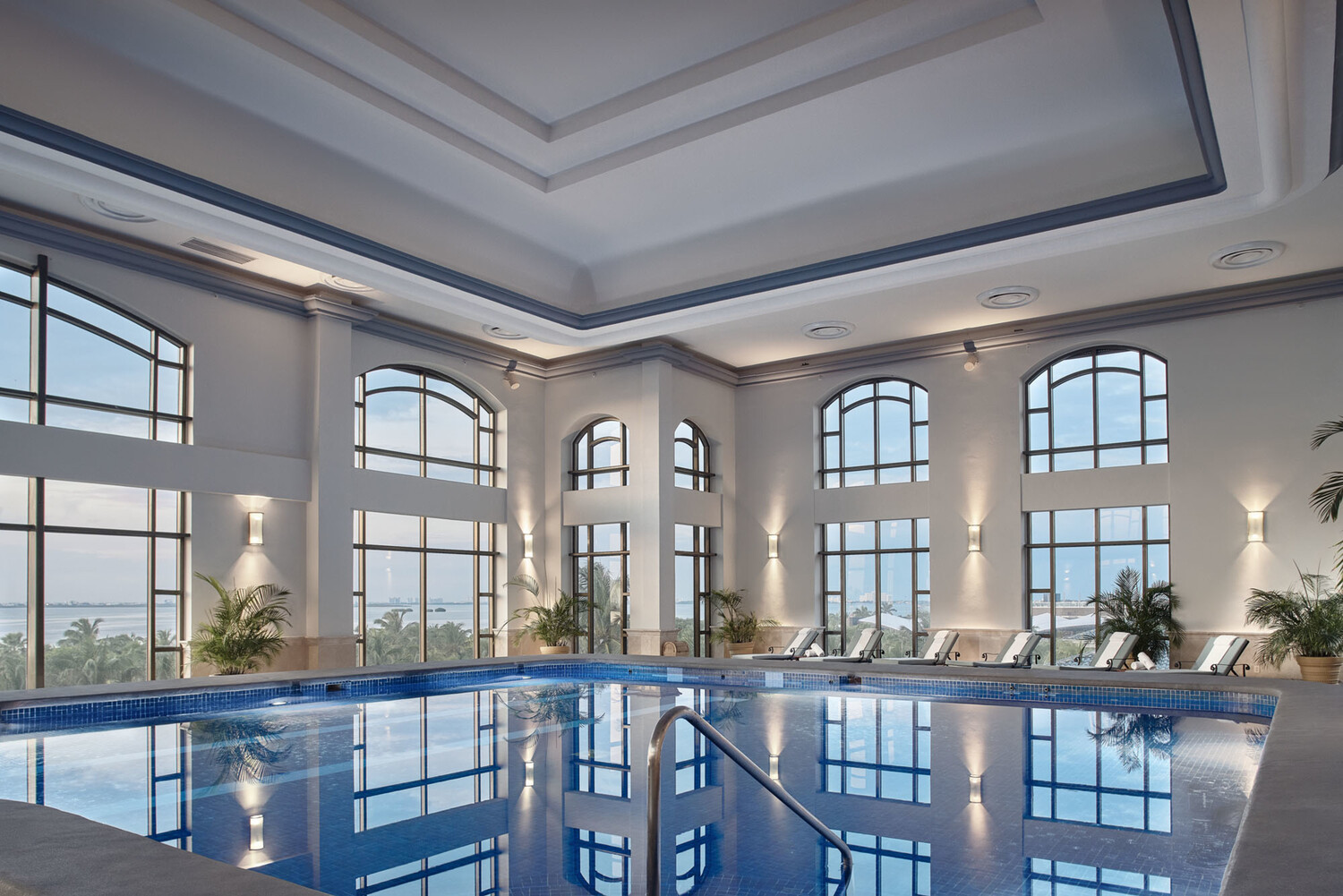
The pool at the spa, included with any treatment—time it to catch the jets meeting the sunset.
Beyond the property
Immediately outside, Boulevard Kukulcán does the rest of the talking: Luxury Avenue and Kukulcan Plaza sit about a mile off, close enough for a determined walk but realistically a five-minute taxi, and La Isla’s open-air shopping and canals make for an easy afternoon away from the sand. Cancún's Hotel Zone also rewards guests who leave it for a full day. Chichén Itzá is a 3.5-hour drive—full-day territory, best started early—while Tulum’s ruins sit closer, an hour and a half to two hours out, and pair naturally with an afternoon at one of the cenotes nearby. Isla Mujeres is a short ferry ride for anyone wanting a quieter beach for an afternoon. None of it needs to be planned in advance from home; the concierge desk handles same-week bookings for all of it without much notice.
Need to know
Currency & fees
Rates and service charges move with the season. Ask before committing to dates, not after.
Families
Connecting rooms are limited and floor-specific, so larger multigenerational trips should lock configurations in early. If a supervised kids’ club is a priority, book a CAMP Club Pass at sister property Marriott’s kids’ club for $50 USD per child per day—ask me before booking, as options in the area shift from season to season.
Getting there
20 minutes from Cancún International, inside the Hotel Zone itself.
For more inspiration and insider recommendations, visit our Cancún page.


Travel Advisor
Juan Jose
Juan Jose

Get in touch with Juan Jose
Did you like this guide? Reach out to customize and book your own experience. Or, just to chat about travel in general.