


Curator’s statement
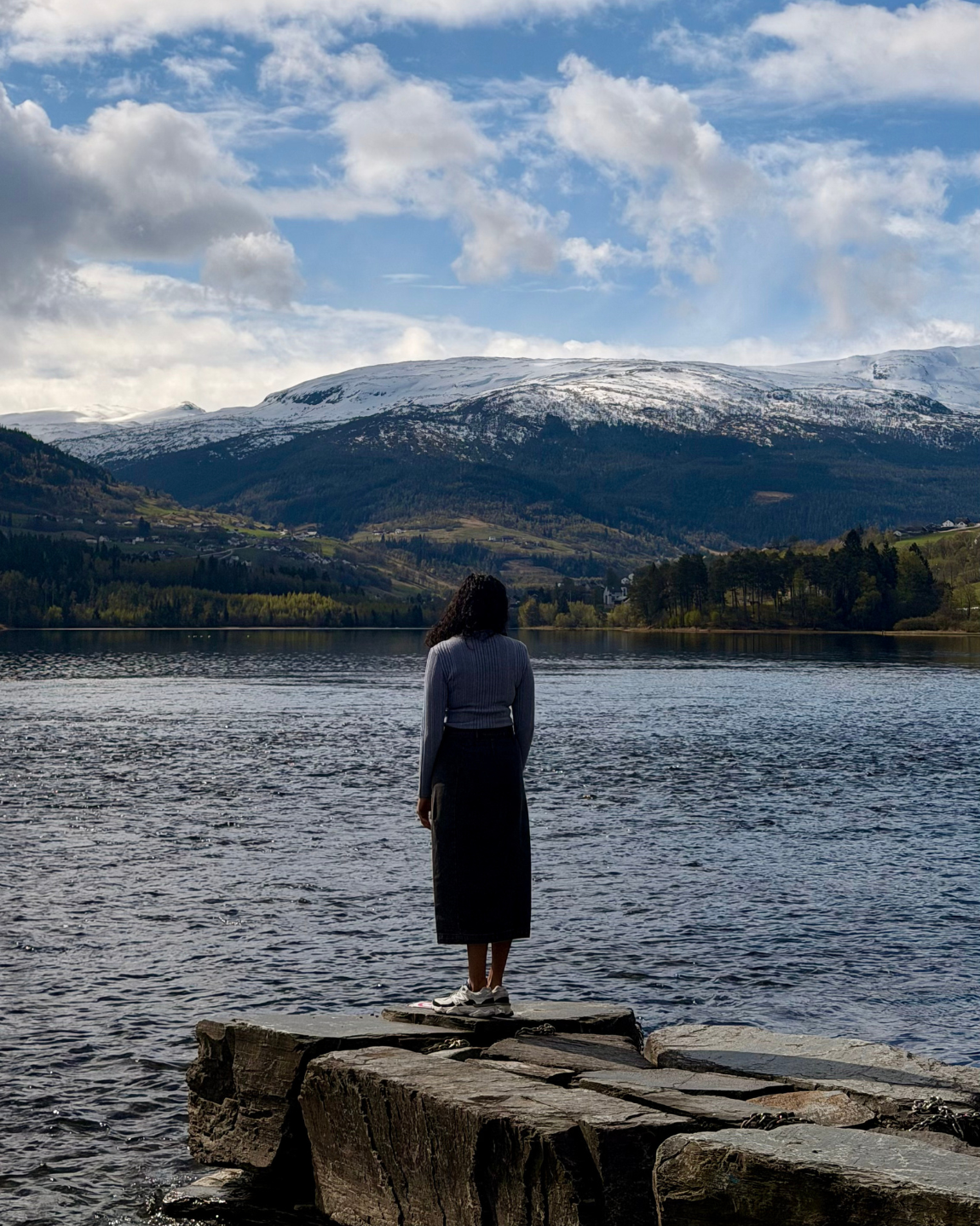
While mainstream tourism rushes toward the crowded peaks of Geiranger or Pulpit Rock, the Western Fjords offer a rare, unhurried immersion into Norway’s rawest landscapes. By handpicking a deliberate, minimalist itinerary and leaning into the endless daylight of the Nordic summer, I experienced a liberating “slow life” where the journey is entirely on your own timeline. Here, human efficiency bends to respect untouched nature, allowing you to truly live in the region rather than just pass through it. It is a place of endless, breathtaking vistas that weary your eyes in the best way possible, and a destination I would return to in a heartbeat.
The Fora Difference
Book with Raksna Anand to access exclusive perks and experiences on your trip.

Killer perks
Free upgrades, spa credits and more—we got you

Personalized recs
Customized travel planning for your style

Insider knowledge
Expert advice from people who’ve actually been there
Where to stay in Norway
Unlock perks by contacting Raksna Anand to book your trip.
The most challenging part of planning a Norway trip, especially through the Western Fjords, is choosing the right bases, because there’s surprisingly little information out there to guide you. Get the bases right, though, and the rest of the itinerary becomes a cakewalk. Here’s how I’d choose them, along with the must-do experiences that can help you plan it right.
Basing the trip
The drive between each base is part of the experience.
Bergen makes a natural starting point thanks to its good flight connectivity, its size, and the number of activities you can do before heading into the fjords. From Bergen to Balestrand, we took the longer scenic route through Aurland, stopping at Stegastein before continuing through Lærdal and across a couple of short car-ferry crossings into Balestrand.
Balestrand works beautifully as a base because it sits in the Sognefjord region, surrounded by some of the three fjord landscapes, with plenty of scenic waterfront hotels and cabins, while also being well positioned for the next leg of the journey. It was here that we slowed the pace completely, spending time on the Sognefjord before continuing toward Stryn, where the landscape shifts from fjords and fruit-growing villages to lakes, valleys, and glaciers.
Stryn is particularly useful as a base because it gives you easy access to Loen, Olden, and Briksdal Glacier, while the town itself is surrounded by incredible mountain and lake scenery. Staying in a mountain cabin overlooking the lakes can also make the accommodation itself part of the experience. Alternatively, Loen is a great base if you prefer somewhere slightly more developed, particularly with the Loen Skylift right on your doorstep.
From there, the final drive to Ålesund makes for a spectacular exit from the Western Fjords, taking you through Geiranger and along some of the region’s most dramatic fjord roads and viewpoints. Ålesund itself is a charming little town and, with good flight connectivity, makes a convenient final stop before heading home.
Must-do activities
Briksdal Glacier
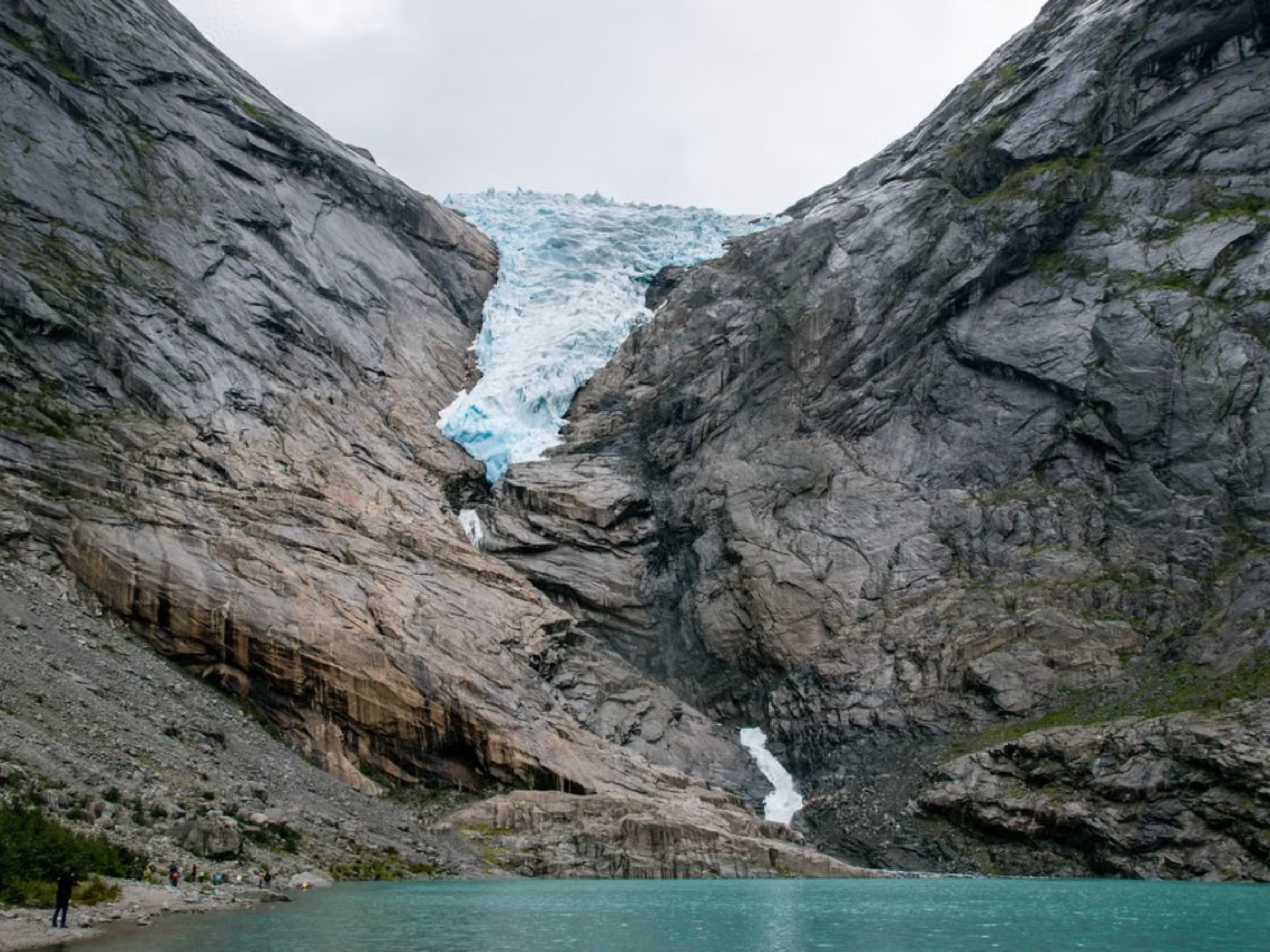
The drive from Olden to Briksdal Glacier is an experience in itself, with cloud-covered mountains, enormous waterfalls, and dramatic valley scenery. From the parking area, you can take a troll car close to the glacier, followed by an easy 15-minute walk to reach it. What makes Briksdal special is how untouched and serene it feels—the silence, vivid colors, and crystal-clear water make the experience feel almost otherworldly. It’s one of those places where the journey and the destination are equally spectacular.
Briksdal Glacier
Loen skylift
It’s definitely on the pricier side, like most activities in Norway, but if you’re doing just one skylift in the Western Fjords, I’d make it this one. From the top, you get an incredible panoramic view of three turquoise lakes separated by dramatic mountains, a landscape you won’t easily find anywhere else. The restaurant at the top is also surprisingly reasonable for Norway, with great food, friendly service, and plenty of gluten-free options, making the experience well worth the money.
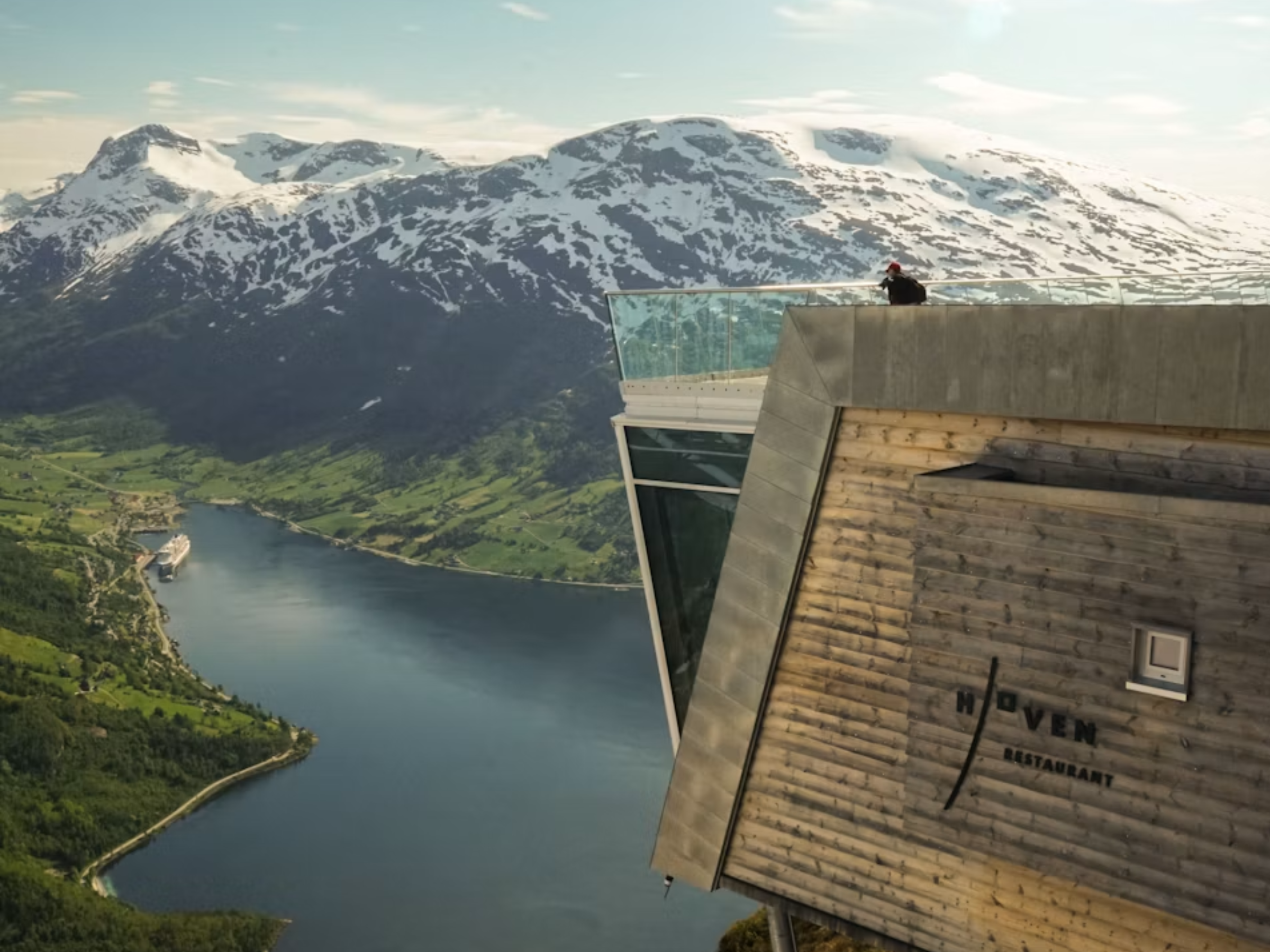
Hoven Summit: Panoramic views over turquoise lakes when you go through the Loen Skylift.
Sognefjord private boating
A private Sognefjord cruise from Balestrand is one of the most unique experiences I’d recommend, especially with a local like Thor, who owns Balestrand Fjord Angling and grew up in the area. He brings the fjord to life with stories about its history, local laws, trolls, and traditions, while taking you into the deeper, unexplored arms of the fjord, right up to waterfalls where you can drink the water directly. The experience is wonderfully hands-on; you can fish, see starfish and other fish up close, feed seagulls, and simply switch off the boat and soak in the silence for 20 minutes. And as if the day couldn’t get better, we encountered an orca on the way back—a rare sighting even for Thor—which was the cherry on top of an already fantastic tour.
Gaularfjellet Scenic Route
Gaularfjellet is one of Norway’s designated scenic routes, and I’d particularly recommend it for the feeling of having the road almost entirely to yourself. It begins at Utsikten Gaularfjellet, an incredible viewpoint, before winding through half-frozen, semi-frozen, and fully frozen lakes, with tiny red houses seemingly placed in the middle of nowhere. Along the route, you’ll find multiple places to stop, including Likholefossen, a beautiful waterfall bridge where you can walk across and take in the mountains surrounded by water.
Geiranger Viewpoint—Ørnesvingen
There are several viewpoints around Geiranger, but Ørnesvingen was by far my favorite and the one I’d completely recommend. The drive up the mountain is beautiful, and from the viewpoint you get an incredible perspective over Geirangerfjord; we even arrived as it started snowing, which made the experience even more magical. There’s parking nearby, and it’s an easy walk to the viewpoint, although you can expect some crowds, especially from cruise passengers. I’ll admit I initially thought Geiranger was overrated, but seeing it from Ørnesvingen completely changed my mind.
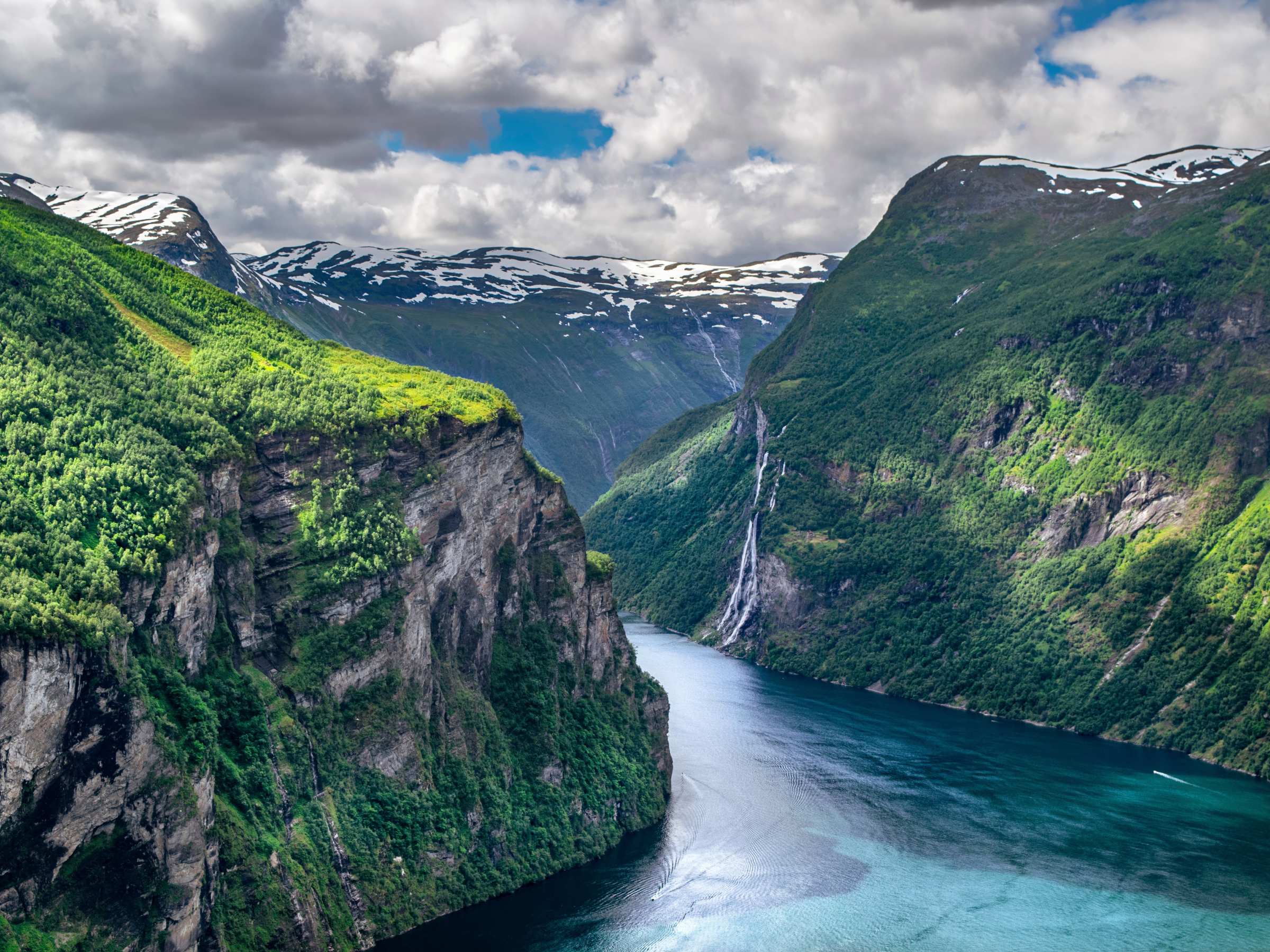
Ørnesvingen: One of my favorite viewpoints over the dramatic Geirangerfjord
Stegstein lookout
Stegstein lookout is another beautiful stop, with some of the most striking turquoise waters you’ll see along the route. The view itself is incredible, but what really makes this viewpoint stand out is its architecture—the structure feels like part of the landscape rather than simply a place to stop and look around. It’s a perfect example of how Norway turns even a viewpoint into an experience.
Trollstigen
Trollstigen is basically Mario Kart in real life. From the viewpoint, you can see the dramatic, winding roads carved into the mountainside, surrounded by waterfalls and towering peaks. The viewpoint itself is beautifully designed, with glacier water collected along the way, and walking between the different viewpoints gives you incredible perspectives of the waterfalls and the road below. It’s an incredible feat of engineering set against an equally spectacular landscape, but check the weather before going. On very cloudy days, heavy fog can completely obscure the views.
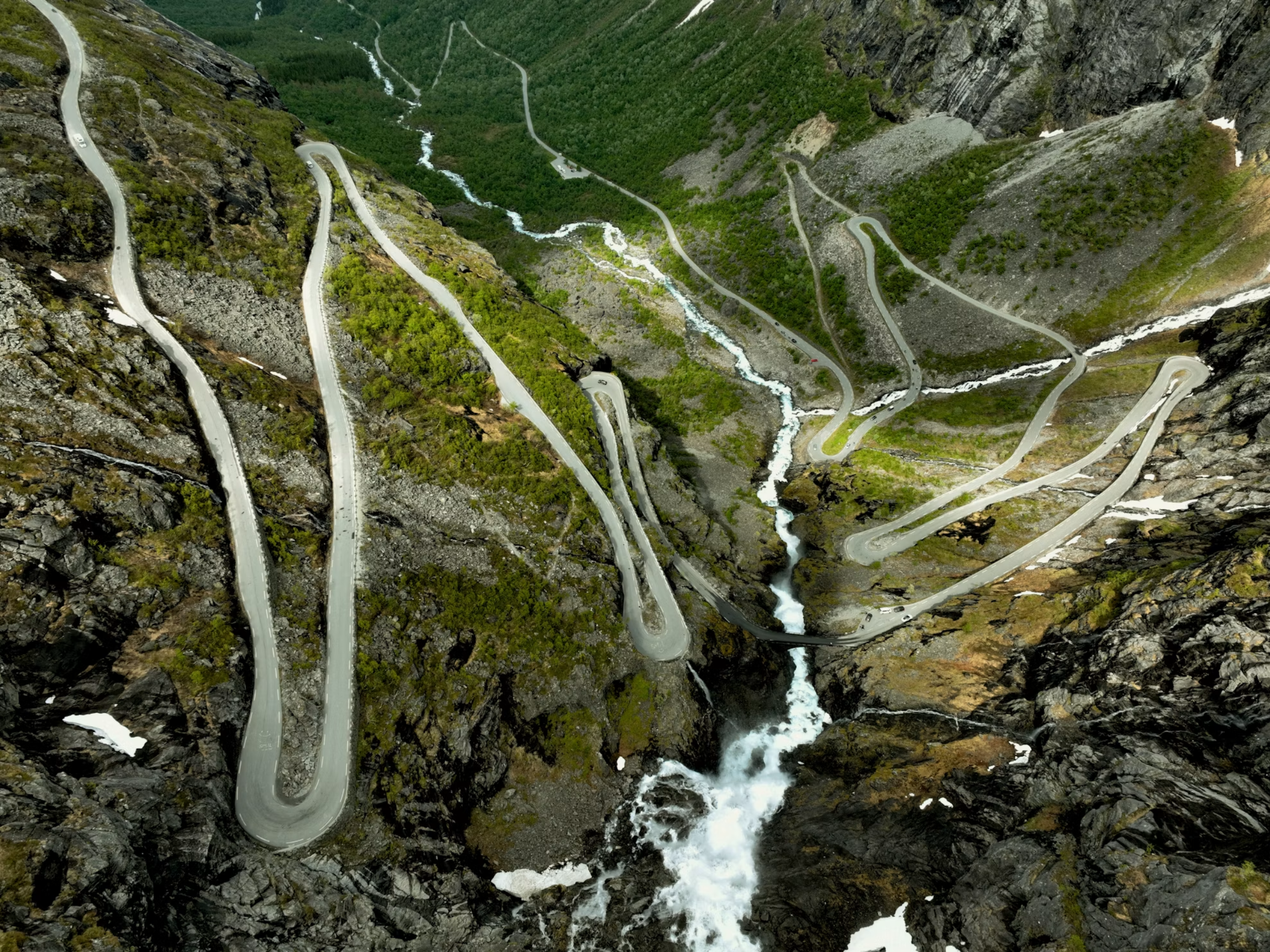
A glimpse from Trollstigen viewpoint
Bryggen—UNESCO World Heritage Site, Bergen
Bryggen is a lovely place to simply slow down and walk around the historic harbor, taking in the colorful wooden buildings and the atmosphere of Bergen. There’s something especially charming about watching locals walk along the port with their dogs, grab a coffee, and simply carry on with everyday life around you. It’s less about ticking off a sight and more about soaking in the laid-back, lived-in vibe of the city.
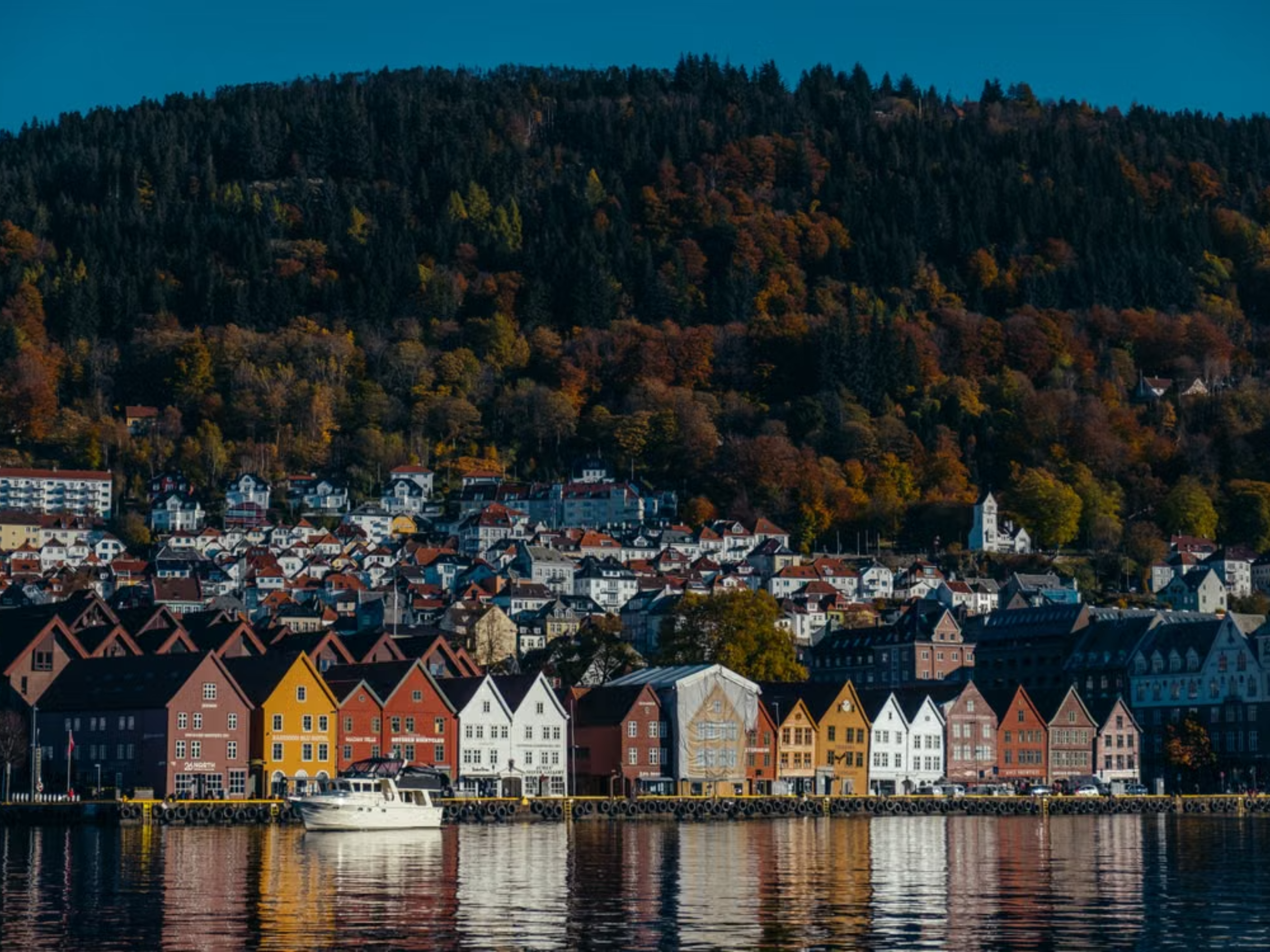
Bryggen, Bergen’s UNESCO-listed harbor
Need to know
Norway’s weather is famously unpredictable, even in summer.
We experienced snowfall in May despite it not being in the forecast, and within a single day you’ll often see sunshine, wind, rain, and clouds. Outdoor activities like kayaking or paddleboarding can also be canceled if conditions change, so pack layers and leave a little flexibility in your itinerary.
Driving through the Western Fjords means driving through tunnels.
Lots of them. Some are less than a mile long, while others, like the 15-mile Lærdal Tunnel—the world’s longest road tunnel—can take several minutes to cross. Mobile signal can be patchy in some tunnels, so download offline maps before you set off.
Ferries are simply part of everyday driving in the fjords.
Most crossings are efficient and, if you’re renting a car, the charges are usually billed automatically through the vehicle’s AutoPASS. Just make sure you’re boarding the correct ferry, as many routes stop at multiple destinations before reaching the final one. The Geirangerfjord sightseeing cruise is separate from the regular car ferries and requires its own ticket.
One small tip that saved us a lot of embarrassment: If your rental car allows it, temporarily disable the alarm before leaving it on a ferry. The movement of the ferry can trigger some car alarms, and it’s surprisingly common to hear them going off while everyone is upstairs enjoying the crossing.
The Western Fjords are made up of small villages rather than large towns.
Many of the best cafés and restaurants are independently run, which is part of their charm, but they can have longer waiting times during busy periods. Keeping a few snacks in the car is never a bad idea, especially on longer driving days.
If you’d like to buy wine or spirits, plan ahead.
In Norway, stronger alcohol is sold through government-run Vinmonopolet stores rather than regular supermarkets, and many branches in smaller towns close relatively early. If you want a bottle for yourself, it’s worth picking it up before the evening.
Electric cars are incredibly easy to use in Norway.
Charging stations are everywhere, from hotel car parks to shopping areas and scenic stops. So an EV is a great option for a road trip. If you’re renting a petrol or diesel car instead, plan your fuel stops in advance. Some stretches, particularly around Stryn and towards Geiranger, have far fewer fuel stations than you might expect.
Norway takes road rules seriously.
Speed limits are strictly enforced, parking fines can be expensive, and even public toilets in some places are cashless. Download the EasyPark app before your trip, keep a payment card handy for parking, fuel, and toilets, and stick to the speed limits. It’ll save you both money and stress.
Eating out in Norway is expensive, but the food is genuinely worth trying.
Even a simple sandwich from a petrol station can cost around $20 USD per person, so supermarkets are a great way to save on breakfasts and snacks. The good news is that we found gluten-free options surprisingly easy to find, even in small villages.
While you’re there, don’t miss the local seafood, fresh apple juice from the fruit-growing regions, or Balholm’s non-alcoholic fruit drinks. If you enjoy wine, Norway also has some excellent locally produced fruit wines that are well worth tasting.
Norway is largely card-friendly, but don’t rely on euros.
Cards are accepted almost everywhere, including most self-service fuel stations, but euros generally aren’t. If you need cash, exchange it into Norwegian kroner before heading into the Western Fjords, as currency exchange services are difficult to find outside larger cities like Bergen.
Norway has some of the freshest drinking water in the world.
Fill your water bottle whenever you get the chance. The mountain water is some of the freshest you’ll ever taste.
Norwegian folklore is everywhere, especially once you start driving through the fjords.
Trolls have been part of Norwegian folklore for centuries, and you’ll spot troll statues, souvenirs, and references in gift shops all over the country. You may also notice dragon-head carvings on some traditional wooden buildings and stave churches, inspired by Viking-era architecture and old beliefs that they helped ward off evil spirits. It adds a magical layer to the journey and is worth paying attention to as you explore.
If you’re planning a Norway road trip, bookmark the official Norwegian Scenic Routes website before you go.
It highlights the country’s 18 designated scenic drives, complete with viewpoints, rest stops, attractions, and seasonal updates on road conditions. While Google Maps is generally reliable, this website is incredibly useful for checking whether mountain roads or scenic routes are open before you set off, especially in spring and early summer when some roads may still be closed.
For more inspiration and insider recommendations, visit our Norway page.


Travel Advisor
Raksna Anand

Raksna Anand

Get in touch with Raksna Anand
Did you like this guide? Reach out to customize and book your own experience. Or, just to chat about travel in general.