



Curator’s statement
Bogotá unfolds slowly. Set high in the Andes, Colombia’s capital is a city where history is not only preserved, but lived—layered into daily life through neighborhoods, markets, and cultural spaces that feel active rather than curated. This is a city shaped by Indigenous knowledge, colonial influence, political movements, and modern creative expression, all existing side by side. Spending a few intentional days in Bogotá adds grounding context to everything that follows in Colombia. Bogotá isn’t just where a journey begins—it’s where perspective deepens.
The Fora Difference
Book with Swati Shah to access exclusive perks and experiences on your trip.

Killer perks
Free upgrades, spa credits and more—we got you

Personalized recs
Customized travel planning for your style

Insider knowledge
Expert advice from people who’ve actually been there
Where to stay
Unlock perks by contacting Swati Shah to book your trip.
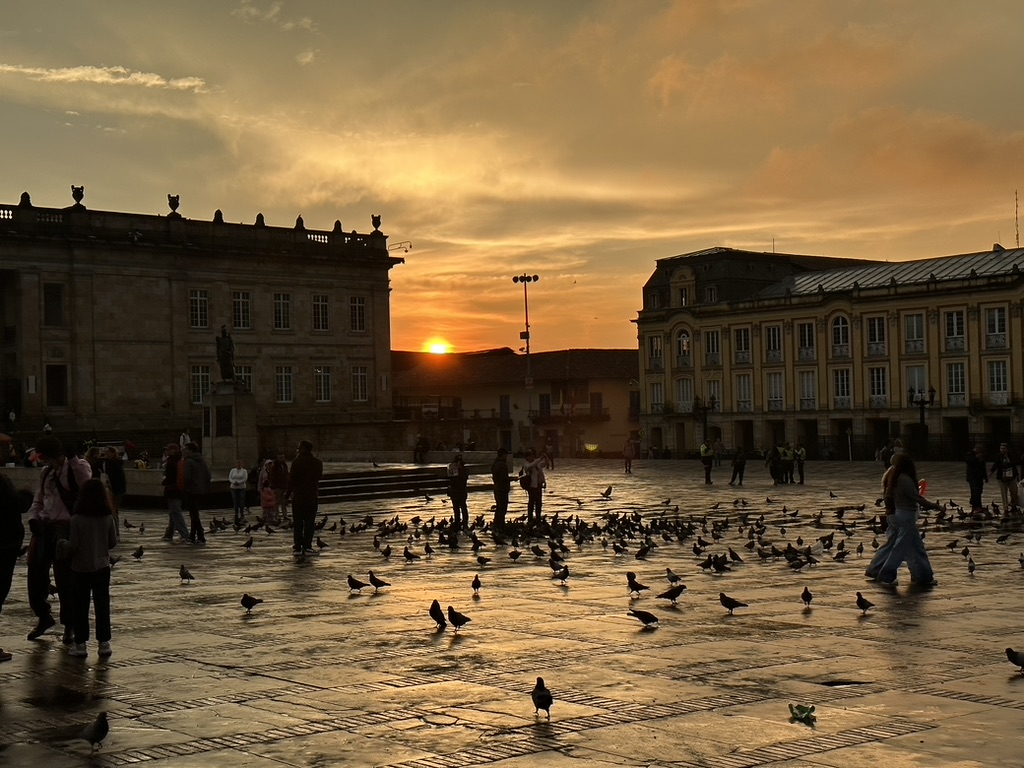
Sunset in the City Square
Bogotá matters as it is Colombia’s cultural and historical anchor. Its altitude, energy, and scale mirror the complexity of the country itself. Museums, markets, and neighborhoods here don’t exist as standalone attractions; they connect the past to the present in tangible, everyday ways.
This destination pairs naturally with cities like Medellín and Cartagena, creating a well-rounded journey that balances cultural depth, neighborhood life, and regional contrast. (I’ve written separate trip reports on these and you could connect them all together for one large, fantastic trip.)
Paloquemao Market: Everyday Bogotá
Paloquemao Market is one of Bogotá’s most important food and flower markets and a meaningful introduction to the city’s daily rhythm. Open throughout the day, the market feels communal and alive. Flower vendors build towering displays, fruit stalls showcase Colombia’s extraordinary biodiversity, and locals move through the space with ease.
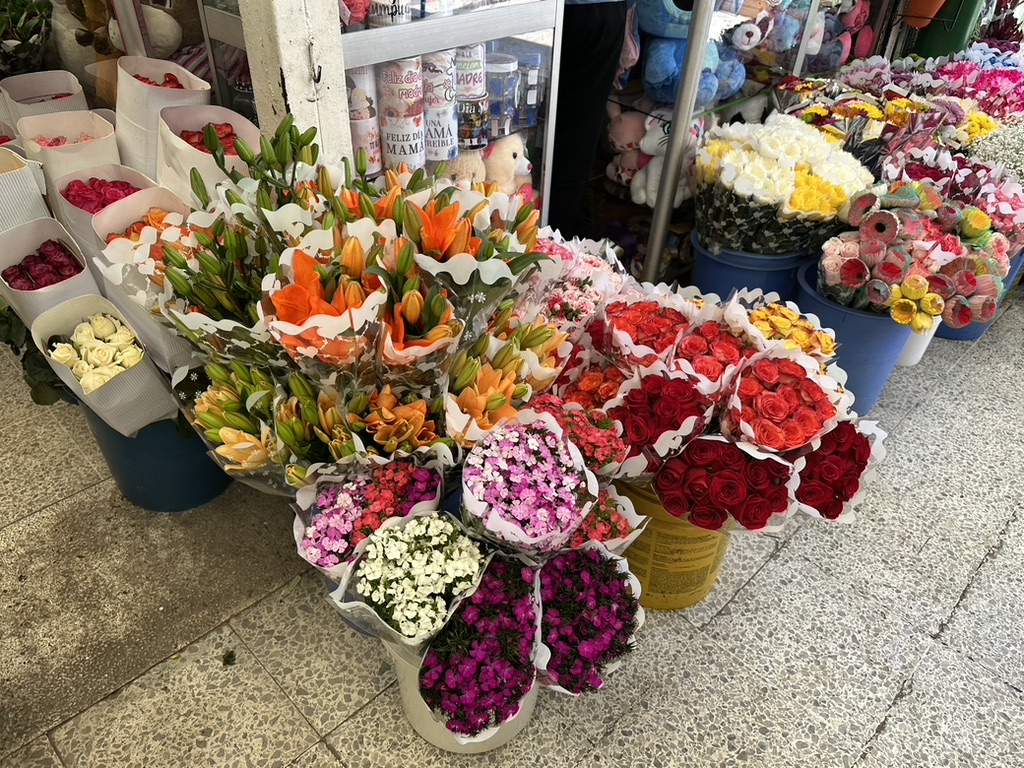
Flowers at the Paloquemao Market
This is not a tourist performance—it’s everyday life. Moments here feel grounded and human, offering insight into how Bogotá eats, shops, and connects. Take the tour and leave feeling stuffed with nutritional goodness, enough for breakfast and lunch!
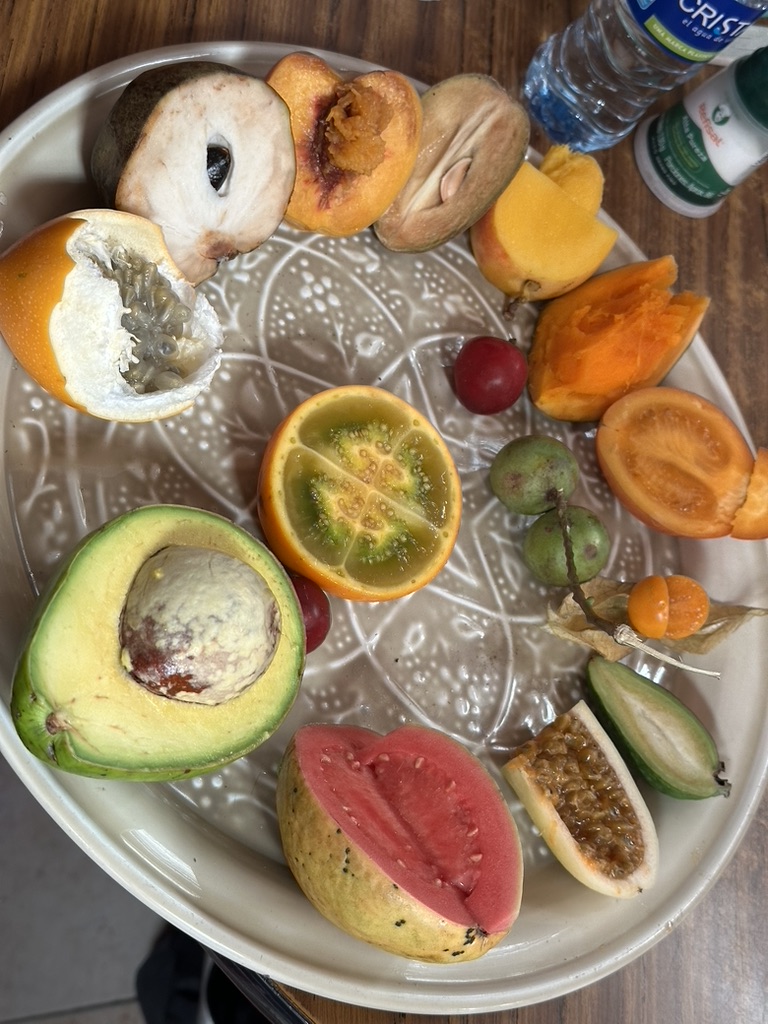
Biodeversity of fruits year-round at Paloquemao Market
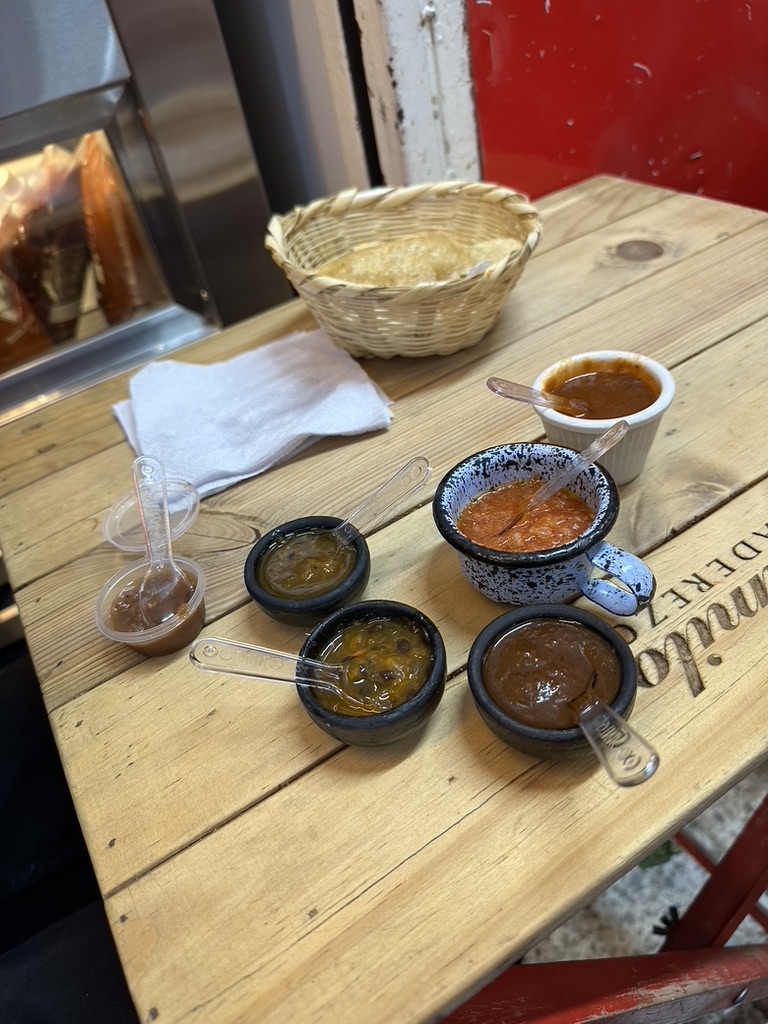
Empanadas with many salsas at the Paloquemao Market
The Gold Museum: Indigenous history and meaning
Bogotá’s layered history comes into focus at the Gold Museum, home to the world’s largest collection of pre-Columbian gold artifacts. Rather than framing gold as wealth or conquest, the museum centers it as a symbol of spirituality, ritual, and identity. The exhibits highlight Indigenous craftsmanship and belief systems that existed long before colonization, grounding Colombia’s story in artistry and meaning. This context becomes especially meaningful as you understand the impact of gold in the world over the centuries. This 4-story museum will show you all of this.
La Candelaria, Concordia Mercado & Barrio Egipto: Where history, art, and community intersect
La Candelaria is Bogotá’s historic heart, where colonial architecture, universities, street art, and public plazas create a neighborhood that feels lived-in rather than preserved. The graffiti is incredible and you’ll want to stop and study every mural along your path. This is a historical and central area which promotes the heart of the origins of the community.
Also a part of this neighborhood, sits the intersection of historic preservation and neighborhood change, the Concordia Mercado. Once an aging public market, Concordia has been reimagined as a shared space for new businesses, small vendors, and emerging food entrepreneurs. It reflects a visible revival of the surrounding neighborhood—one where innovation and tradition coexist with support through local food and small businesses.
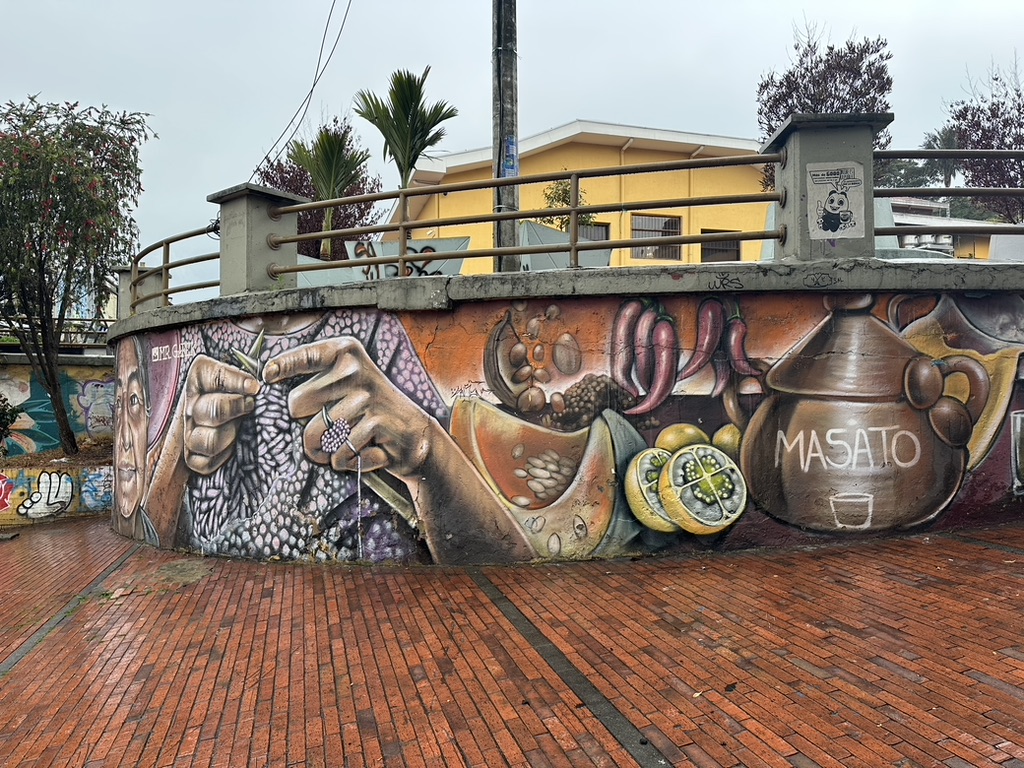
Symbolic mural of La Candelaria
The market offers insight into how Bogotá is evolving, creating space for new ideas while remaining anchored in local identity.
Walking uphill from La Candelaria leads into Barrio Egipto, one of the city’s oldest neighborhoods and an area that offers a more intimate, community-centered perspective on Bogotá’s evolution.
Barrio Egipto is known for its powerful graffiti, which here functions not only as artistic expression but also as a means of earning a living. Local artists use murals and street art to tell stories, preserve memory, and generate income through commissioned work, guided walks, and community-supported projects. The walls become both canvas and currency—a way for residents to remain rooted while adapting to change. Take the tour with Breaking Borders and you will find it fascinating. There is something to be learned here and shared with the rest of the world. This part of the city feels personal, layered, and quietly resilient, and yet there is something in common with many other parts of the world around us.
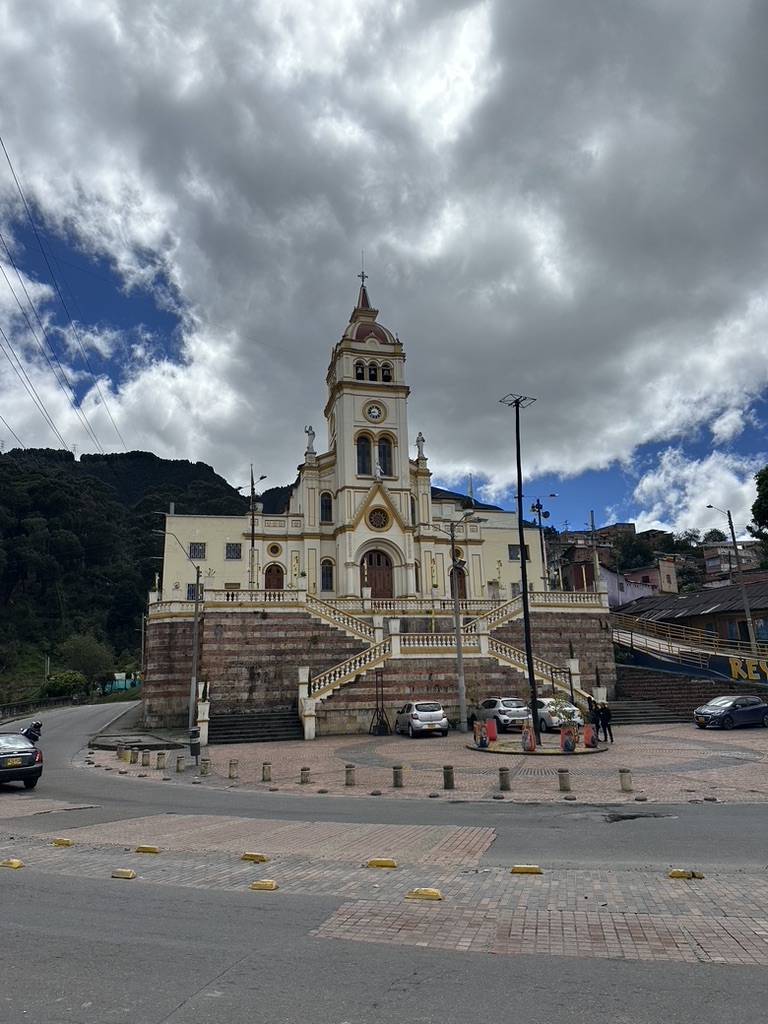
Historic Roman Catholic church at the entrance of Barrio Egipto
Bogotá through food: Mini-Mal and Casa Mama Luz
Bogotá’s culinary scene mirrors its cultural depth, blending Indigenous ingredients, regional traditions, and thoughtful interpretation.
Mini-Mal highlights native ingredients and regional sourcing through a contemporary lens, offering an experience that feels intentional rather than performative.
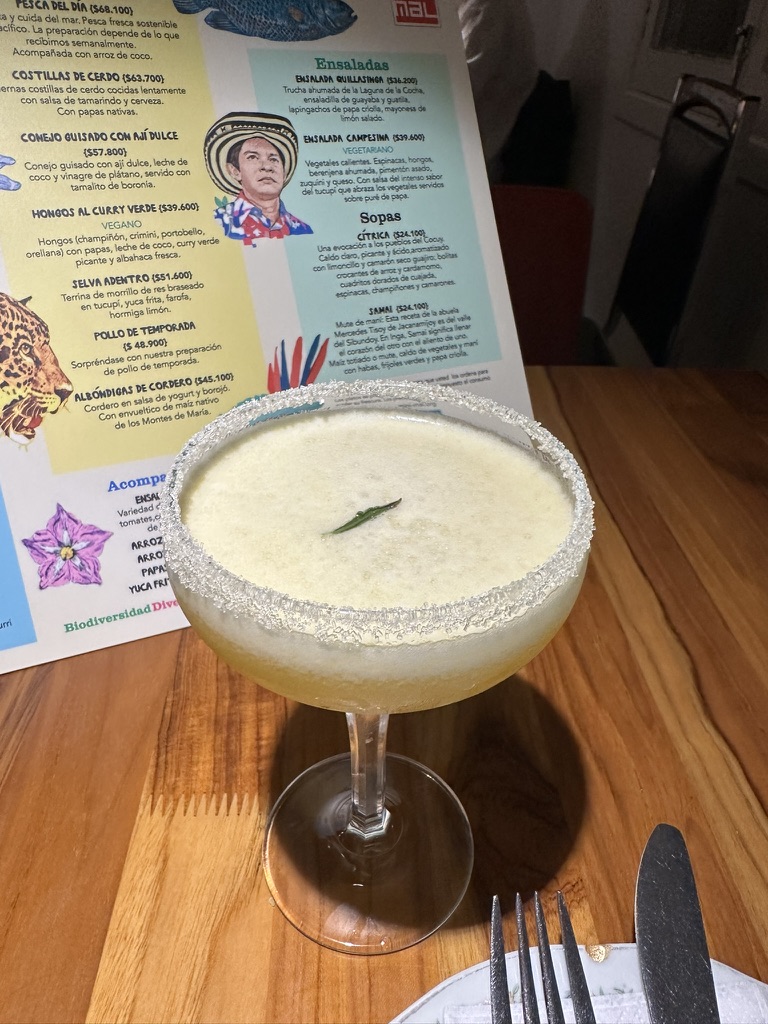
Farm-to-table fruit cocktail at Mini Mal
For something more intimate and home-centered, Casa Mama Luz offers a warm, personal approach to Colombian cooking—food as hospitality, tradition, and cultural memory. Eat the ajiaco soup and your belly will be full!
Together, these meals reinforce how deeply food is tied to place in Bogotá.
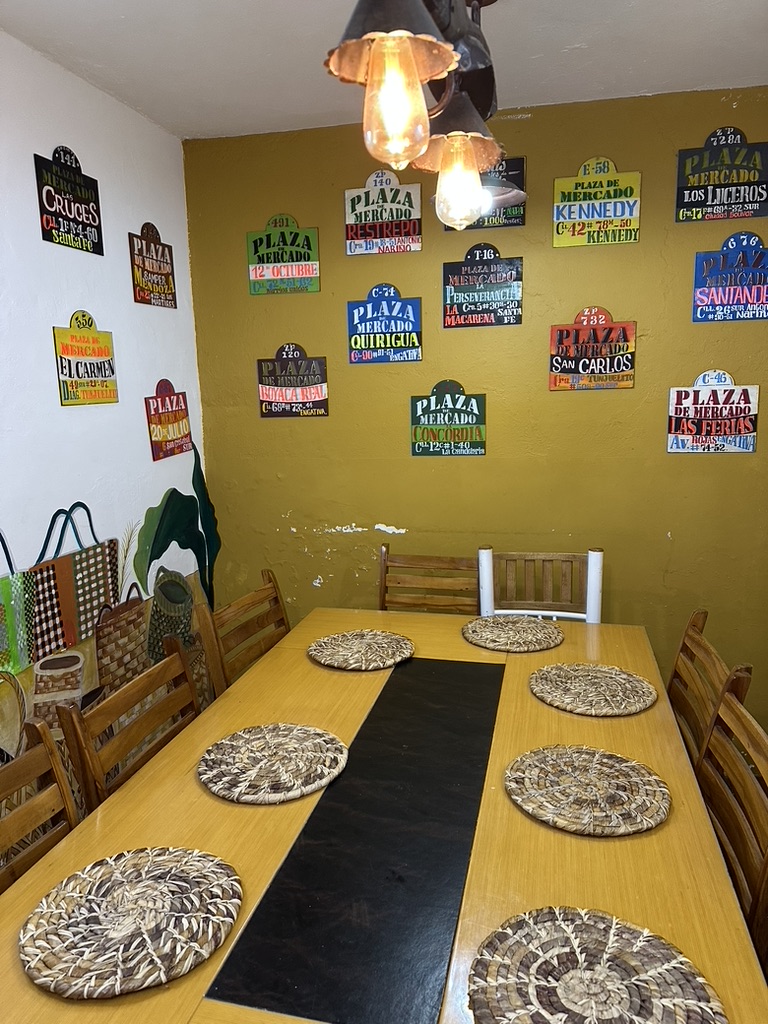
Shared dining room at Casa Mama Luz
Optional experience: Monserrate and the view from above
For travelers with the right timing and energy, an optional visit to Monserrate offers a different perspective on the city. Monserrate rises above Bogotá and is home to a historic church at its summit. Visitors can ascend by cable car or funicular train, often choosing one route up and the other down.
This experience is highly weather-dependent. Afternoon rain showers are common in Bogotá, and cloud cover can limit visibility. Energy levels also matter after full days of walking and exploring.
Personal note: During my visit, frequent afternoon rains and slower mornings meant I chose to skip Monserrate. It’s a beautiful option, but not essential—Bogotá offers depth and richness at street level.
Need to know
Bogotá rewards travelers who move with intention. The city is best experienced by allowing time for neighborhoods, markets, food, and museums to unfold naturally rather than rushing between stops.
Bogotá resonates most with travelers drawn to:
Cultural history and museums—there are so many more that I did not get to see!
Street art and creative expression
Local markets and food traditions
Walkable historic neighborhoods
Community-centered experiences
Where Bogotá fits in a Colombia journey
Bogotá provides the context that makes the rest of Colombia richer. Understanding its history, neighborhoods, art, and food culture adds depth to every destination that follows, whether traveling onward to mountain cities or the Caribbean coast.
This is where travel shifts from observation to understanding.
Bogotá travel is not one-size-fits-all. Some travelers want museums and markets, others want neighborhoods and food, and some want space to wander and absorb.
I design personalized itineraries that reflect how you want to experience the city, accounting for pacing, weather, energy, and interests. That thoughtful planning is the value of booking with EatMoveSeeTravels through Fora Travel—and how Bogotá becomes more than just a destination.
For more inspiration and insider recommendations, visit our Colombia page.

Travel Advisor
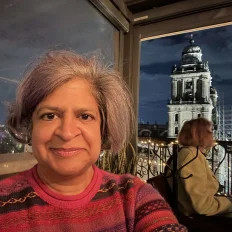
Swati Shah

Swati Shah
Get in touch with Swati Shah
Did you like this guide? Reach out to customize and book your own experience. Or, just to chat about travel in general.