



Curator’s statement
The Himalayas are a hiker's paradise. I love scenic multi-day hikes that don't require camping, and the Annapurna Circuit delivered in spades. Breathtaking views abound, and getting to experience the local culture at each stop adds a whole other level to the adventure.
The Fora Difference
Book with Regan Kirk to access exclusive perks and experiences on your trip.

Killer perks
Free upgrades, spa credits and more—we got you

Personalized recs
Customized travel planning for your style

Insider knowledge
Expert advice from people who’ve actually been there
Where to stay in Nepal
Unlock perks by contacting Regan Kirk to book your trip.
To adventurers, Nepal is almost certainly best known as the home of Mount Everest. The Himalayas ring large portions of the country, presenting spectacular vistas by plane and on foot (We saw Everest on our departure flight. Amazing!) Before setting out on a Himalayan trek, hikers will fly into Kathmandu and spend a day or two preparing. If there's anything you forgot, you can get it (or a knockoff version) for a song at the many shops and stalls in the tourist area.
If you have time and aren't doing an Everest trek, splurge and take the helicopter to the base of Everest. We tried and landed at Lukla (the most dangerous airport in the world), with absolutely incredible views for the entire ride. Unfortunately, due to weather, we couldn't continue to Everest. It was still worth it!
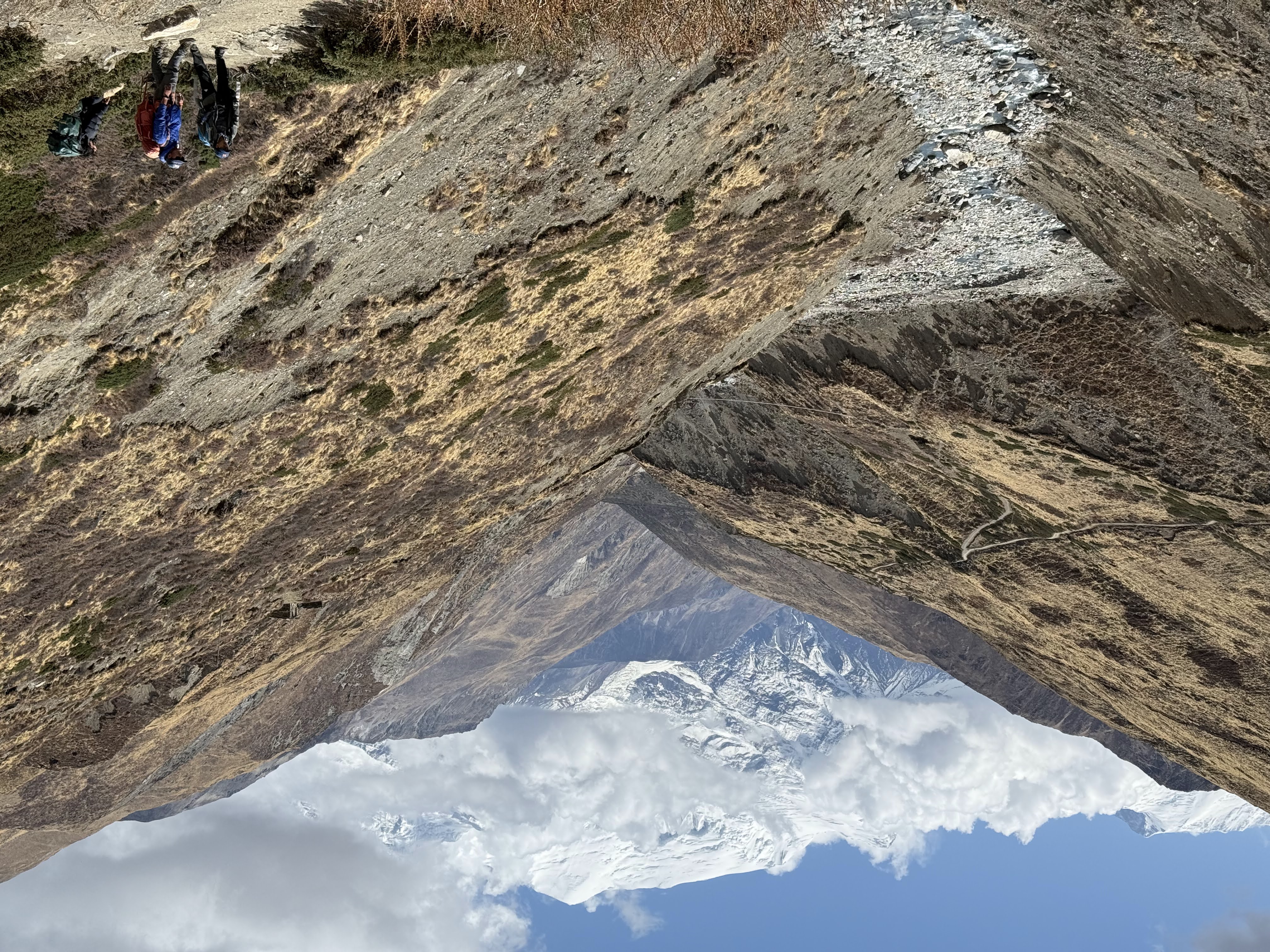
Our guide, Ngima, and porter, Serku. They worked so hard and took such good care of us.
There are many trekking options available in the region. The most famous is the Everest Base Camp trek. There's also the Three Passes Trek, which includes Everest Base Camp. We opted to do the Annapurna Circuit instead. This is known as having equally spectacular views while being less crowded, and it takes place in a separate section of the Himalayas (meaning you won't see Everest). Depending on where you start and finish, you can do the Annapurna Circuit in 10 to 15 days. We booked the trip with a local tour company that did a great job of managing logistics on the ground.
We took a car to Dharapani and started the trek there, skipping a couple of earlier towns in the interest of time. The drive was rough getting out of Kathmandu, so brace yourself for traffic, but once we escaped the thick of it we had great views the rest of the drive, from mountain scenery to local towns to terraced fields.
The trek started in earnest the next day. Over the next 10 days, with our guide and a porter (don't skimp on this—both are necessary for a good experience), we hiked from town to town, staying at local tea houses along the way. Each day began with breakfast (an interesting variety with some Western options and a lot of local Nepalese dishes—try the Tibetan bread) and a hot beverage. The treks typically lasted somewhere between four to six hours per day, often with a great deal of elevation gain. This isn't a trek you want to rush; altitude sickness is a real concern, so time should be built into your itinerary to help acclimate. We spent an extra day at Ngawal and Manang for acclimation and still felt some effects. (Speak to your doctor about medication for this—Diamox was very helpful for us.) We passed through several tiny villages each day and would stop at one for lunch. Again, the options are interestingly varied, although almost every tea house offers essentially the same menu. The most popular option is the daal bhat, which is an all-you-can-eat platter of curry and other things. Many of the guides and porters will eat that for every meal.
Along the way, we saw many prayer wheels, monasteries, and prayer flags. We had a couple of opportunities to visit monasteries, which is not an experience to miss. Most of the tea houses are run by the indigenous people, the Gurungs.
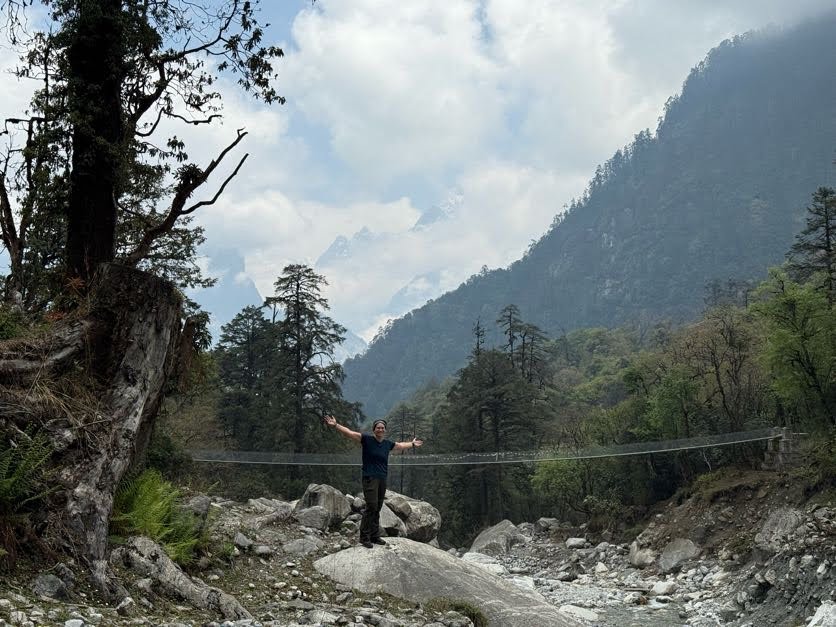
There were many great suspension bridges.
The weather was often cloudy, but each day we still had wonderful views of the soaring peaks around us. The most prominent mountains we saw were Manaslu, the Chulu range, and Annapurna 2 through 4. The hikes were always challenging, with two sections being especially demanding: the 600-meter climb from Chame to Upper Pisang and the grueling, but so rewarding, crossing of the 5416-meter high Thorong-La Pass, which is the climax of the trek. We started that final day with awful weather (relentless snow making it very hard to see, especially since we set out at 4 am on that last day in order to get to the pass at a good time), but the longer we trekked, the more the clouds dissipated. It was one foot in front of the other, with occasional pauses to take pictures or allow someone to pass on horseback (there are locals who will wait around with horses to offer weary hikers a ride—for a hefty fee, of course), so I was shocked when the porter said, "There's the pass!" I will say that reaching that milestone was one of my top three most rewarding physical experiences of my life. (Not to brag, but my guide, Ngima, told me the seven hours it took us to get from Thorong Low Camp to Muktinath was a record for him.)
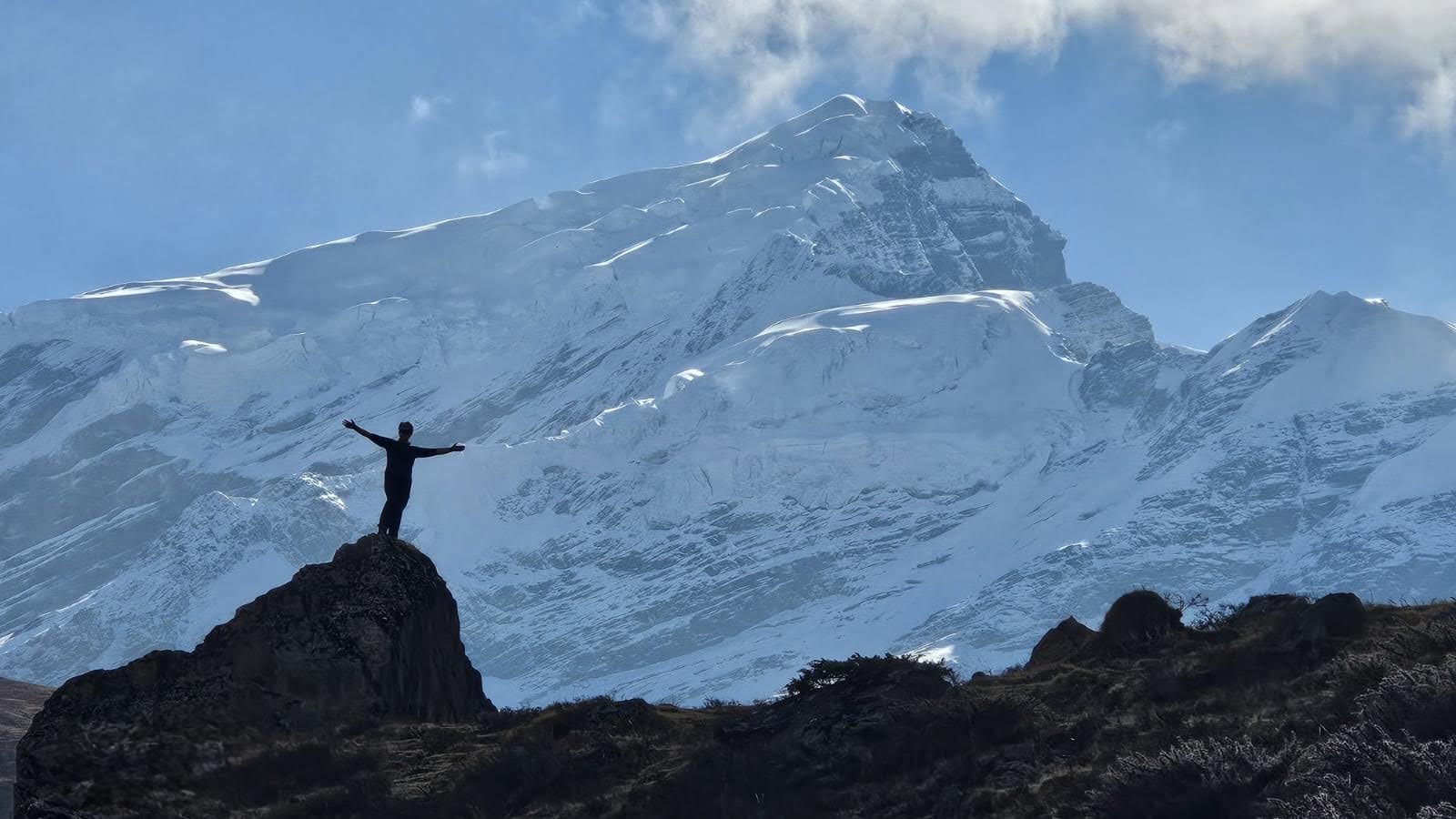
Here's me with one of the Chulu mountains behind me. Ngima watched in surprise as I scrambled off the trail and up that rock, but I sure think it was worth it.
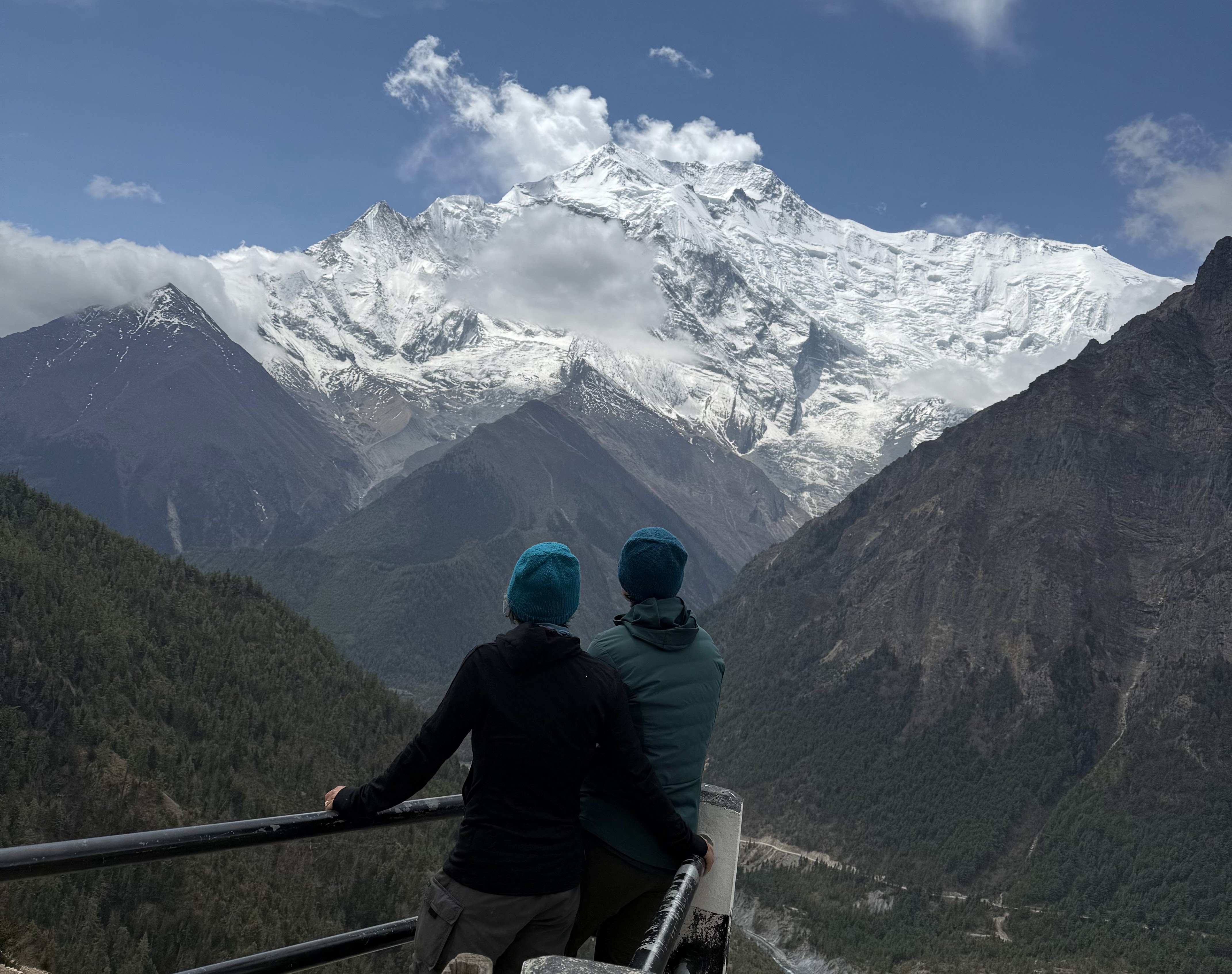
Admiring the view after a grueling section of trail on the way to Upper Pisang.
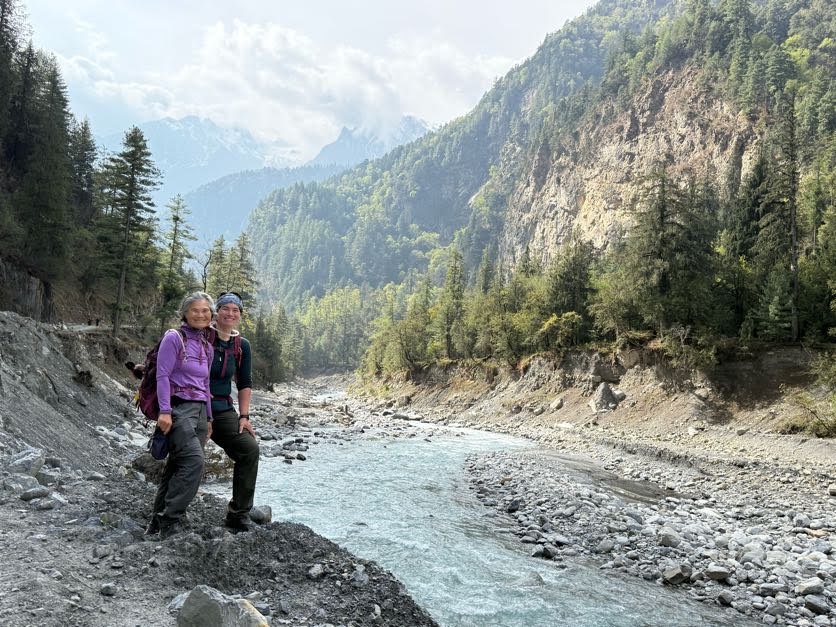
Manaslu behind us.
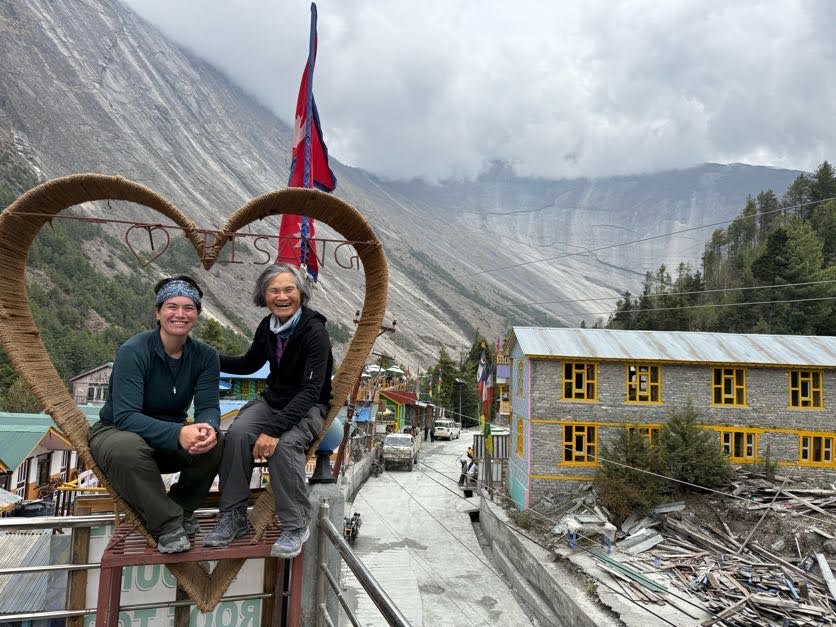
We loved Pisang! The cool mountain you see behind us is colloquially known as "Heaven's Gate."
By the end of the trek, I'd already decided I must go back and do the Three Passes Trek—three times as challenging, since you cross three passes instead of one! I loved my guide and hope to do that trek with him in the near future.
Need to know
The more time you can set aside for the trek, the better. There are a lot of side hikes you can add. The one we missed out on that I'd like to go back and do is the Ice Lake from Manang, which adds a couple of days.
Manang is the last town that has a road; after that, everything becomes far more expensive. Manang also has a fabulous bakery at the Tilicho Hotel—a real treat after days of the same food. Stock up on some pastries to take you through the next couple of days.
Manang is home to a hotel run by Mountain Lodges of Nepal. This is the closest to a real hotel you'll encounter on the trek and absolutely worth the splurge (which is still less than you'd pay for a Motel 6 back home) for the comfort that it offers. It's relatively new and unknown.
The tea houses all have power outlets, although some are only in common areas. The vast majority offer Wi-Fi. If you get an eSim, it won't work for a lot of the trek.
Westerners: Be aware that most of Nepal uses squat toilets. When choosing tea houses, many offer a couple of rooms with attached bathrooms with Western toilets, while the majority of rooms don't have an attached bathroom and instead you must use a shared squat toilet bathroom. This is where having a great guide who has connections with the tea houses comes in very handy.
Bring a headlamp—you'll need it. There will be ample opportunities to refill your water at each town as you pass through, so don't over-fill; you want to be carrying as little weight as possible.
Layers are important, as the temperature can vary widely over the course of the day. Merino base layers are incredibly useful, especially because they don't retain odors, so you can wear them every day of the trek and not be completely disgusting.
For more inspiration and insider recommendations, visit our Nepal page.


Travel Advisor
Regan Kirk

Regan Kirk

Get in touch with Regan Kirk
Did you like this guide? Reach out to customize and book your own experience. Or, just to chat about travel in general.