


Curator’s statement
Amsterdam is easy to underestimate. The canals and gabled houses are so familiar that it is tempting to treat the city as a postcard and keep moving. Spend a few days crossing it by boat, by bicycle, and on foot, and a different city surfaces: centuries old on the surface and unmistakably sharp underneath It is one of the most quietly creative places in Europe, and it rewards travelers who slow down enough to notice.
The Fora Difference
Book with Scott Schorn to access exclusive perks and experiences on your trip.

Killer perks
Free upgrades, spa credits and more—we got you

Personalized recs
Customized travel planning for your style

Insider knowledge
Expert advice from people who’ve actually been there
Where to stay
Unlock perks by contacting Scott Schorn to book your trip.
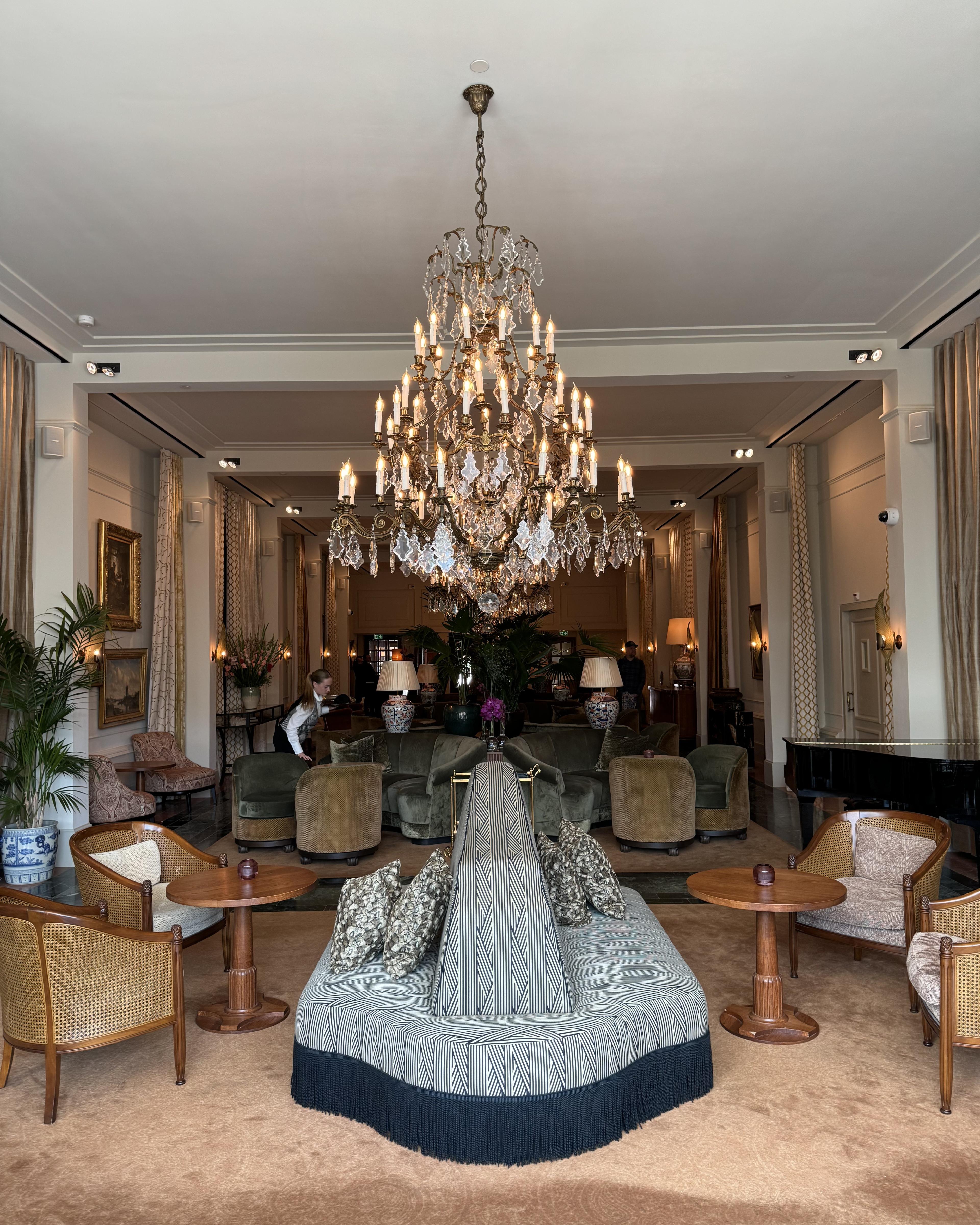
We stayed at Hotel De L'Europe, which sits in a landmark position on the Amstel, and it turned out to be the ideal expression of the city itself. The property runs as two distinct identities under one roof. The historic wing delivers old-world Amsterdam elegance, the version most people picture when they imagine a grand hotel on the water.
Then there is 't Huys, a design-forward wing where local creatives, fashion labels, design houses, and cultural institutions each curate an individual suite, with bespoke experiences attached. Staying there means choosing which Amsterdam you want to wake up in, and few hotels anywhere hold heritage and modern imagination together this convincingly.
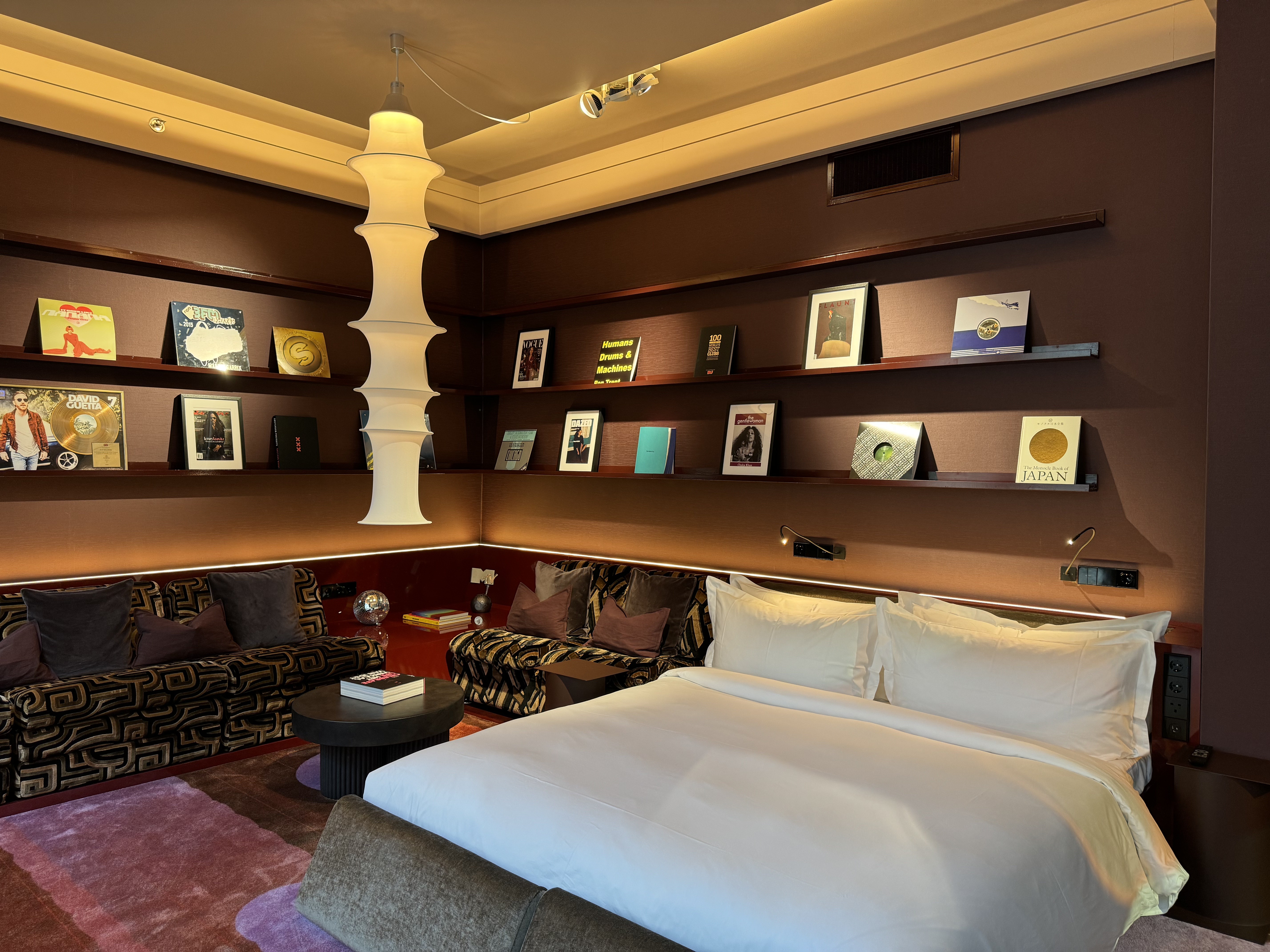
Inside a 't Huys suite, where local creatives curate the room down to the objects on the shelves.
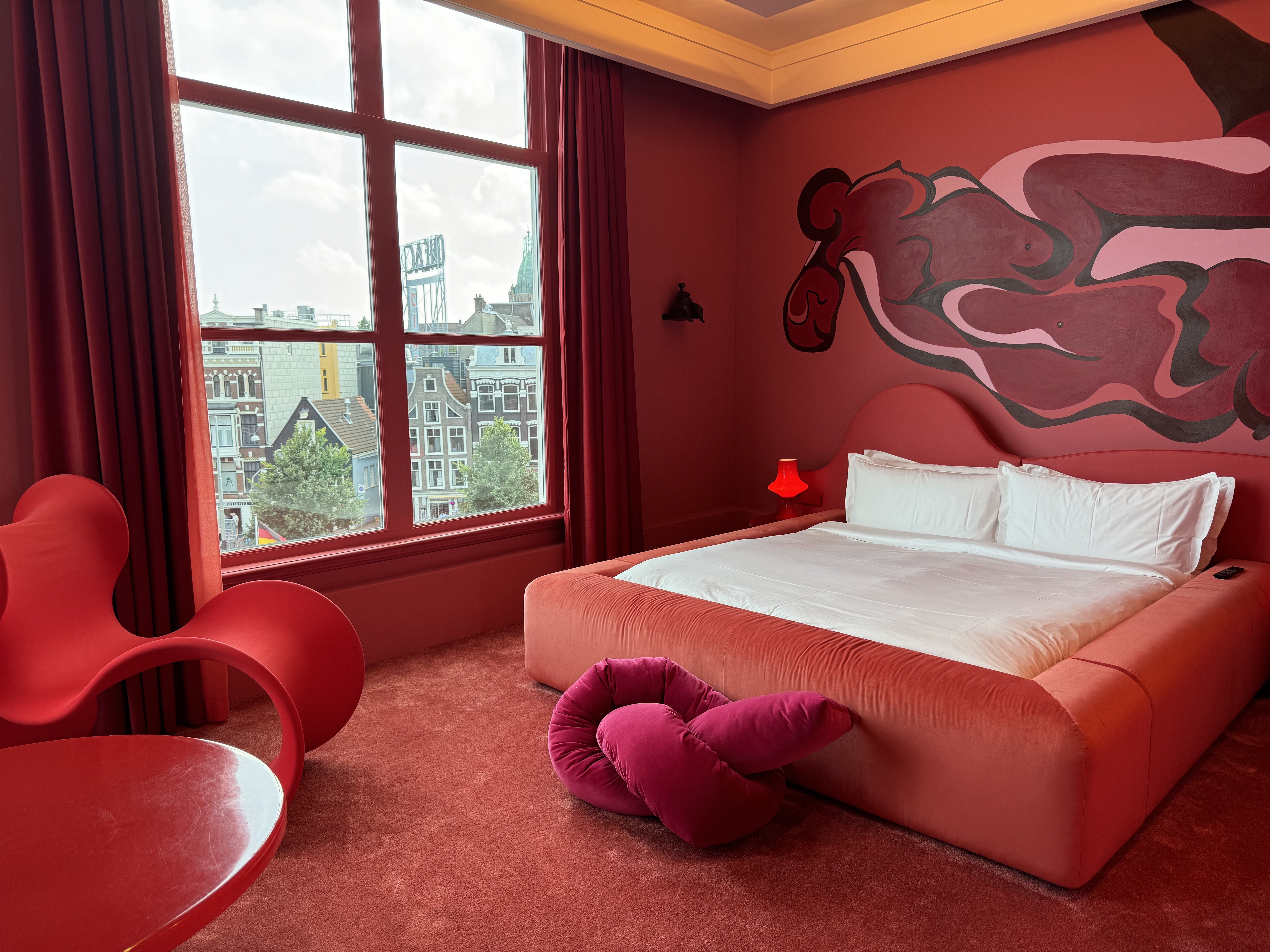
Another 't Huys suite entirely, and a good measure of how far the wing's design range runs.
The city is best understood from the water, and a private canal cruise at golden hour, drinks aboard, reorders your whole sense of the place. Streets you walked that morning arrive from a different angle, the light softens against the brick, and the scale of the canal houses finally makes sense. We also moved by bicycle and on foot, which is the right instinct here. Amsterdam gives up something different in each mode, and picking only one leaves most of it unseen.
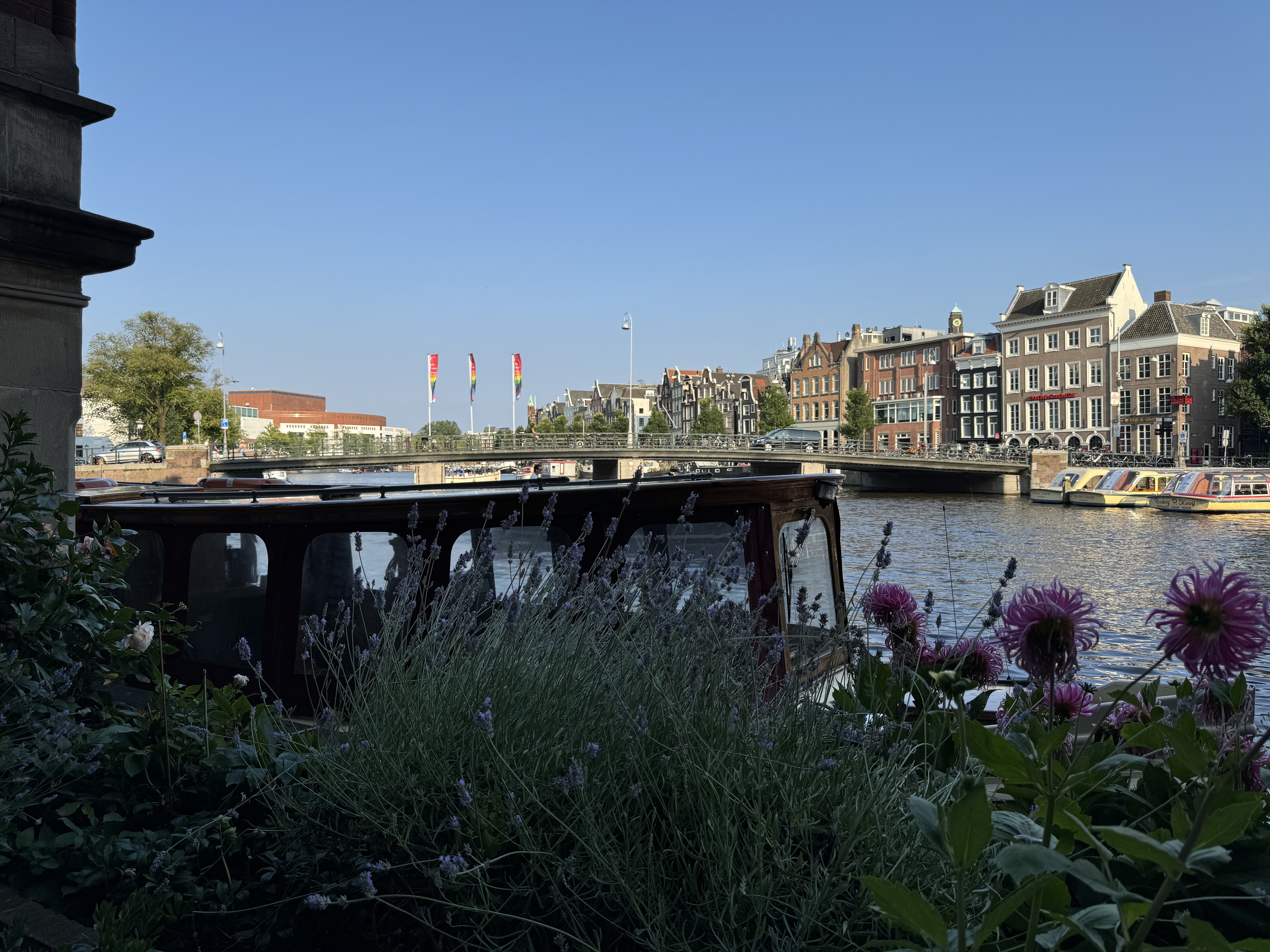
Late summer along the Amstel, where the water organizes everything around it.
A private guided walk early in the trip paid dividends for everything after it. Moving through the neighborhoods and historical sites with someone who could explain what we were looking at meant the rest of the days had context rather than just scenery. After dark, the city stays quietly alive in a way that is easy to miss, particularly in its small jazz venues, where the rooms are intimate and the playing is serious.
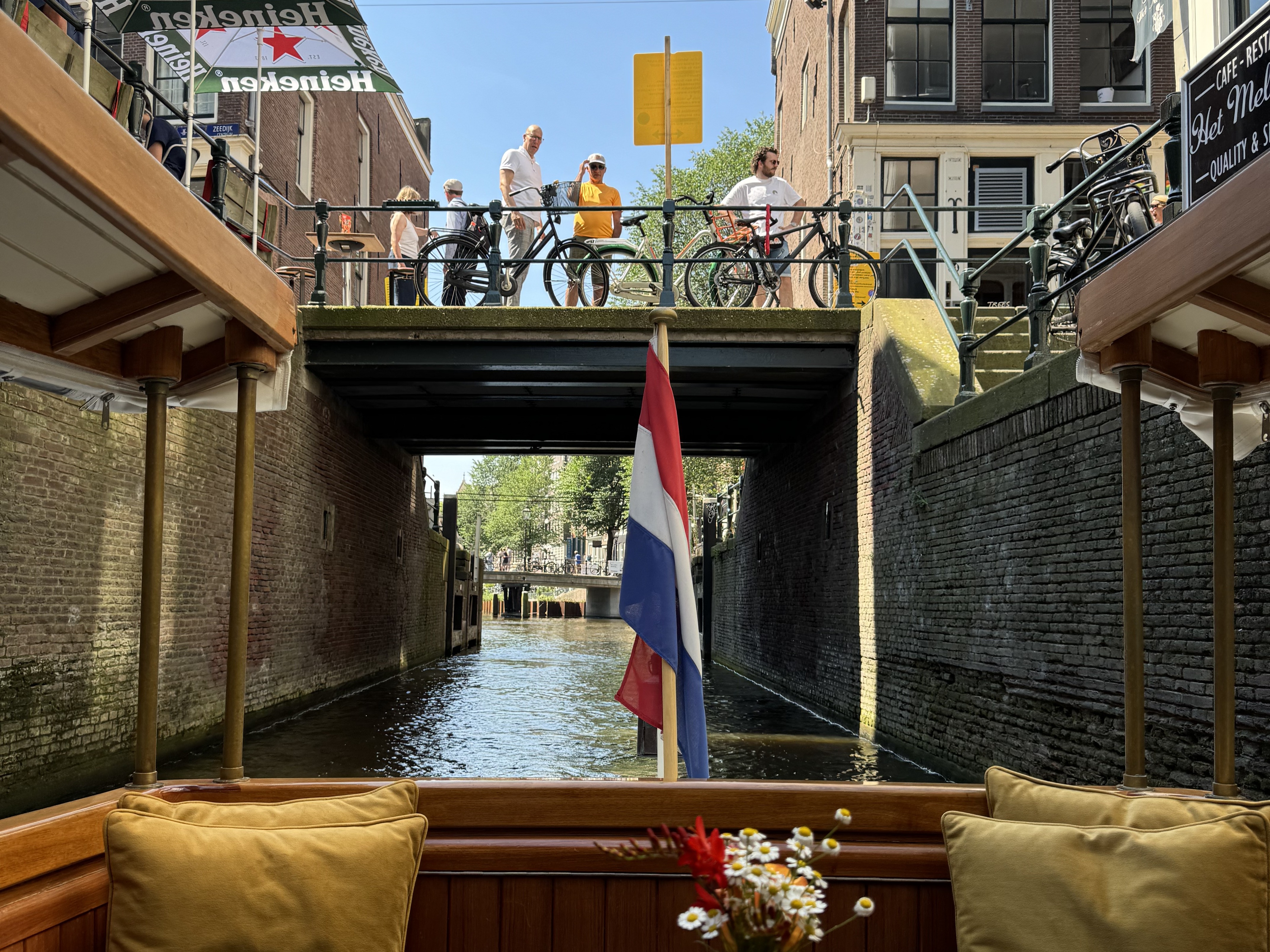
Passing beneath a bridge on a private canal cruise, the best way to understand how the city fits together.
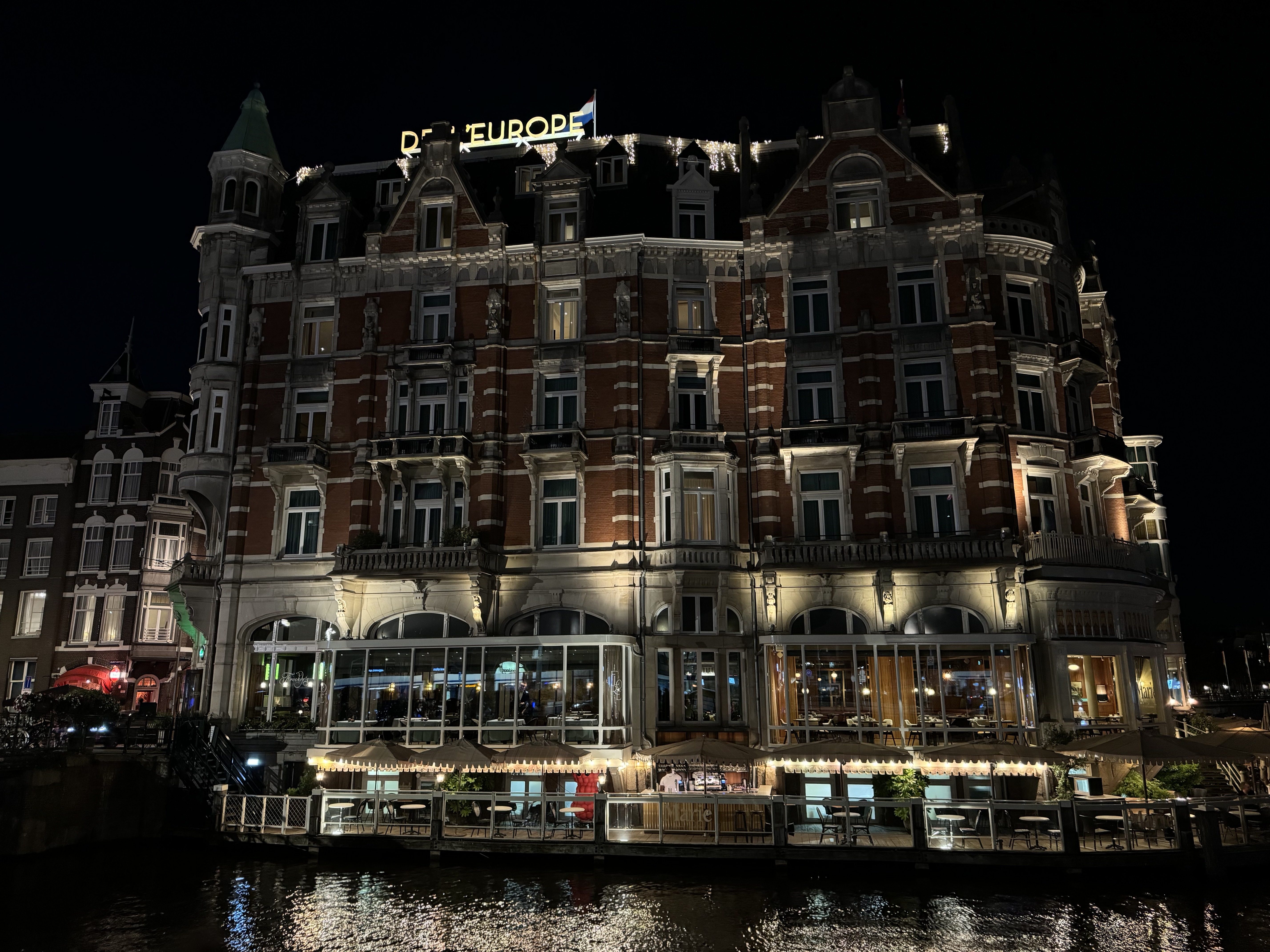
Hotel De L'Europe after dark, holding its landmark position on the Amstel.
The eating was outstanding and unusually varied for a compact city. Restaurant Flore, the Michelin-starred dining room within the hotel, is creative and intimate, grounded in seasonal ingredients and confident enough not to overwork them. Graphite is the opposite in mood, a speakeasy-style room behind a nondescript door, where a tasting menu arrives with dramatic lighting and precise, unhurried service. And Freddy's Bar, the hotel's cocktail lounge, anchors the social life of the property with rich woods and live piano, the kind of room that feels timeless without trying to.
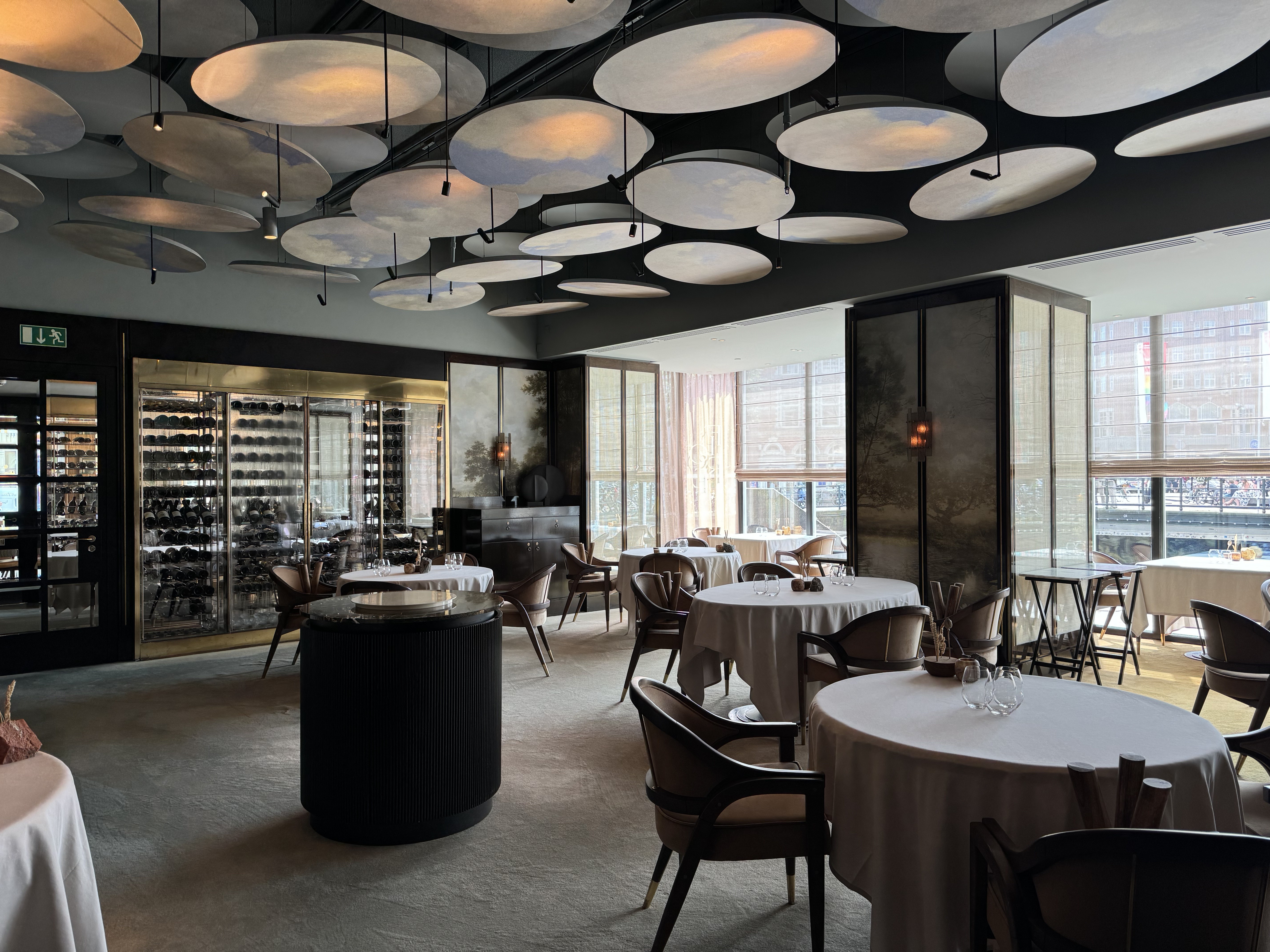
The dining room at Restaurant Flore, the hotel's Michelin-starred kitchen.
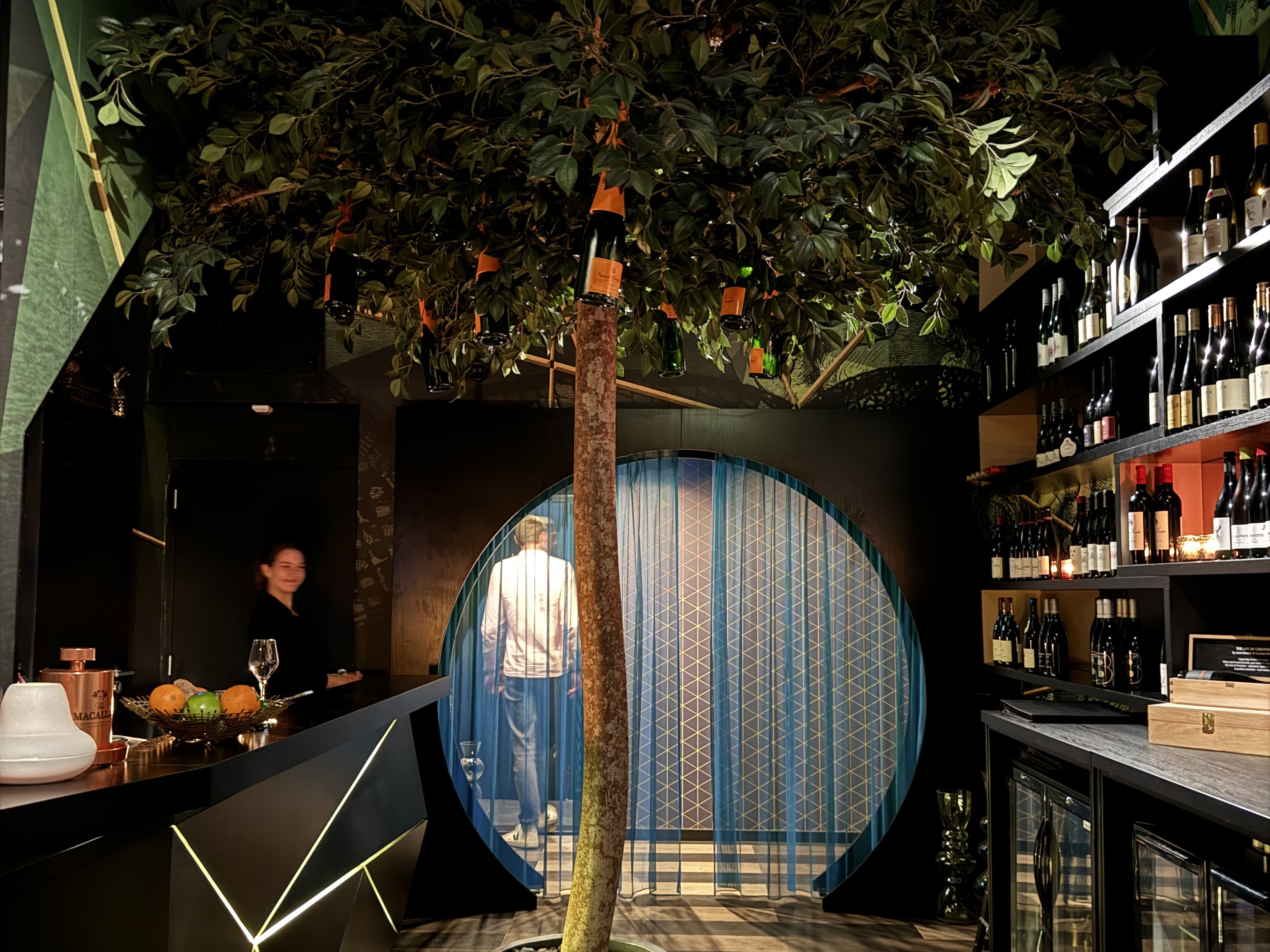
Behind a nondescript door at Graphite: a tree, a lit portal, and a tasting menu worth planning around.
What stayed with me is that Amsterdam's creative pulse is steady rather than loud. The historic and the contemporary are genuinely in conversation here, not in conflict, and the city has never felt the need to choose between them. It is a natural pairing with Paris or London on a multi-city trip, and it holds its own against both.
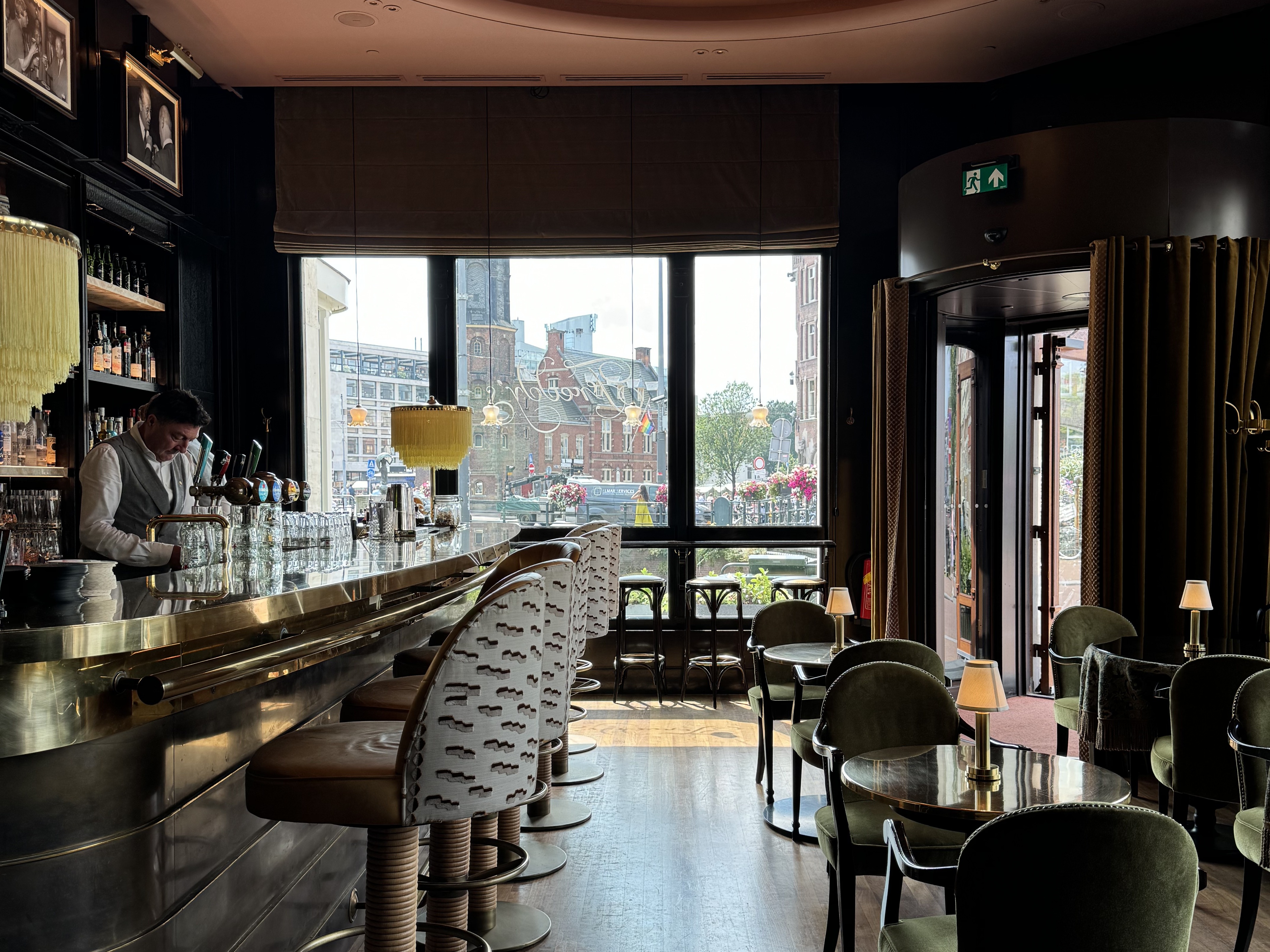
Freddy's Bar, brass and low light, with the city through the windows.
Need to know
Ask specifically about the 't Huys suites when booking Hotel De L'Europe. Each is curated by a different local creative, and they are quite different in character from the historic wing.
Booking through an advisor can add preferred partner benefits such as breakfast, an upgrade when available, and a property credit.
Book the private canal cruise in advance and aim for golden hour. It is the single best way to understand the city's layout.
Restaurant Flore and Graphite both need reservations well ahead. Graphite, in particular, is small and easy to miss even when you are standing in front of it.
Leave an evening open for the jazz. The venues are small, the playing is serious, and it is the side of Amsterdam most visitors never see.
Move through the city several ways. Water, bicycle, and on foot each show you something the others do not.
Put a private guided walk early in the trip rather than late. Everything after it lands better with the context.
Amsterdam pairs naturally with Paris or London by train, and three or four days is enough to feel like you know it.
For more inspiration and insider recommendations, visit our Amsterdam page.


Travel Advisor
Scott Schorn

Scott Schorn

Get in touch with Scott Schorn
Did you like this guide? Reach out to customize and book your own experience. Or, just to chat about travel in general.