



Curator’s statement
The White Continent is on many people’s bucket lists. It sounds so out of reach, but Viking and other expedition cruise lines have made it more accessible for the adventurous traveler. Visiting Antarctica is truly like traveling to another planet, with its stark beauty and charming wildlife. South Georgia, which isn’t on all Antarctica itineraries, is aptly known as the Galapágos of the Southern Ocean with its hundreds of thousands of king penguins.
The Fora Difference
Book with Regan Kirk to access exclusive perks and experiences on your trip.

Killer perks
Free upgrades, spa credits and more—we got you

Personalized recs
Customized travel planning for your style

Insider knowledge
Expert advice from people who’ve actually been there
Where to stay
Unlock perks by contacting Regan Kirk to book your trip.
Sailing to Antarctica on the Viking Octantis in December 2024 was my second expedition trip (the first being to the Arctic with Quark in May of the same year—see my trip report). I traveled, as I often do, with my mother (and fellow travel advisor). We truly did not know what to expect, but the experience would end up blowing me away—so much so that we can’t wait to return sometime soon!
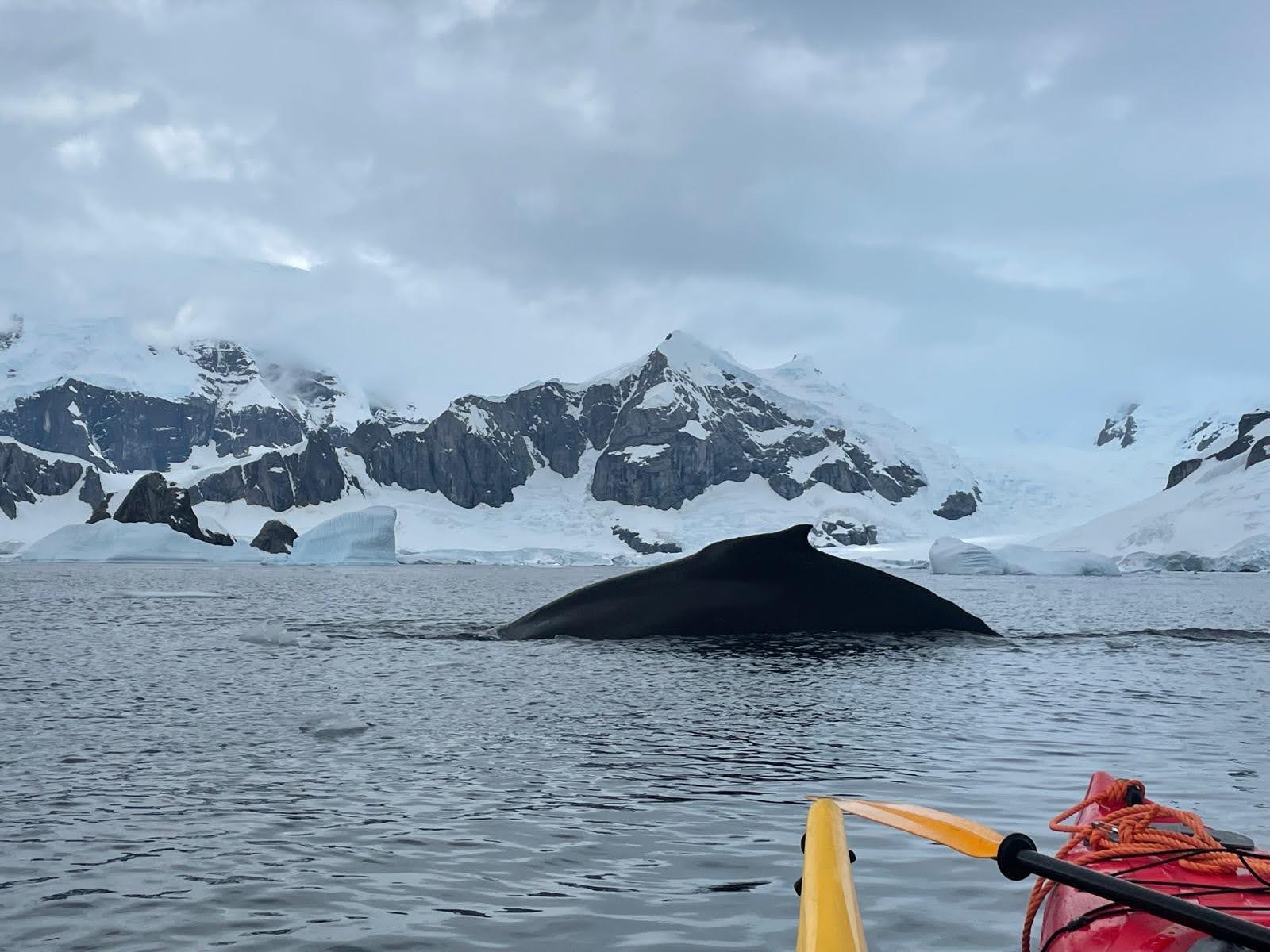
Kayaking with whales
We began our journey in Buenos Aires, where Viking met us at the airport and took us to a nearby hotel for the night. The next morning, after a light breakfast, they put us on shuttles and took us back to the airport, where we waited quite a while (small airlines in Argentina aren’t known for being prompt) before boarding a small plane to Ushuaia, the southern-most city in the world.
We had a bit of time in Ushuaia to take pictures in front of an iconic sign and do some souvenir shopping. Then it was all aboard the beautiful Octantis. It’s large for expedition ships, holding 378 people (as compared to many vessels’ 200-person limit), but it never felt crowded. Our stateroom felt new and cozy, although we felt some of the storage could have been better designed to accommodate the needs of two people.
Over the next couple of days, as we sailed towards the Falkland Islands, the expedition team worked hard to prepare us for the adventure that lay ahead. They fitted us with parkas, waterproof pants, and muck boots. They delivered multiple lectures in the Aula, the large auditorium, on a variety of topics such as safety requirements, conservation efforts, and different penguin species. They inspected all of the outerwear we’d brought, looking for loose tassels that could come off and contaminate the places we’d visit. (Some people had articles of clothing completely rejected as too tattered to bring ashore.)
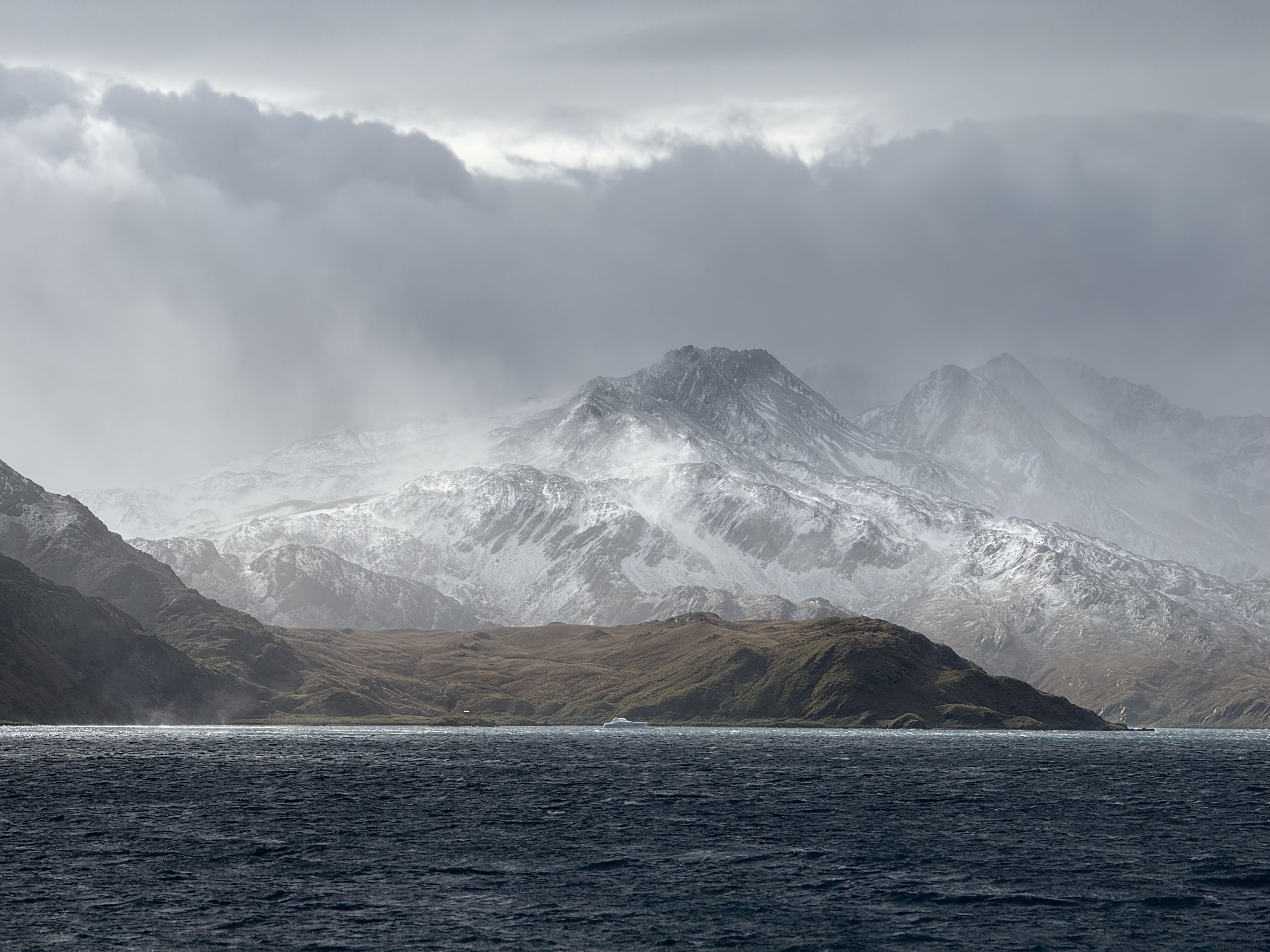
The scenery was astounding throughout the trip
Our first stop was at Port Stanley in the Falkland Islands—still a good ways from the White Continent. We had arranged a third-party tour with a local woman, which turned out to be an excellent call—we caught the first tender to shore and immediately set out on a long, arduous car ride that began on a road and ended with driving through a seemingly unmarked bog.
Our destination was well worthwhile, however, when we were the first car to arrive at the famous king penguin colony. We were absolutely delighted by the hundreds of beautiful, judgmental birds, some of whom were clumped in a large group and others of whom waddled around us as if assessing our lack of tuxedos. We spent hours there, alternating between taking pictures of, and with, the king penguins and venturing down to the beach, where magellanic and gentoo penguins were also present. The excursion organized by the cruise ship arrived well after we did and departed before us.
We were supposed to have another day in the Falkands to visit the albatross colony, but the weather forced us to move along. In some ways, this was a blessing in disguise: one fewer day in the Falklands meant an extra day at South Georgia.
South Georgia is home to hundreds of thousands of king penguins, as well as endless numbers of fur seals and elephant seals, and many other types of birds. It’s worth noting that king penguins are the second-largest breed of penguin and do not live on Antarctica, so if you miss South Georgia and/or the Falklands, you won’t see them at all.
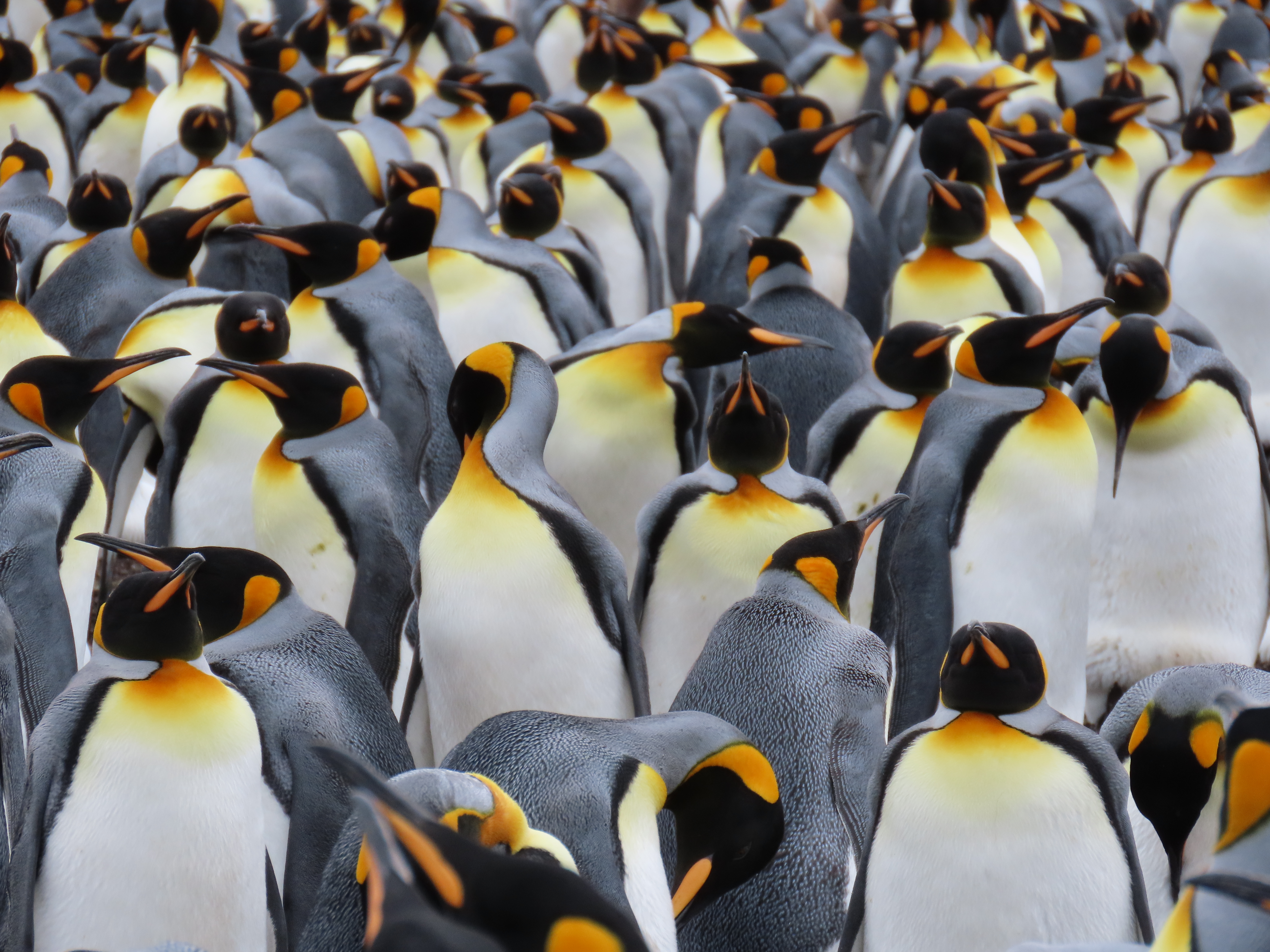
King penguins at Port Stanley, Falkland Islands
Emperor penguins are the most famous variety (thank you, March of the Penguins), but cannot be seen on the vast majority of Antarctica expeditions. They live predominantly on Snow Hill, which is extremely difficult to reach and requires a special itinerary to get to. The adelie, gentoo, and chinstrap penguins of Antarctica are plentiful, but they are much smaller than most people may imagine.
South Georgia was a delight. We had our first of many kayak outings there, thrilling in paddling past penguins and seals on the beach. (Note: you’re only guaranteed one kayak outing with Viking, but if you’re persistent, as we were, it’s possible to do many more.) We visited the great explorer Ernest Shackleton’s grave at Grytviken, and I bought a delightful wool hat at the tiny store in the museum. Keep in mind that you aren’t allowed to put anything on the ground on either South Georgia or Antarctica, which means you don’t want to over-pack!
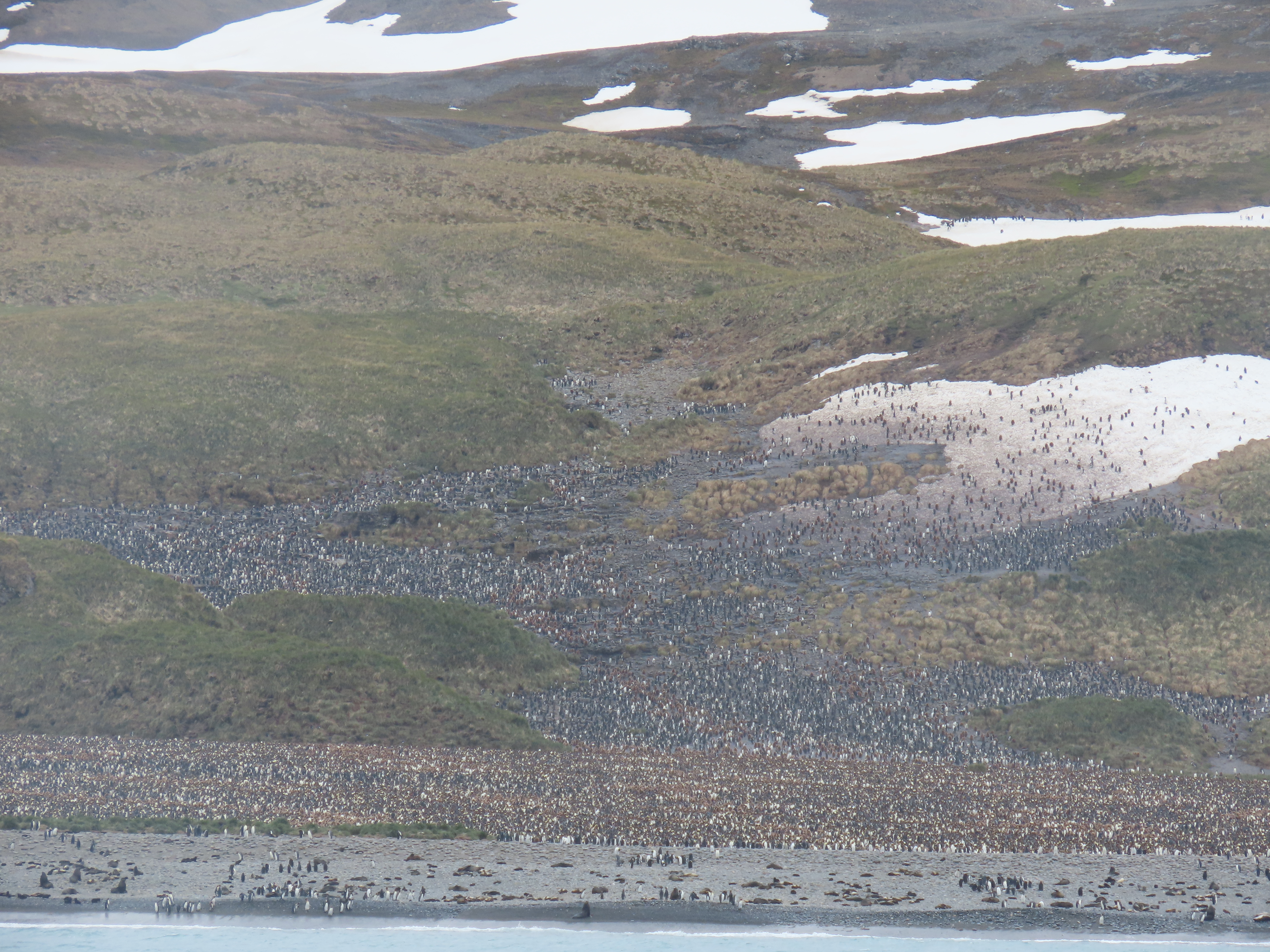
Tens of thousands of king penguins (at least) at Salisbury Plain, South Georgia
South Georgia is also where we saw the only Macaroni penguins of our trip, enjoying the sight of them porpoising alongside our zodiac. We also kayaked in a bay that had never been kayaked in before—the previous season, it was still part of a glacier. We sailed by, but could not stop at the incredible Salisbury Plain, where some 150,000 king penguins stood together in a truly awe-inspiring sea of life. The avian flu has tragically devastated penguin populations in South Georgia and Antarctica. Strict regulations about human behavior will hopefully help to curtail this in the future.
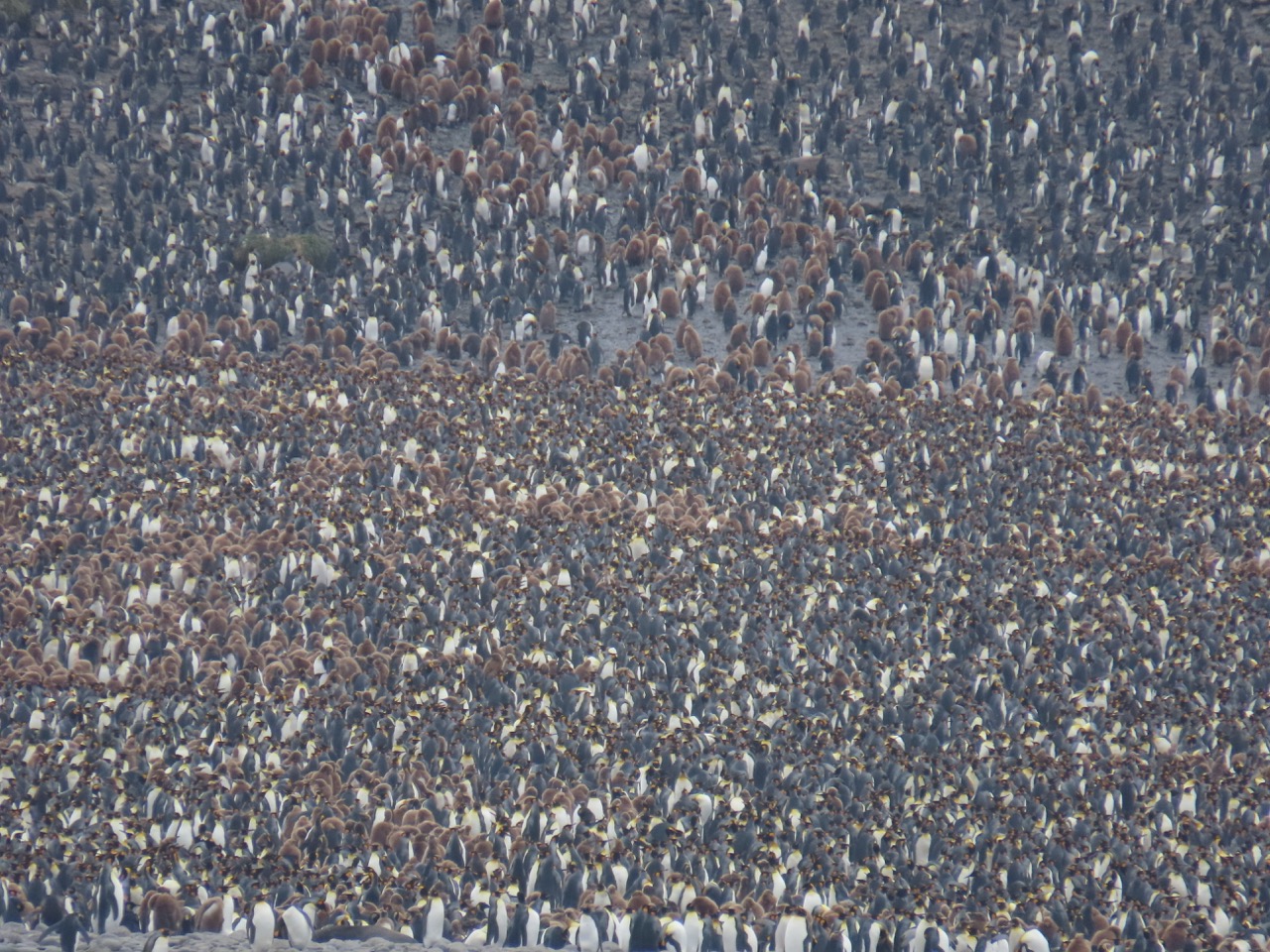
A closer view of the mass of king penguins at Salisbury Plain
After South Georgia, we continued on our way to Antarctica. It took about two days of sailing, during which time we celebrated Christmas on board and had the great privilege of passing the incredible A23a iceberg, which at the time was the largest iceberg in the world. It was larger than New York City, according to one of the expedition’s team members.
Finally, we arrived at Antarctica and spent four days reveling in beautiful weather and wonderful sights. We were able to set foot on the continent multiple times, in addition to landing on sea ice (what Quark in the Arctic would have called “fast ice”). We had many encounters with hilarious penguins drifting by on icebergs or leaping in and out of the water seemingly at random. We saw dozens, if not hundreds, of humpback and fin whales, including one humpback that breached far in the distance (the only time I’ve ever seen that). A major highlight was drifting through the Girlache Straight under the midnight sun with whales spouting all around as we met up with our sister ship, the Viking Polaris, nose-to-nose.
Eventually, it was time to say farewell and face the dreaded Drake Passage. Just as we began to head away, we got the alert that someone on the bow had spotted orcas! We set off in their direction and enjoyed a brief but rewarding period of watching the small pod frolic in the waves.
Since I get seasick very easily, I was deeply relieved when we had the great good fortune to enjoy the “Drake lake” (as opposed to the common and far less pleasant “Drake shake”). I had some bouts of motion sickness, but by and large the last two days at sea passed without much issue.
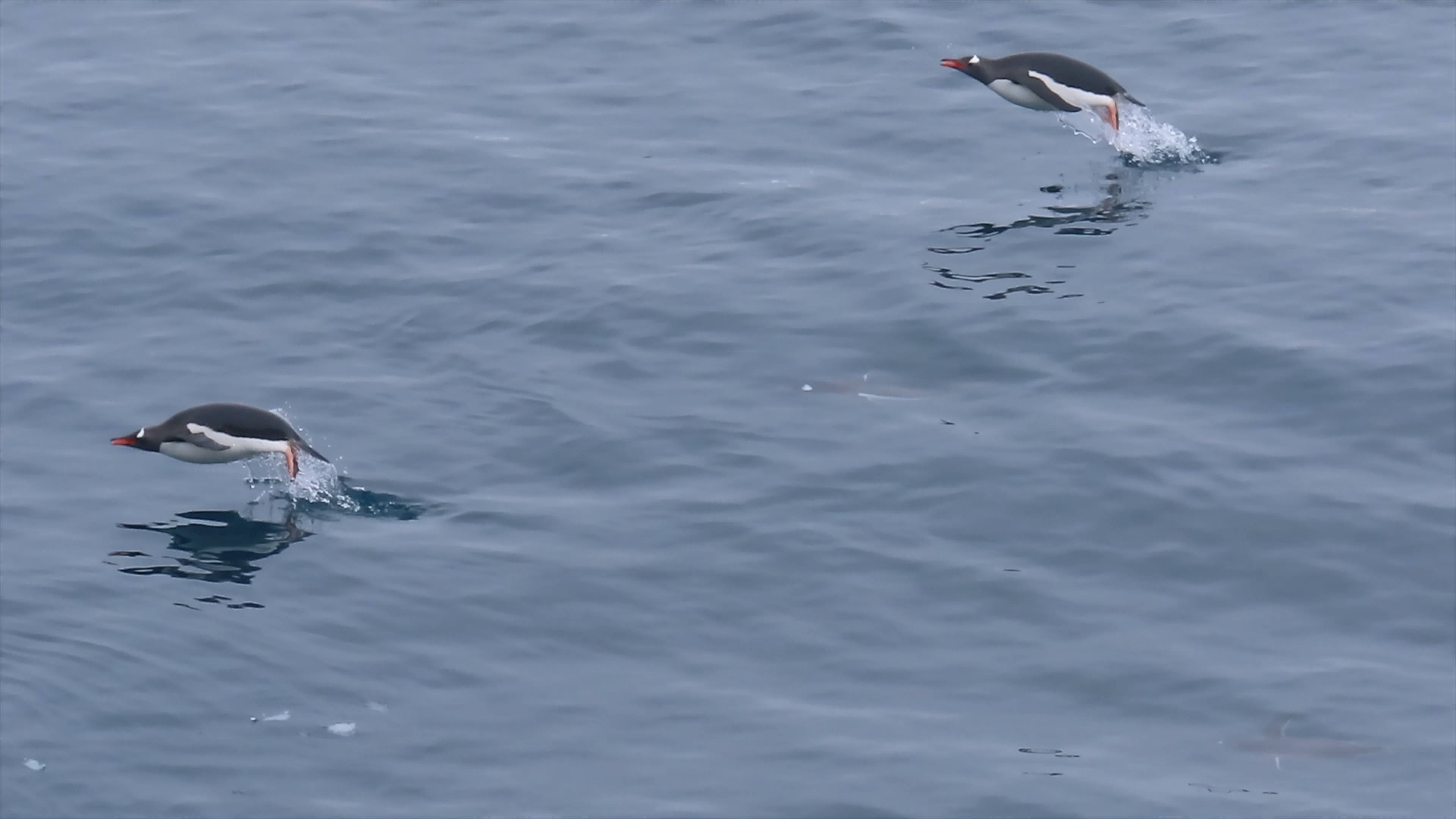
People kept telling us we'd get tired of penguins, but we never did—especially when they were porpoising!
Overall, the itinerary and wildlife were fantastic. So, what about the Viking Octantis specifically?
Key to any expedition cruise is the expedition team, which is responsible for keeping the passengers safe, educating them, and ensuring they have a rewarding experience. That’s a lot to ask, but the team overall did an excellent job with that, especially the whale expert, Judith. We weren’t as enamored with the expedition leader as we were when we went on Quark, feeling some of the communication was lacking, but we never doubted that they were making every effort to give us the best possible experience.
As I said, the Octantis is large for an expedition ship, which means less time ashore as only 100 people are allowed on land at a given time. However, the expedition team navigated this challenge gracefully, ensuring everyone got to enjoy the experiences on land. Viking offers a variety of means of enjoying oneself in these remote areas: zodiacs, which are small motorized rubber rafts typical for expedition cruising, Special Operations Boats (SOBs), which are not typical and extremely comfortable and well-designed, a submarine, and kayaks.
We went out many times on the zodiacs, sometimes for a mini-cruise past icebergs and scenery and other times to be delivered onto land to explore on foot. The SOBs were by reservation only, and if we’d known how good they were, we would have made an effort to make more reservations early on. As it was, we did get to hop onto them a couple of times by going on a waitlist. We loved kayaking the most—there’s something about being down at the level of the water, propelling yourself around, that’s simply magical in a place like that. I should warn that the process of getting in and out of the kayaks is not exactly graceful—in fact, you have to take a test in the ship first to see if you can slide from a zodiac into the kayak and back out. However, there were a lot of helping hands to make this process less difficult than it sounds.
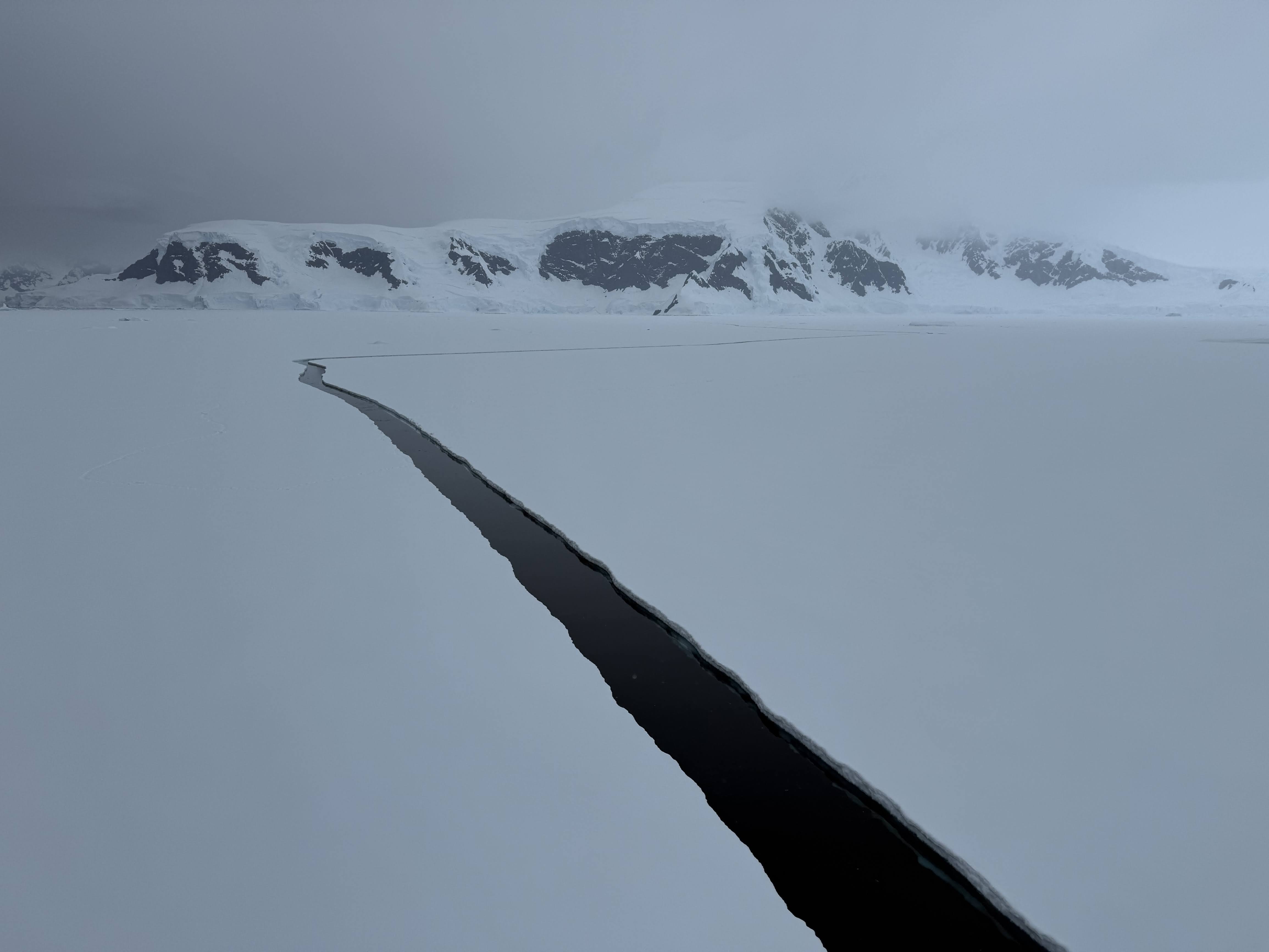
Sea ice after we rammed it with our ship and created this crack
Our favorite experience of the trip was on the last day, in Wilhelmina Bay. We started the day by ramming the sea ice with our ship, trying to dig deep enough so that we could disembark directly onto the ice. It was mesmerizing watching the ice part, exposing the dark water below. We couldn’t quite manage it, though, and ended up anchoring a little bit away from the ice and then sending people over by zodiac. I had the brilliant idea to set up my GoPro to take a time lapse from the ship, which worked out perfectly—just as our zodiac arrived at the ice, a massive humpback whale surfaced directly next to us and then swam along the edge of the ice for a while before vanishing.
Later that same day, we went for our last kayak excursion and I got to cross something off my bucket list: kayaking with whales! We found a small pod of humpbacks and got to paddle around with them for an hour as they drifted, fed, and occasionally showed us their tails. When we got back on the ship, we were lucky enough to get onto an SOB to go back out with the whales again, giving us an opportunity to take a hilarious selfie with a curious young humpback. That was one of the best days of my life.
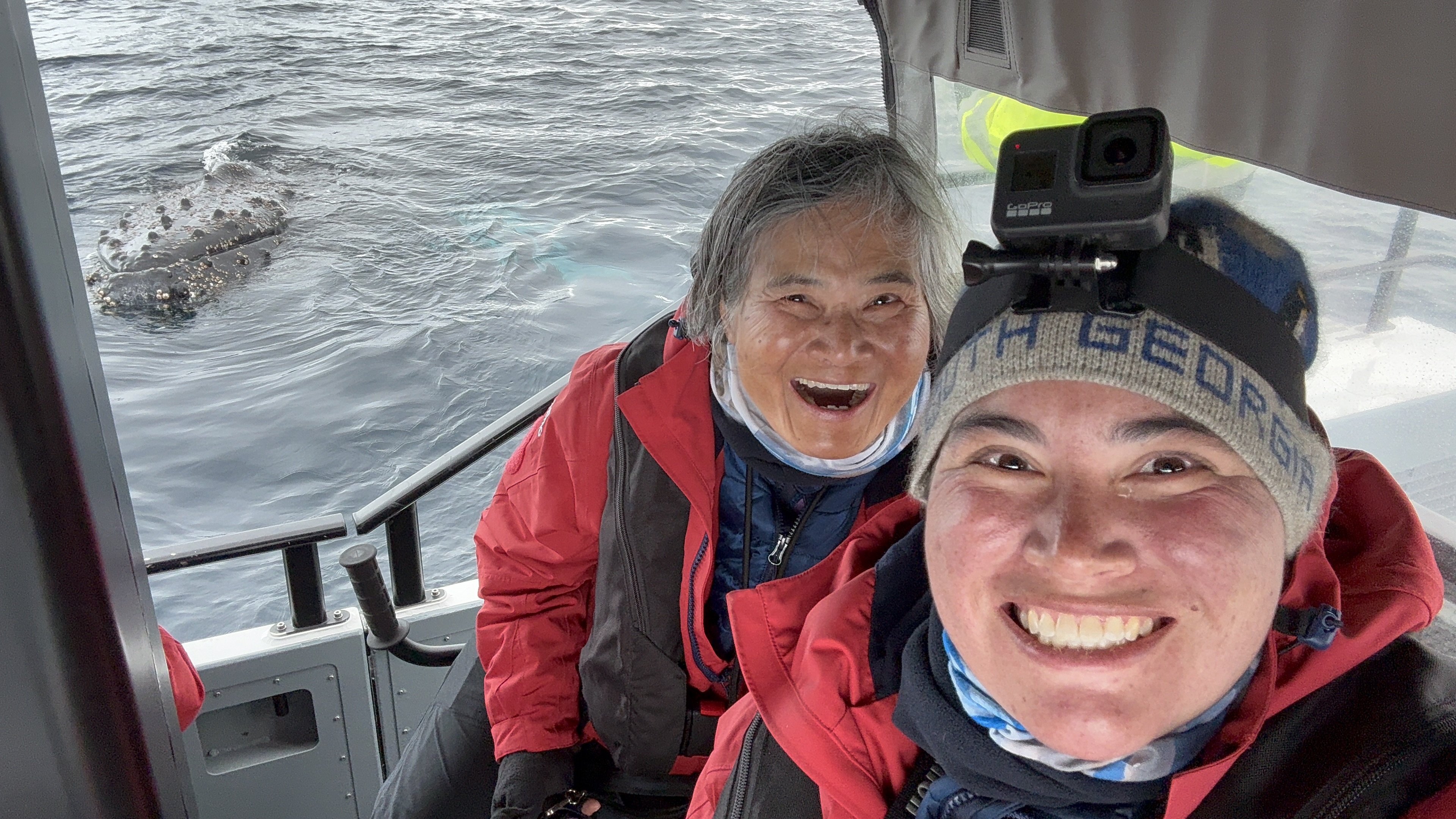
Selfie with a curious whale
Finally, let me leave a special remark about the food. I have sailed on many different cruise lines, but the food on the Viking Octantis was in a different stratosphere. For the duration of the trip, every meal was fresh, inventive, and far too delicious. The nightly lobster, sushi bar, and gelato bar were highlights, as was the giant chocolate clock tower they assembled to celebrate the new year.
We thought Antarctica would be a one-and-done for us, but we’re already looking forward to a return trip. We’re aiming for a February expedition, when there will be more penguin chicks (we saw a lot of eggs) and even more whales (though how that’s possible, I don’t know). We’d also like to make the trip to Snow Hill to see the emperors.
If you dream of visiting Antarctica, I share your passion! Let me help make that dream come true.
Need to know
Be aware that expedition cruising is a different breed than normal cruising. The itinerary you may have studied in advance is almost certainly going to change based on weather conditions, ice, other ships, wildlife reports, etc. Your expedition team will give you a nightly briefing about what to expect the next day—even so, plans may change overnight or even throughout the day. Just go with the flow and trust that you’re in good hands.
Many expeditions offer an optional excursion to visit Tierra del Fuego in Ushuaia upon your return before going to the airport—this was worthwhile for us, although not terribly memorable as there wasn’t a lot of time to explore the park.
Plan to be patient in the process of getting to Ushuaia. There are a lot of moving pieces and the airlines are unreliable.
Different expedition cruise lines have different rules in terms of what activities are included or even offered. I was disappointed that Viking did not offer a polar plunge, which I’d done in the Arctic with Quark. However, it was very nice that kayaking was not an added expense with Viking.
Viking will ask you to reserve your excursions (kayaking, SOBs) in advance. This is, at best, a loose show of interest in the activities you’d like to participate in—once the expedition begins, everything is going to change. I do recommend visiting guest services as soon as you board and asking to be booked on as many SOB and kayak outings as you can if that’s something that interests you.
We didn’t do the submarine, which costs $500 per person, and we heard mixed responses to it. Many felt it was extremely rewarding to be able to submerge like that in a place so few people will ever go. They saw some small life forms that might only exist in those waters. However, the water was also reportedly very murky and there wasn’t a lot to see.
For more inspiration and insider recommendations, visit our Antarctica page.


Travel Advisor
Regan Kirk

Regan Kirk

Get in touch with Regan Kirk
Did you like this guide? Reach out to customize and book your own experience. Or, just to chat about travel in general.