
Curator’s statement
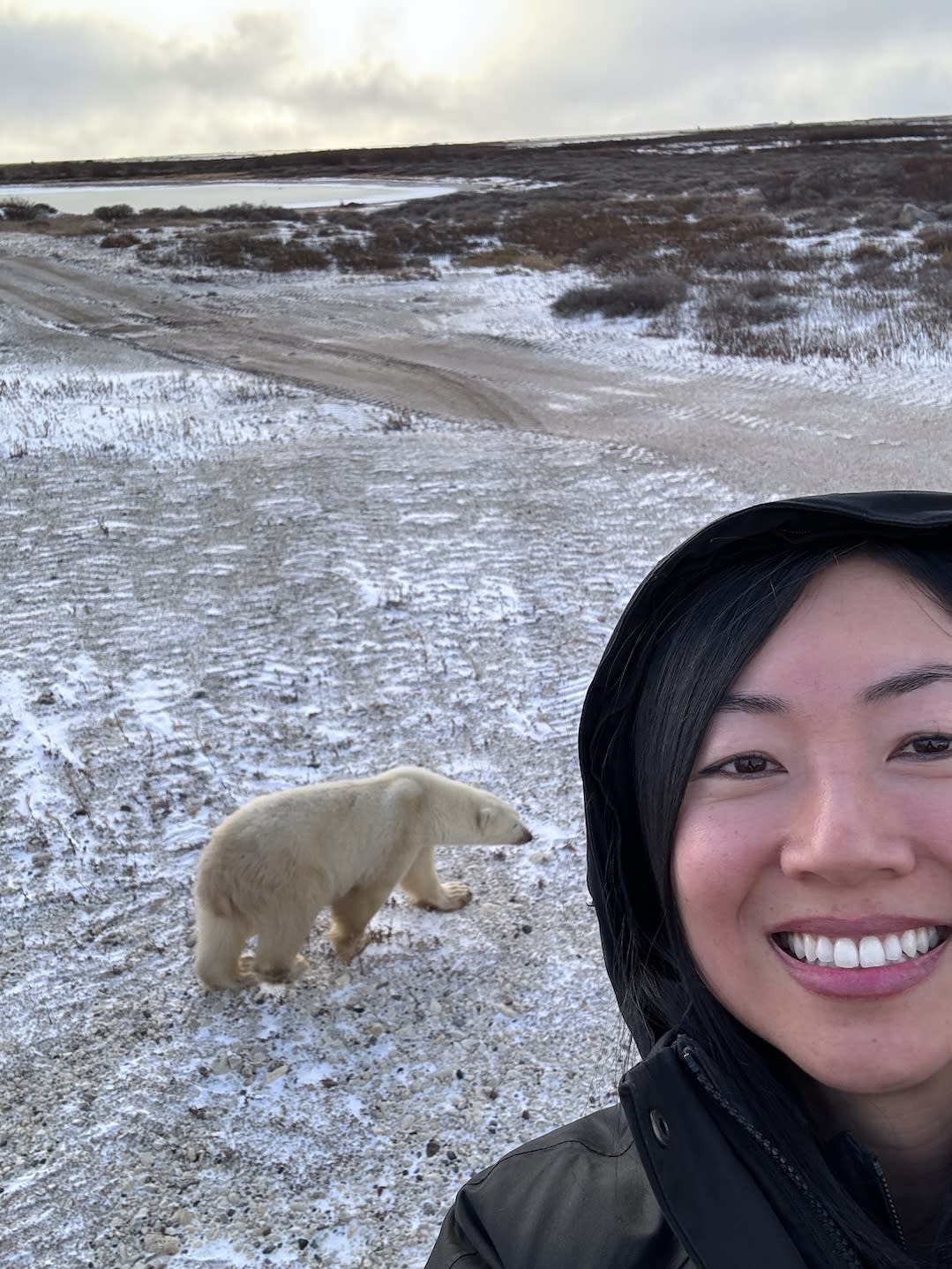
Churchill, Manitoba, known as the Polar Bear Capital of the World, sits at the edge of the Hudson Bay in northern Canada, and, for one narrow window each year, is the absolute best place to see polar bears in the wild and (and this is the key) up close. I traveled there in late October 2024 with Frontiers North Adventures, staying three nights out on the tundra in their Tundra Buggy Lodge, and it was one of the most singular wildlife experiences of my life. Over three nights out on the tundra (living, sleeping, driving around), I saw more than twenty polar bears, including a mama and her two adorable cubs, watched them spar and play and sleep and stare right at us in the buggy, and fell asleep knowing they were wandering just outside. As a bonus I hadn’t quite planned for, the Northern Lights made a spectacular appearance two of my three nights as well.
The Fora Difference
Book with Wenli Plans Travel to access exclusive perks and experiences on your trip.

Killer perks
Free upgrades, spa credits and more—we got you

Personalized recs
Customized travel planning for your style

Insider knowledge
Expert advice from people who’ve actually been there
Where to stay
Unlock perks by contacting Wenli Plans Travel to book your trip.
When to go:
The polar bear viewing season in Churchill runs roughly from mid-October through mid-November. Before that, during the summer, polar bears are spread out across the land; as temperatures drop in the fall they begin congregating on the shores of Hudson Bay just outside Churchill, waiting for the bay to freeze over so they can head out onto the ice and spend the winter hunting. After that, they’re gone from the land and live out the winter hunting and living on the sea ice. It’s a precarious window that isn’t a guarantee, especially with the way the climate is going these days, but you don’t want to be too late because then you’ll miss them entirely; that waiting-for-the-ice congregation is what you’re there to see. Book early: when I booked in mid-February, several of the prime late-October departure dates were already sold out for the overnight experience (more on that later), as those only run during this monthlong period. I went the last full week of October.

Polar bear walking across one of the many frozen-over bodies of water out in the tundra.

The sunrises and sunsets out on the tundra were stunning!
How to do it:
There are two main ways to experience Churchill’s polar bears. The simpler option is to stay in Churchill town (lower budget) or one of the nice upscale lodges run by Churchill Wild, and join day trips out onto the tundra by Tundra Buggy or other daytrip excursions out looking for polar bears (kind of like a polar bear safari experience), though it takes over an hour to drive out and back to the tundra each day from town, which cuts into your wildlife time. The more immersive option, and the one I went on and strongly recommend, is to stay overnight at one of the two Tundra Buggy Lodges located right out on the tundra. Only two operators offer this: Frontiers North Adventures and Natural Habitat Adventures. Both run set packages with small groups (maximum 20 per group). Frontiers North is the more affordable of the two, though "affordable" is relative: expect to spend at least $10,000 USD for six nights (one of which is spent in Winnipeg and two in Churchill town), a significant portion of which goes toward the charter flights between Winnipeg and Churchill, which are apparently the single most expensive line item in the package. It is a lot of money… but it’s worth it.

The unexpected bonus: stunning crisp and clear and colorful northern lights
The Tundra Buggy
Picture a very large, very wide vehicle, somewhere between a double-wide school bus and a tank, elevated several feet off the ground on enormous tires. Inside, it’s comfortable rather than luxurious: heated, with rows of schoolbus style seats and schoolbus style windows that slide down halfway to open (for people to take photos without class in the way). The buggy, and the buggy lodge, are elevated for safety reasons: because polar bears roam freely across the flat, mostly treeless tundra at all times and you are in the wild with no fences, being elevated is what keeps you separate from the bears (who can stand up to heights of between 6 to 10 feet). Your feet essentially don't touch the ground for the duration of your time out there. You board the buggy from an elevated platform, transfer between vehicles via open-air elevated platforms, and never simply step outside onto the tundra itself. It sounds strange in concept but felt pretty natural in practice, but this is not an active trip where you will be able to walk around a lot, because you literally can’t walk around on the ground. When a bear approaches (and they will, including right up to the buggy cars and occasionally directly under the open-air rear platform, separated from your feet only by the metal mesh platform), the whole buggy erupts into excited, hushed activity and everyone reaches for their camera.
Each tundra buggy holds 40 passengers, but these overnight tours limit their groups to 20 people per car (I think the day tours from town will fill the cars entirely). Therefore, as a solo traveler I always had a window seat on the buggy and never felt crowded.
Over four days on the tundra I counted more than twenty bears, though some were likely repeat visitors. We saw a mama with two cubs multiple times. We played a lot of "polar bear or large rock? polar bear or clump of snow?" while scanning the landscape. We watched bears spar and play with each other. The bears are completely unbothered by the buggies and often quite curious, walking right up to us, sniffing around, staring right up at all our open-mouthed faces. Some are particularly inquisitive and charming, all are adorable. Our guide was exceptional throughout.
The Tundra Buggy Lodge
The buggy lodge itself is a series of connected converted buggy cars parked permanently out on the tundra, connected to the next car at each end like a big wide train: sleeping cars, a lounge car (with seating, snacks, wifi, and charging ports), and a dining car. Getting between cars requires stepping outside for a few seconds onto the connecting platforms, which is bracingly cold but brief. Inside, everything is warm and comfortable.
Accommodations are dormitory-style bunk beds, which I'll admit was the aspect I was most nervous about as someone who sleeps lightly and values privacy. It turned out to be far less terrible than I was worried about. The sleeper cars and bunk frames are made of a light warm wood, with colorful wool linens, so no cold white lights and asylum feel here. Each bunk is enclosed on all but the side you get in on, with its own privacy curtain, a thicker privacy curtain for you and your bunkmate’s area, and a small personal window. It’s cozy! Although if you get claustrophobic, this may not be for you. Each sleeping car holds up to 20 guests and there are two sleeping cars. Three bathrooms per sleeping car with hot showers (two minutes, and everyone abides by this politely and patiently), earplugs provided and recommended.
The food exceeded my expectations for what is, logistically speaking, a kitchen on wheels in the middle of the subarctic. Breakfasts were buffet style. Lunches were served out in the buggy during the day (one day was salad and pasta; other times there were sandwiches, like a picnic but inside a giant tank-bus). Dinners were three proper courses: think roasted root vegetable appetizers, pork loin or salmon or schnitzel, apple crumble a la mode. Upscale preparations, locally inspired ingredients, and you're eating while polar bears amble past the panoramic dining car windows, which is a dining experience I cannot imagine being replicated anywhere else on Earth.
Evenings in the lounge featured presentations from Polar Bears International researchers and wildlife photographers. Two of my three nights, the northern lights appeared. The protocol involved someone voluntarily staying up to watch for the lights and then alerting the rest of the group, which meant being woken at 2 or 3am by the sound of excited feet rushing across the wooden floor of the sleeper car. I would drag myself out of my warm bunk, layer up, and run outside to the open air platform in the back of the car, into the frigid dark to photograph the sky, then retreat inside to defrost for a few minutes before heading back out for round two (and sometimes round three, though I had a limit – some other people did not and stayed out for an impressively long time given the subzero temperatures!). It was cold enough that I could only stay outside for a few minutes at a stretch. It was one of the most coolest communal moments I've ever experienced as a traveler.
Note that for your nights in Winnipeg and in Churchill, you have regular hotel rooms (no sharing with anyone outside of your own travel companions).

The buggy lodge sleeping situation: bunk beds but make them cute and cozy
Churchill, the town
The itinerary includes two nights and one day in Churchill before heading out to the lodge, which is honestly fine; I think this is required to provide the town some revenue from tourists. Churchill town itself is small, with a few local hotels, a few local restaurants, and a “Polar Bear Jail” (where they airlift any bears they find roaming around town, house them for a little while to discourage them from coming back into town, and then relocate them in the wild). The Itsanitaq Museum houses an impressive collection of Inuit carvings and artifacts. The Parks Canada Visitor Centre gives good context on the history and wildlife of the region. The dog sledding excursion with Wapusk Adventures, an Indigenous-owned and operated operation, was a highlight: part interpretive talk on Métis culture and mushing history, part actual dog sled ride through the boreal forest (and you get to hang out with the dogs and marvel at how they prefer to sleep outside, often on top of rather than inside their little doghouses).

Why did the polar bear cross the road? To come sniff our buggy rover!

The bears are not shy about coming right up to the cars!

View of the dining car (from a buggy rover car) with a cameo from some furry friends

Mama bear with her two adorable cubs (we saw them several times over the four days, and it was an adorable delight each time)!
Need to know
Cold and wind:
Churchill in late October is very very cold, made significantly more intense by the wind out on the tundra. I found it colder than I found Antarctica during my Antarctica cruise, largely because of how relentless the wind is. Layer aggressively: a moisture-wicking base layer, warm mid-layers, and a fully windproof outer shell. A warm hat, windproof gloves you can still operate a touchscreen with, and a scarf are non-negotiable. The good news is that you’re inside the buggy for most of the day, so you’re not sustaining that cold for hours at a stretch. The exception is the open-air rear platform, and overnight on the observation deck for northern lights viewing, both of which require your full cold-weather kit.
What to wear:
I rented waterproof boots from the company and in retrospect didn’t need them for the tundra portion at all. Since your feet never touch the ground out there, traction and waterproofing are largely irrelevant. What you do need is warmth and outerwear that is windproof. You can also rent ski pants and a parka, but I brought my own coat (the same North Face parka I live in all winter in NYC), and wore fleece-lined leggings under a ski pant shell. Windproof hat (or knit beanie under your windproof parka hood) and windproof gloves are essential. Layers are key, because inside the buggy lodge is cozy and warm, and the buggy rovers you are in all day are heated too, but as soon as someone opens a window (which everyone does when a polar bear is spotted, for better photo taking), all the heat dissipates.
For the day or two you spend in Churchill town, the sidewalks can be icy and snowy, so something with decent tread matters there, but it doesn’t need to be a heavy expedition boot. Save yourself the rental fee and just bring warm, reasonably sturdy footwear you already own.
What else to bring:
Binoculars! While many bears get close (like, literally right below your feet), there are still bears far away, so binoculars are very helpful.
The group experience:
This is a small group trip. You’re with the same 20 people for the entire duration (eating, sleeping, driving around in the buggy rover during the day). In my experience the self-selection process works well: people who book this kind of trip tend to be curious, good-humored, and easy to be around. As a solo traveler, I found it comfortable and never felt like an odd one out.
Northern Lights:
Churchill sees northern lights activity roughly 300 nights per year, but cloud cover is the variable that determines whether you’ll actually see them. There’s no guarantee. I got lucky with two spectacular nights out of three. If the lights appear, expect to be woken up and to make a very cold, very worthwhile middle-of-the-night dash outside.
Cost:
This is, quite frankly, an expensive trip. Budget at least $10,000 for the six-night Frontiers North lodge package, with charter flights from Winnipeg accounting for a significant chunk of that. Natural Habitat Adventures offers a comparable experience at a higher price point. The good news is that everything is included from when you start in Winnipeg on the first day of the tour till you get back to Winnipeg at the end: accommodations, transportation, guides, and most (though not all) meals. It’s basically a safari, just colder and focused primarily on one animal.
If budget is a constraint, staying in Churchill town and doing day buggy trips is a more accessible option. You’ll also need to get yourself to Churchill, and there is limited flight connectivity from Winnipeg (the alternative is a 2-day train, which is its own fun little adventure!)
For more inspiration and insider recommendations, visit our Canada page.

Travel Advisor
Wenli Plans Travel


Wenli Cai

Get in touch with Wenli Plans Travel
Did you like this guide? Reach out to customize and book your own experience. Or, just to chat about travel in general.