


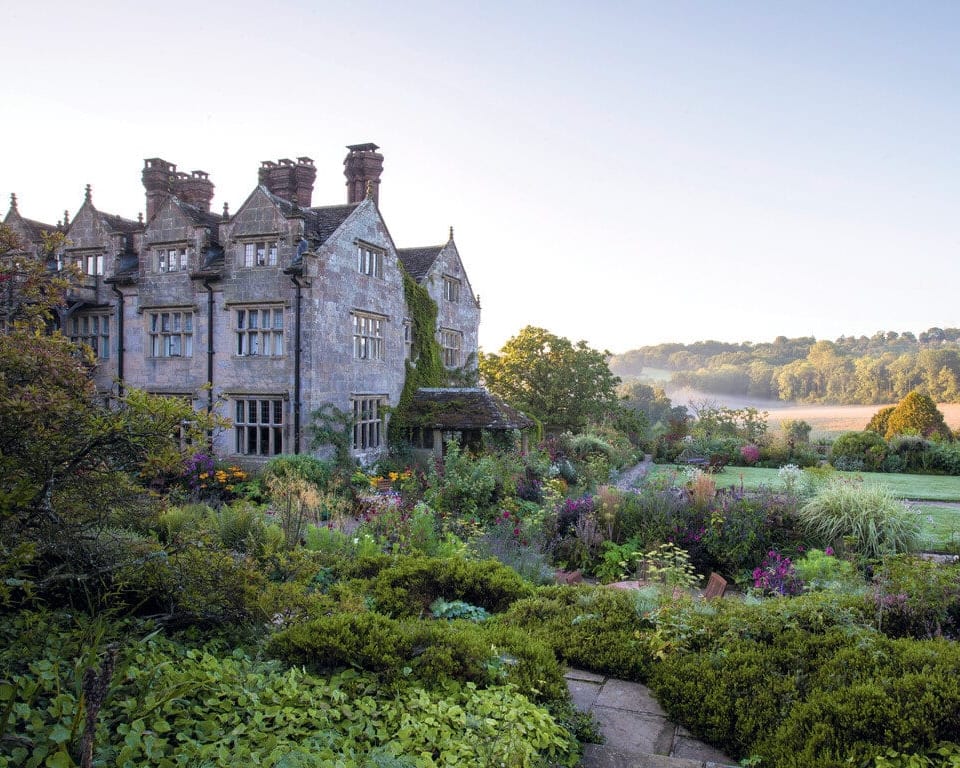
Image courtesy of Gravetye Manor
The English countryside is all about slowing down to the cadence of crackling fires, long walks through damp meadows, and afternoon pints that stretch into the evening. There is a deeply settled sense of history in dry-stone walls dotted across the hillsides, in the ancient footpaths that cut across private estates, and in the way a local pub feels like the center of village life. The landscape asks you to trade a rigid itinerary for a pair of sturdy boots, and recognizing that early matters more than ticking off every landmark.
What draws travelers to these rural areas are postcard-perfect cottages, honey-colored stone villages, and rolling hills that look painted into the horizon. Centuries-old tithe barns now house boundary-pushing farm-to-table restaurants, and grand Georgian manor estates have been reimagined as high-design, eco-luxury sanctuaries without losing a shred of their historic soul. Whether you are navigating the narrow, high-hedged lanes of the Cotswolds or watching a storm roll over a moody Yorkshire fell, the countryside's real magic lies in its ability to offer an escape that is both completely timeless and thoroughly alive.
Need to know
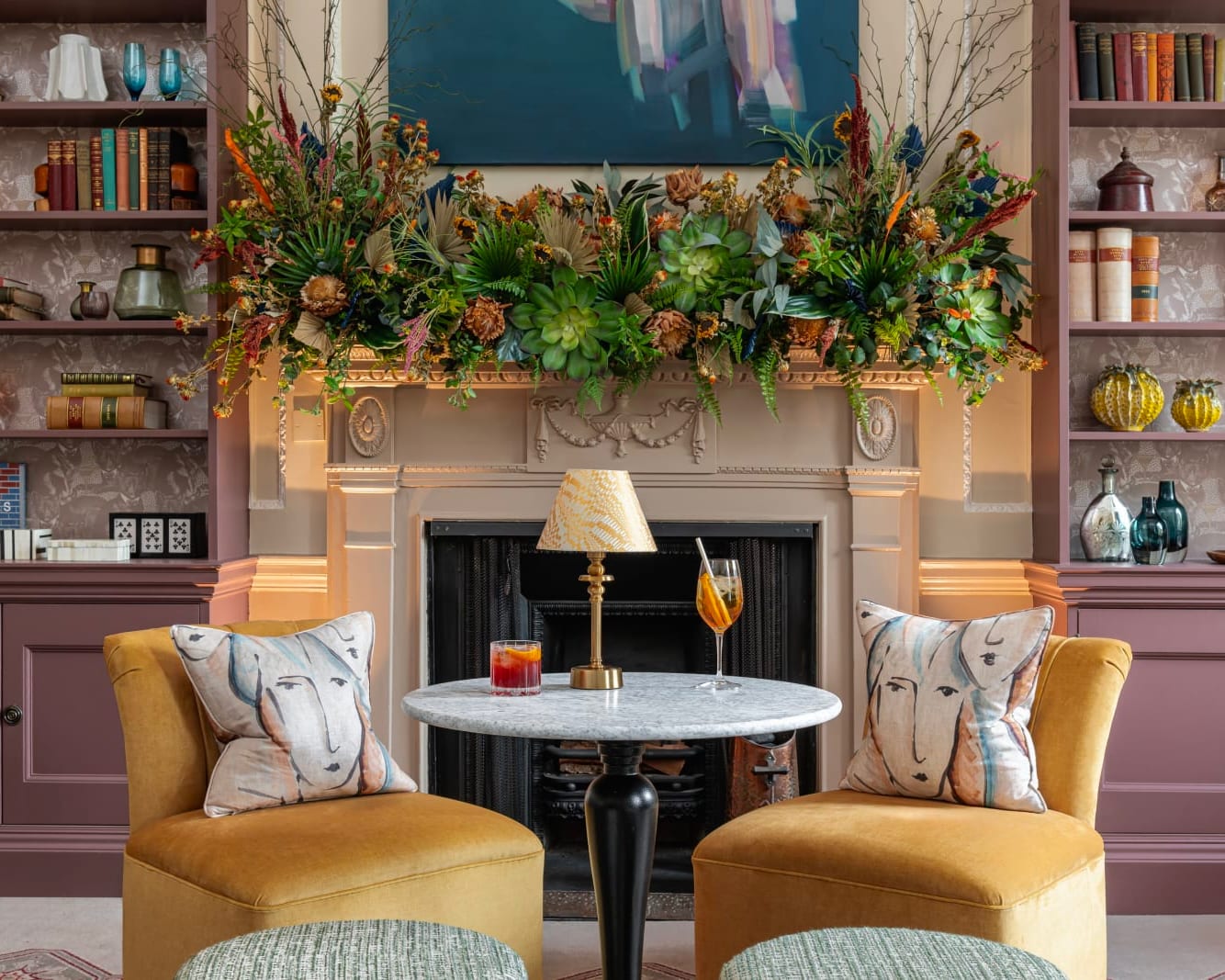
Image courtesy of The Royal Crescent Hotel & Spa
Roads narrow quickly once you leave the motorway, opening times at houses and gardens can be limited, and the weather rarely sticks to the forecast—knowing a few basics like these can make the whole experience considerably more enjoyable.
Currency: England uses the British Pound Sterling (GBP). Contactless and card payments are standard across most of the country, but village shops, farm stands, country pubs, and weekly markets may only take cash. Tipping in rural England follows different conventions; In pubs, offer to buy the bar staff a drink, leave 10–12.5% in restaurants (if not already included), an round up or leave small coins in tea rooms and cafés.
Airports: London Heathrow (LHR) is the primary gateway to England, with extensive nonstop service from cities across North America, and beyond. Gatwick (LGW) handles a smaller selection of transatlantic routes, while Stansted (STN), London City (LCY), and Luton (LTN) primarily serve destinations across Europe. Manchester (MAN) is the more practical option for those heading north, with year-round nonstops from New York, Toronto, and Atlanta. Smaller regional airports are scattered across the country for added flexibility.
Transportation: Trains are the standout option, reaching deep into the countryside with many properties within minutes of a station. For those who want more flexibility, hiring a private driver is a comfortable and practical alternative. Rental cars are available, but navigating narrow lanes and left sided driving is an adjustment that catches many visitors off guard.
Best time to visit: Spring (May–June) and fall (September–October) are the most rewarding windows—wildflowers, blooming hedgerows, and saturated green countryside. Summer (July–August) is peak season; the villages and walking trails are at their busiest, and the Cotswolds in particular can feel crowded. Winter (November–April) is the low season, with short daylight hours, colder and wetter weather, and a more somber mood.
Ideal length of stay: Two to three nights is enough for a focused stay, with a few drives and village stops built in. Five to six nights gives you room to move between areas or simply settle into one place without the pressure of optimizing every day. The English countryside tends to work best as part of a longer trip, so the timing is worth thinking about: stay early in the trip to ease into the time change, or save for the end to decompress before heading home.
Signature dishes and drinks:
Sunday roast: Roasted beef, lamb, or chicken with crispy potatoes, seasonal vegetables, and enough gravy to drown everything on the plate
Ploughman's lunch: The ultimate midday pub staple of sharp cheddar or Stilton cheese, thick-cut ham, crusty bread, and pickled onions, all brought together by a generous dollop of sweet, tangy branston pickle
Yorkshire pudding: Batter poured into screaming-hot fat and baked until puffed, golden, and hollow—served alongside the roast to mop up gravy, or on its own filled with sausage and onions as toad in the hole
Bangers and mash: Thick pork sausages—Cumberland, Lincolnshire, or whatever the butcher recommends—over a mound of creamy mashed potato and buried under a dark, slow-cooked onion gravy
Artisan cheeses: Beyond the well-known Stilton, Cheddar, and Red Leicester cheeses are small-producer varieties worth seeking out, like Stinking Bishop (Gloucestershire), Ogleshield (Somerset), Berkswell (West Midlands), and Lincolnshire Poacher
Sticky toffee pudding: A dense, date-sweetened sponge drenched in warm butterscotch sauce and served with pouring cream, custard, or vanilla ice cream
Real ale: Unpasteurized, unfiltered, cask-conditioned beer served at cellar temperature with a soft, natural carbonation—bitter, nutty, and complex
Dry cider and perry: Pressed from heritage apple and pear varieties grown in the orchards of Herefordshire, Somerset, and Gloucestershire, the best examples are bone-dry, funky, and tannic—closer to natural wine than anything poured from a can
Pimm's No. 1 Cup: A gin-based fruit liqueur mixed with lemonade or ginger ale and loaded with cucumber, mint, strawberries, and orange; the drink that signals British summer has officially arrived, however briefly
What to wear: Countryside dressing relies on practical layering that can adapt to England's notoriously fickle weather. Sharp-casual is the general rule, with durable, earth-toned fabrics like tweed, wool, and heavy cotton. Daytime exploration demands sturdy, waterproof footwear—think broken-in leather boots or wellies—and a packable rain jacket. Light sweaters for the evening, even in summer, often come in handy. In-town shopping and historic village strolls favor a tailored look, while evenings at high-end estates or Michelin-starred restaurants call for casual elegance, with jackets and dresses.
Travel tips:
Bank holidays: Avoid bank holiday weekends (especially the last weekend of August)—this is when the entire English urban population simultaneously attempts to reach the same Cotswolds village, Lake District car park, or coastal path.
Boot rooms: Field paths become genuinely deep mud after rain. Proper walking boots with ankle support and a Vibram or equivalent sole are highly recommended—check if your hotel has a boot room with Wellies (Wellington boots) to borrow.
Waymarkings: Public footpaths follow a specific color code: yellow arrows indicate footpaths (walking only), blue indicates bridleways (walking, cycling, horses), red indicate byways (all traffic), while white or no color indicates restricted byways.
Parking: If renting a car and self-driving, be aware that national park car parks fill by 9 AM on summer weekends and may operate pre-booking systems. Parking on verges (roadside strips) is illegal in many areas and results in fines.
Greater London
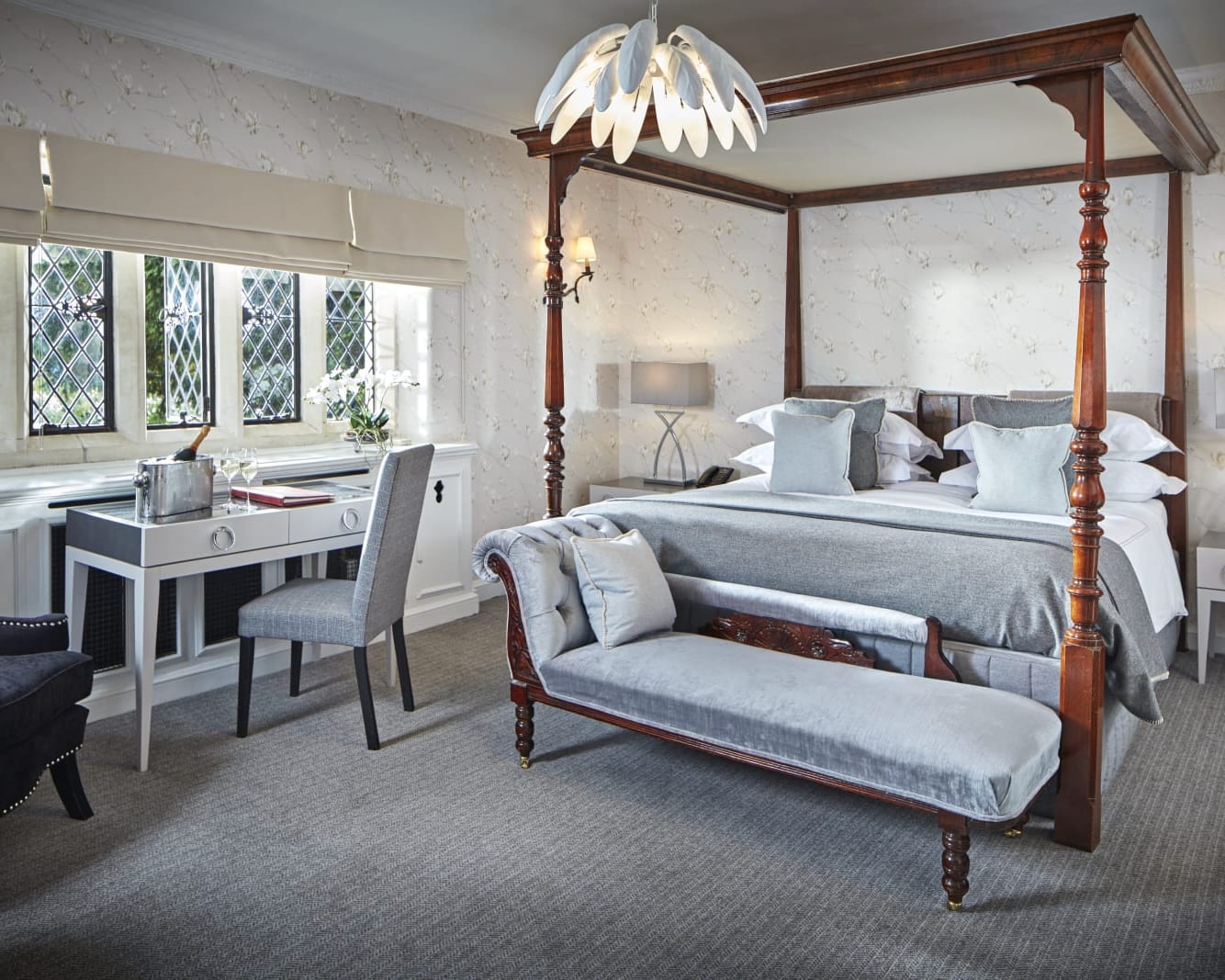
Image courtesy of Great Fosters - A Small Luxury Hotel
Just outside of London, the rolling countryside of Berkshire and the dramatic, chalky ridges of the Surrey Hills offer a historic escape from the urban sprawl. This region serves as the quintessential introduction to the English estate lifestyle, characterized by ancient woodlands, winding rivers, and meticulously manicured parklands. Because of its proximity, the area is home to some of the country's most legendary and opulent country houses, making it perfect for rural tranquility and world-class luxury. It is a landscape defined by seamless transitions from royal forests to Michelin-starred dining, offering country house living at its most refined.
Where to stay
Coworth Park - Dorchester Collection (Berkshire): This grand Georgian manor house estate seamlessly blends sleek, contemporary interiors with country-chic charm, complete with its own professional polo club and an eco-luxury spa hidden in the wildflower meadows.
Fora Perks include a £100 hotel credit, daily breakfast, and an upgrade whenever possible.
Beaverbrook (Surrey Hills): Once the lavish estate of press baron Lord Beaverbrook, this vibrant retreat pairs rich cinematic and political history with whimsical, high-design interiors, a world-class Japanese restaurant, and a striking, stained-glass wellness spa.
Fora Perks include a $100 food and beverage credit, daily breakfast, welcome amenity, an upgrade, and extended check-in/out whenever possible.
Cliveden House - an Iconic Luxury Hotel (Berkshire): Set above the River Thames, this legendary, 350-year-old Italianate mansion offers guests unapologetic gilded-age opulence, National Trust gardens, and an elite sense of privacy.
Fora Perks include a £85 hotel credit, daily breakfast, welcome amenity, an upgrade, and extended check-in/out whenever possible.
Great Fosters - A Small Luxury Hotel (Surrey): Steeped in royal heritage, this majestic 16th-century Elizabethan estate features towering red-brick chimneys, original oak paneling, and a Michelin-starred restaurant set against knotted topiary gardens.
Fora Perks include a $100 hotel credit, daily breakfast, welcome amenity, an upgrade, and extended check-in/out whenever possible.
Southern England
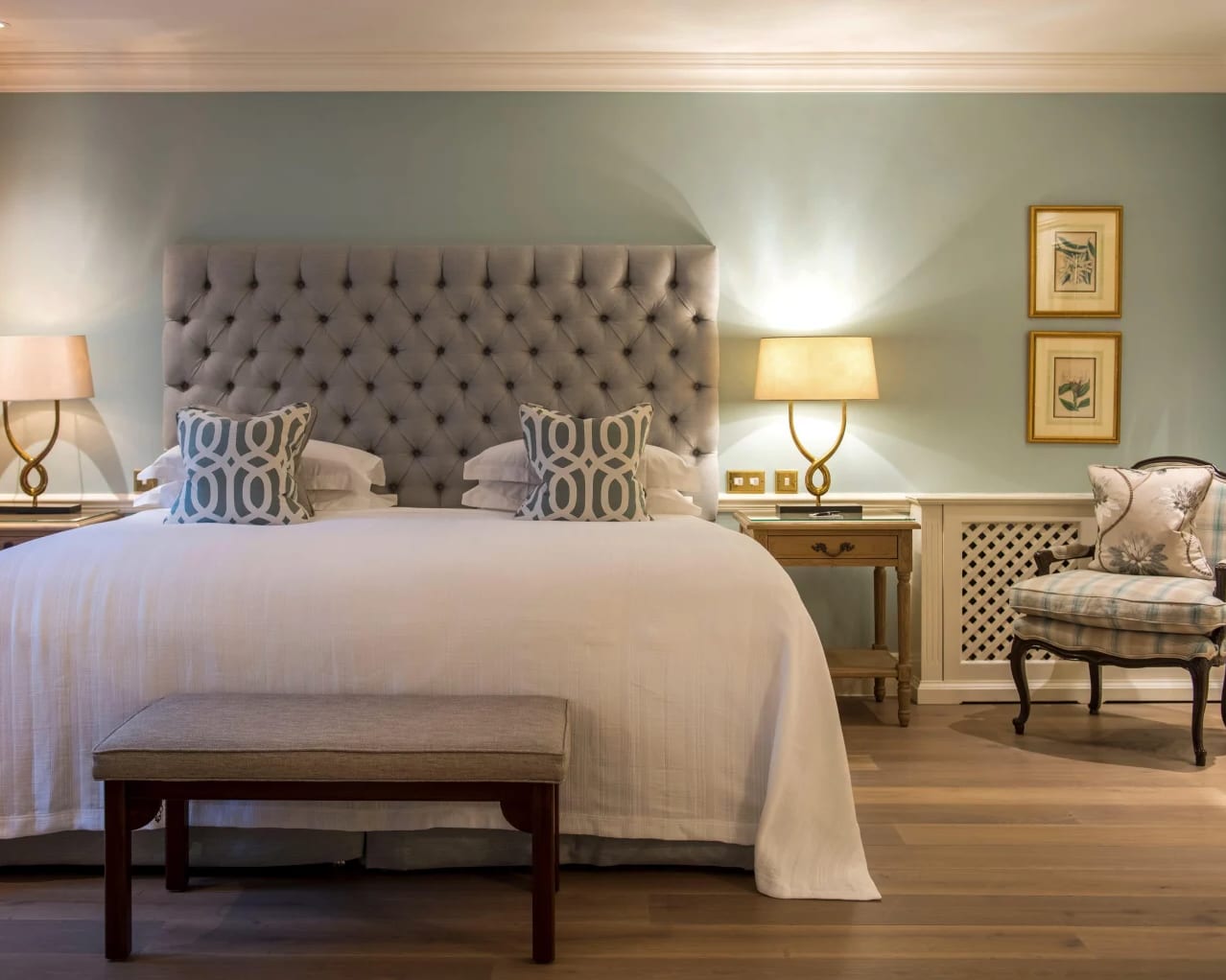
Image courtesy of Chewton Glen Hotel & Spa - an Iconic Luxury Hotel
The rolling landscapes of Hampshire and Sussex provide an incredibly accessible escape from London. This region is defined by dramatic topography, where you can hike the famous chalk slopes of Box Hill or trace the ridges of the South Downs National Park. Among the ancient woodlands, winding river valleys, and deeply historic villages is also the epicenter of sun-drenched soils that mirror the Champagne region, producing world-class sparkling wines. Whether you are touring up-and-coming vineyards, exploring medieval market towns like Arundel and Winchester, or settling into centuries-old country pubs, Southern England blends outdoor adventure and refined rural leisure.
Where to stay
Heckfield Place (Hampshire): This masterfully restored Georgian family home feels less like a hotel and more like a progressive, high-minded country estate. Quiet luxury pairs with an obsessive farm-to-fork ethos driven by its own biodynamic farm and market gardens.
Fora Perks include a $100 food and beverage credit, daily breakfast, an upgrade, and extended check-in/out whenever possible.
Four Seasons Hotel Hampshire: This quintessential family favorite occupies a grand 18th-century manor house amidst 500 acres of rolling hills. It effortlessly balances historic Georgian elegance with modern, high-energy country pursuits like clay pigeon shooting, falconry, and canal boating.
Fora Perks include a $100 hotel credit, daily breakfast, an upgrade, and extended check-in/out whenever possible.
Gravetye Manor (Sussex): A true pilgrimage site for horticulturists, this enchanting Elizabethan stone manor is completely enveloped by its world-famous wild gardens. Created by pioneering gardener William Robinson, the grounds now inspire the Michelin-starred restaurant’s hyper-seasonal menus.
Fora Perks include daily breakfast and VIP welcome whenever possible.
Chewton Glen Hotel & Spa - an Iconic Luxury Hotel (Hampshire): Situated on the edge of the historic New Forest, this timeless luxury resort combines classic English country house traditions with modern indulgence. A stay here is best experienced through its iconic, secluded treehouse suites suspended in the forest canopy.
Fora Perks include a £85 resort credit, daily breakfast, welcome amenity, an upgrade, and extended check-in/out whenever possible.
The Cotswolds
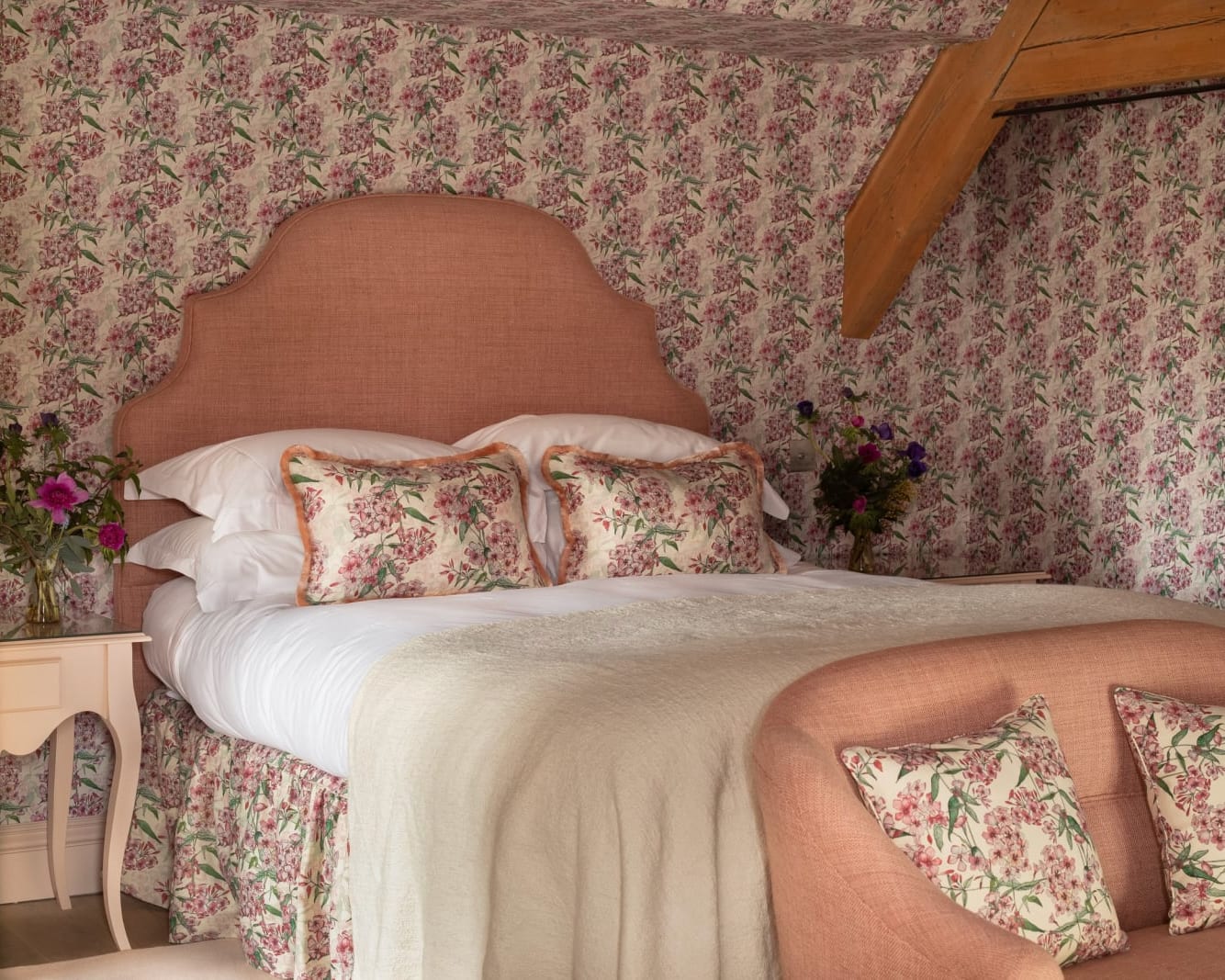
Image courtesy of Thyme – Hotel, Restaurant, Spa
As England’s most idyllic rural destination, the Cotswolds is characterized by sweeping, wave-like hills and storybook villages. Iconic, honey-colored cottages have had visitors flocking here to wander through postcard-perfect lanes in Castle Combe or Bibury. But beyond the cinematic visuals, the Cotswolds offers a sophisticated slice of country life. It serves as a premier hub for boutique antique shopping, organic farm-to-table dining, and traditional cream teas served in manicured gardens. Whether you are walking a stretch of the historic Cotswold Way, browsing high-end local markets, or curling up by a roaring fire, this region delivers the ultimate, quintessential British countryside experience.
Where to stay
Estelle Manor (Oxfordshire): A sprawling, neo-Gothic estate that acts as a high-octane country house hotel and private club. Opulent, maximalist interiors couple with a vast Roman-inspired bathhouse and a vibrant, modern social scene.
Fora Perks include a $100 hotel credit, daily breakfast, an upgrade, and extended check-in/out whenever possible.
Thyme – Hotel, Restaurant, Spa (Gloucestershire): Self-described as a “village within a village,” this meticulously restored collection of historic honey-stone barns and cottages centers its thoughtful, boutique experience around a grand restaurant and massive gardens.
Fora Perks include daily breakfast, welcome amenities, an upgrade, and extended check-in/out whenever possible.
The Royal Crescent Hotel & Spa (Bath): Occupying the imposing, majestic center of Bath’s most famous Georgian architectural masterpiece, this iconic hotel pairs grand, high-ceilinged historic elegance with a secluded, walled garden oasis.
Fora Perks include a $100 hotel credit, daily breakfast, an upgrade, and extended check-in/out whenever possible.
Le Manoir aux Quat’Saisons, A Belmond Hotel (Oxfordshire): This iconic 15th-century manor house remains the definitive gastronomic pilgrimage site, combining two-Michelin-starred culinary brilliance with idyllic, French-influenced English gardens.
Fora Perks include a hotel credit, daily breakfast, welcome amenity, an upgrade, and extended check-in/out whenever possible.
Southwest England
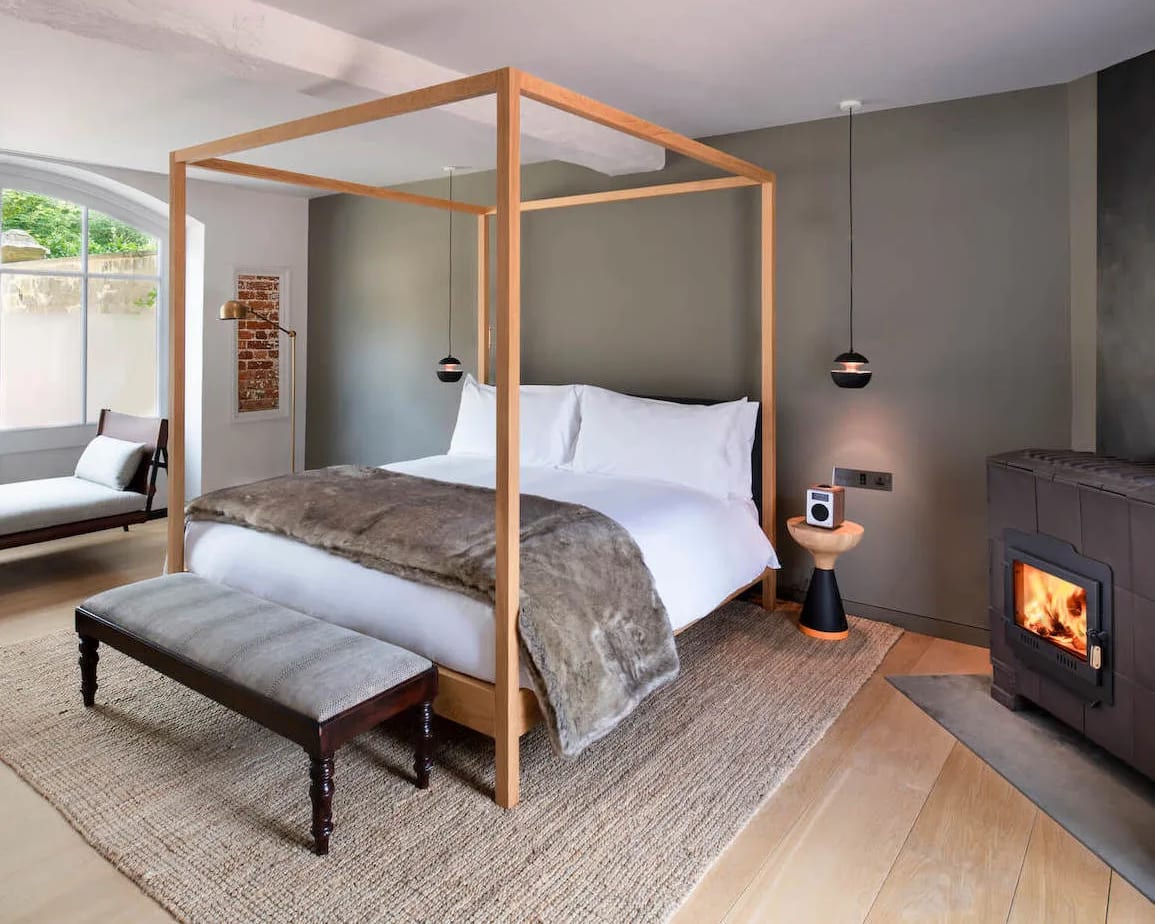
Image courtesy of The Newt in Somerset
Stretching to the rugged edge of the Atlantic, southwest England offers a dramatic, maritime twist on the classic countryside getaway. The untamed moorlands of Dartmoor and Exmoor National Parks are filled with wild, heather-covered hills, ancient woodlands, and free-roaming ponies. Along the Jurassic Coast of Dorset and East Devon, a 95-mile UNESCO World Heritage Site, travelers can hunt for prehistoric treasures on fossil-rich beaches or marvel at geological icons like the limestone arch of Durdle Door. Deep into Cornwall, the landscape shifts to jagged headlands, world-class surf breaks, and historic, white-washed fishing villages like St Ives and Fowey. It is a region where rural traditions are shaped by the sea, offering travelers a captivating mix of windswept coastal hikes, legendary seafood, and wild, open horizons.
Where to stay
The Newt in Somerset: This ultra-chic, impeccably detailed estate centers around a grand Palladian limestone manor house. Its sprawling, world-class botanical gardens, working cider press, and an indoor-outdoor spa of pure architectural theater draw travelers here.
Fora Perks include an exclusive on-site experience, daily breakfast, welcome amenity, an upgrade, and extended check-in/out whenever possible.
Lime Wood Hotel (Hampshire): Hidden in the ancient canopies of the New Forest National Park, this Regency country manor blends laid-back luxury with a vibrant, modern soul. It draws style-seekers and food lovers alike with its world-class, multi-story herb house spa and an acclaimed, Italian-inflected kitchen that champions seasonal, forest-foraged ingredients.
Fora Perks include daily breakfast, welcome amenity, and an upgrade whenever possible.
THE PIG-at Combe (Devon): Tucked away in a valley, this Elizabethan manor house epitomizes relaxed luxury, greeting guests with honeyed-stone charm, an unpretentious, woolly-sofa aesthetic, and a hyper-local menu dictated entirely by what is plucked from its 25-mile kitchen garden.
The Midlands
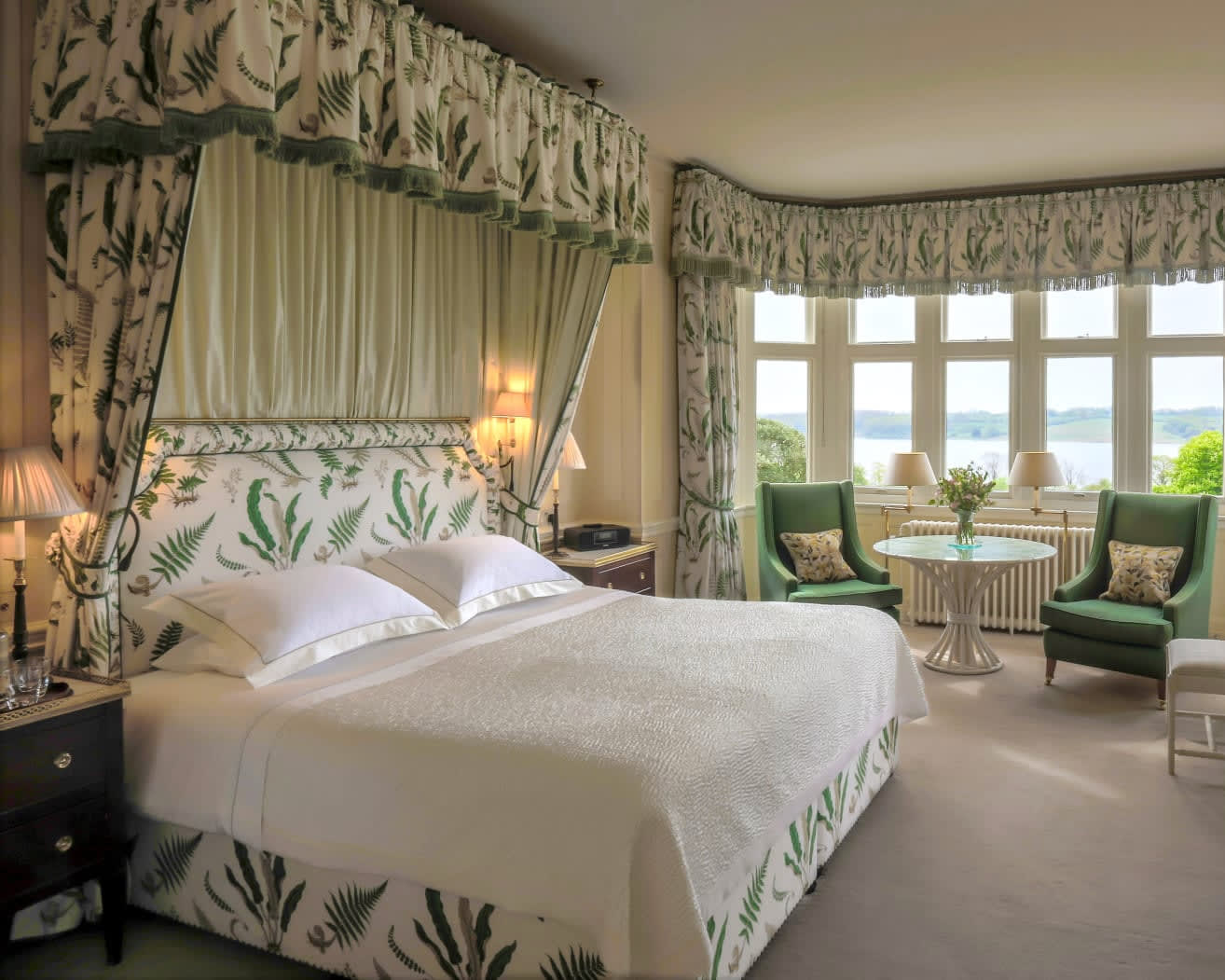
Image courtesy of Hambleton Hall
The Midlands bridges the gap between the soft hills of the south and the rugged peaks of the north, offering a diverse landscape, industrial heritage, and rural charm. This central region is home to Rutland, England's smallest historic county, which centers around a massive, scenic reservoir famed for its watersports and birdwatching. Further north and west, the scenery shifts dramatically into Derbyshire and the Peak District National Park. Here, the landscape splits into two distinct personalities: the “White Peak,” characterized by rolling green hills, limestone gorges, and hidden cavern networks, and the “Dark Peak,” a moodier, untamed expanse of heather-clad moorlands and gritstone edges. Dotted with grand stately homes, market towns, and an artisan food scene, the Midlands offers an authentic, uncrowded slice of country life.
Where to stay
The Cavendish Hotel at Baslow (Derbyshire): Positioned on the Duke of Devonshire’s historic Chatsworth Estate, this impeccably refined country hotel treats guests to idyllic, sheep-dotted views, and interiors curated with original artwork from the Duke's private collection.
Fora Perks include a £20 food and beverage credit, welcome amenity, an upgrade, and extended check-out whenever possible.
Hambleton Hall (Rutland): Set majestically on a secluded peninsula overlooking the vast waters of Rutland Water, this grand Victorian country house hotel pairs old-school, wood-paneled elegance with a legendary, Michelin-starred dining room.
Fora Perks include daily breakfast and VIP welcome whenever possible.
Northern England
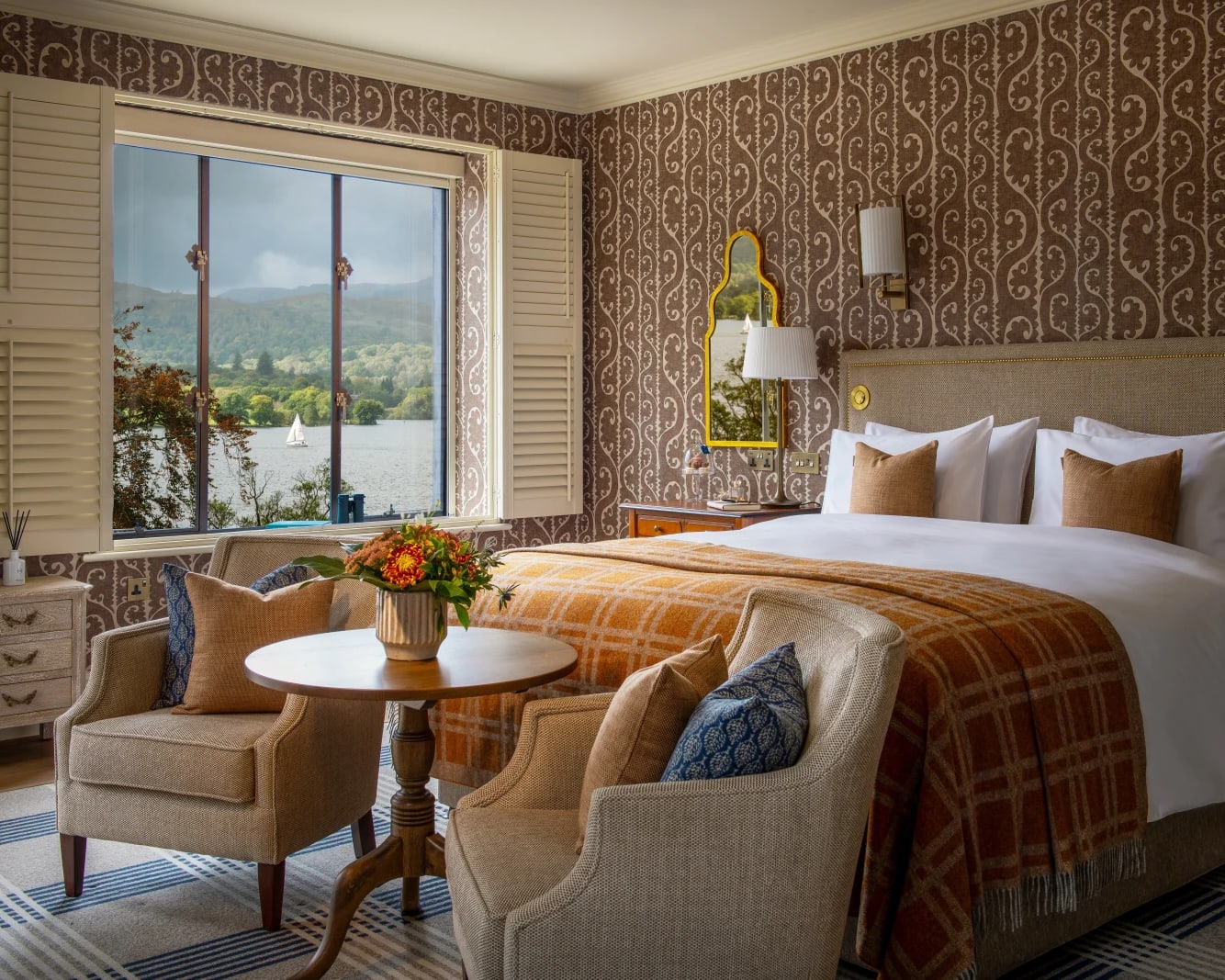
Image courtesy of Langdale Chase Hotel
Characterized by raw, elemental beauty and expansive horizons, northern England is anchored by two spectacular, adjacent National Parks. The Lake District, a UNESCO World Heritage Site, is a breathtaking expanse of glacier-carved ribbon lakes, dramatic mountain passes, and England's highest peaks. Immediately to the east lie the Yorkshire Dales, a striking landscape defined by sweeping heather moorlands, deep green valleys, and a patchwork of historic dry-stone walls and limestone pavements. Together, these regions form a paradise for outdoor enthusiasts, combining challenging fell walks and moody mountain vistas with a rich tapestry of literary history, exceptional farm-to-table dining, and stone-built market towns.
Where to stay
Langdale Chase Hotel (Lake District): Standing proudly on the banks of Lake Windermere since 1891, this masterfully revived Victorian villa marries its historic timber-framed grandeur with sleek, contemporary lakeside luxury, boasting panoramic mountain views and a private jetty that draws travelers straight out onto the water.
Fora Perks include a hotel credit, daily breakfast, an upgrade, and extended check-out whenever possible.
Grantley Hall (Yorkshire Dales): Tucked away on the edge of the Yorkshire Dales, this palatial 17th-century estate delivers unapologetic luxury, captivating guests with its grand sweeping drive, a subterranean cocktail bar, and an elite wellness sanctuary.
Fora Perks include a hotel credit, daily breakfast, one complimentary lunch, an upgrade, and extended check-in/out whenever possible.
History and culture
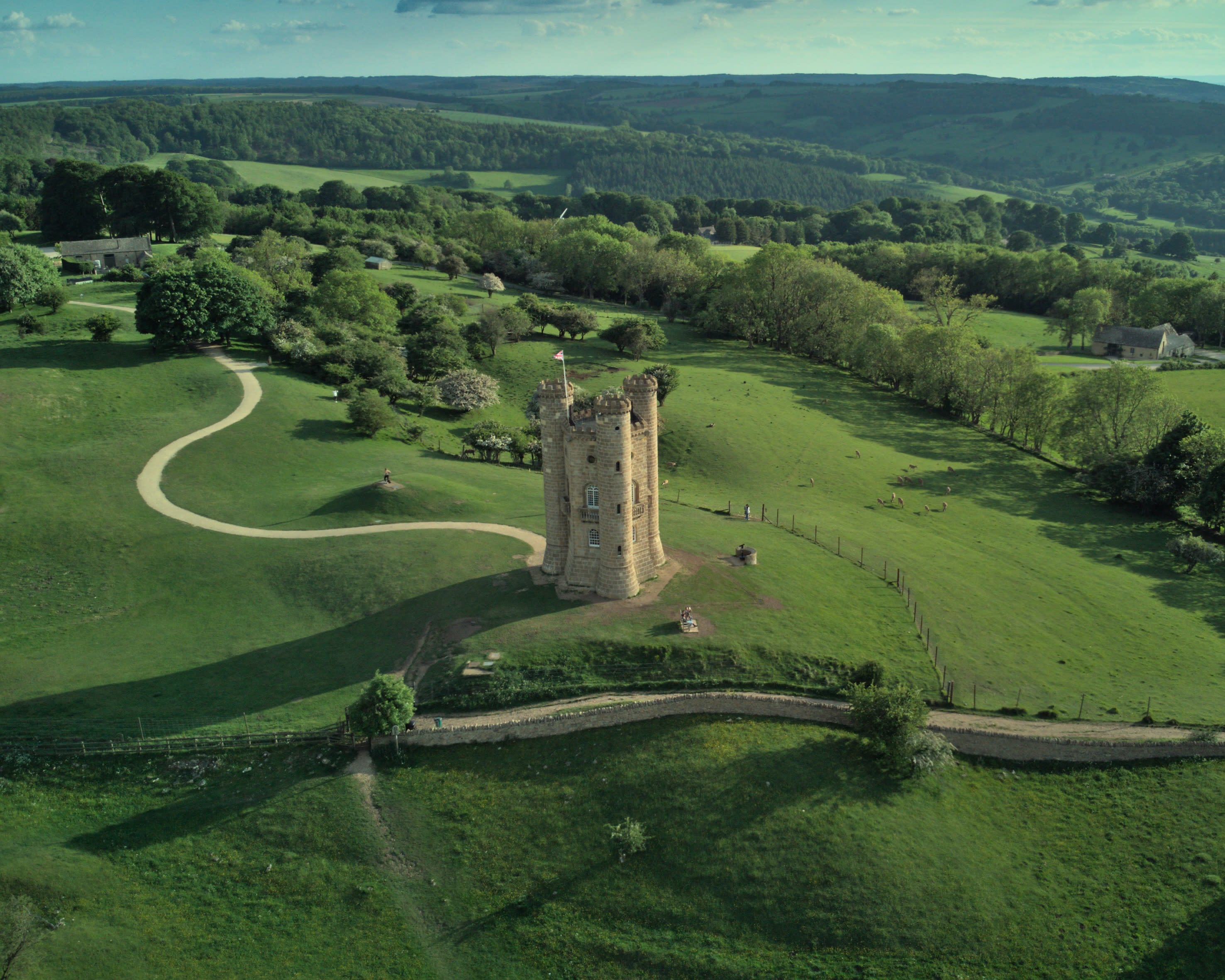
England’s rural landscape is one of the most shaped-by-human-hand environments on earth. The fields, hedgerows, village greens, and dry-stone walls that read as timeless were largely engineered—the Enclosure Acts of the 17th through 19th centuries systematically transferred common land into private hands, displaced rural communities, and accelerated both industrialization and emigration. Before that, the same land had been worked under medieval strip-farming systems, and before that by Romano-British and Iron Age communities whose earthworks, hill forts, and burial mounds remain visible in the landscape today. Stonehenge and Avebury are the most visited of these ancient sites, but the countryside is scattered with less-trafficked monuments.
The village church, the market town, the country house, and the pub are institutional anchors that have organized English rural life for centuries, each carrying its own layered history of class, religion, and land ownership. The country house in particular tells an uncomfortable story: many were built on wealth extracted from colonial trade, a history that institutions like the National Trust have only recently begun to seriously examine. Literary culture has long romanticized the English countryside, and that romanticism has real consequences for how the landscape is perceived, preserved, and visited. Beneath the postcard imagery, the countryside offers a living working environment where farming, conservation, and tourism coexist.
Cultural celebrations and events
The Olney Pancake Race (Shrove Tuesday, Buckinghamshire): Since 1445, the women of Olney race through the town's market square to the parish church, flipping a pancake in a frying pan over 415 yards.
May Day (May 1, villages nationwide): The arrival of spring is marked on village greens with Maypole dancing, the crowning of a May Queen, and marking the turning of the season with music and flowers.
Agricultural shows (June–July, nationwide): From the Royal Cornwall Show to the Great Yorkshire Show, expect days-long celebrations bringing together livestock competitions, food halls, and rural craft stands.
Cambridge Folk Festival (August, Cambridge): One of the longest-running folk festivals in the world, with a four-day long program that pulls in artists from across roots music, acoustic, and world traditions.
Bridport Hat Festival (September, Dorset): For one weekend, this market town on the Dorset coast fills with elaborately decorated headwear—competitions, parades, and street performances built entirely around the hat as artistic medium.
Dark Skies Festival (February and October–November, nationwide): Night runs, canoe sessions, astrophotography, and stargazing take over several national parks across the country over various dates in February or October to November.
What to do in the English countryside
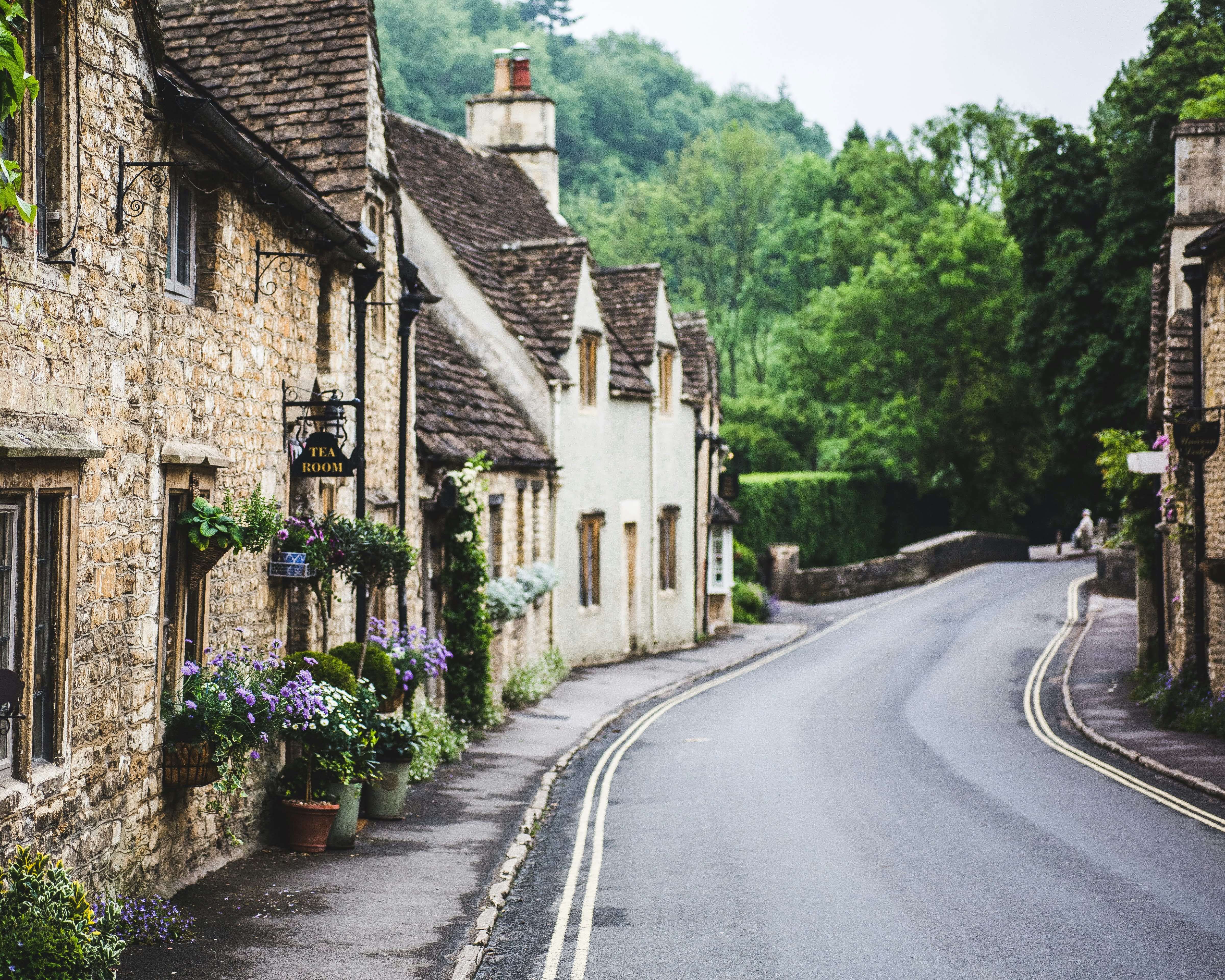
The English countryside is all about slowing down—ancient footpaths, market towns, and country houses that have been accumulating history since before the Norman Conquest.
Hill walking and rambling: The national trail network covers over 2,500 miles of long-distance paths, ranging from the gentle rolling Cotswold Way to the high moorland and fell walking of the Lake District and Yorkshire Dales, or the Hadrian's Wall Path following 2,000-year-old Roman walls. Most trails are well-marked and navigable in sections, so a day walk pulls as much value as a multi-week through-hike.
Country estates: The English country house tradition is unmatched in scale and variety. Blenheim Palace in Oxfordshire—birthplace of Winston Churchill and one of the largest private houses in England—sits within a 2,000-acre park. Sudeley Castle in the Cotswolds has 1,000 years of history and the only private castle in England to contain the tomb of a queen: Catherine Parr, the last of Henry VIII's six wives.
Ancient sites and landmarks: From prehistoric ruins like Stonehenge to historic sites like Lindisfarne Castle sits on a tidal island off the Northumberland coast, the country is dense with landmarks to explore.
Historic cities and towns: Bath is the most intact Georgian city in England, built on top of the only natural hot springs in Britain that date back to Roman times. Oxford's university colleges open their quads and chapels to visitors at varying hours. York is one of the most complete medieval cities, with ringed 13th-century walls around the city center.
Horseback riding: The English countryside is threaded with bridleways designated for riding, particularly in the New Forest, the South Downs, and the moorlands of Dartmoor and Exmoor. Riding stables operate across these areas, with options ranging from a two-hour moorland hack to multi-day rides.
Spa and wellness: Several of the country's most established spas are embedded in the countryside, from geothermal waters the Romans tapped in Bath to country house hotel settings that treat the landscape as part of the experience.
Afternoon tea: The ritual is taken seriously in England, whether inside a country house hotel setting or in village tearooms. The scones are made in-house, the queue is out the door on a Sunday afternoon, and delicious, piping hot tea is the reason for being.
Activities: The lawns and grounds of a number of hotels and estates offer activities like croquet, giant chess, archery, clay pigeon shooting, and falconry.
Boat tours: Lake Windermere is England's largest natural lake, with sightseeing and passenger services connecting villages along its shores—Langdale Chase Hotel even operates its own private boathouse. Beyond the Lakes, networks of rivers and channels navigable by hired dayboats can be found across the countryside.
Where to eat in the English countryside
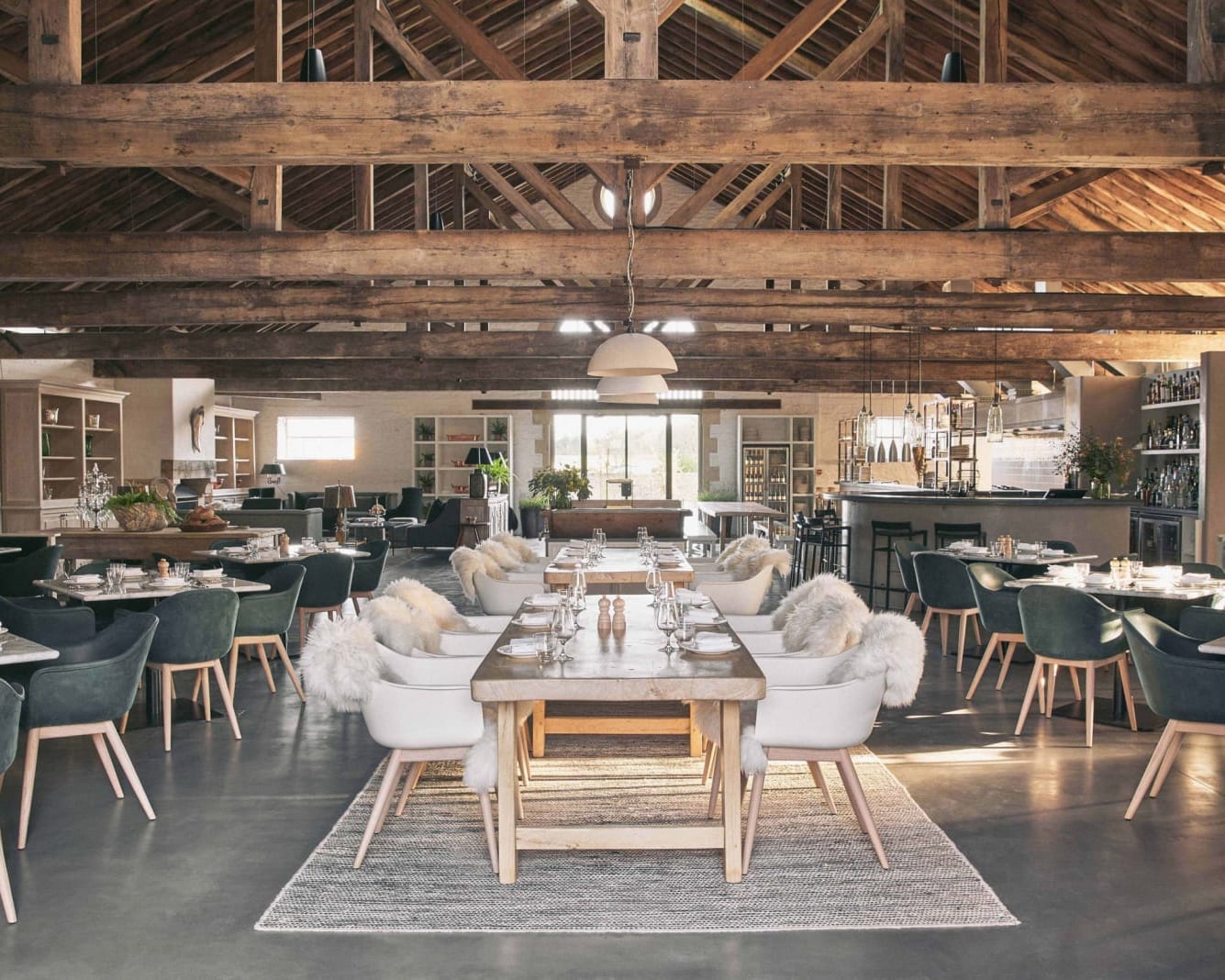
Image courtesy of The Ox Barn at Thyme – Hotel, Restaurant, Spa
Dining in the English countryside blends centuries of heritage with a deeply rooted passion for seasonal, hyper-local ingredients. Expect crackling fires alongside hearty gastropub fare, and avant-garde fine dining hidden behind historic brick and thatch buildings.
Greater London
The Fat Duck (Bray): A Michelin-starred culinary institution by Chef Heston Blumenthal, offering an immersive, multi-sensory tasting menu known for its playful, scientific innovation in a 16th-century building.
The Loch & The Tyne (Old Windsor): A refined gastropub delivering luxury twists on classic British pub food using sustainable produce from its own gardens and orchards.
The Gomshall Mill (Gomshall): A beautifully refurbished 11th-century mill house in the Surrey Hills, featuring a relaxed pub menu, a scenic garden, and a small river running through it.
Southern England
Burnt Orange (Brighton and Hove): A vibrant neighborhood hangout and late-night bar that focuses on flavor-packed, social grazing dishes cooked over a wood-fired grill.
The Chesil Rectory (Winchester): Located inside a charming, 600-year-old medieval house, enjoy British classics with a modern twist using fresh Hampshire produce.
The Black Rabbit (Arundel): A quintessential riverside country pub boasting views of Arundel Castle and the surrounding wetlands from a large outdoor terrace.
The Cotswolds
The Ox Barn at Thyme (Southrop): A striking, meticulously restored 19th-century barn featuring a seasonal farm-to-table menu curated from the estate's own gardens.
The Nut Tree Inn (Murcott): A picture-perfect, 15th-century thatched village pub that effortlessly balances a cozy, pint-swilling atmosphere with modern British cuisine.
The Wild Rabbit (Kingham): A chic reinvention of the traditional English inn, championing organic, locally-foraged principles of the nearby Daylesford Estate within a stylish space of exposed stone and open kitchens.
Southwest England
The Cornish Arms (Tavistock): A cozy, unpretentious gastropub that serves up hearty, flawlessly executed British classics right on the edge of Dartmoor.
Lympstone Manor (Exmouth): A luxurious, Michelin-starred country house offering exquisite, modern British fine dining paired with panoramic views over the estate’s vineyards and Exe Estuary.
The Start Bay Inn (Torcross): A delightful 14th-century thatched pub on the shingle beach, legendary for its generous portions of traditional, locally caught fish and chips.
The Midlands
Hitchen's Barn (Oakham): A warmly welcoming, award-winning neighborhood restaurant that pairs high-end cooking techniques with a relaxed atmosphere and a focus on Rutland's best seasonal produce.
The Boat (Lichfield): A stylishly reimagined country pub where Chef Liam Dillon serves up ambitious, modern British tasting menus with a creative, contemporary spin.
Restaurant Sat Bains (Nottingham): A world-renowned, two-Michelin-starred culinary destination tucked beneath a flyover, known for its hyper-innovative, boundary-pushing tasting menus and luxurious rooms.
Northern England
The Angel at Hetton: Widely regarded as the UK's original gastropub, this Michelin-starred Yorkshire Dales gem delivers ultra-refined, technical modern dishes in a beautifully rustic setting.
The Old Stamp House Restaurant (Ambleside): An intimate Michelin-starred eatery celebrating the heritage and distinct flavors of the Lake District through locally-foraged ingredients.
Homeground Coffee + Kitchen (Windermere): A buzzing, exceptionally popular brunch spot that combines expertly brewed specialty coffee with creative, beautifully presented dishes in a relaxed, contemporary space.
Trips to add on
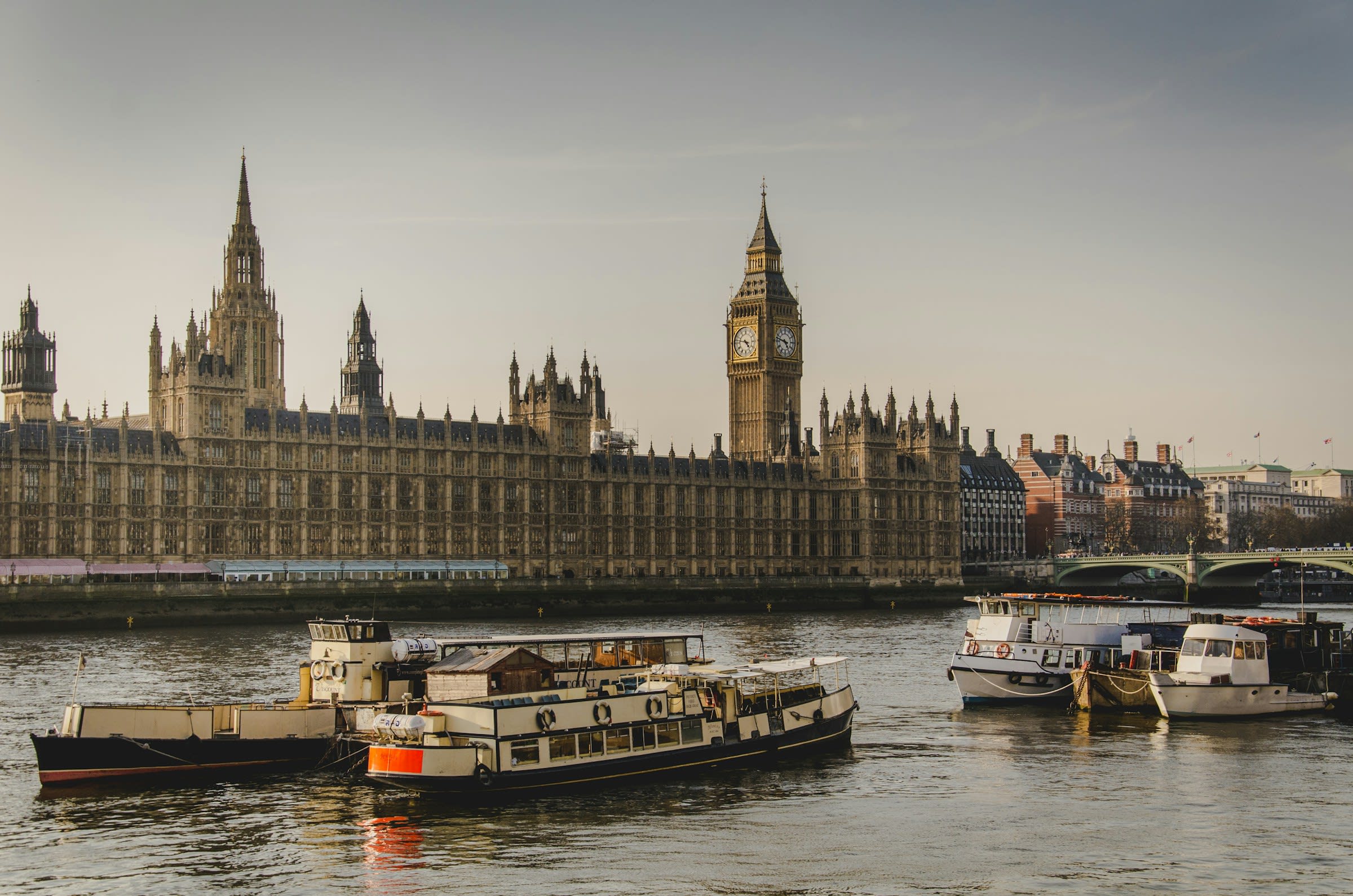
The English countryside connects naturally to the wider British Isles and mainland Europe, with easy rail and flight options, making it easy to build out a longer trip.
London (1–5 hour train or drive): A vibrant hub for world-class museums, distinct neighborhoods, and an exciting restaurant scene. Two to three days covers the essentials, though a week barely scratches the surface.
Oxford and Cambridge (45 minutes to 1.5 hours by train): Distinct university towns perfect for dedicated stays or day trips. Oxford boasts honey-colored colleges and deep literary history, while the flatter, more open Cambridge is defined by college gardens meeting the River Cam.
Ireland (1–1.5 hour flight): Dublin offers Georgian squares, literary pubs, and a sharp food scene, while the rugged west coast—Galway, Clare, and Kerry—shares England's green palette but with a completely different cultural register.
Paris (2.5-hour train from London): The Eurostar makes Paris a remarkably straightforward addition. Across the Marais, Saint-Germain, and Montmartre, the food, the museums, and the architecture justify as many days as the itinerary allows.
Scotland (1–2 hour flight or 5–9 hour train): The most dramatic scenery shift in the British Isles. Edinburgh offers walkable medieval closes, while the Highlands open up into vast, lonely landscapes of lochs, ruins, and historic whisky distilleries.
If not the English countryside…
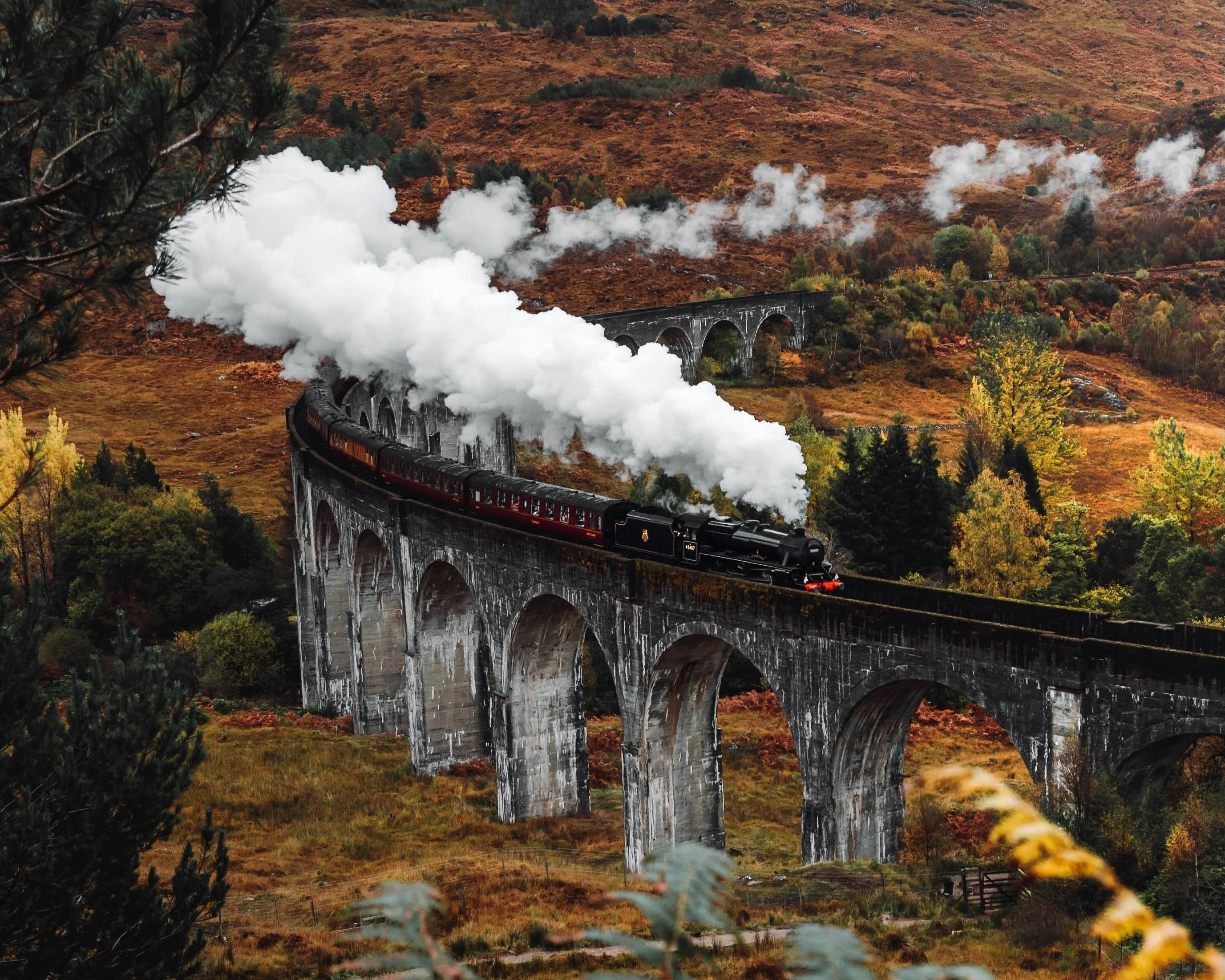
A landscape shaped over the centuries, walking culture built into the infrastructure, and a particular pleasure of a good pub shares the same DNA of each of these, with varying degrees of wildness and distance from the source.
Wales: The closest alternative geographically, and even more dramatic—Snowdonia's peaks, the Brecon Beacons, and the Pembrokeshire Coast. The castles are extraordinary, the walking trails are world-class, and the Welsh language gives the country a distinct cultural texture.
Scotland: The Highlands operate grander than the English countryside, with glens, lochs, and coastal sea stacks that make even a well-traveled landscape feel remote. The village culture, the whisky distilleries, and the weight of history make Scotland a natural next step.
Ireland: Sharing the essentials of an English countryside trip through a different filter, Ireland blends legendary pub culture and scenic walks with rich literary traditions. Beyond the iconic Wild Atlantic Way, the Aran Islands and scattered monastic ruins add profound depth.
Norway: Where England is shaped and storied, Norway is raw and monumental, defined by glacier-carved fjords and isolated fishing villages. Secluded lodges are destinations in themselves, designed to center every room, meal, and activity around the landscape.
Chilean Patagonia: A wild, remote landscape where luxury lodges are built directly into the wilderness. The entire experience—from long, dramatic journeys to hiking, kayaking, and viewing the iconic Torres del Paine—is centered on pure immersion.