

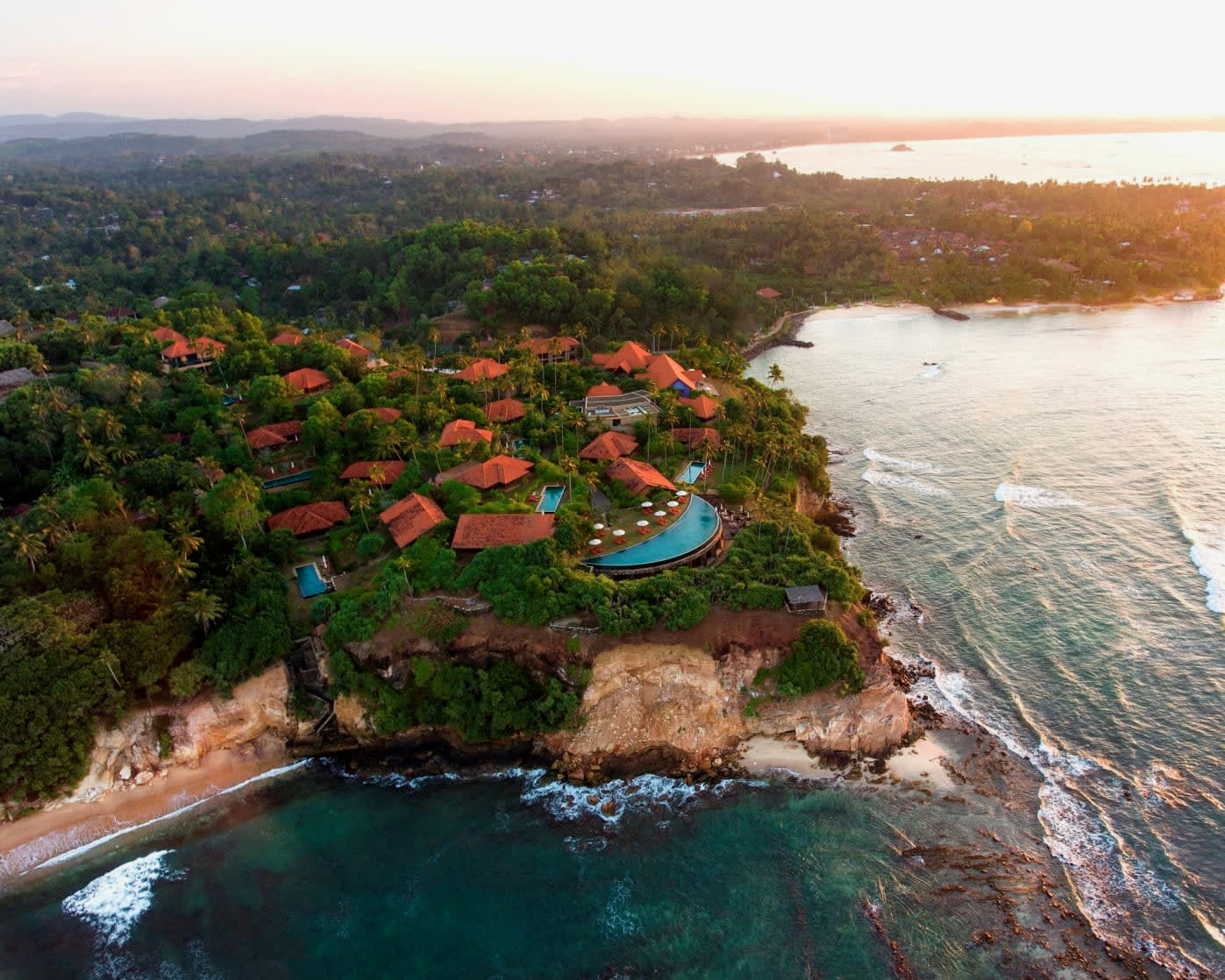
Image courtesy of Cape Weligama - Relais and Chateaux
Sri Lanka is one of the rare destinations where a single itinerary can encompass truly varied experiences without sprawling across a huge map. Within an island roughly the size of West Virginia, travelers can move from ancient capitals and frescoed cave temples to misty tea country, leopard territory, colonial port cities, surf towns, and beaches where blue whales pass offshore.
Sri Lanka spent years off the main tourist circuit, but it’s garnering more attention from travelers looking for dynamic trips that weave together culture, wildlife, food, and coastal pursuits. The country has enough infrastructure for a seamless journey, but the routing, weather patterns, and range of experiences still make smart planning essential. Use this guide as a starting point for a more informed conversation with your Fora Advisor. From there, they can translate the country’s many possibilities into an itinerary calibrated to your pace and priorities.
Sri Lanka travel basics
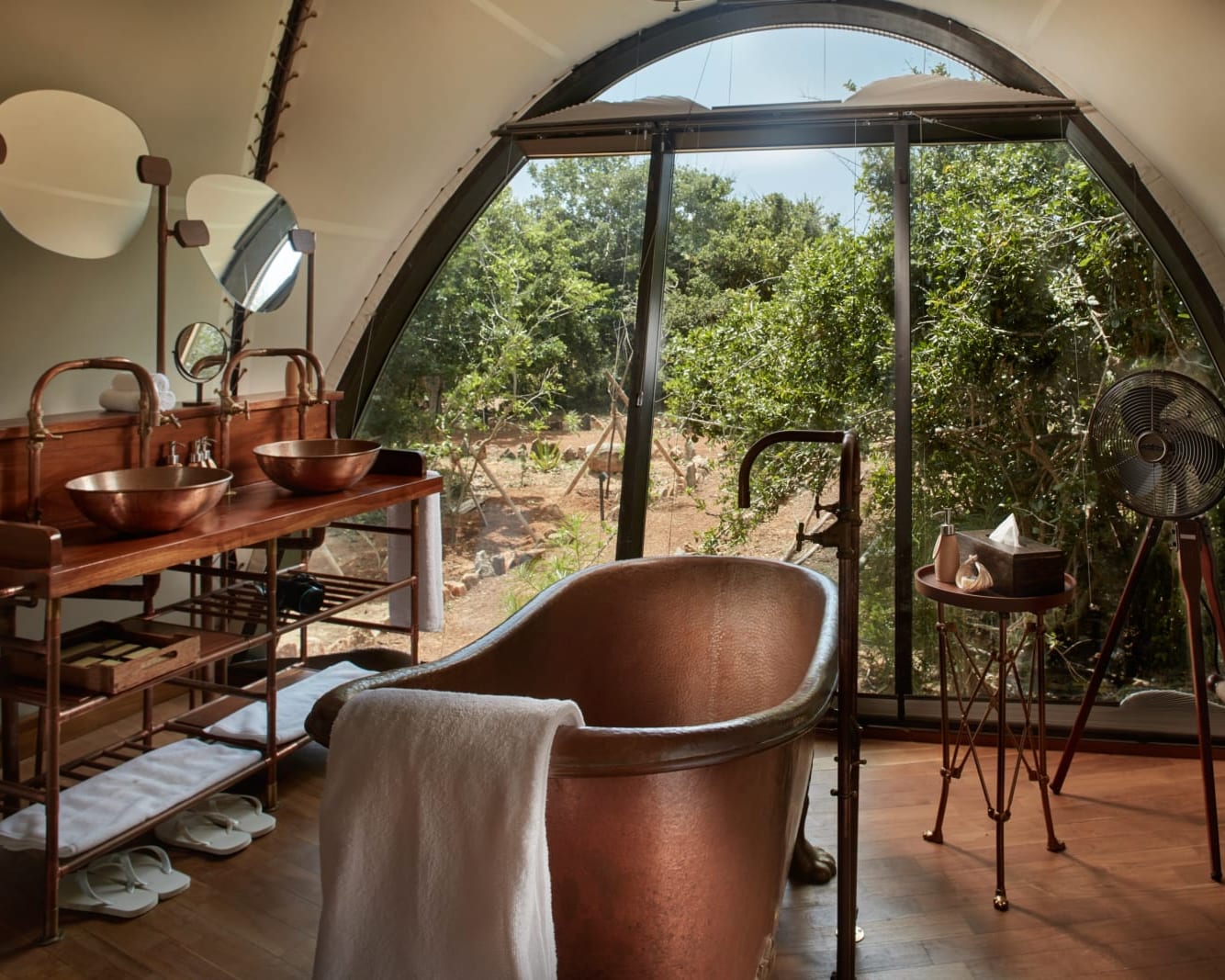
Image courtesy of Wild Coast Tented Lodge - Relais and Chateaux
Sri Lanka is compact, but the logistics are more nuanced than the map suggests. Roads can be slow, monsoon patterns vary by coast, and details like temple etiquette, Poya days, and safari timing can all affect how the trip comes together..
Currency and payments: Sri Lanka’s official currency is the Sri Lankan Rupee (LKR). Cards are accepted at larger hotels, restaurants, and tour operators, but cash is essential for small vendors, tuk-tuks, and markets. ATMs are available in major tourist areas, but are hard to find in rural regions.
Languages: Sinhala and Tamil are both official languages, with Sinhala spoken by the majority of the population and Tamil predominant in the north of the country. English is widely used in hotels, tourist areas, and urban centers, but knowing a few key words and phrases in the local languages go a long way.
Useful Sinhala phrases: ayubowan (hello / may you live long), istuti (thank you), karunākara (please), samāwenna (excuse me), ōw/naa (yes/no), Singhala danna naa (I don’t speak Sinhala), ingirisi dannevada? (do you speak English?)
Useful Tamil phrases: vanakkam (hello), nandri (thank you), tayavu seytu (please), mannikkavum (excuse me), amam/illai (yes/no), enakku tamil theriyathu (I don't speak Tamil), unalukku anggilam peysath theriyooma? (do you speak English?)
Airports: Bandaranaike International Airport (CMB) in Colombo is Sri Lanka’s main gateway, with connections to major cities across Europe, Asia, Australia, and the Middle East.
Transportation: Nearly all travel here happens by road, but the infrastructure doesn’t always make that easy. Expect slow going and unpredictable conditions. Since public transit and self-driving can be hiring a private driver is the practical standard.
Best time to visit: Sri Lanka has two distinct monsoon seasons, so the optimal window to visit depends on your destination. The west and south coasts are best visited from December through April, when conditions are dry and seas are calm. The east coast follows the opposite schedule, with optimal conditions falling between May through October. The Cultural Triangle and the central highlands tend to be driest from January through March.
How long to stay: Five days is enough for a focused introduction to Colombo and the Cultural Triangle. Seven to 10 days gives you time to move between the coast, the Cultural Triangle, and the hill country without rushing.
What to wear: Beach towns are very casual, while Colombo is smart casual. Safaris call for neutral colors and long sleeves, and if you’re headed into the hill country, bring a light layer for cooler evenings. At temples, you’ll want to cover shoulders and knees, and you’ll need to remove your shoes, so slip-ons help. A rain jacket is useful in monsoon season, and sun protection is essential year-round.
Etiquette and planning tips: Sri Lanka trips run more smoothly when travelers plan around the country’s daily rhythms, from full-moon holidays and temple protocol to early safari starts and cash-heavy local stops.
Visa: The mandatory e-visa must be obtained before arrival for most nationalities.
Wildlife etiquette: Safaris are a highlight, but always stay inside your vehicle, follow your guide’s instructions, and avoid sudden movements around animals.
Religious sites: Sri Lanka has four major religions in active daily practice: Theravada Buddhism, Hinduism, Islam, and Christianity. Their respective places of worship—temples, kovils, mosques, and churches—can appear on a single street in Colombo, and each has a different dress code, behavioral expectations, and entry protocols.
Poya days: These full moon days are national holidays where alcohol cannot be legally sold, shops often close, and the entire country takes on a quieter, more contemplative character. Check the lunar calendar before finalizing plans.
Where to go in Sri Lanka
Sri Lanka is compact enough to combine several regions in one trip, but each one serves a different purpose. Think less in terms of covering the whole island and more in terms of choosing the experiences you want most: ancient sites, tea country, safari, history, or beach.
For a soft landing: Colombo
Colombo is the entry point for most international arrivals, and it deserves more than a quick overnight. Pettah’s markets, the Fort district’s historic buildings, and the city’s restaurant scene reflect Sri Lanka’s many influences, from Malay and Dutch to Portuguese and South Indian. It works especially well at the beginning of a trip, when you’re adjusting to the time zone and getting oriented before longer drives inland or down the coast.
For ancient sites: the Cultural Triangle
Start here for Sri Lanka’s densest concentration of ruins, temples, royal cities, and archaeological sites. Sigiriya, Polonnaruwa, and Anuradhapura form the core of the Cultural Triangle, and there’s enough depth between the three sites to justify several days.
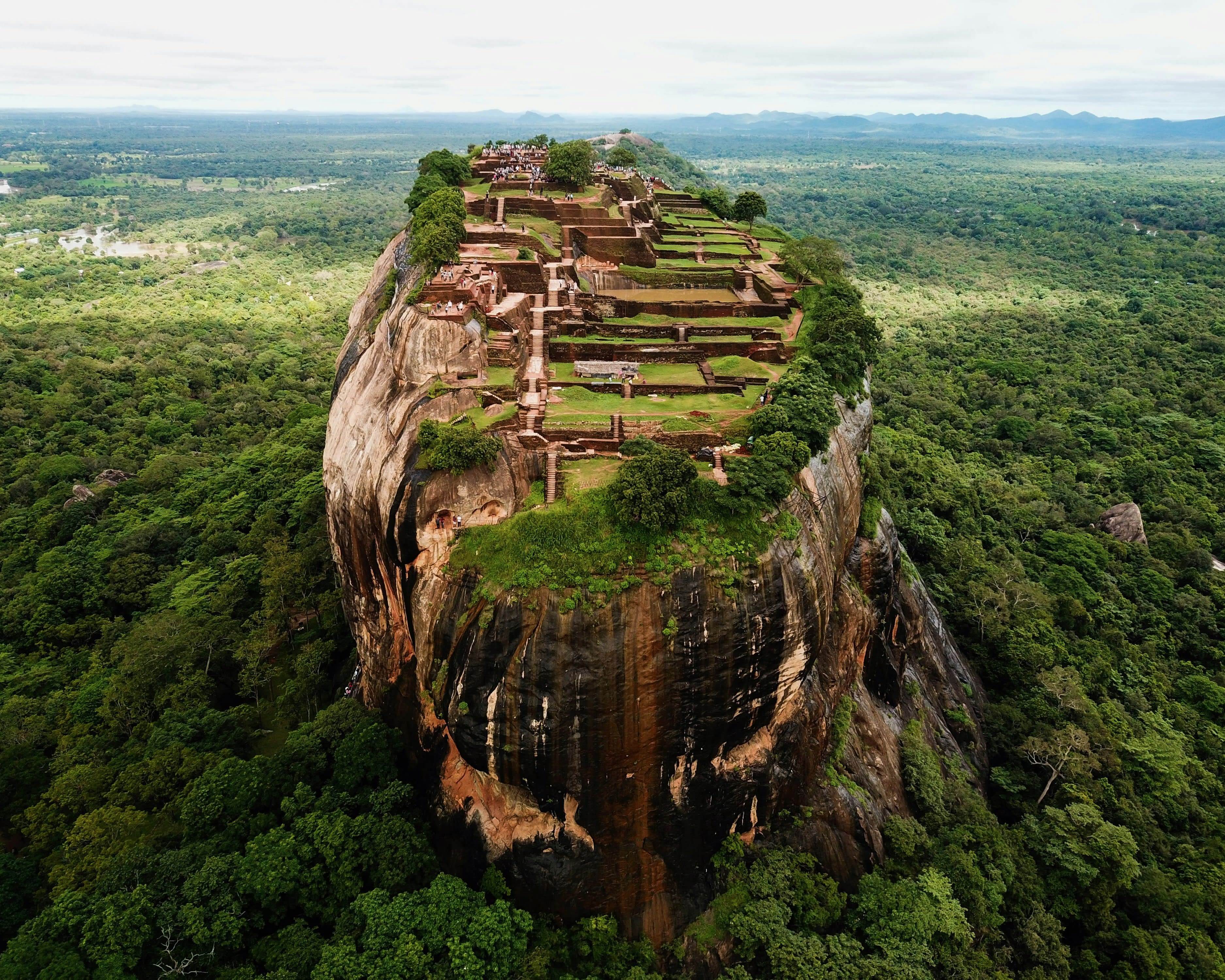
Sigiriya is the major visual landmark: a rock fortress rising more than 600 feet above the jungle, with frescoed galleries, water gardens, and a summit reached by a steep climb. Nearby Dambulla adds cave temples painted floor to ceiling, while Polonnaruwa offers a powerful introduction to Sri Lanka’s medieval capital.
For tea estates: the central highlands
Head into the central highlands and tea country for cooler air, mountain views, and a slower pace. Kandy sits around an artificial lake and the Temple of the Tooth, one of Buddhism’s most sacred sites, while Ella feels smaller and more relaxed, with cafés, ridge walks, and views that can stretch toward the southern coast on clear days.
One of the country’s signature experiences, the train journey between Kandy and Ella passes through tea estates, mountain tunnels, arched bridges, and misty highlands over several hours.
For seaside history: Galle
Galle gives the south coast its cultural anchor. The UNESCO-listed Dutch fort is a walkable district of ramparts, churches, whitewashed streets, boutiques, hotels, restaurants, and working homes, all set within a historic grid that still feels lived-in.
It works well as a standalone stop or as a base for exploring nearby beach towns. Add it when you want a coastal itinerary with more texture than sand and surf alone.
For surfing, whale watching, and beach towns: the south coast
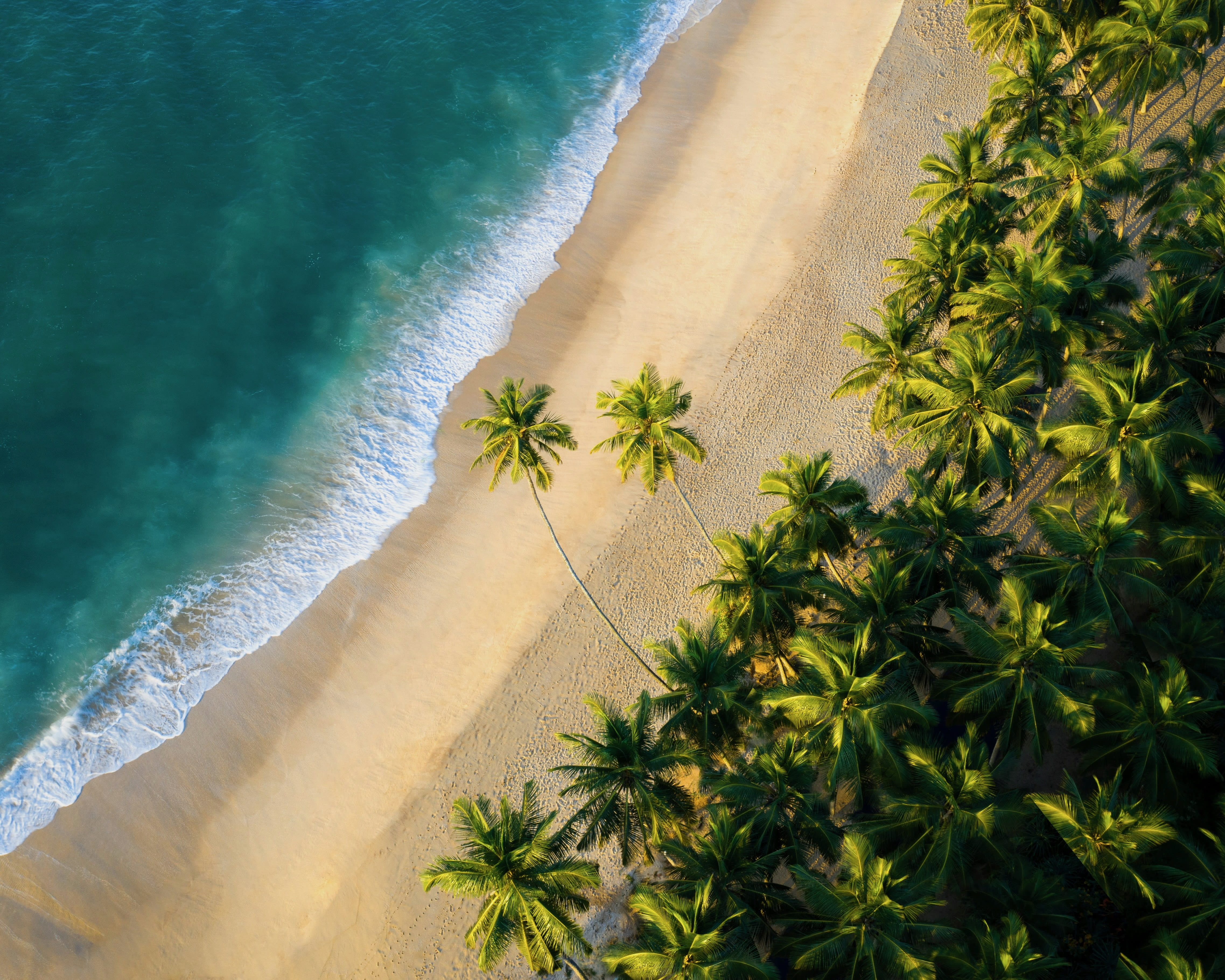
The south coast changes quickly from lively surf towns to quieter beach retreats. Hikkaduwa adds a layer of nightlife and high-energy bars, Weligama is renowned for its beginner surf breaks, Mirissa serves as the base for seasonal whale watching, and Tangalle draws beachgoers who crave easy-going vibes and quiet bays.
For a different beach season: the east coast
The east coast follows a different weather pattern from the south and west, with its strongest season generally running from May through October. If you’re traveling outside the south coast’s prime months, places like Trincomalee and Arugam Bay can shift the trip toward diving, beaches, or more serious surf.
For leopard safaris: Yala National Park
Choose Yala if leopard sightings are high on your list. It is Sri Lanka’s best-known safari destination and delivers the closest version of a classic game-drive experience, though sightings are never guaranteed and responsible guiding matters.
For elephants: Udawalawe National Park
If elephants are the priority, this park’s open grassland makes wildlife viewing feel less pressured than in denser terrain, and elephant sightings tend to be more reliable.
Where to stay in Sri Lanka
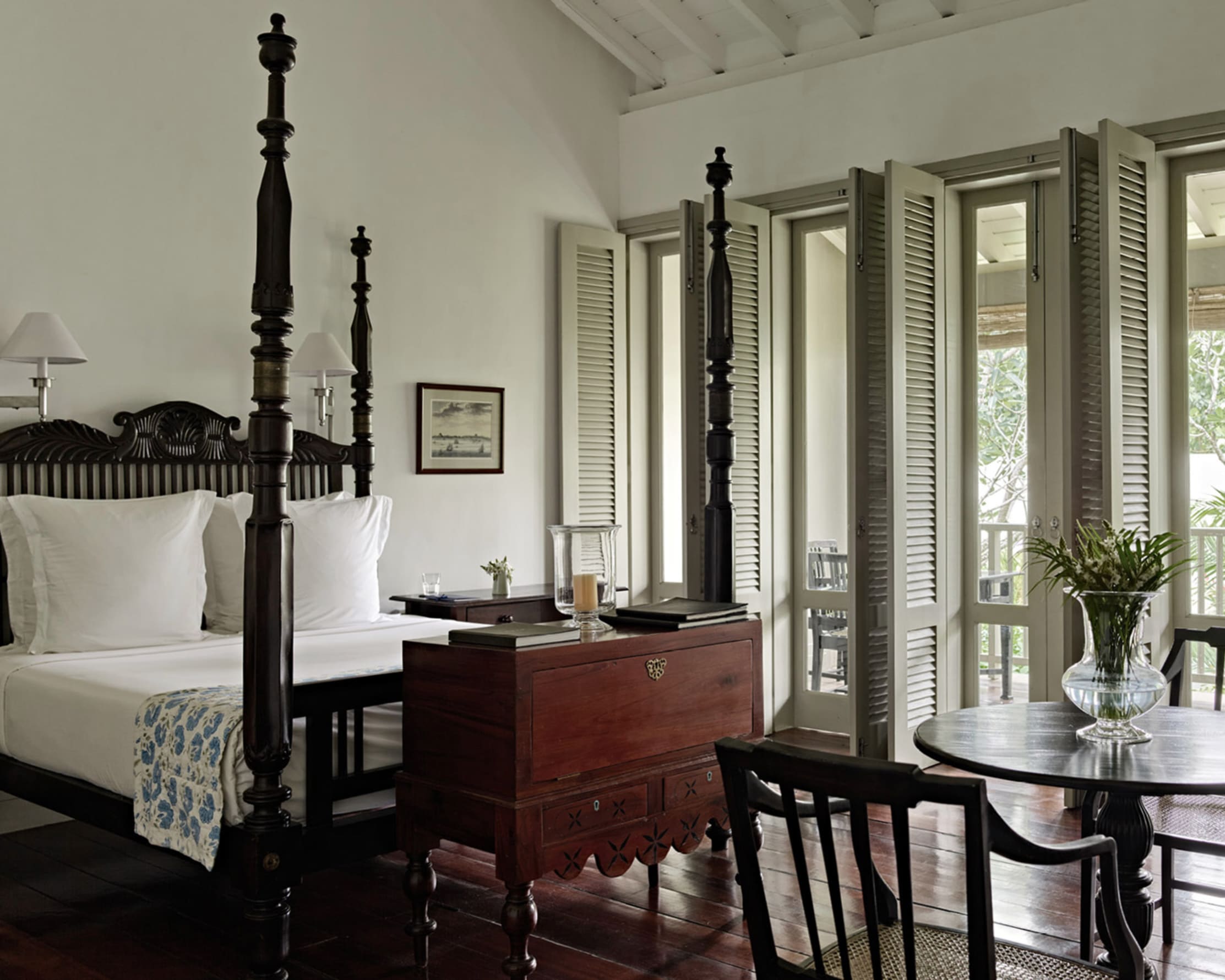
Image courtesy of Amangalla
Sri Lanka’s strongest hotels tend to be closely tied to their setting: safari lodges near Yala, historic stays inside Galle Fort, tea-country bungalows in the highlands, and south-coast resorts that treat the ocean as the main event.
Wild Coast Tented Lodge: On the edge of Yala National Park, cocoon-shaped suites center on the safari setting, which leopards, elephants, and sloth bears call home. An infinity pool overlooks a watering hole, so wildlife viewing can continue even after the game drives end.
Fora Perks include one guided nature walk, an upgrade, and extended check-in/out whenever possible.
Amangalla: Within the ramparts of the UNESCO-listed Galle Fort, this 17th-century building once served as the Dutch governor’s guesthouse. Verandas, high-ceilinged rooms, and a sense of old-world formality tie the hotel closely to the fort’s architecture and daily life.
Fora Perks include a $100 hotel credit, daily breakfast, an upgrade, and extended check-in/out whenever possible.
Cape Weligama: From a clifftop above the Indian Ocean, 39 villas, multiple restaurants, and an infinity pool make this Relais & Chateâux property a generous coastal base for surfing, whale watching, and day trips along the south coast.
Fora Perks include one high-tea experience (for stays of three nights or more), an upgrade, and extended check-in/out whenever possible.
Amanwella: Everything about this ultra-luxury resort—from the pared down, minimalist design to the intuitive, personalized service—keeps guests’ focus on the ruggedly beautiful south Sri Lankan coast.
Fora Perks include a $100 resort credit, daily breakfast, an upgrade, and extended check-in/out whenever possible.
Ceylon Tea Trails: Four restored British planter’s bungalows—each with its own staff and kitchen—sit within a working tea estate in the central highlands. Plunge pools, produce from the surrounding gardens, and views across manicured tea terraces enhance every stay.
Fora Perks include one gourmet tea infused dinner, an upgrade, and extended check-in/out whenever possible.
Kayaam Wellness: Eight Ayurvedic programs—ranging from 3-night introductions to 22-night intensives—are designed around a specific outcome, with a consulting doctor tailoring herbal treatments, diet, and movement to each guest’s needs.
Ahu Bay: Curving architecture, natural materials, and direct beach positioning give this small south-coast property the feel of a thoughtfully designed private house with hotel-level service.
Heritance Kandalama: Carved directly into a rocky, jungle-covered cliffside, this architectural gem features a sprawling infinity pool, open-air corridors, and panoramic views across the Kandalama Reservoir, where wild elephants roam and monkeys swing freely.
Water Garden Sigiriya: A collection of villas float above a network of man-made lakes and water channels. Private plunge pools, lily-pad-filled waterways, and a serene infinity deck capture a sense of majestic isolation in the heart of the Cultural Triangle.
Uga Ullagalla: This eco-conscious resort centers around a restored 150-year-old chieftain’s mansion. Individual stilted villas, private plunge pools, and complimentary bicycles provide an ultra-private base for wildlife spotting, horseback riding, and exploring nearby ancient ruins.
Cruising to Sri Lanka
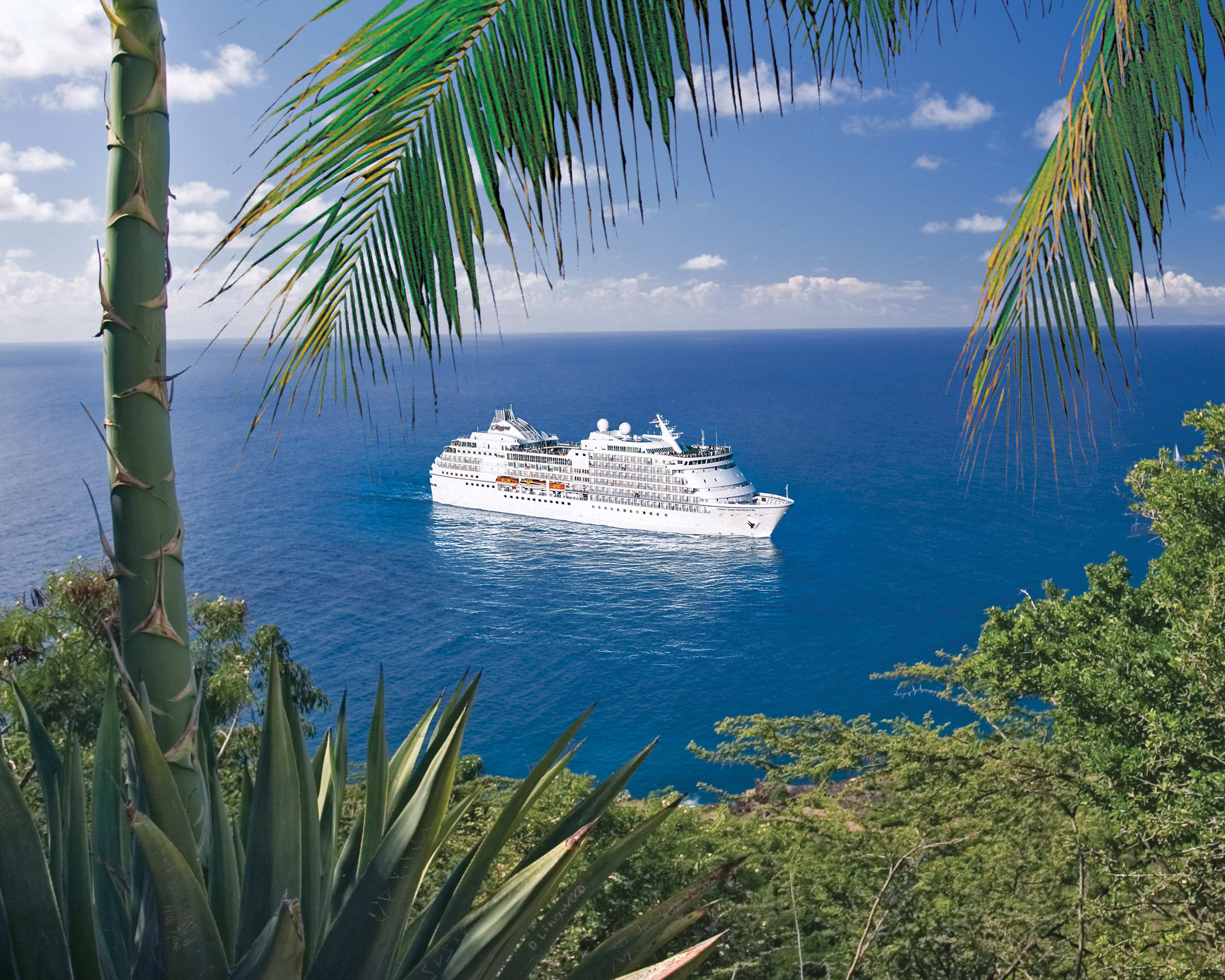
Image courtesy of Regent Seven Seas Cruises
Sri Lanka appears almost exclusively as a single day on long Indian Ocean itineraries or grand world voyages, with four ports of call: Colombo (the island’s commercial capital), Galle (the historical and cultural hub), Hambantota (the gateway for many wildlife excursions), and Trincomalee (the beach and watersport stop)..
Sri Lanka’s best-known inland destinations—Sigiriya Rock, the Cultural Triangle, Kandy’s Temple of the Tooth, and the tea country highlands—sit too far from the coast to be seen on a standard shore excursion.
Notable cruise lines
Silversea: All-suite ships, butler service, inclusive fares, and a sophisticated but unstuffy atmosphere make this line a strong fit for travelers who want luxury without losing the destination thread. The S.A.L.T. program gives food and shore excursions a deeper regional focus.
Virtuoso Voyages Hosted Benefits available on select sailings.
Holland America Line: Experienced cruisers who value consistency, comfort, and destination-heavy itineraries appreciate the warm onboard atmosphere and well-run programming on these mid-size ships.
Fora Perks include a $100 shipboard credit per stateroom on select sailings.
Viking Cruises: These adults-only ocean ships are well-suited to intellectually engaged travelers who favor a sleek Scandinavian aesthetic and high-quality, culturally focused programming.
Fora Perks include up to $200 onboard credit per stateroom on select sailings.
Regent Seven Seas Cruises: All-suite ships and inclusive fare model that encompasses specialty dining and shore excursions, among other costs, appeal to travelers who want a high-comfort cruise with many of the major decisions handled before boarding.
Virtuoso Voyages Hosted Benefits available on select sailings.
Oceania Cruises: Oceania leans into its culinary reputation, with Jacques Pépin as executive culinary director and specialty restaurants included in the fare. Sea days are kept substantial with a library, cooking classes, guest speakers, and an adults-only atmosphere that leans country-club casual by day.
Virtuoso Voyages Hosted Benefits available on select sailings.
Sri Lankan culture
Food and drink to know
Sri Lankan food blends indigenous traditions with centuries of outside influence, brought to the island by trade routes and colonial history. South Indian techniques and ingredients are foundational, while Portuguese, Dutch, and British elements appear in certain dishes and cooking styles; coconut, rice, seafood, curry leaves, pandan, chili, and sambol anchor the cuisine across regions.
Hoppers: Bowl-shaped pancakes of fermented rice flour and coconut milk, crispy at the edges and soft at the center—eaten plain, or with an egg cooked into the well
Kottu roti: Flatbread chopped and stir-fried on a hot griddle with vegetables, egg, meat, and spices
Rice and curry: A mound of rice surrounded by bowls of curried meat or fish, dhal, and spiced sambol condiments
Pol sambol: Freshly grated coconut pounded with dried chili, lime juice, and Maldive fish to form a coarse, fiery condiment served with almost every meal
Fish ambul thiyal: A dry, intensely flavored sour fish curry unique to Sri Lanka, made with the tart goraka fruit that gives the dish its characteristic acidity
Ceylon tea: A bright black tea grown across highland estates in Nuwara Eliya, Kandy, and Uva that’s best brewed strong and tempered with a splash of milk
Wood apple juice: A thick beverage with a fermented funk and flavor somewhere between tamarind and dates
King coconut water: The bright orange coconut found across the island yields a sweeter, more delicate beverage than its green counterpart
Lion Lager: A light, crisp local lager with mild maltiness, best served ice-cold alongside spicy food
Arrack: Sri Lanka’s national spirit, distilled from the fermented sap of coconut palm flowers and often mixed with ginger beer
Sri Lankan history and local context
Sri Lanka’s recorded history stretches back more than 2,500 years, beginning with Sinhalese kingdoms that built irrigation systems, temples, and royal cities across the island’s interior. The archeological sites at Anuradhapura and Polonnaruwa preserve these legacies through stupas, monasteries, and other ruins that demonstrate the island’s long-standing importance to Theravada Buddhism.
Tamil communities, with cultural and linguistic ties to South India, have also shaped the island for centuries, especially in the north and east. Portuguese, Dutch, and British colonizers later transformed trade, religion, architecture, labor, and land ownership, with lasting consequences that are still visible in coastal forts, tea estates, place names, and demographics.
Independence came in 1948, but the decades that followed were marked by deepening ethnic tensions between the Sinhalese-majority government and Tamil residents facing discrimination in language policy, education, and political representation. The civil war between the Sri Lankan government and the Liberation Tigers of Tamil Eelam lasted 26 years and ended in 2009 with devastating human cost. That history is recent, and it remains especially present in the north and east.
The island’s cultural life is broader than its political history: Kandyan dance, Sinhala and Tamil literature, Buddhist and Hindu ritual calendars, mosque and church communities, and a food culture that cuts across communal lines. Travelers who understand that complexity will have a richer trip.
Major celebrations and events
Duruthu Perahera (January, Kelaniya): This nighttime festival marks the Buddha’s first visit to Sri Lanka with a ceremonial procession of decorated elephants, drummers, dancers, and torch bearers on the Kelaniya Raja Maha Vihara temple grounds.
Maha Sivarathri (February/March, countrywide): One of Hinduism’s most important occasions is observed with fasting, prayer, and night-long vigils dedicated to Lord Shiva—devotees in the major temples maintain their observance from dusk until dawn.
Sinhalese and Tamil New Year (April, countrywide): The end of the harvest season is marked with timed rituals—lighting the hearth, cooking milk rice—followed by games of greased pole climbing, pillow fights, and pot-breaking that take over the streets.
Vesak Poya (May, countrywide): The most sacred date in the Buddhist calendar commemorates the birth, enlightenment, and passing of the Buddha with paper lanterns, illuminated roadside food stalls, and backlit pandols depicting his life.
Kandy Esala Perahera (July/August, Kandy): For 10 nights, the city of Kandy honors the Sacred Tooth Relic of the Buddha with a procession of ornately caparisoned elephants, Kandyan drummers, whip crackers, and fire dancers that builds in scale each night.
Deepavali (October/November, countrywide): During the Festival of Lights, Tamil communities celebrants don new clothes, set off fireworks, and exchange sweets. Many people also set out oil lamps on their doorsteps and decorate thresholds with colorful powdered kolam patterns.
What to do in Sri Lanka
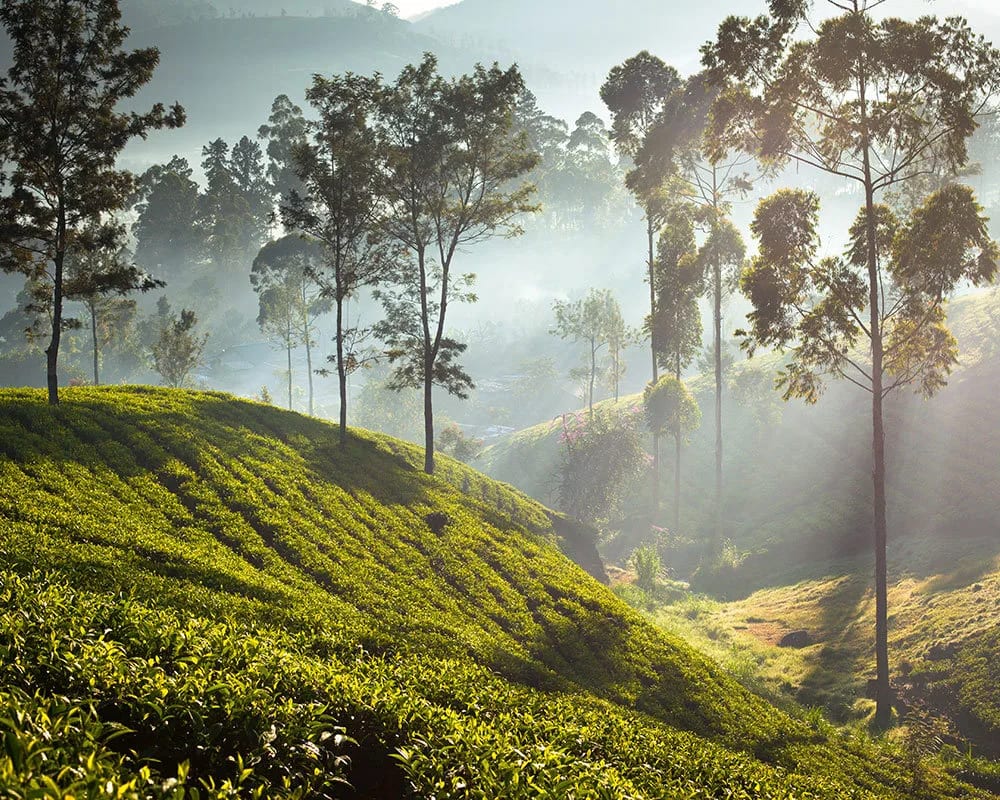
Image courtesy of Ceylon Tea Trails - Relais and Chateaux
The country divides into a Cultural Triangle in the north-central interior, a central hill country, and a beach-lined southern coast. A well-planned trip can cover a large portion of the country without feeling rushed.
Ancient sites and attractions
Sigiriya Rock Fortress: The 5th-century citadel rises more than 600 feet above the jungle, with frescoed galleries, water gardens, and lion-paw gates along the summit approach. The climb is steep, but the site is one of the clearest expressions of Sri Lanka’s ancient engineering and royal ambition.
Dambulla Cave Temple: Near Sigiriya, five cave sanctuaries house more than 150 Buddha statues and over 20,000 square feet of ceiling frescoes dating to the 1st century B.C.
Polonnaruwa: The compact and well-preserved medieval capital holds a concentration of 11th and 12th-century temples, dagobas, and royal buildings. The standout is the Gal Vihara, four enormous Buddha figures carved into a granite face.
Galle: This UNESCO World Heritage Site of bastions, ramparts, and a working lighthouse—originally built by the Portuguese in the 16th century and later expanded by the Dutch—is filled with cobblestone streets, boutiques, and art galleries.
Beaches: Mirissa is lively with a good restaurant scene and whale-watching boat tours. Bentota suits a slower vibe with calmer waters suited to families. Weligama has a long bay that functions as one of the better learn-to-surf breaks in Asia. Arugam Bay on the east coast is a serious surf destination; its season runs roughly May through October.
Activities
Taking the Kandy to Ella train: The iconic six-hour rail journey through Sri Lanka’s hill country climbs through tea estates, crosses the nine-arch bridge, and passes through misty cloud forests above 6,000 feet. Advance reservations are a must.
Visiting tea estates: The hill country around Nuwara Eliya and Ella is blanketed in tea fields that have been in continuous production since the 1860s. Most offer tours covering the picking, withering, rolling, and drying process. Mackwoods Labookellie, on the road from Kandy to Nuwara Eliya, is among the most visited and includes a tasting.
Scaling Adam’s Peak (Sri Pada): The 7,359-foot sacred summit draws Buddhist, Hindu, Muslim, and Christian pilgrims alike to venerate the “sacred footprint” at its apex. Most ascents begin around 2 a.m. so climbers reach the top before sunrise. The pilgrimage season runs December through April, when the 5,500-step pathway is lit through the night.
Going on wildlife safaris: Yala National Park has one of the highest densities of leopards in the world, with jeep safaris departing at dawn and dusk. Udawalawe is the best park for elephants since the herds are large, habituated, and reliably visible in open grassland.
Whale watching: The waters off the southern coast afford amazing blue whale sightings, with sperm whales and spinner dolphins also encountered. The season runs November through April, with tours leaving from Mirissa Harbour in the early morning.
Shopping: Browse boutiques filled with handloom textiles, crafts, and homewares in Colombo. In Galle, check out art galleries, jewelers, and shops to buy Ceylon teas.
The Pekoe Trail: A spectacular, 186-mile walking trail winding through the Central Highlands, inviting hikers to trek through tea plantations, remote villages, and dramatic valleys along the historic routes used to transport Ceylon tea.
Where to eat and drink in Sri Lanka
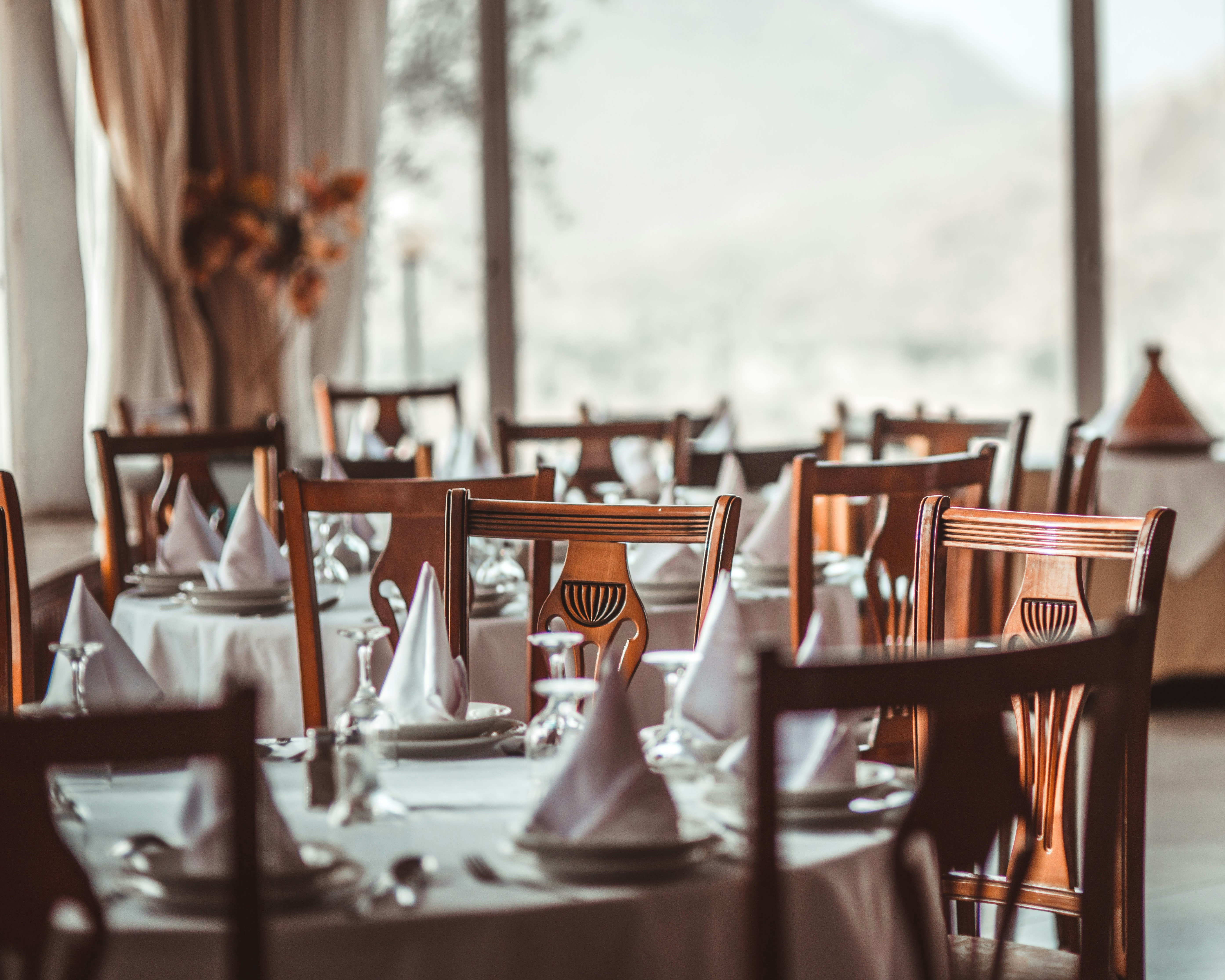
Sri Lanka’s food is built on coconut milk, curry leaves, pandan, and an extensive range of spices. Beyond traditional cooking, there’s also a strong contemporary restaurant scene, especially in Colombo, Galle, Weligama, and the south-coast surf towns.
The Bayleaf (Colombo): Ask for a table on the garden terrace, where this long-running Italian restaurant serves fresh pasta in a century-old Colombo mansion.
Ministry of Crab (Colombo): Set inside a 400-year-old Dutch Hospital in Colombo Fort, this celebrated restaurant specializes in lagoon mud crab, a local delicacy prepared a dozen different ways.
Aqua Forte (Galle): Inside a neoclassical Dutch mansion, chef Roberto serves a focused four-course menu of regional Italian cooking.
Kaiyō (Weligama): Polished concrete and steel give this sushi bar a striking contrast to the surf-town setting, but the locally caught seafood reminds diners exactly where they are.
Maru (Galle, Weligama, Hiriketiya, and Colombo): For something quicker and lighter, this chainlet of poke cafés offer a tight menu with strong value for the quality.
Locale (Weligama): Cocktails, live music, poke bowls, and grilled dishes make this gastropub a lively choice for an easy beachside dinner.
Smoke & Bitters (Dickwella): Built with locally sourced materials and stocked with house-made bitters, liqueurs, and syrups crafted from native ingredients, this open-air bar and restaurant is rooted in the island on every level. The kitchen matches the bar’s precision, with food that goes well beyond standard beach-bar fare.
Trax (Ahangama): Homegrown spices feature prominently in the focused menu of small plates at this spot, which serves as a garden café by day and a hybrid cocktail bar and music venue by night.
Mettha’s Home Cooked Meals (Unawatuna): The namesake chef grinds her own spices, sources vegetables from farms each morning, and cooks a rotating spread of local staples, serving finished dishes in the front parlor of her home.
Cafe Nuwara (Kandy): Local art and architectural heritage inform the interiors, while the menu moves between Sri Lankan dishes and international options.
Trips to add on
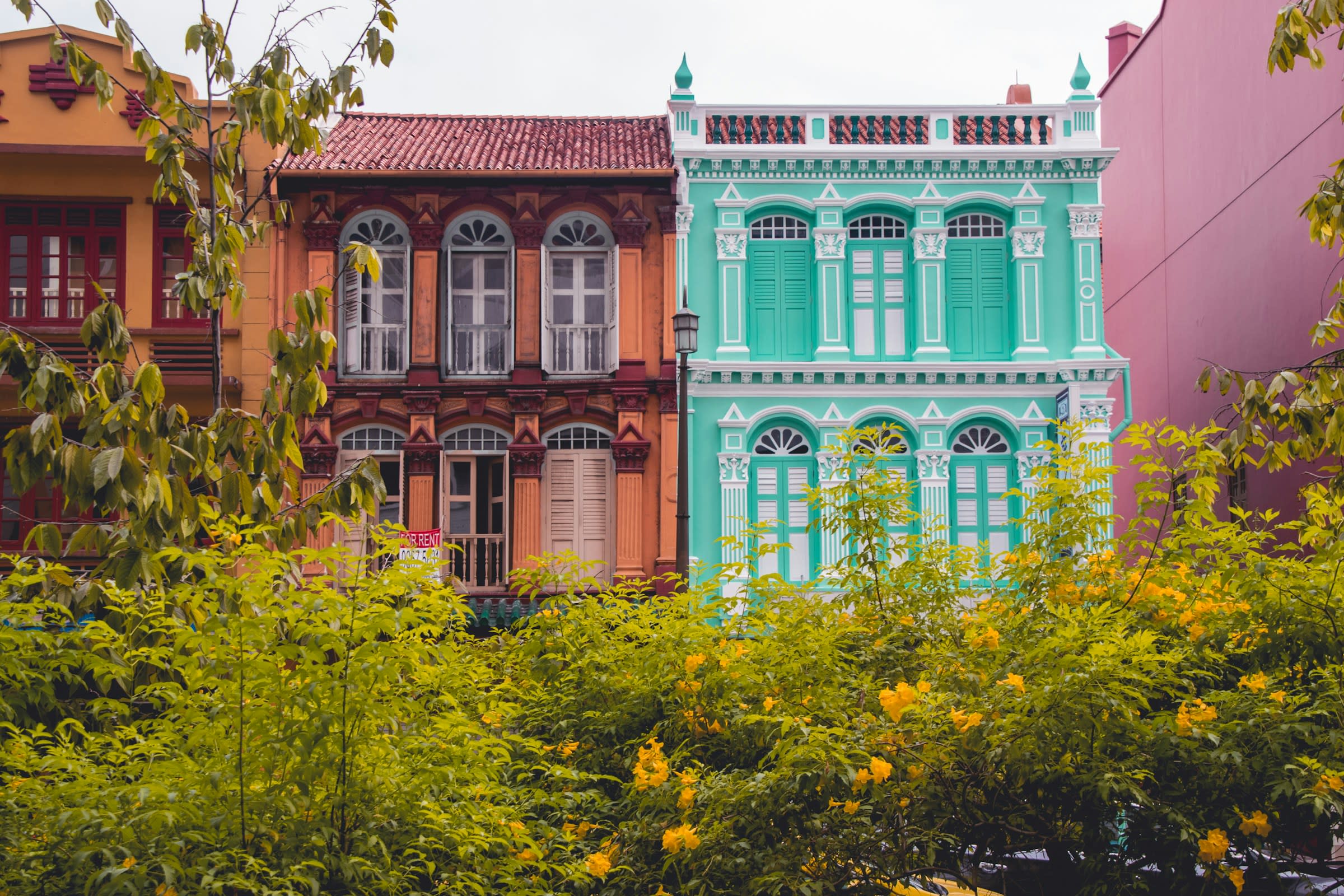
Sri Lanka sits at a natural crossroads for long-haul travel, and its position in the Indian Ocean makes it a logical jumping-off point for the wider region—or a convenient place to break up the journey home.
Maldives (1.5-hour flight): After Sri Lanka’s temples, tea country, jungle, and coast, this archipelago narrows the focus to pure relaxation and private-island resorts. Choosing the right property is the key decision to make.
Thailand (3.5-hour flight): Bangkok adds big-city energy, street food, and hotels with real range. Chiang Mai shifts the trip toward temples and northern landscapes, while islands such as Phuket and Koh Samui offer a beach chapter that complements Sri Lanka without feeling repetitive.
Singapore (4-hour flight): The city’s efficiency and impressive airport are enough to merit a day-long stopover at minimum, but the excellent food (hawker centers, Peranakan restaurants) coupled with Gardens by the Bay, Chinatown, and Little India justify a more extended stay.
Dubai (4.5-hour flight): Al Fahidi, the spice and gold souks, and the creek district offer a counterpoint to the city’s towers, malls, and highly developed hotel scene, and the volume of Emirates flights adds both flexibility and practicality.
Stopover cities (5.5- to 11-hour flight): The routing from Sri Lanka to North America almost always requires a connection, easy to build in two or three nights somewhere along the way. London and Paris are well connected to major North American cities, offering museums and historical sites to explore. Tokyo and Hong Kong reward even a short stay with exceptional food, neighborhoods, and cultural sites. In Dubai, a major hub for Emirates, there’s plenty to explore between the spice and gold souks, the creek district, and the over-the-top malls.
If not Sri Lanka…
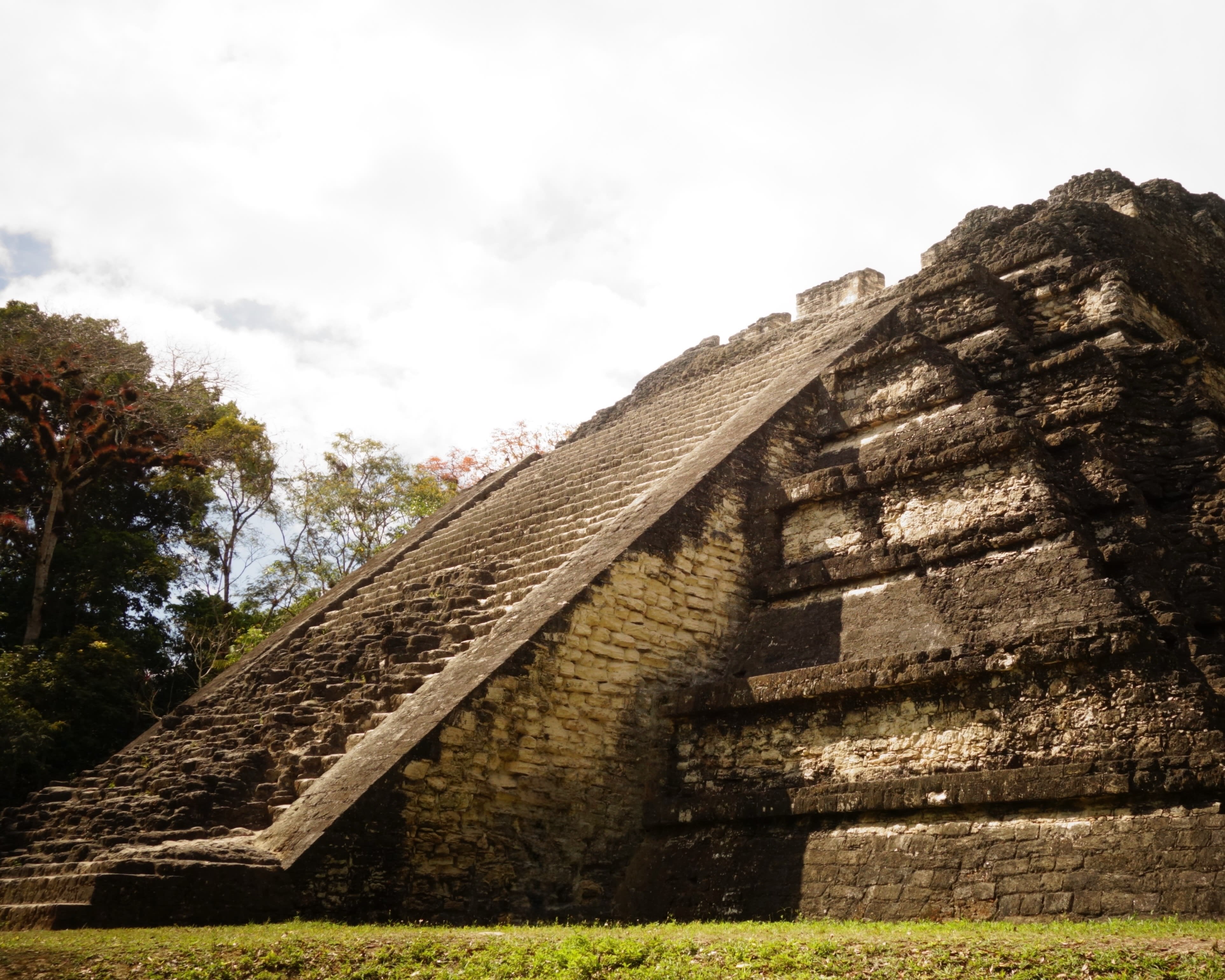
What makes Sri Lanka worth the flight—ancient ruins, a varied coastline, and extensive wildlife—shows up in each of these, through a different geography and personality.
India: For greater scale and intensity, start with Kerala and Tamil Nadu, where temple culture, tropical landscapes, spice-driven food, and South Indian history overlap most closely with Sri Lanka. North India adds the Himalayas, Mughal architecture, and a historical density that can take multiple trips to absorb.
Guatemala: Volcanic highlands, ancient Maya ruins, and Indigenous communities make Guatemala one of the most culturally concentrated countries in the Americas. Lake Atitlán—ringed by volcanoes and Maya villages—is the landscape centerpiece, and Antigua’s architecture provides a well-preserved base.
Morocco: Medinas, madrasas, souks, and a food culture built around spice and ceremony give Fez and Marrakech their character, while the Atlas Mountains, Sahara, and Essaouira extend the trip beyond the imperial cities.
Greece: The ancient ruins here are better known but no less affecting; Athens, Delphi, and Olympia carry real historical weight. The islands offer a coastline that shifts from the volcanic drama of Santorini to the forested, underdeveloped interior of Ikaria. The food, the pace, and the way history is embedded into the landscape make Greece a natural counterpart for travelers drawn to Sri Lanka’s combination of culture and coast.
Madagascar: The wildlife evolved in near-total isolation, which is why the lemurs, the baobabs, and the chameleons here look and behave like nothing encountered elsewhere. The island’s landscapes range from spiny desert in the south to rainforest in the east, and the Malagasy culture—a blend of African, Southeast Asian, and Arab influences—adds a layer of depth.