

Curator’s statement
Sri Lanka, known as the “Pearl of the Indian Ocean,” is an island located south of India. Its fame comes from its lush landscapes, paradisiacal beaches, rich history, and vibrant culture. This destination offers a unique combination of nature, ancient temples, colonial towns, and delicious cuisine. Sri Lanka is a fascinating destination for travelers seeking adventure, nature, culture, and relaxation.
The Fora Difference
Book with Michael Perlo to access exclusive perks and experiences on your trip.

Killer perks
Free upgrades, spa credits and more—we got you

Personalized recs
Customized travel planning for your style

Insider knowledge
Expert advice from people who’ve actually been there
Where to stay
Unlock perks by contacting Michael Perlo to book your trip.
Day 1: Travel route and arrival

Fairmont Doha and Raffles Doha hotels are located at the Katara tower
Traveling from Miami to Sri Lanka is a long journey. I recommend flying with Qatar Airways, as it offers direct flights from Miami to Doha, which makes it easy to connect with different parts of the world with a stopover in Doha, the capital of Qatar. This stop offers the opportunity to explore the city before continuing on to Sri Lanka. The first leg of the flight, from Miami to Doha, takes approximately 14 hours.
During my stay in Doha, I enjoyed two nights at the luxurious Fairmont Doha, which shares a building with the ultra-luxurious Raffles Doha in The Katara Tower. This accommodation adds a touch of luxury and comfort to the trip, allowing for rest and a brief exploration of the city.
Day 2: From Colombo to Negombo
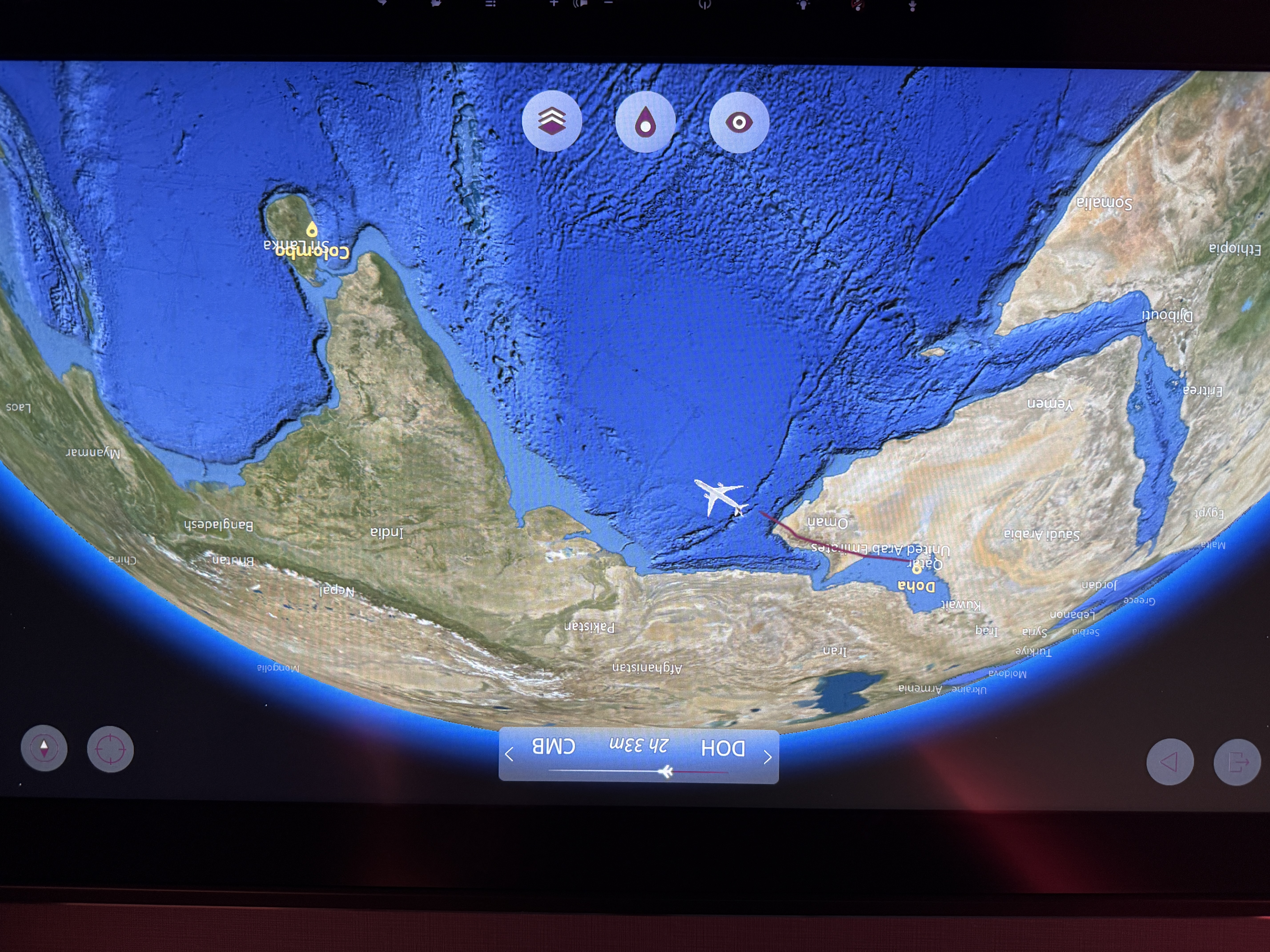
Arrive in Colombo and transfer to Negombo. Negombo is a lively coastal city just 20 minutes from Bandaranaike International Airport. It is known for its vibrant fish market, picturesque catamarans, the Dutch colonial canal, and its beaches. It mainly serves as a resting point before or after touring the island. I recommend staying at Jetwing Beach Negombo.
Day 3: Negombo Fish Market and Dambula Cave Temple
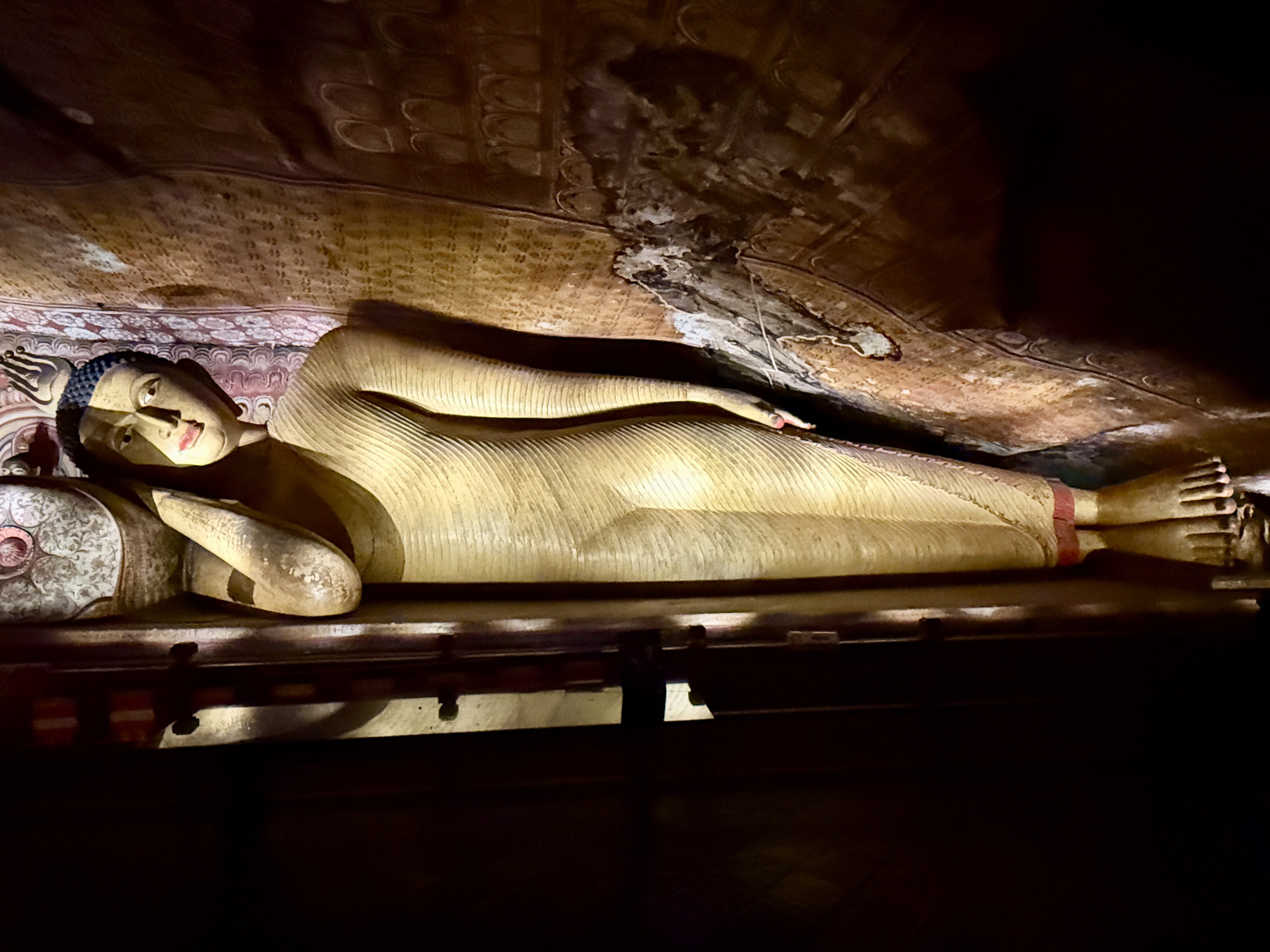
Reclining Budah at Dambulla Cave Temple
At 5:00 a.m., we set out to explore the Negombo fish market, locally known as Lellama, where we saw the arrival of boats and auctions. From dawn, fishermen return from the Indian Ocean on traditional boats and modern catamarans to unload nets filled with tuna, crabs, squid, and prawns. The lively open-air auctions are a unique sensory experience. You can also witness traditional fish drying. On the beaches next to the market, we saw huge stretches of jute mats where local women lay out and salt the fish to sun-dry, an ancient preservation method. This is also one of the best photographic spots in the country due to the vivid color contrasts of the boats, the variety of marine species, and the energy of the local people.
After visiting the market, we went to the Dambulla Cave Temple (also known as the Golden Temple), the largest and best-preserved cave temple complex in Sri Lanka, recognized as a UNESCO World Heritage Site. Located in the Central Province, this hanging monastery has been a sacred pilgrimage site for over 22 centuries. The complex consists of five main caves carved under a massive 160-meter rock, decorated with intricate Buddhist murals covering 2,100 square meters and housing over 150 Buddha statues. I recommend staying in Deer Park Hotel in Giritale or Wild Grass Nature Resort in Dambulla.
Day 4: Habarana Village Tour and Minneriya National Park Safari
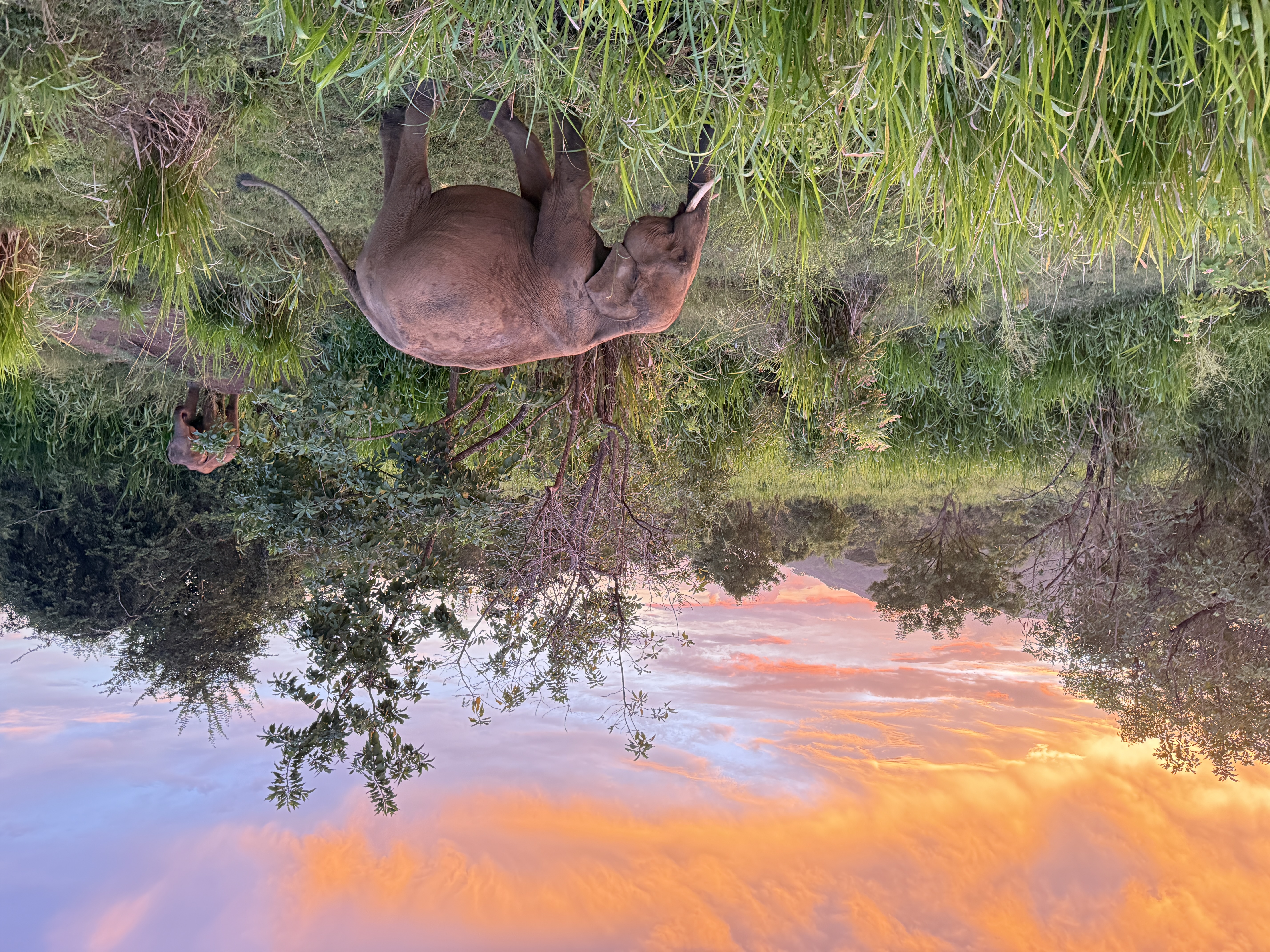
Minneriya National Park Safari
We toured Habarana village and went on a safari in Minneriya National Park. Combining a traditional tour of Habarana village with a jeep safari in Minneriya is one of the best eco and cultural experiences in Sri Lanka. Habarana serves as the perfect base in the Cultural Triangle, directly connected to the national parks that host hundreds of wild elephants.
Morning: Habarana Village Tour
This tour takes around 3 hours, depicts authentic rural Sri Lankan life. Recommended to start around 6:30–7:00 a.m. to avoid the heat. The tour traditionally begins with a ride through rural paths and farmlands in an ox cart. Walk alongside local plantations of rice fields, observe traditional farming systems (Chena), and see tree huts built to protect crops from wild animals. The tour also includes and canoe ride along the calm Habarana lake in a handmade boat with sightings of birds, monitor lizards, and even crocodiles. The tour ends with a traditional lunch of home-cooked rice and curry meal in a humble village home.
Afternoon: Minneriya National Park Safari
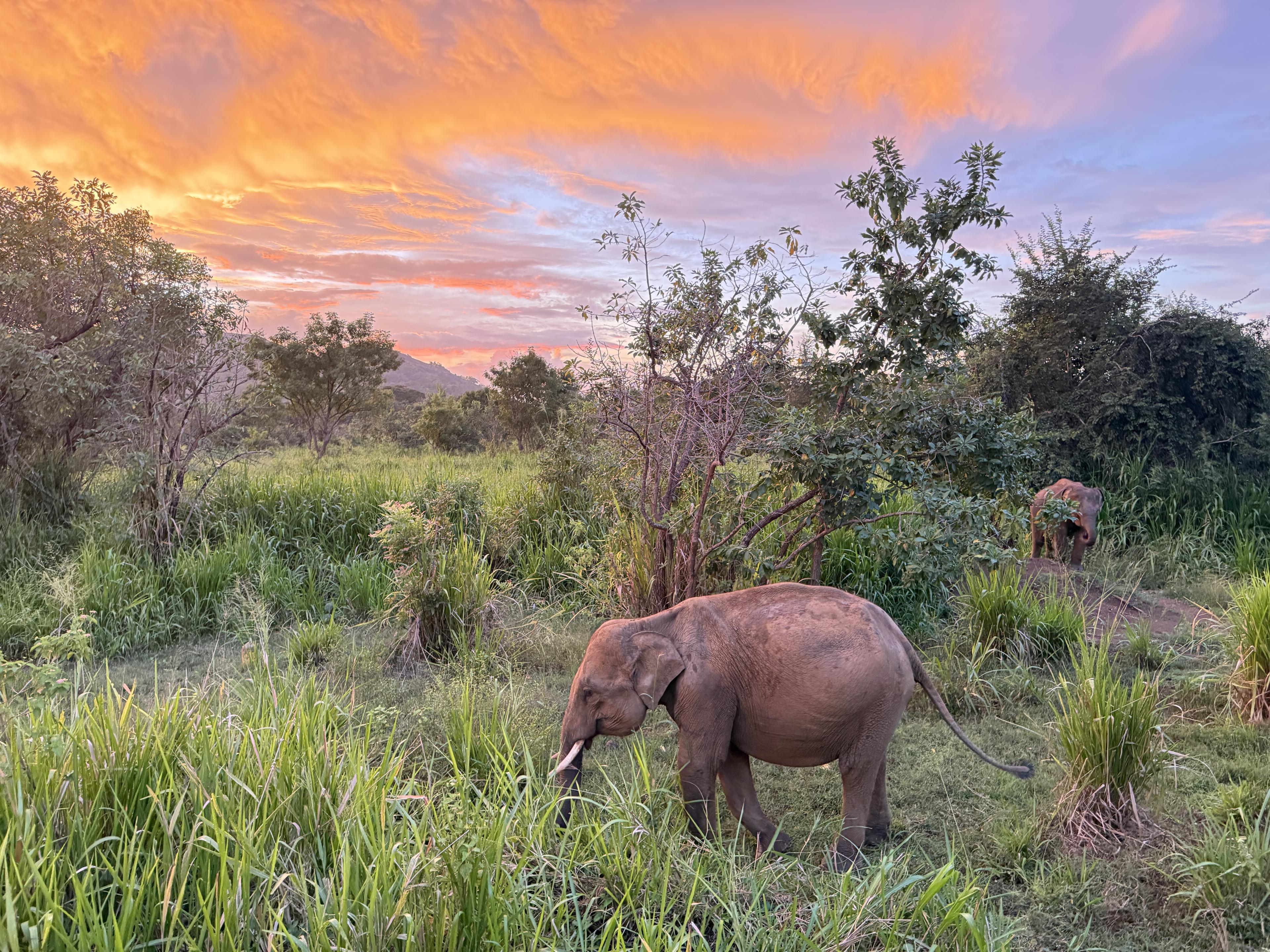
This region is famous for large herds of Asian elephants. The safari is conducted in open 4x4 jeeps for 3–4 hours. The best time is the afternoon safaris (2–3 p.m.) when elephants gather at the main reservoir to drink, bathe, and socialize. This area is also home to water buffaloes, spotted deer, peacocks, and many migratory birds.
Day 5: Sigiriya and Sri Dalada Maligawa
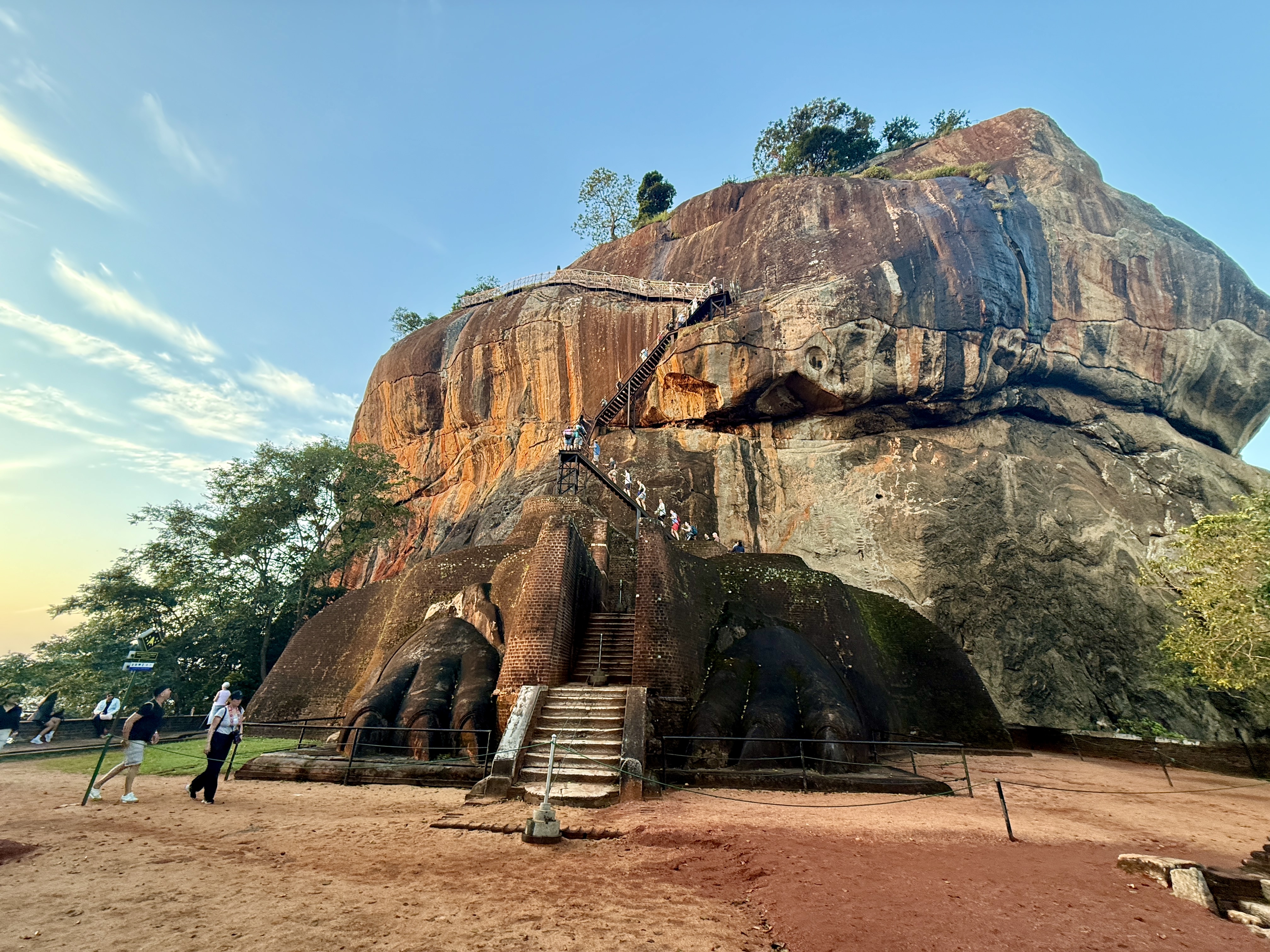
Sigiriya, known as the Lion Rock
We left at 5:00 a.m. for Sigiriya, the best time to witness the sunrise and avoid the intense heat. Known as the Lion Rock, this ancient palace and fortress complex rises almost 200 meters high in Sri Lanka’s central province. Declared a UNESCO World Heritage Site in 1982, locals consider it the eighth wonder of the world.
In the afternoon, we visited Sri Dalada Maligawa (Temple of the Sacred Tooth Relic) in Kandy, the most sacred site in the country and a UNESCO World Heritage Site. It houses Buddha’s canine tooth relic and is a global Buddhist pilgrimage center. I recommend staying at Earl's Regency Hotel or Kandy Myst by Cinnamon.
Day 6: Heeloya Village
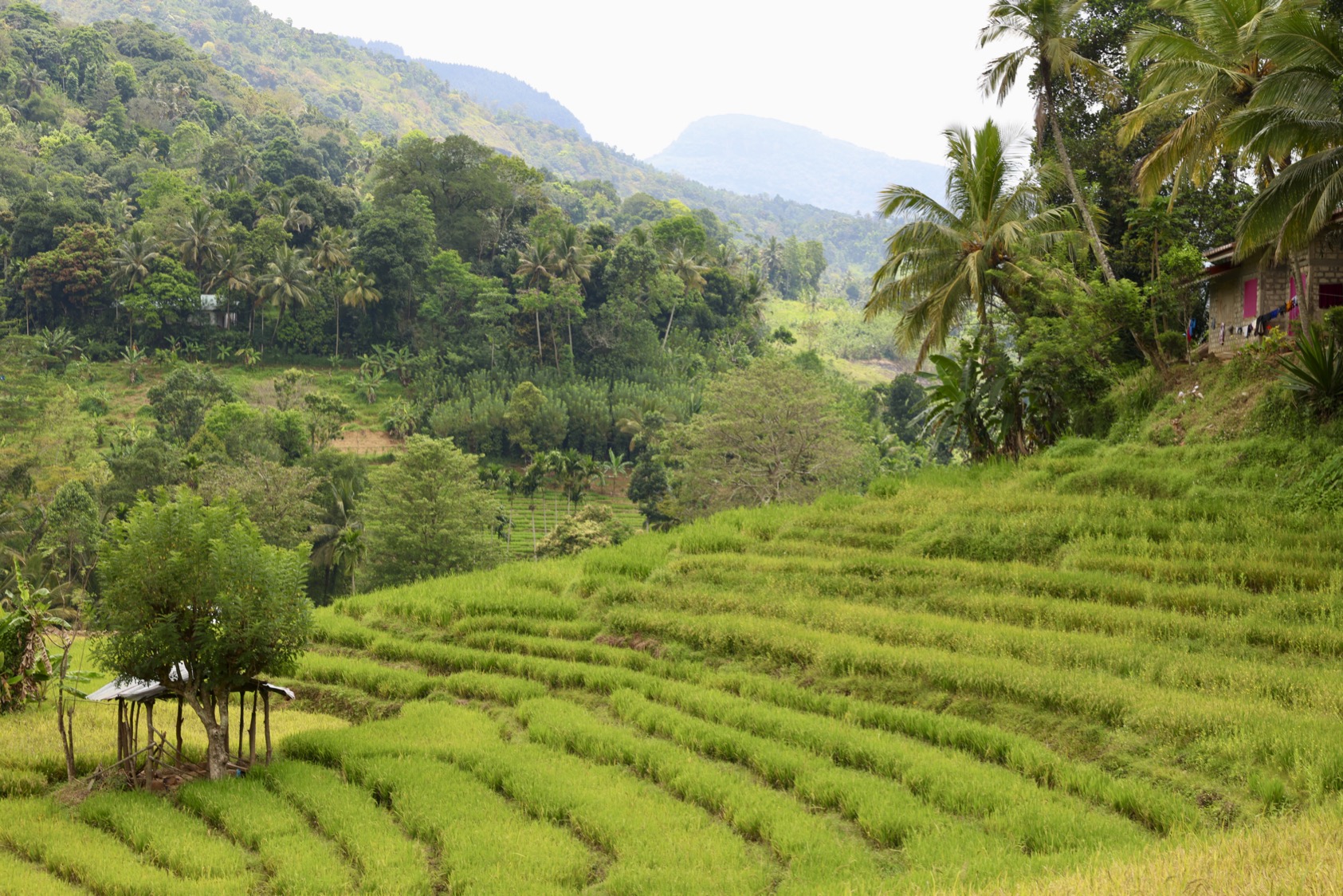
Heeloya Village
We visited Heeloya Village, experiencing traditional Sinhalese rural life and a long nature trek that led to a monastery in the middle of the jungle, where we meditated with Buddhist monks. The typical duration is a full-day (6–8 hours) including trekking and a traditional lunch. The meditation sessions are a moving spiritual experience with monastic breathing and contemplation techniques. The nature trek is a guided hike to observe flora, fauna, and interact with locals. We bathed in a river at a waterfall. The local meal consists of rice and curry prepared by a village family.
Day 7: Nuwara Eliya
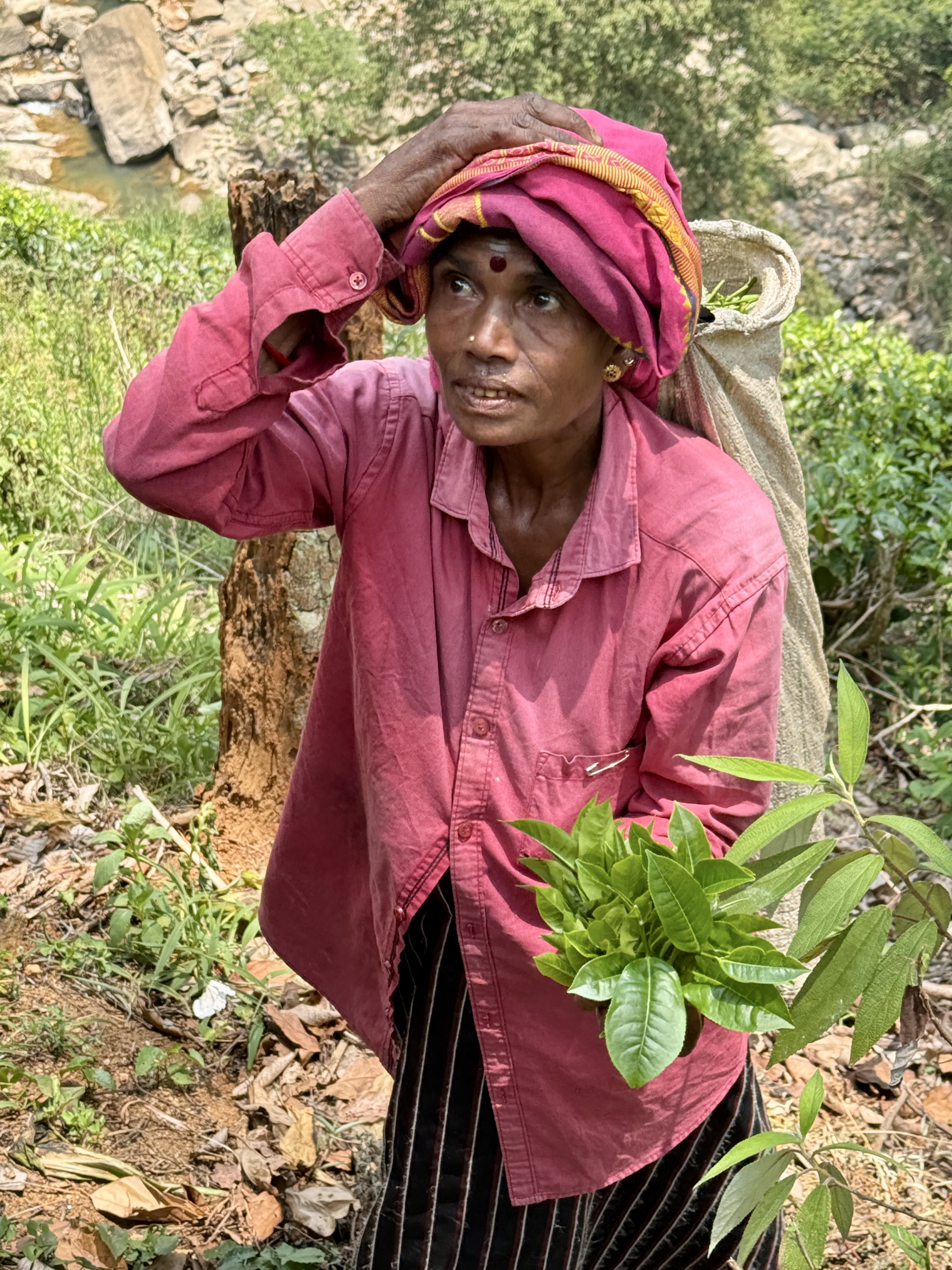
Tea leaf picking
Take this time to visit tea plantations and tea factory tours. This is the Ceylon tea capital in Sri Lanka’s highlands. We walked the green hills, joined in leaf-picking, and observed traditional machinery processing tea from drying to packaging. I recommend staying at Hill Rise Luxury Villa and Stables - Nuwara Eliya.
Day 8: Highlands to Ella train ride
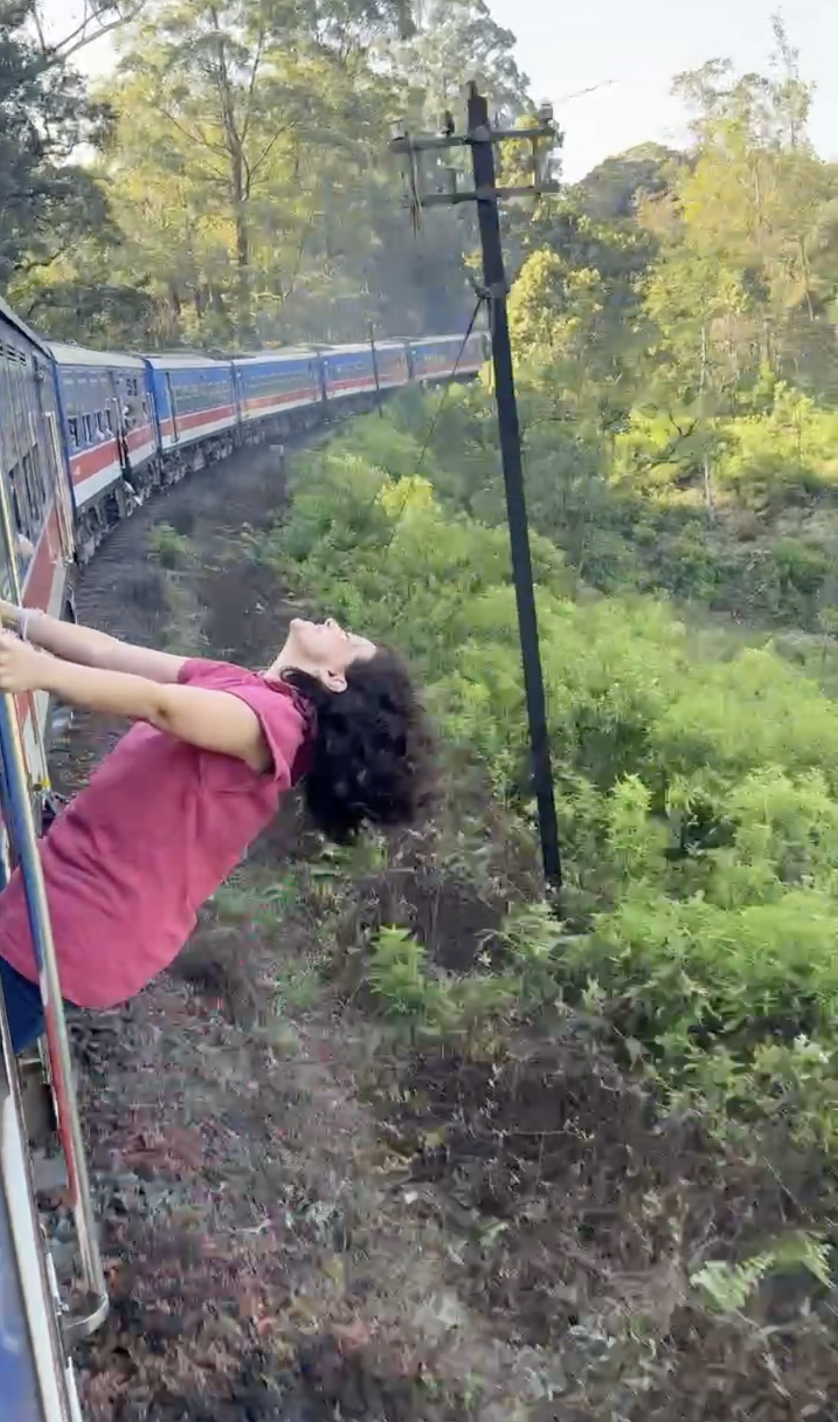
This train ride runs 2.5–4 hours, through the iconic mountains of Sri Lanka’s central province. You depart from Nanu Oya (7 km from Nuwara Eliya) or Ambewella station. Witness the stunning view of rolling green tea hills, pickers at work, misty forests, and spectacular waterfalls. The second or third class reserved seats are best for photography from open windows and doors. The right side gives the best early views, then switch to the left closer to Ella with an evening arrival in Galle.
Day 9: Galle Fort and stilt fishermen at sunset
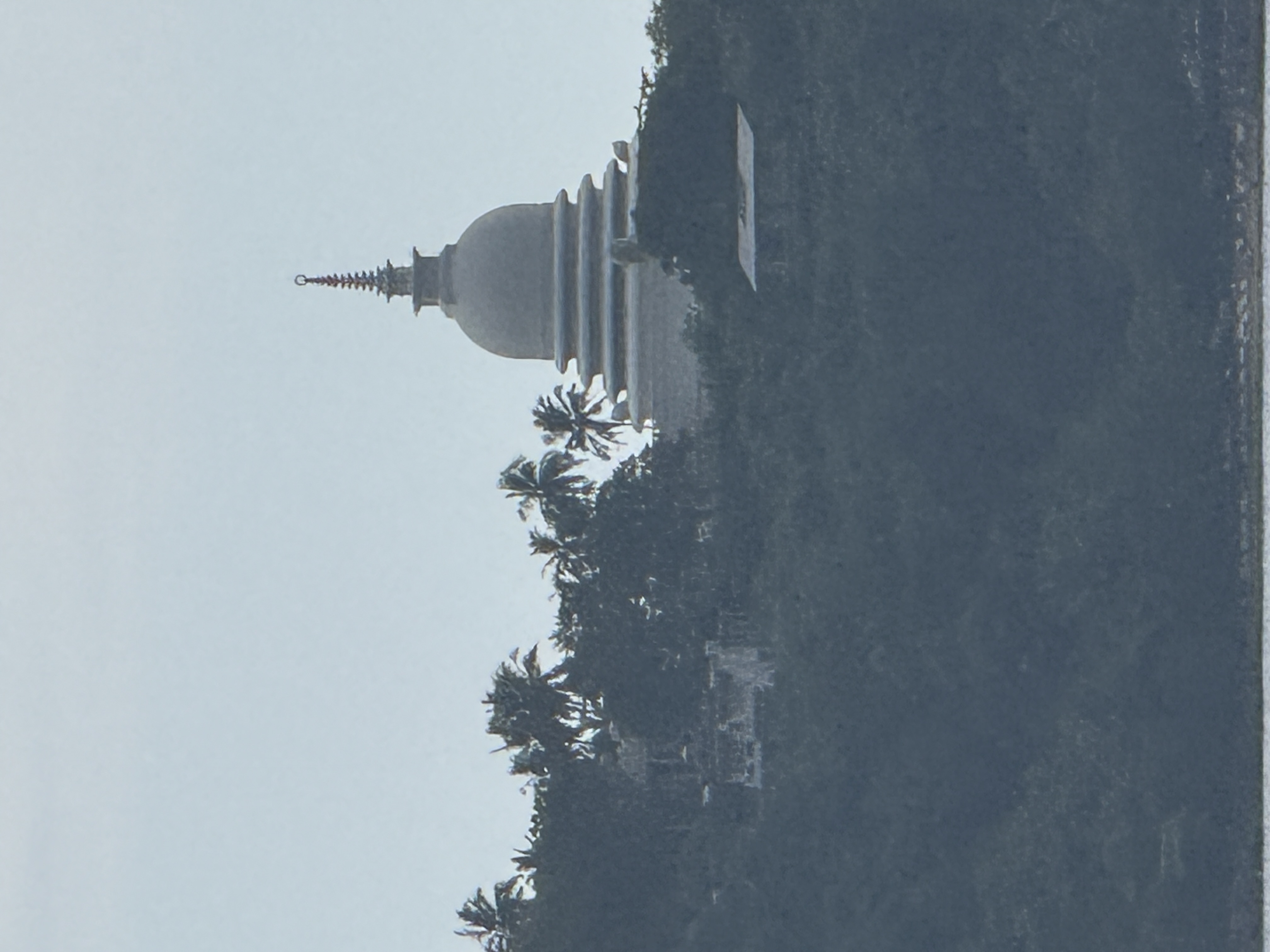
Buddist temple at Galle
The fort is a living historic district with cobblestone streets, boutiques, and cafes. The best route is to walk the 3-km walled perimeter with highlights including a 19th-century lighthouse and Flag Rock for sunset views over the sea. I recommend staying at Amangalla, an Aman Luxury Resort.
Visit stilt fishermen at sunset. This is found mainly at Koggala, Ahangama, and Unawatuna beaches. From Galle, it’s a 30–40 min tuk-tuk ride. Unfortunately, most stilt fishing today is for tourist photos and no longer for fishing as a job. Instead, tips (around $5) are expected.
Day 10: Beach day in Galle
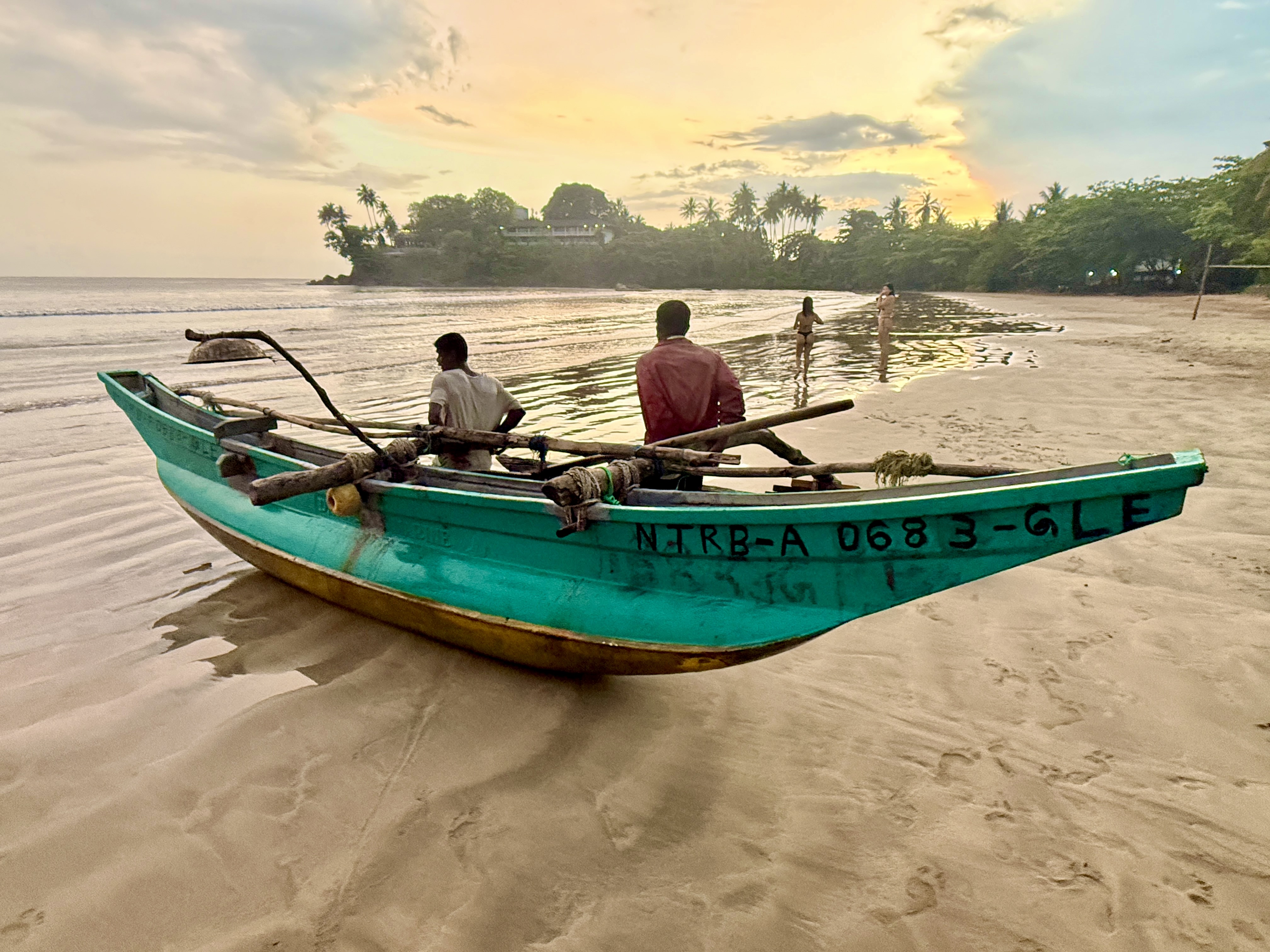
Beach day
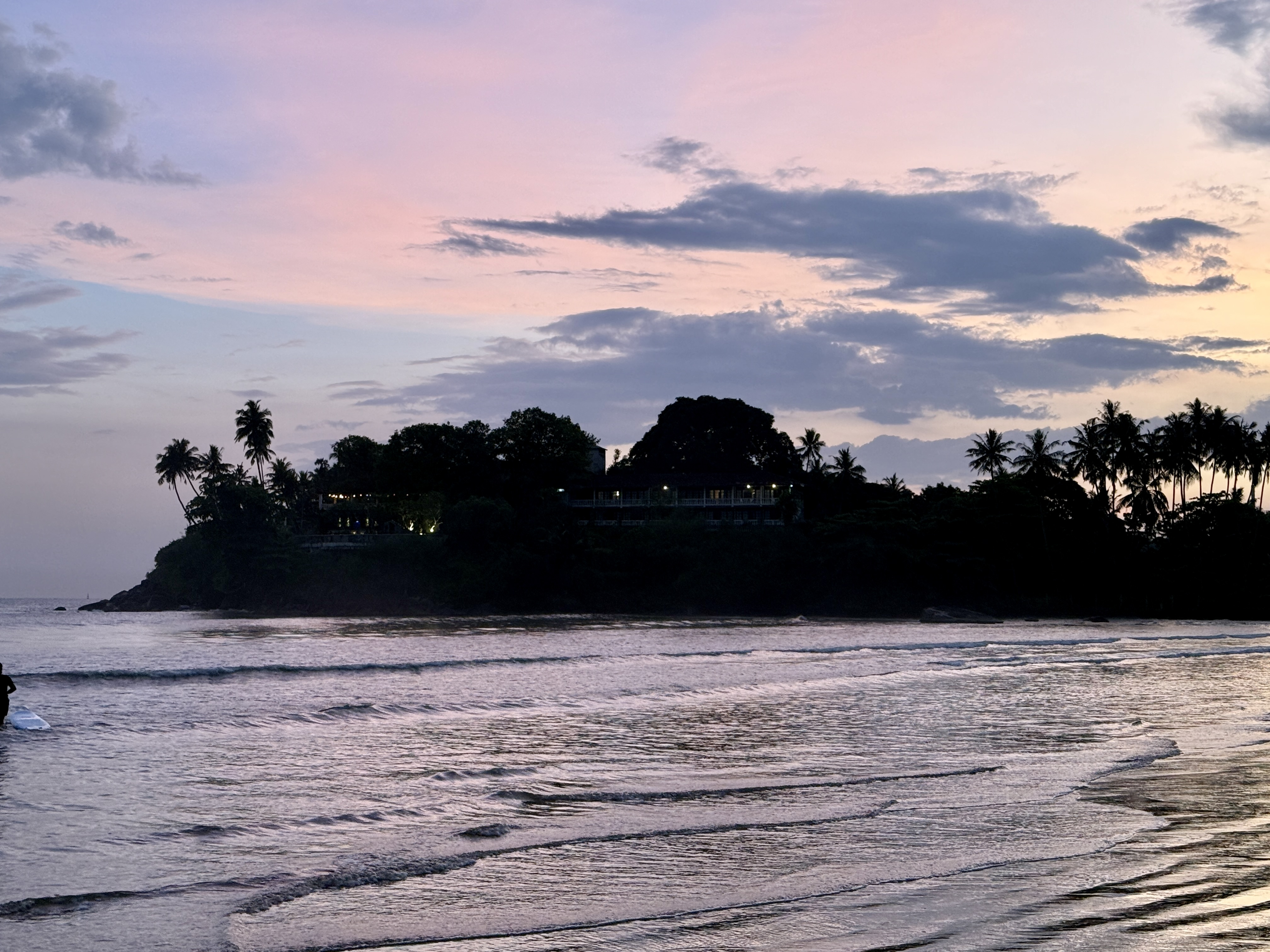
A beach day in Galle options inlcude:
Galle Fort Beach: Calm water for a quick swim near the old town.
Unawatuna Beach: 6 km away; best for snorkeling and beachfront seafood.
Dalawella Beach: 5 minutes south of Unawatuna; famous palm tree swing and sea turtles.
Day 11: Colombo
Take a morning transfer to Colombo, Sri Lanka’s vibrant capital mixing colonial buildings, busy markets, and modern skyscrapers.
Recommended sites include:
Red Mosque (Jami-Ul-Alfar): Red and white Indo-Saracenic brick patterns.
Gangaramaya Temple: Major Buddhist temple with eclectic architecture and artifacts.
Fort District: Financial hub with historic British-era buildings.
Lotus Tower: Tallest telecom tower in South Asia with city views.
Galle Face Green: Seaside promenade for walks, kites, and street food.
Pettah Market: Bustling market maze to buy spices and fabrics.
I recommend staying at Shangri-La Colombo.
Day 12: Return journey
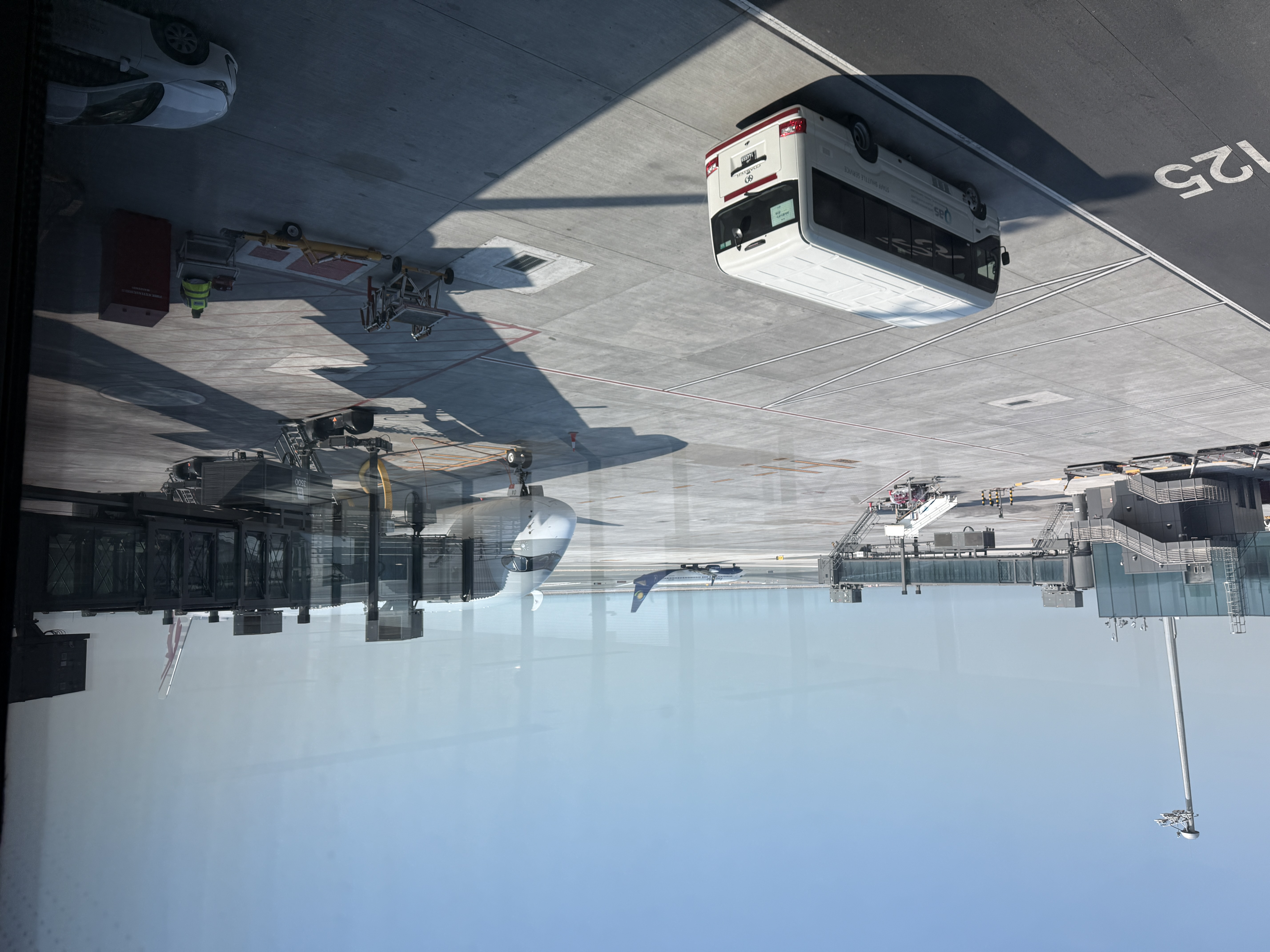
My return journey was quite similar to my arrival. I flew for four hours to Doha and spent the night at the Oryx Hotel. Since my flight back to Miami was at 8 a.m. the next day, this hotel was perfect because it’s located inside the terminal. This eliminates the need to go through security, which is ideal for layovers under 12 hours. If you have an early flight, you’ll already be inside the airport past security, which is convenient.
Tip: Pack your overnight essentials in your carry-on luggage, as checked luggage won’t be accessible until you reach your final destination.
Need to know
Best time to travel
West &South Coast: Dec–Mar
East Coast: May–Sep
Central Highlands: Dec–Mar
Avoid monsoon seasons for sunny beach days.
Transport
Train: Must-do, especially Kandy–Ella route.
Bus: Cheap but less comfortable.
Tuk-tuk: Ideal for short rides.
Private car with driver: Common and convenient.
Culture and traditions
Mostly Buddhist; religion and tradition are important.
Greet with "Namaste" hands.
Dress modestly at temples; remove shoes.
Locals are very hospitable and welcoming.
Cuisine
Spiced curries, rice, sambol, and fresh seafood.
Famous dishes: Rice & curry, hoppers, Ceylon tea.
Be cautious with spice; drink bottled water.
Practical tips
Official languages: Sinhala & Tamil; English widely spoken.
Currency: Sri Lankan Rupee (LKR).
Carry cash; cards less accepted in rural areas.
Plugs: Type D or G; bring an adapter.
Useful Sinhala phrases
Hello: Ayubowan
Thank you: Stuti
How much?: Kiyadha?
Goodbye: Suba daawasak
Fun facts
Birthplace of world-famous Ceylon tea.
Eight UNESCO World Heritage Sites.
Surfing and whale watching are popular on the south coast.
Entry requirements
Visa: U.S. citizens need an ETA online before travel.
Passport: Valid at least six months from entry date.


Travel Advisor
Michael Perlo

Michael Perlo

Get in touch with Michael Perlo
Did you like this guide? Reach out to customize and book your own experience. Or, just to chat about travel in general.
For more travel inspiration and insider recommendations, check out our Sri Lanka page.