

The Art of Island Hopping in Dalmatia: 8 Days on the Adriatic by Private Yacht

Curated By
Sirena Collective | Tanitra Partivit
Curator’s statement
Croatia’s Dalmatian Coast is one of those destinations that changes the way you think about travel. The water is the kind of blue that makes you wonder if the photos are edited—they’re not. The best way to experience it is by private yacht—dropping anchor in a secluded cove, sliding into water so clear you can see the bottom twenty feet down, and watching your kids discover that the ocean is the best thing that has ever happened to them. This itinerary is built for groups who want to actually be together—no over-planning, no competing agendas, just the Adriatic at your own pace with the people who matter most.
The Fora Difference
Book with Sirena Collective | Tanitra Partivit to access exclusive perks and experiences on your trip.

Killer perks
Free upgrades, spa credits and more—we got you

Personalized recs
Customized travel planning for your style

Insider knowledge
Expert advice from people who’ve actually been there
Where to stay
Unlock perks by contacting Sirena Collective | Tanitra Partivit to book your trip.
Day 1: Dubrovnik—Arrive, exhale, begin
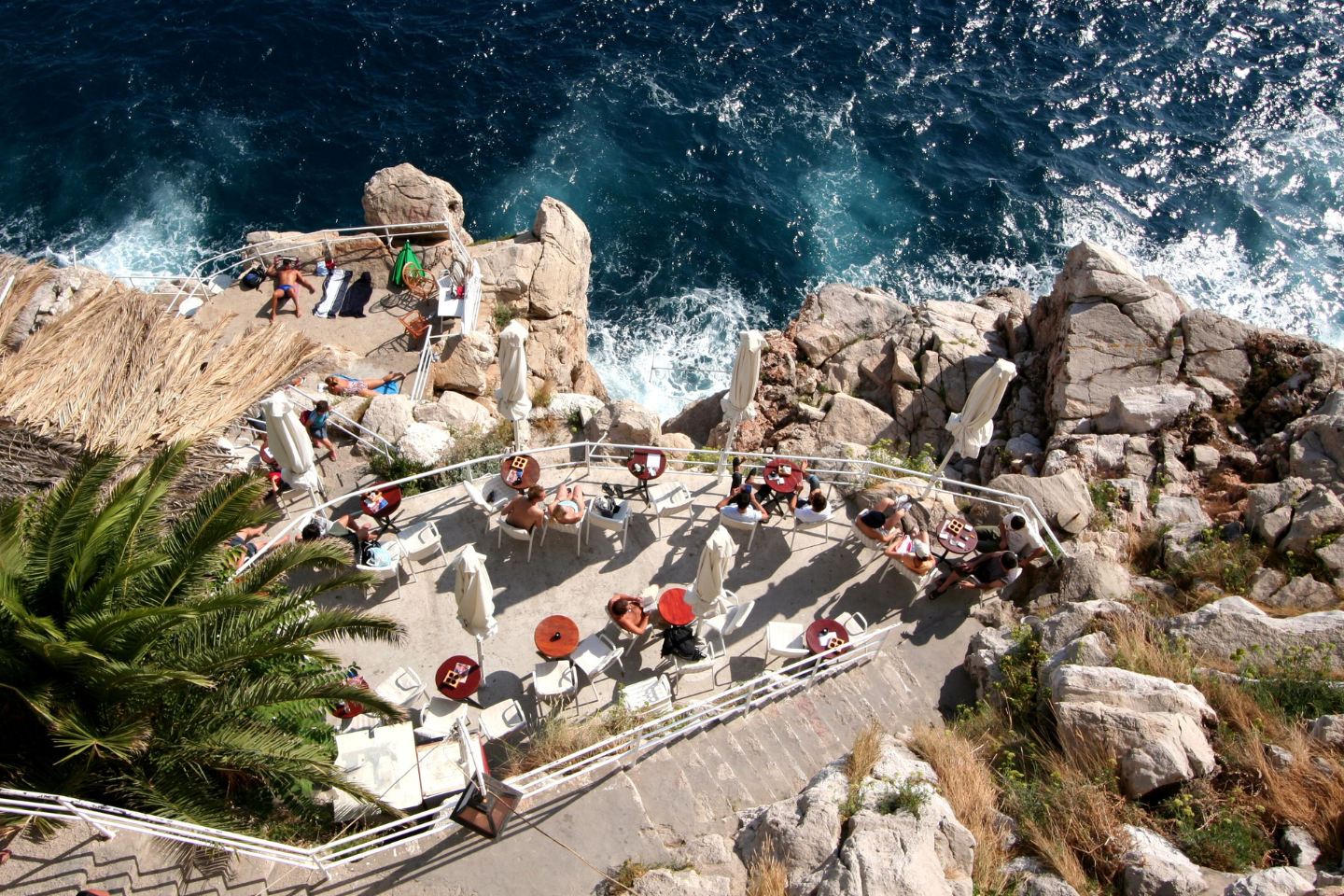
Buza Bar, Dubrovnik—find the hole in the wall and you'll find this. Drinks on the rocks, the Adriatic below, cliff jumping optional.
There is a reason Dubrovnik appears on every serious traveler’s list, and that reason becomes obvious the moment you see the walled Old Town rising from the coastline. Red-roofed townhouses, centuries-old palaces, and an energy that manages to feel both ancient and completely alive. Day one is for arrival, orientation, and settling in—meet your crew, get comfortable on board, and let the chef prepare your first dinner on the water. If you have the energy, a short walk through the Old Town at dusk—when the day-trippers have gone and the cobblestones belong to you—is the perfect introduction to everything that’s coming.
Insider tip: Arrive in Dubrovnik a day early if your schedule allows—the city deserves more than an embarkation day. Walk the City Walls at sunrise before the crowds arrive and board the yacht refreshed rather than rushed. And as the afternoon heats up, find the hole in the wall—literally. Buza Bar is cut directly into the city walls on the seaward side, with cold drinks, open Adriatic, and cliff jumping straight into the sea. No sign, no fuss. Just follow the locals through the crack in the stone and you’ll understand immediately why people come back to Dubrovnik year after year.
Day 2: Dubrovnik—History in the morning, magic in the evening
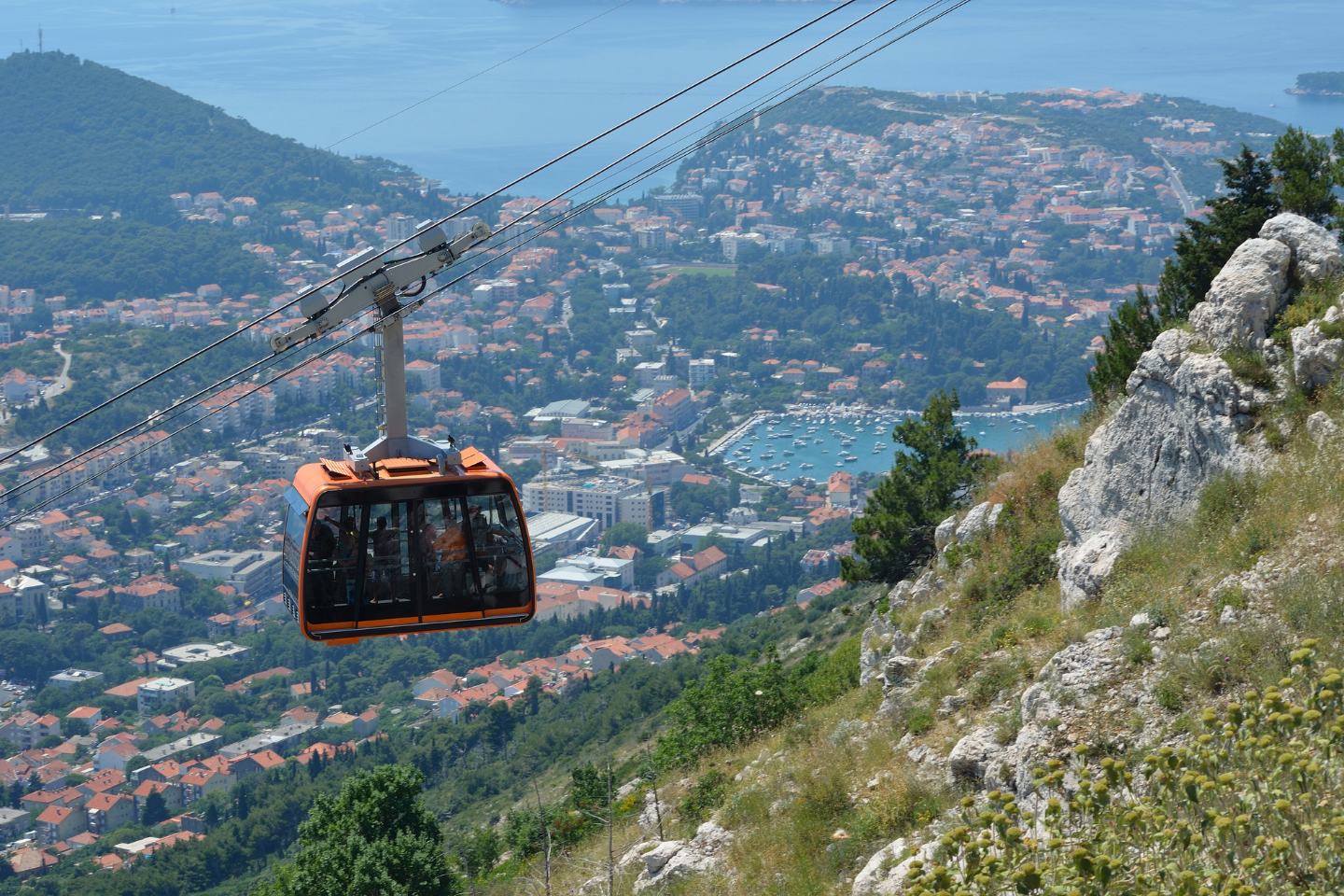
The Dubrovnik cable car—ride up to Mount Srđ and watch the entire city unfold below you. Worth every minute.
Begin with the cable car up to Mount Srđ—the panoramic view of the Old Town and the Adriatic below is the kind of thing that recalibrates your sense of scale. Descend into the Old Town for a guided walk through UNESCO-listed streets, the Rector’s Palace, and the iconic City Walls: two kilometers of medieval fortification with the sea on one side and the rooftops of the city on the other. Few walks anywhere in the world deliver this consistently. As the sun drops, head back to the boat. Tonight dinner is served on deck—the chef has been preparing something with whatever came fresh from the market this morning. The Old Town glows in the distance. This is the version of Dubrovnik most people never see.
Day 3: Hvar—Glamorous without being pretentious
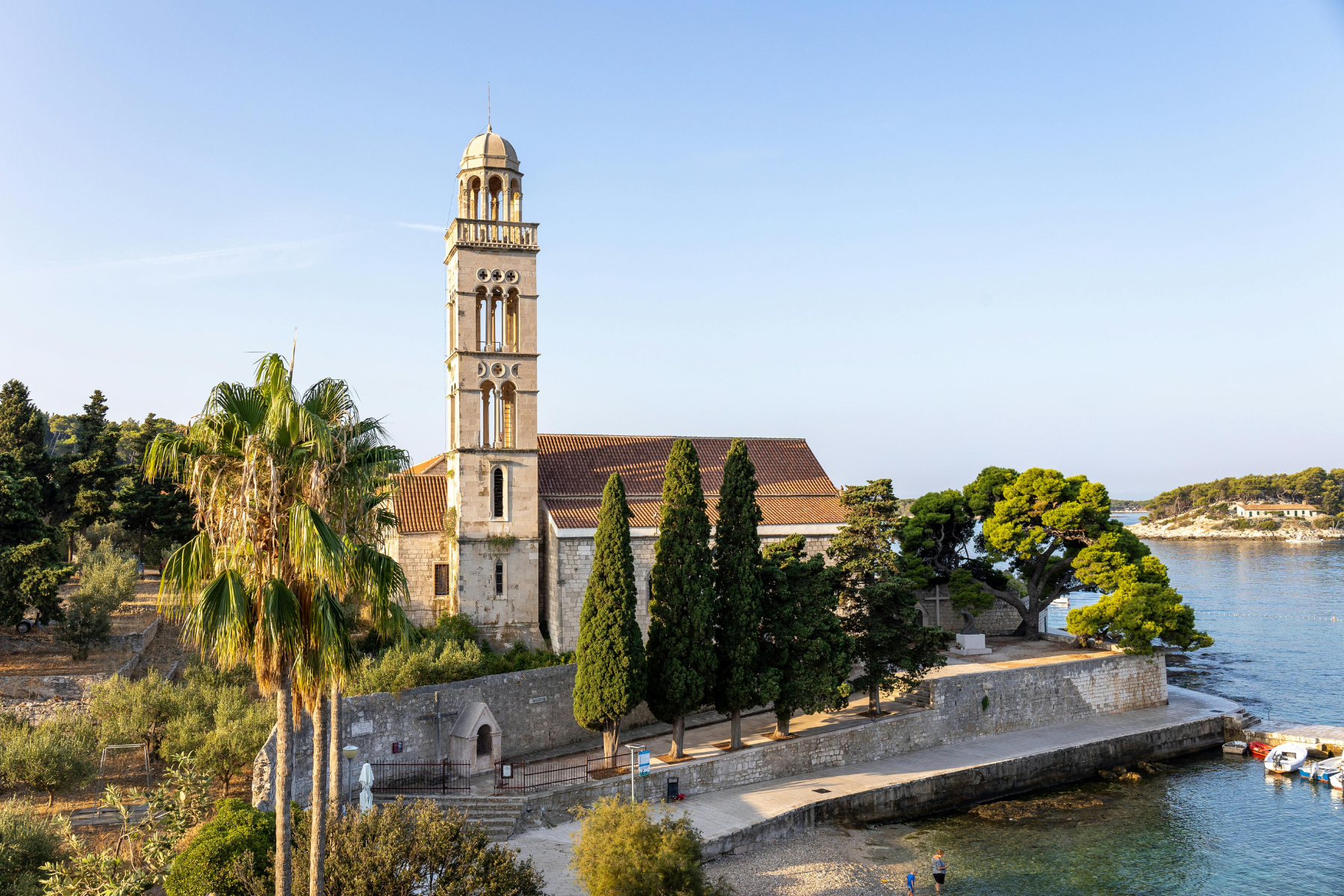
Hvar’s Franciscan Monastery—golden light, ancient stone, and the Adriatic just steps away. Glamorous without trying.
Hvar is the island people mean when they say the Dalmatian Coast is unlike anywhere else in Europe—glamorous, sun-drenched, and fragrant with lavender. Arriving by private yacht, anchoring in the harbor, and tendering ashore, is an entirely different experience than arriving by ferry. Today’s focus is Hvar’sAger—Hvar’s wine country: travel inland through the charming villages of Brusje and Velo Grablje, past fields of lavender that bloom purple across the hillsides, to the UNESCO-protected Ager—Hvar’s ancient agricultural landscape—and on to a family-owned wine cellar for a tasting of Pošip and Grk, the island’s exceptional local varietals that are almost impossible to find outside Croatia. A traditional lunch completes the morning.
Insider tip: The lavender fields are at peak bloom in June—if your dates are flexible, this is the detail worth planning around. The island smells extraordinary and the visual is unforgettable.
Day 4: Split—Where Roman emperors once walked
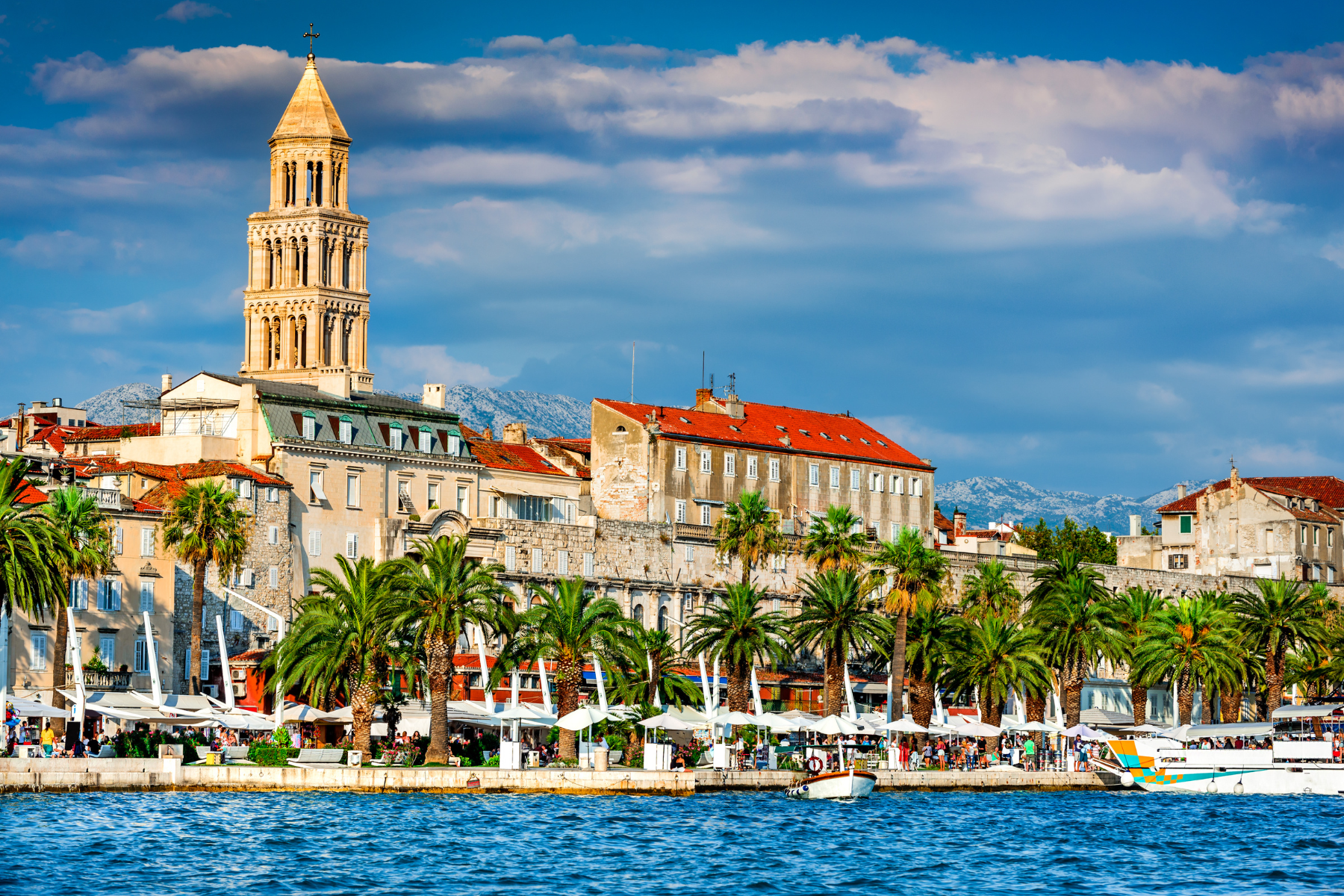
Split from the water—Diocletian’s Cathedral tower rising above the Riva promenade, with the Dinaric Alps in the background. Two thousand years of history, still very much alive.
Split is the kind of city that surprises people who think they know what to expect. The Old Town is built inside and around Diocletian’s Palace—the UNESCO World Heritage Site that is less a ruin and more a living, breathing neighborhood where people have been eating, sleeping, and going about their days inside Roman walls for seventeen centuries. Ancient stone corridors open onto bustling cafes. Hidden courtyards reveal centuries of Croatian life layered over Roman grandeur. Walking through those corridors—the same ones Roman emperors once walked—is one of those rare travel moments where history stops being abstract and becomes completely, viscerally real. That these structures still stand, still lived in, still breathing after two thousand years, is almost impossible to comprehend until you’re standing inside them. And from the right angles, you catch the mountains surrounding Split in the background—ancient stone in the foreground, dramatic peaks behind, the Adriatic somewhere beyond.
Insider tip: Diocletian’s Palace is best experienced early morning or in the evening when the day-trippers have left. Your private guide can time the visit accordingly—one of the advantages of having the itinerary entirely on your terms.
Day 5: Krka National Park—Where the water never stops moving
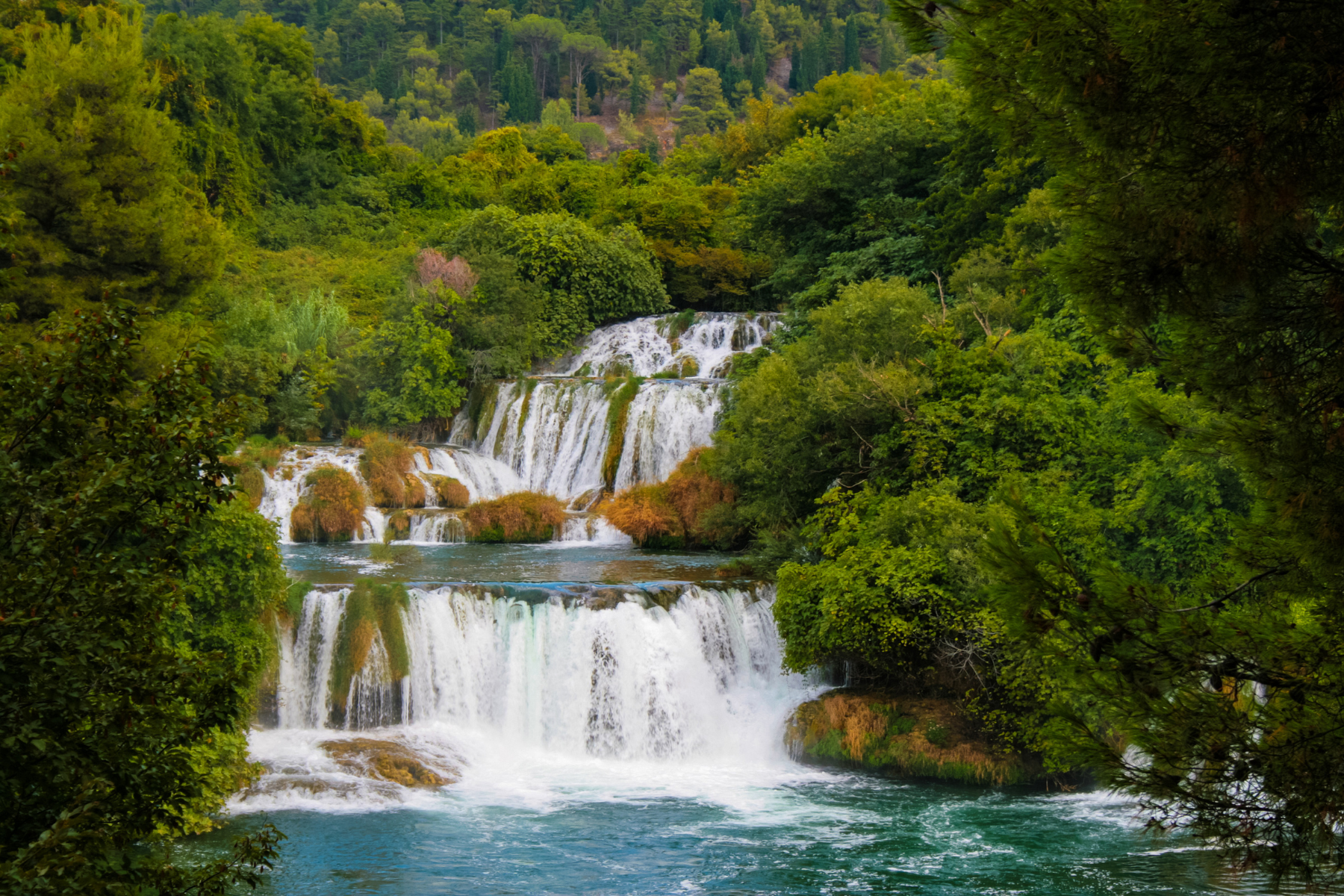
Skradinski Buk, Krka National Park—cascading waterfalls, emerald pools, and the sound of falling water from every direction. The best contrast to a day on the Adriatic.
Krka National Park is one of those places that photographs beautifully and still manages to exceed the photographs in person. Cascading waterfalls, emerald pools, and lush Mediterranean vegetation along a river canyon that has been carving itself deeper for millennia. But here’s what the photos don’t capture: the feeling of stepping off a sun-drenched boat deck into cool, shaded forest trails. The contrast is extraordinary—one moment you’re on the Adriatic, wind in your hair, salt on your skin, and the next you’re surrounded by green, the sound of falling water replacing the sound of waves. Grab a pair of hiking boots or Tevas and explore the trails at your own pace. This is the day the itinerary breathes differently—and it’s the one I keep coming back to.
Insider tip: Don’t rush Krka. The wooden pathways wind through the park and give you access to Skradinski Buk—the park’s breathtaking centerpiece—at close range, with the sound of falling water surrounding you from every direction. After days of coastline and cities, the lush forest of Krka resets everything. Give it a full morning at minimum.
Day 6: Kornati Islands—89 islands, nearly all uninhabited
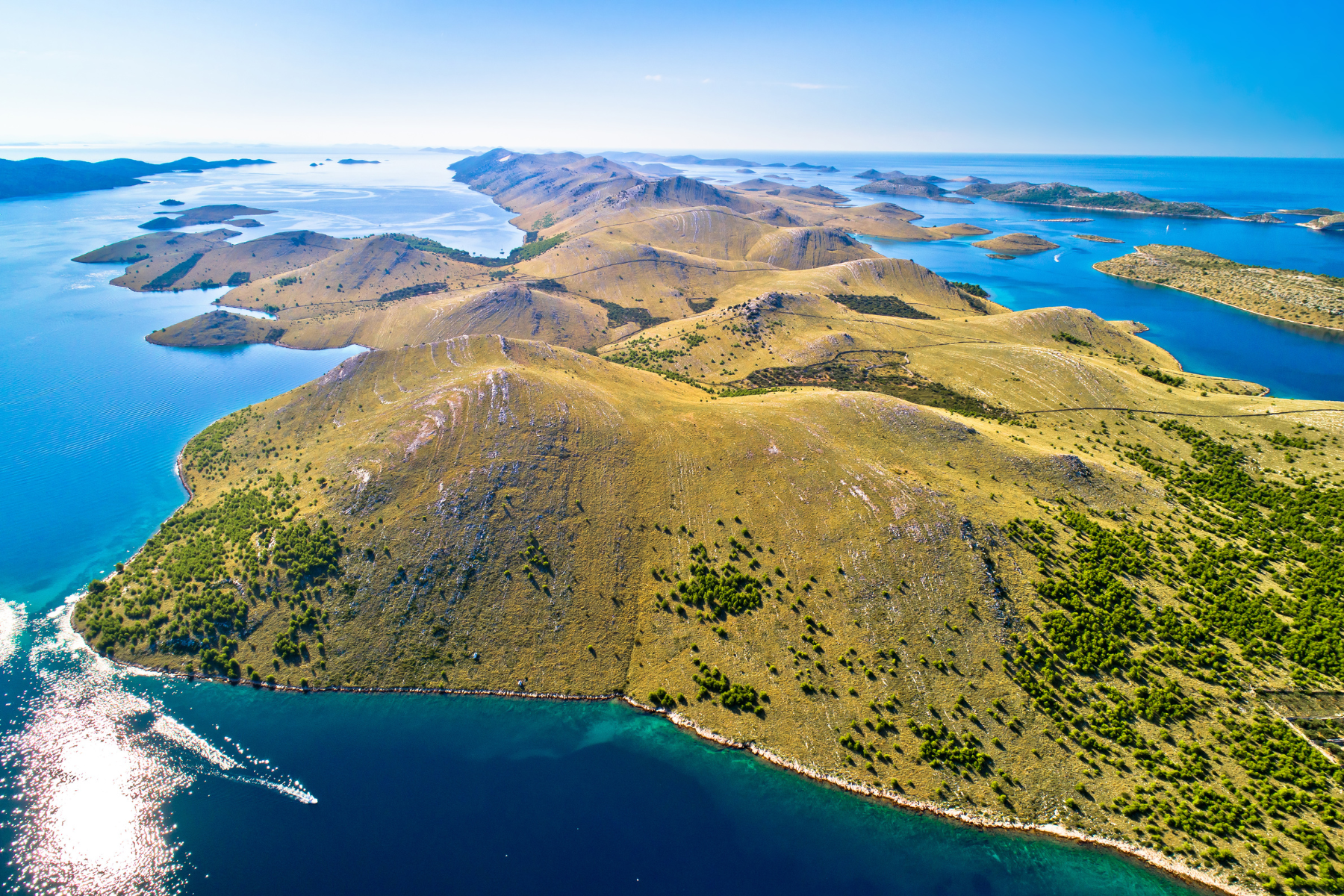
Kornati Islands—89 islands, crystal clear water, and almost no one else. You can only get here by private yacht. That's exactly the point.
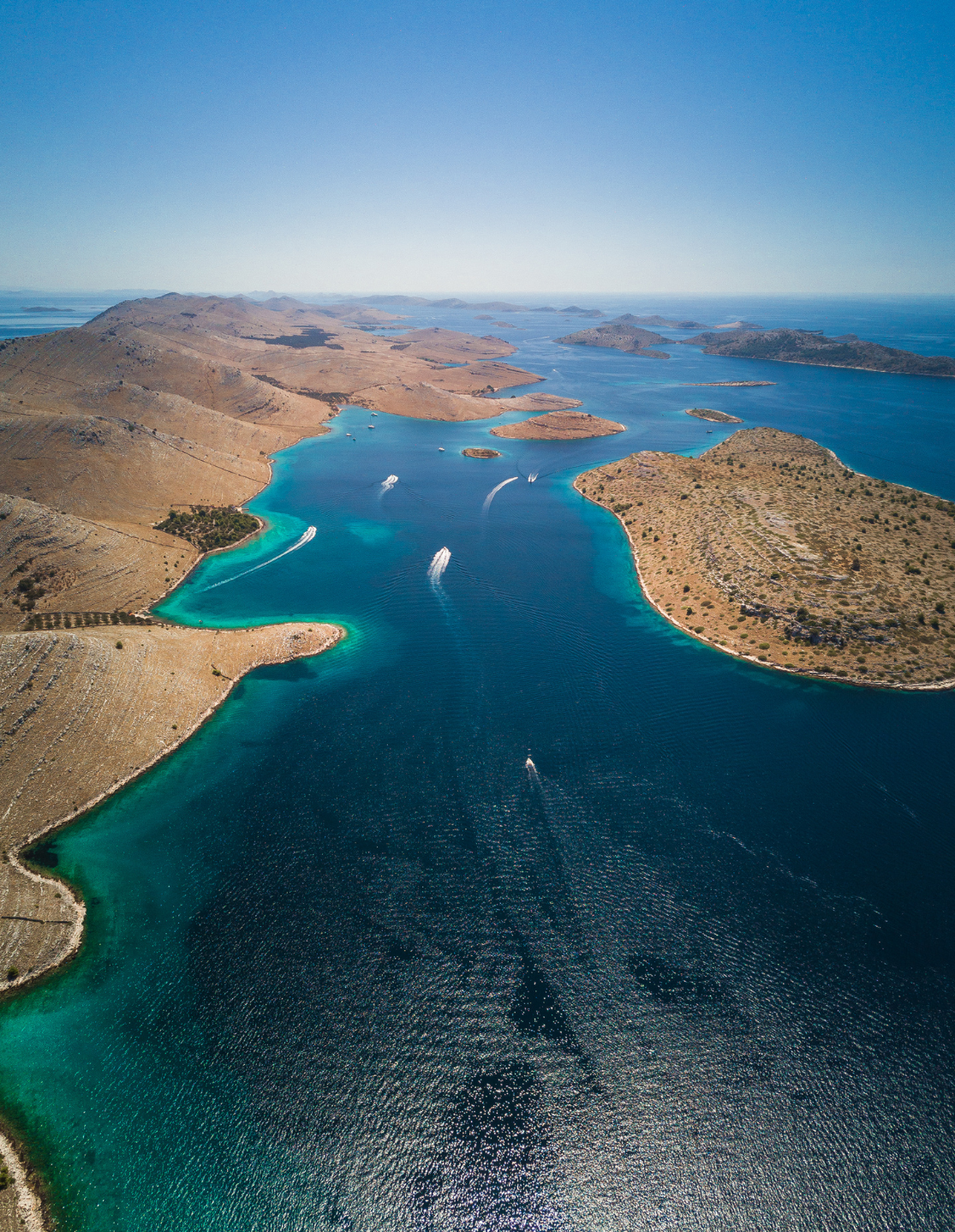
This is the day the itinerary earns its premise—and the reason a private yacht isn’t just a luxury, it’s a necessity. The Kornati Islands National Park is an archipelago of 89 islands, islets, and reefs, nearly all uninhabited, with the most indented coastline in the Mediterranean. The ferry doesn’t come here. The resort doesn’t overlook this. You reach Kornati by private yacht, and you understand immediately why. An experienced skipper who knows these waters will take you to snorkeling spots that don’t appear on any map, hidden coves that feel like they belong to you alone, and swimming holes so clear you can see straight to the bottom. We could not get enough of it. The water here is something else entirely—crystal clear, impossibly blue, warm enough to stay in for hours. Drop anchor, slide in, and forget what day it is. This is the one everyone talks about for years afterward.
Insider tip: The Kornati light is extraordinary in the late afternoon—the limestone islands turn golden and the water shifts through every shade of blue you thought only existed in edited photographs. Time your swim accordingly. And trust your skipper—the best spots are the ones that aren’t on any tourist itinerary.
Day 7: Zadar—A city that turns the Adriatic into music
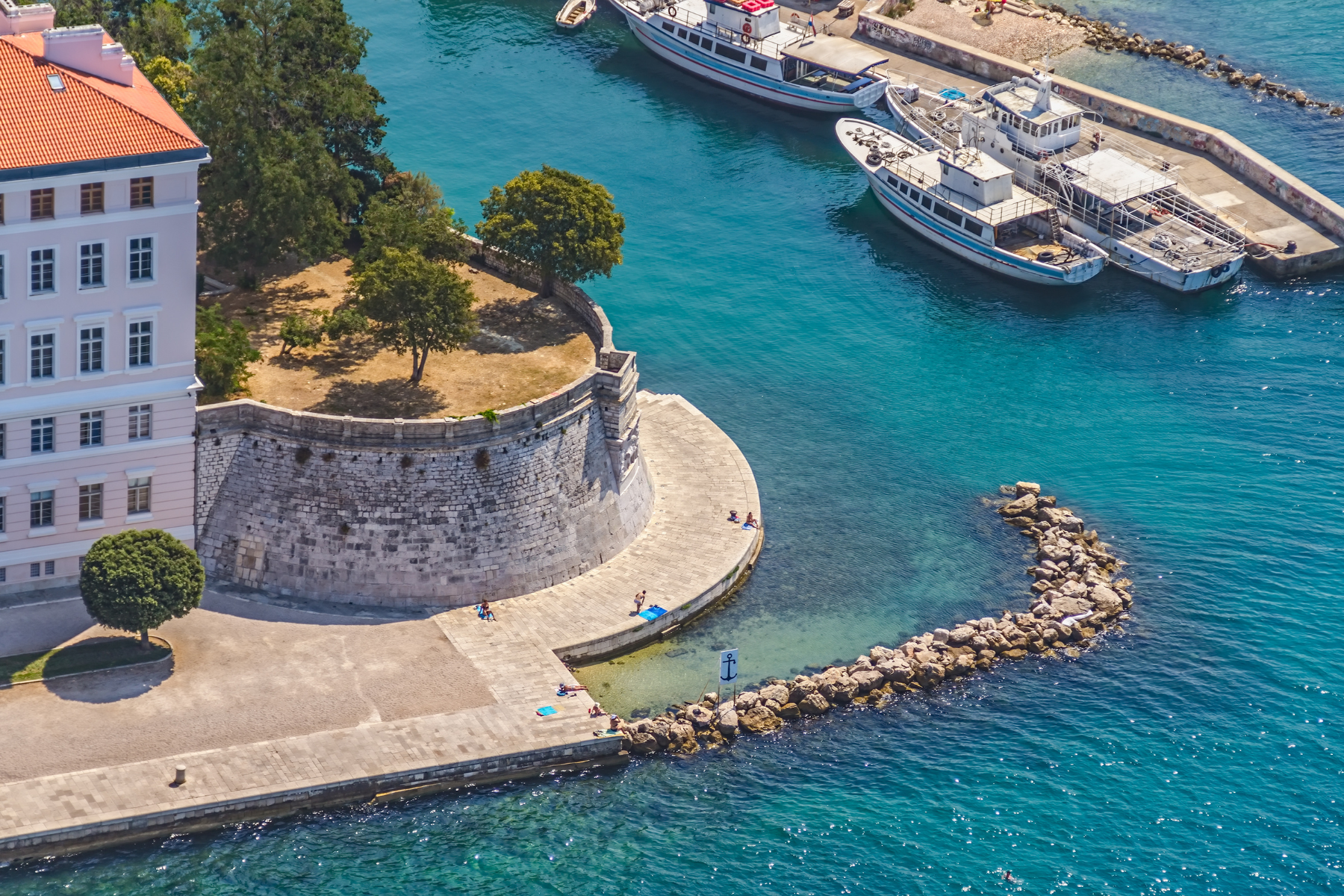
Zadar's ancient city walls meet the Adriatic—and just around the corner, the Sea Organ turns every wave into music.
Zadar is one of the most underrated cities on the entire Dalmatian Coast—an ancient Mediterranean port with fortified walls that have stood since Roman times, moving at a different pace than Dubrovnik or Split. A private guided tour takes you through the Church of St. Donat, the Roman Forum, and Kalelarga, Zadar’s ancient main street, in use for two thousand years. Then, as the sun descends, two of the most remarkable public installations anywhere in the world: the Sea Organ, where 35 pipes beneath the marble steps turn the movement of the waves into a continuous, haunting composition; and the Greeting to the Sun, a 22-meter circle of solar panels that releases a shifting light display at night, a tribute to the sea that surrounds this city on three sides. Your last dinner on board. Whatever the conversation is, it will be about coming back.
Insider tip: Stay for sunset at the Sea Organ. Words don’t do the Sea Organ justice—and neither do photos. The sound it makes as the waves push air through the 35 pipes beneath the marble steps is haunting and ethereal and completely unlike anything you’ve ever heard. You’ll want to stand there longer than you planned. Everyone does.
Where to eat: Pet Bunara—increasingly a local favorite for traditional Adriatic fare with a contemporary twist, they also do some of the best pizzas in the city, alongside dishes like orzotto and black squid stew with chickpeas. Good if you want pizza but also want something more Croatian alongside it.
Need to know
Best time to visit: Late May through early October. June and September offer the best balance of warm weather, calm seas, and manageable crowds. July and August are peak season—beautiful but busier at the most popular ports. September is the sweet spot: warm water, golden light, significantly fewer visitors.
Getting home: Fly out of Zadar Airport (ZAD). If your routing requires it, a private transfer back to Dubrovnik or Split can be arranged.
Book early: Peak season charters fill 9–12 months in advance. The right vessel for your group size and travel style requires lead time.
Who this itinerary is for: Friend groups, multi-family trips, multi-generational crews, and milestone celebrations. The private charter format means every element moves at your pace—the itinerary is a starting point, not a constraint.
Meals: Every charter includes a private chef — and waking up to breakfast on the sea is something you will not forget. There is nothing quite like watching the coast come into view over your morning coffee, or sitting down to dinner as the sun drops into the Adriatic. The chef works around your group’s preferences and dietary needs


Travel Advisor
Sirena Collective | Tanitra Partivit


Tanitra Partivit

Get in touch with Sirena Collective | Tanitra Partivit
Did you like this guide? Reach out to customize and book your own experience. Or, just to chat about travel in general.
For more inspiration and insider recommendations, visit our Croatia page.