

4 Days in Baku: Fire Mountains, Ancient Walls & the City That Surprised Us

Curated By
Sirena Collective | Tanitra Partivit
Curator’s statement
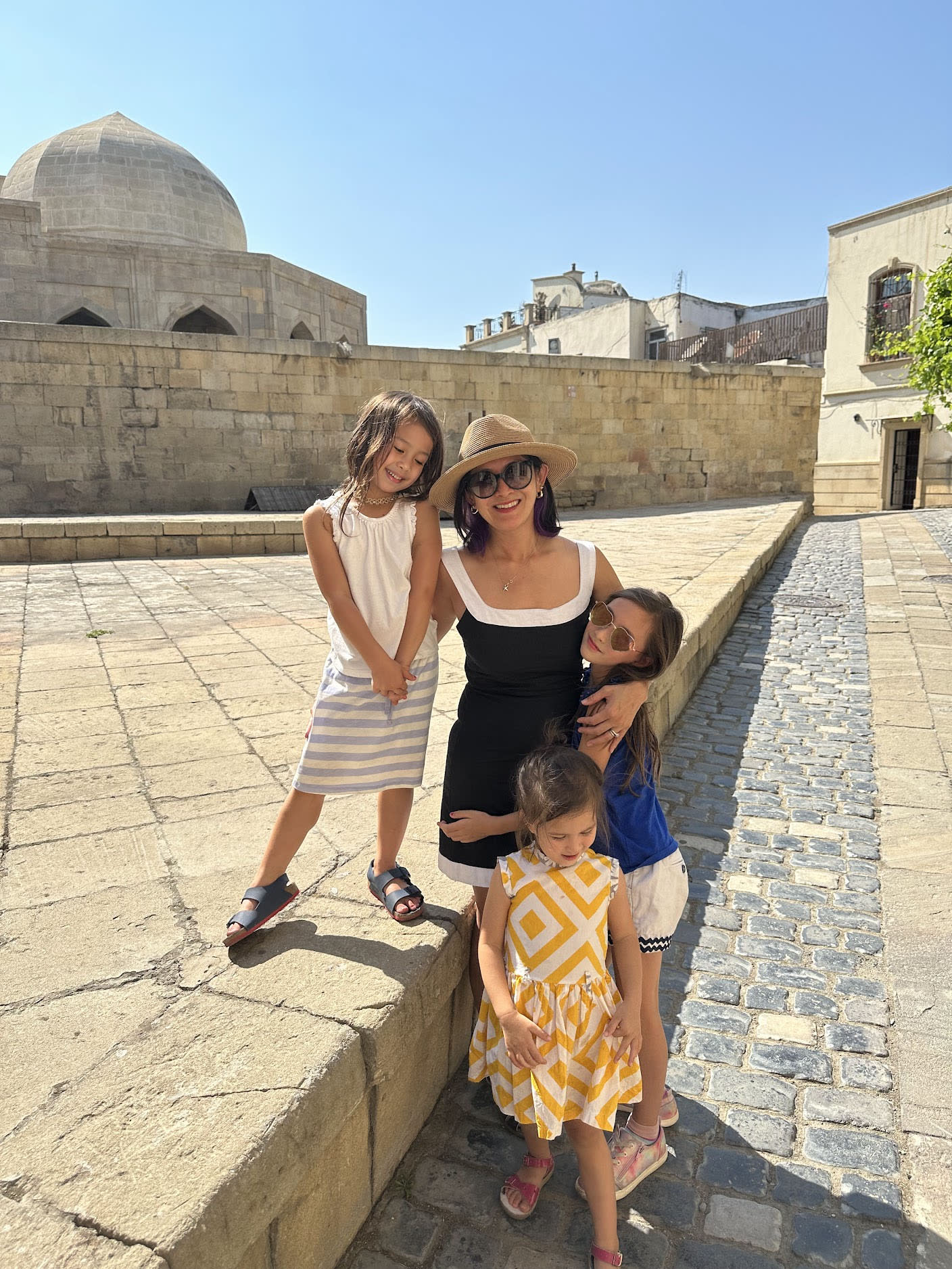
I bought a one-way ticket to Azerbaijan and planned the rest backwards. That probably tells you everything you need to know about my travel style—and about how genuinely excited I was to go somewhere most of my clients have never considered. Baku surprised us completely: a city of ancient fire temples, Zoroastrian history, and world-class infrastructure—where 12th-century fortress walls frame glass towers that light up the night sky. The mud volcanoes are real. Go.
The Fora Difference
Book with Sirena Collective | Tanitra Partivit to access exclusive perks and experiences on your trip.

Killer perks
Free upgrades, spa credits and more—we got you

Personalized recs
Customized travel planning for your style

Insider knowledge
Expert advice from people who’ve actually been there
Where to stay
Unlock perks by contacting Sirena Collective | Tanitra Partivit to book your trip.
Day 1: Getting lost in the old city
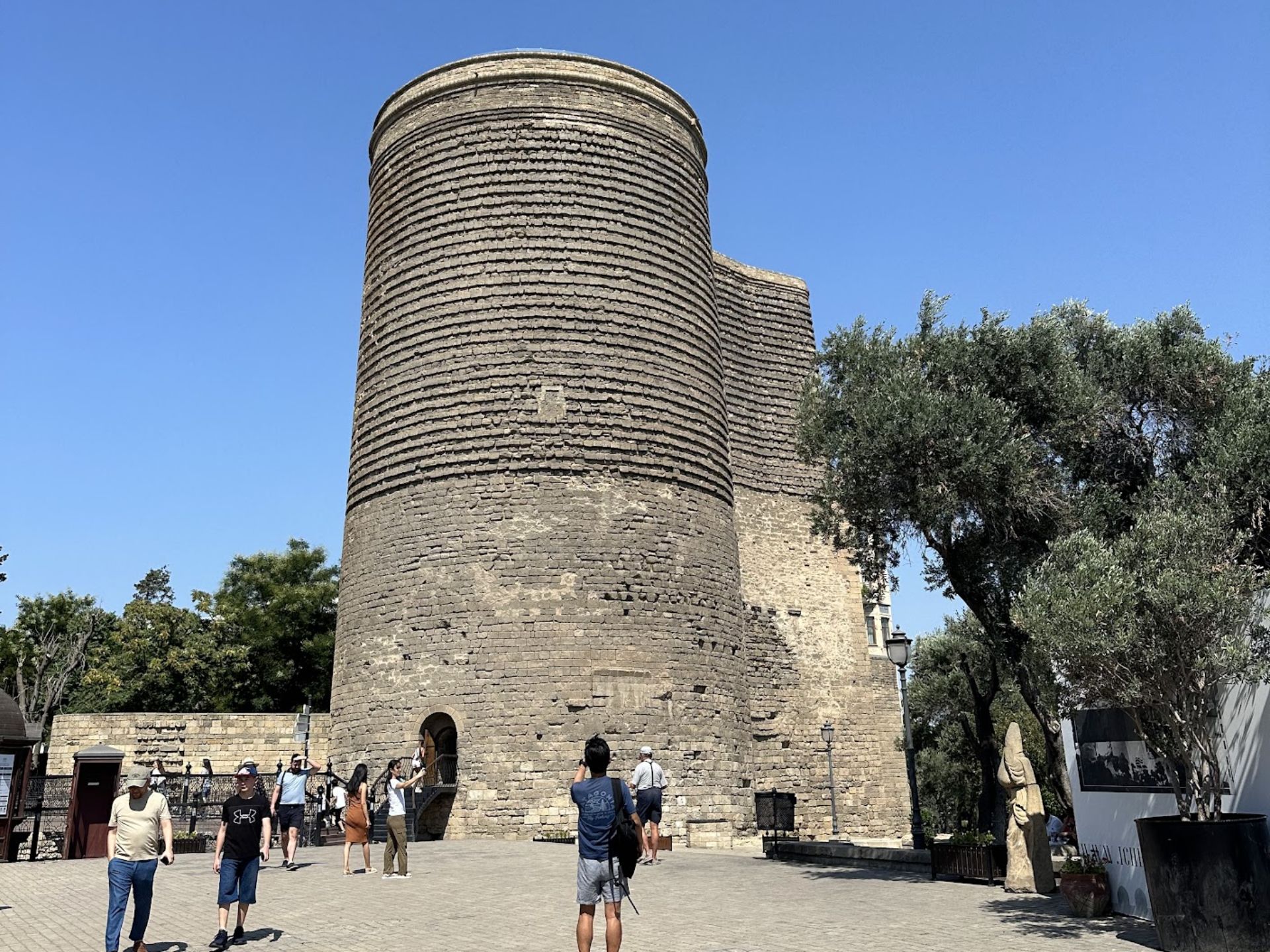
The Maiden Tower, Baku's Old City—standing since the 12th century, built over foundations from the 7th to 6th centuries BC. You're looking at nearly 3,000 years of history.
Baku rewards slow first days. Start in Icherisheher—the UNESCO-listed old city—and let yourself get a little lost. The ancient walls, winding alleys, and the Maiden Tower (built over structures dating to the 7th–6th centuries BC) tell the story of every civilization that passed through this part of the world. Inside the walls, you genuinely feel it: a stone city built before the age of glass, metal, and concrete, preserved almost entirely intact. Walk the city walls at sunset; the light on the stone at that hour is unlike anything else.
After exploring, head to the shopping district to browse local crafts and get your bearings—this is also where you’ll find some of the best street food. End the evening with a hammam to reset after the flight. Baku’s bathhouse culture is genuine and deeply relaxing—exactly the right way to arrive.
As you walk between the old city and the shopping district, look up. Step outside the ancient walls and you’re suddenly in oil-boom Baku—grand, Champs-Élysées-scale boulevards lined with stone facades, ornate carved wooden balconies, horseshoe arches, and ironwork railings that stop you mid-street. What makes it extraordinary is the layering: step back through the city gates and you’re in medieval times again. Azerbaijanis who made their fortunes in oil traveled to Europe and came home wanting to build—but filtered everything through an Islamic design sensibility. The result is something that doesn’t exist anywhere else. Two worlds, separated by a stone wall, coexisting on the same block.
Day 2: Palace, rest & Baku after dark
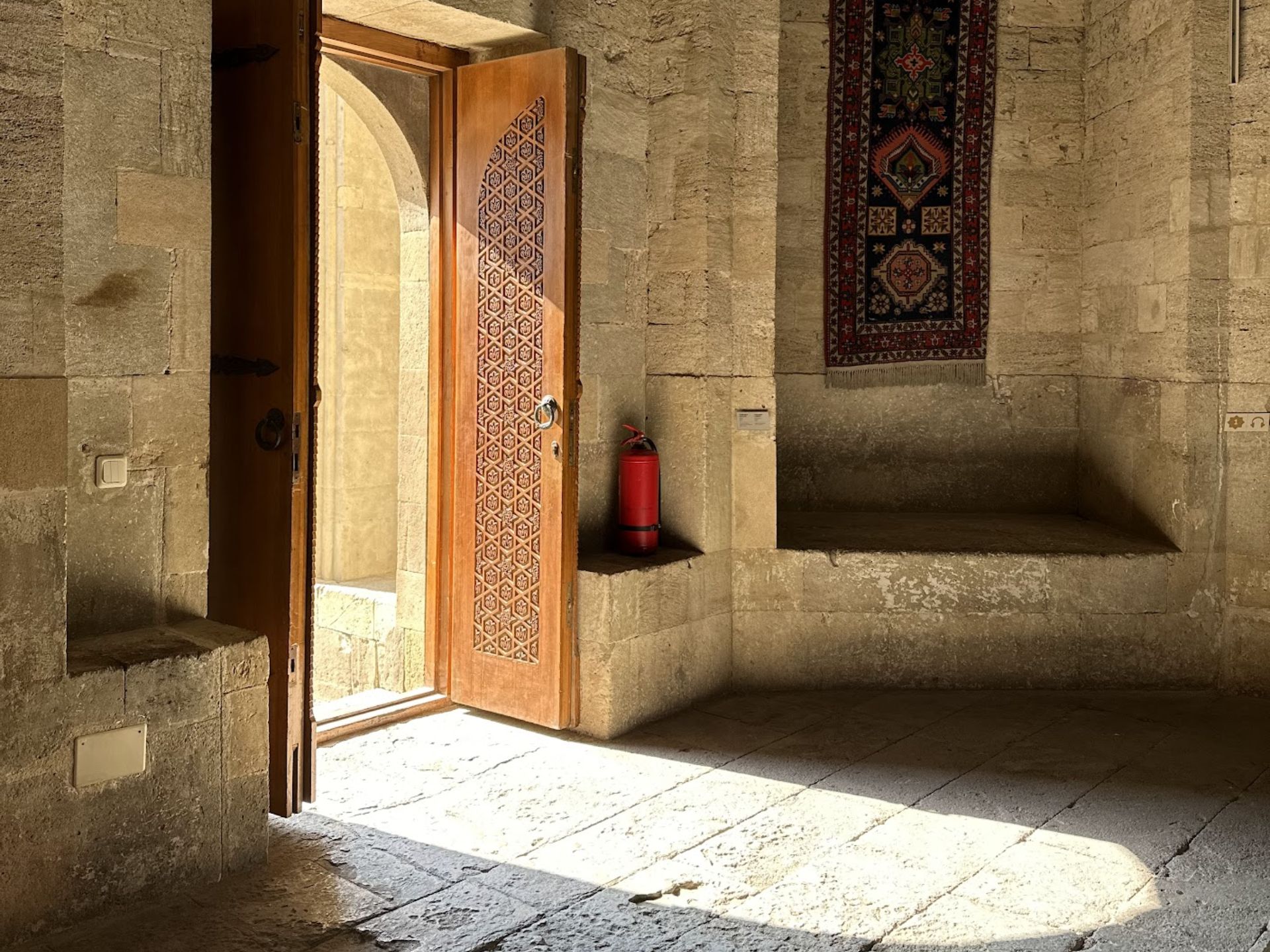
Inside the Palace of the Shirvanshahs—15th-century stone, hand-carved wooden doors, and morning light doing all the work.
Morning is for the Palace of the Shirvanshahs—one of the finest examples of medieval Azerbaijani architecture, set within the old city walls. Take your time here; the detail in the stonework repays a slow walk, and the way the morning sun moves through the different rooms and courtyards is something no photograph quite captures—you have to be there for it.
By midday, retreat to the hotel. The heat in Baku is real, and the locals are right to rest through the afternoon.
Come evening, the city transforms. The boulevard and shopping streets come alive after dark—families, couples, and groups of friends fill the promenade late into the night. Seek out the carousel, linger over Turkish ice cream from a street vendor, and let the night take its time. This is Baku at its most itself.
Day 3: The seaside, the Carpet Museum & Highland Park
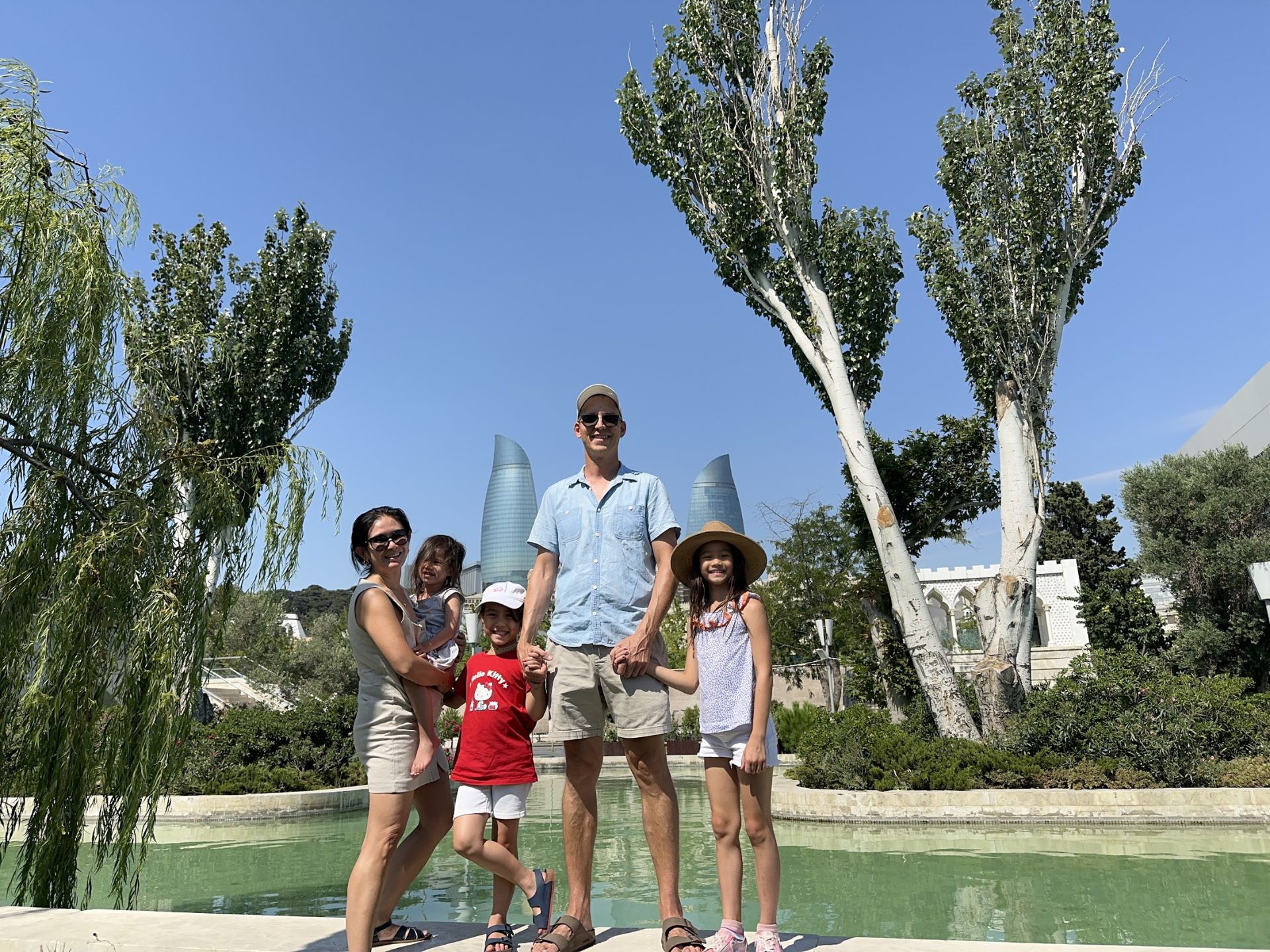
Little Venice, Baku—where the Caspian breeze, the Flame Towers, and the Carpet Museum are all within a perfect afternoon's walk.
Start the morning with a walk through the city toward Baku City Seaside National Park—a wide, beautiful stretch along the Caspian that gives you a completely different perspective on the city.
From there, make your way to Little Venice, a small canal district that’s charming and worth a quick stop, and then to the Azerbaijan Carpet Museum. Housed in a building shaped like a rolled carpet (our kids announced this fact loudly to everyone nearby), the collection is genuinely world-class—and a welcome refuge from the midday heat.
In the afternoon, take the funicular up to Highland Park for the best panoramic view in Baku, with the Flame Towers rising behind you. Have lunch at Manzara Restaurant at the top—a modern spot with a menu that works for everyone, and a designated playroom for kids that made it ideal for our group. Walk back down the hill slowly, stop for ice cream, and end the afternoon at the Baku Museum of Miniature Books, tucked inside the old city walls. The only museum of its kind in the world—tiny books, some requiring a magnifying glass to read, all free to enter. Whimsical and wonderful.
Day 4: Fire, mud & 40,000 years of history
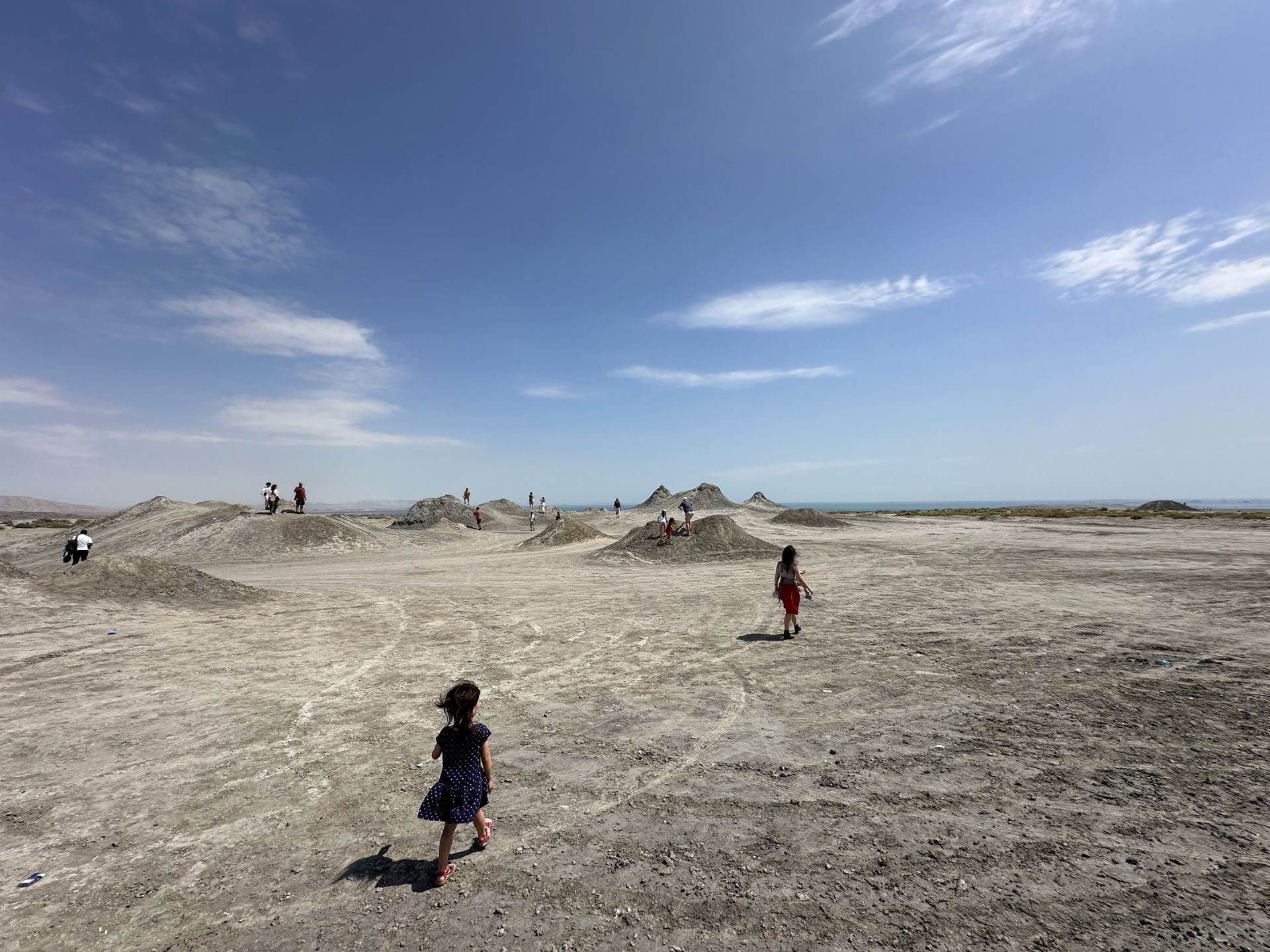
The mud volcanoes outside Baku. Yes, it looks exactly like the moon. No, the kids did not want to leave.
Save your last full day for the excursion outside the city—and book a private guide. This is non-negotiable. Start with breakfast at Paris Bistro (the White Lilies fountain nearby is worth a morning photo stop), then meet your guide and head out. The mud volcanoes come first—the road in is essentially a lunar landscape, lurching at terrifying angles, which the kids will find hilarious. The volcanoes themselves bubble mud slowly from the earth like a science experiment that never stops.
Next, Gobustan’s rock art landscape: over 6,000 engravings spanning 40,000 years of human history—human figures, hunting scenes, boats with oarsmen, and animals covering the shelter walls. You can see how the rocks themselves have shifted over millennia. UNESCO World Heritage Site, and one of the most quietly astonishing places I’ve ever stood. If you go in summer, bring water. There is no shade.
Then Ateshgah, the Fire Temple—a Silk Road pilgrimage site sacred to Hindus, Sikhs, and Zoroastrians, with inscriptions in Sanskrit, Punjabi, and Persian still visible in the courtyard. You sometimes wonder whether kids absorb any of this when they’re young. They do. A year later, walking around New York City, someone handed us a flyer for an event at a Bahá’í center. I mentioned offhandedly to my partner that the Bahá’í Faith and Zoroastrianism are connected—and my eight-year-old looked up and said: “Wasn’t that the place we visited in Azerbaijan? Plan that trip. You won’t regret it. Book the private tour. Reserve the larger room with the balcony. Bring your kids.
End at Yanardag—the Fire Mountain—where natural gas vents have kept the hillside burning for more than 20,000 years. The guide’s context throughout, on Zoroastrian history, Silk Road trade routes, and the geology of the volcanoes, turns what could be sightseeing into something that genuinely stays with you.
Need to know
The heat is real. In summer, outdoor activities belong in the early morning or early evening—afternoons are for museums, hammams, and hotel pools. Best travel window: May–June or September–October.
Get your visa before you go. Most travelers can obtain an e-visa in advance online—straightforward and quick. Do this before you leave.
Hire private transport for everything outside the city. Gobustan, Ateshgah, the mud volcanoes, and Yanardag are not accessible by public transport in any practical sense. A van with a driver and English-speaking guide is the only way to do it well.
Money and payments: Local currency is the Azerbaijani Manat. Apple Pay did not work reliably. Some major cards were declined without warning. Bring multiple card networks and withdraw cash early.
Book airport transfers in advance. Baku airport at 3 a.m. is manageable if you have a car waiting. It is much less manageable if you don’t.


Travel Advisor
Sirena Collective | Tanitra Partivit


Tanitra Partivit

Get in touch with Sirena Collective | Tanitra Partivit
Did you like this guide? Reach out to customize and book your own experience. Or, just to chat about travel in general.
For more inspiration and insider recommendations, visit our international travel page.