




Curator’s statement
There are dozens of Caribbean islands, but Bonaire is the one I keep coming back to. My first trip was with my local dive shop, and what hooked me—and keeps me returning—is how effortless the island makes diving: pull up to a shore dive site, gear up, walk in and dive on your own schedule. My early visits were four dive days, but now we dive twice in the morning and spend the afternoons relaxing before dinner. For years Bonaire was a destination almost exclusively for divers, but with the recent addition of beach clubs, it’s finally a place I can recommend to non-divers too.
The Fora Difference
Book with Nicholas Toscano to access exclusive perks and experiences on your trip.

Killer perks
Free upgrades, spa credits and more—we got you

Personalized recs
Customized travel planning for your style

Insider knowledge
Expert advice from people who’ve actually been there
Where to stay in Bonaire
Unlock perks by contacting Nicholas Toscano to book your trip.
Things to do in Bonaire
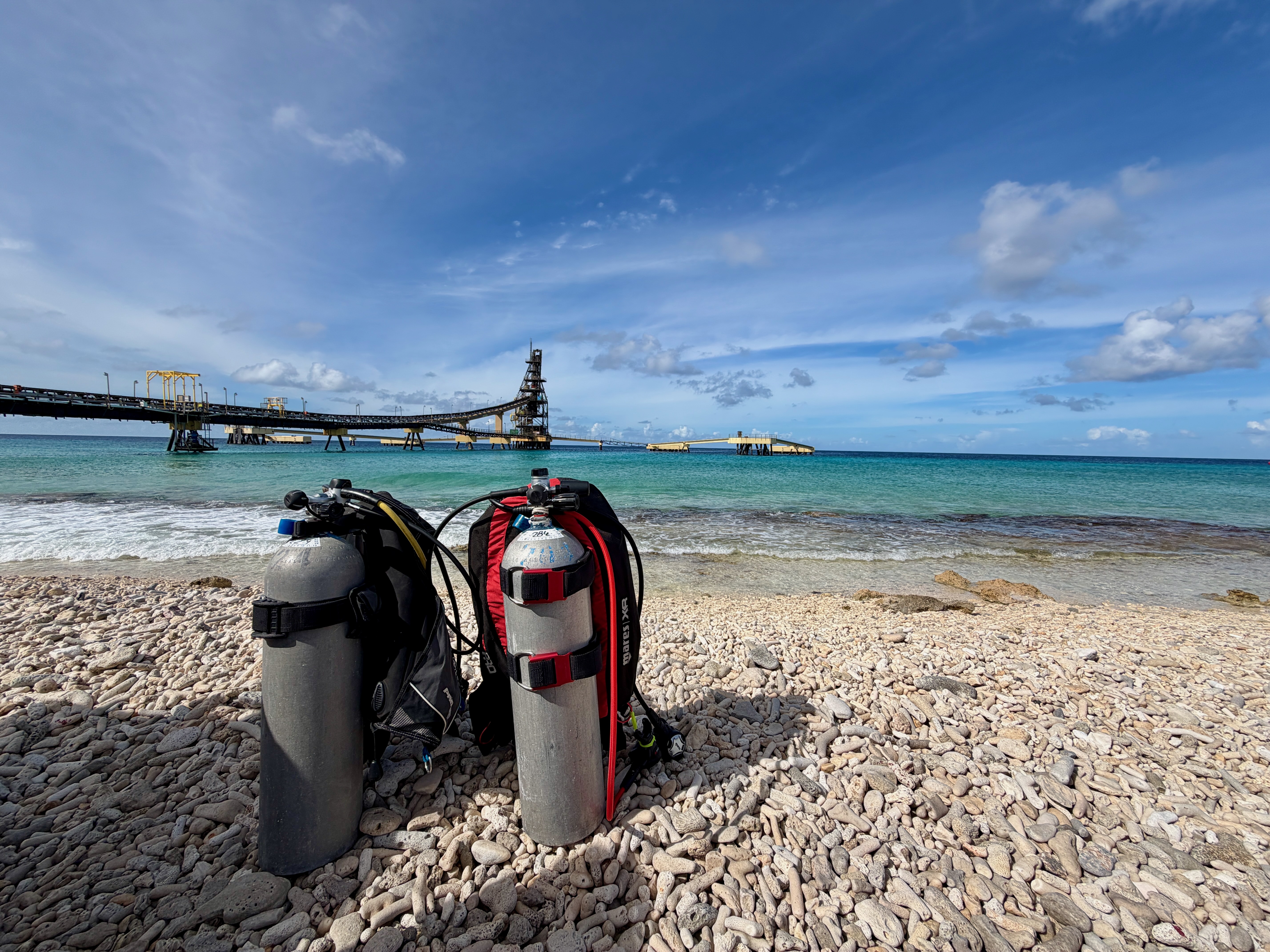
Scuba gear at the Salt Pier
Shore diving the classics: Salt Pier, 1000 Steps, Hilma Hooker, and Oil Slick Leap
These four shore dives are on my rotation every trip. Salt Pier has reliable turtle sightings and is a great snorkel spot too. The 1,000 Steps aren’t really 1,000, but in full gear it’ll feel like it. The Hilma Hooker—a great wreck dive. Oil Slick Leap is just plain fun—you giant-stride off a ledge into the blue.
VIP diving
Our go-to for tank rentals on every trip. Drive-through pickup makes multiple dives a day easy; the staff are great, and they run open water and specialty courses if you’re learning or adding certs.
Washington Slagbaai National Park
The national park at the north end of the island. Drive the loop in a 4WD or pickup for blowholes, flamingos, and quiet coves. Plan a half day.
Cadushy Distillery
In the small inland town of Rincón. They make liqueurs from cactus—the tasting and tour is a fun hour and the Cadushy of Bonaire is their signature pour.
Jibe City at Lac Bay
Lac Bay is one of the best windsurfing spots in the Caribbean, and Jibe City is the hub. Even if you don’t surf, it’s a great place to grab a drink and watch.
Donkey Sanctuary
A drive-through sanctuary with way more donkeys than you’d expect. You can buy hay at the entrance, but they’ll come right up to your truck either way.
Ocean Oasis Beach Club
The upscale end of Bonaire’s new beach club scene. Day beds, pool, food, drinks—perfect for non-divers or an easy afternoon between dives.
Places to eat & drink in Bonaire
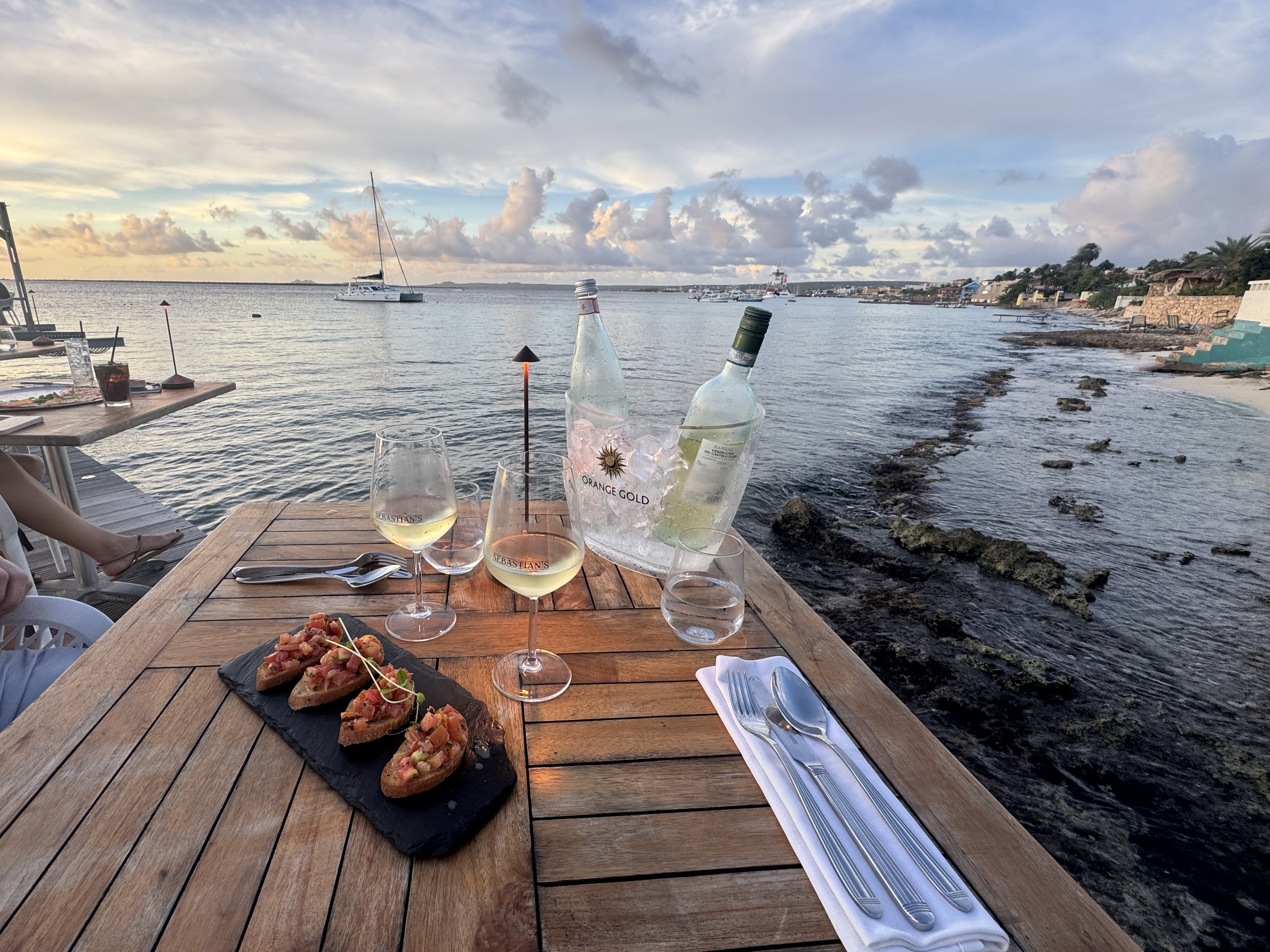
Italian Night at Sebastian's
Sebastian’s: Waterfront dining in town. Go on Sunday for Italian Night.
At Sea Bonaire: Our top recommendation. Book the 4–6 course surprise menu—the chef handles dietary restrictions seamlessly and pulls together flavor combinations I haven’t seen anywhere else.
Hangout Beach Bar: Thursday night is table BBQ—they bring the grill right to your table and you cook your own. A blast for families and groups.
Stoked Food Truck: Burgers and wraps served out of a London double-decker bus parked at Te Amo Beach. A great lunch stop.
Ocean Oasis Beach Club: Beachfront food and drinks with a polished setting. Easy lunch or sunset spot whether you’re spending the day or just stopping in.
Gio’s Gelateria: The spot for your daily gelato fix.
Need to know
Getting there: Direct flights to Bonaire (BON) are limited but reliable. From North America, American flies from Miami, Delta from Atlanta, and United from Newark and Houston, with WestJet running a seasonal route from Toronto in winter. From Europe, KLM, Corendon, and TUI all fly direct from Amsterdam. Schedules shift seasonally, so always confirm before booking. Plan to spend at least a week—the limited flight options and the 24-hour no-fly rule after diving make Bonaire a poor fit for a long weekend.
Getting around: Rent a truck. If you’re diving, it’s the only practical way to haul gear and tanks to shore sites. Even if you’re not diving, a truck or SUV is the better call—much of the island’s terrain is rough, and the more interesting parts aren’t friendly to a low-clearance car.
When to go: Bonaire is a year-round destination, helped by the fact that it sits south of the hurricane belt. December through April is peak season with the most reliable weather and biggest crowds. We’ve also been in November and February and had perfect conditions both times.
Money: USD is widely accepted across the island.
Two fees to budget for: Bonaire has two separate mandatory fees every visitor needs to know about. The first is the Visitor Entry Tax—$75 per person per visit, paid online before arrival. The second is the STINAPA nature fee—$40 per person per year—which funds the island’s protected areas and gives you access to the Bonaire National Marine Park, Washington Slagbaai National Park, the Lac Bay lagoon and mangroves, and Klein Bonaire. Pay both online before you arrive to skip lines on arrival.


Travel Advisor
Nicholas Toscano

Nicholas Toscano

Get in touch with Nicholas Toscano
Did you like this guide? Reach out to customize and book your own experience. Or, just to chat about travel in general.
For more inspiration and insider recommendations, visit our Caribbean page.