


Curator’s statement
There is no easing into Mumbai. You land, and you simply get absorbed into its orbit. I spent 48 hours here at the end of a South India research circuit, walking the heritage district with a local guide whose family has lived in this city for generations, eating vada pav in the shadow of Art Deco buildings, taking in the view from a sea-facing room at the Oberoi. What surprised me is how much depth 48 hours can hold if you stop trying to cover everything. Underneath the chaos, every neighborhood has its own history, grammar, food, and a unique version of how Bombay became Mumbai.
The Fora Difference
Book with 50FlyingFish to access exclusive perks and experiences on your trip.

Killer perks
Free upgrades, spa credits and more—we got you

Personalized recs
Customized travel planning for your style

Insider knowledge
Expert advice from people who’ve actually been there
Where to stay in Mumbai
Unlock perks by contacting 50FlyingFish to book your trip.
Things to do in Mumbai
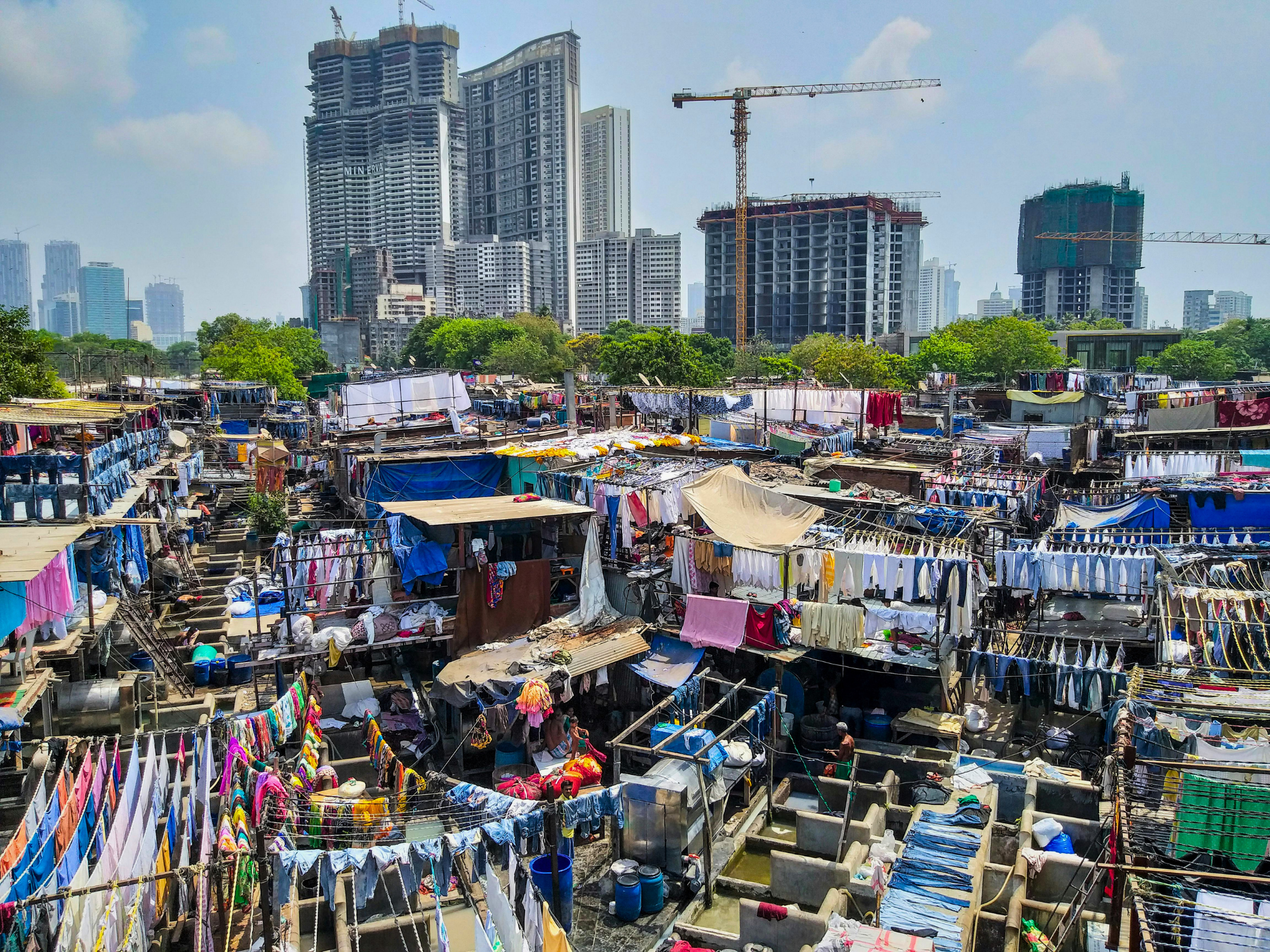
Dhobi Ghat, Mumbai's open-air laundry district, in operation since the 1890s.
Heritage Walk
Mumbai’s southern district contains two architectural worlds within walking distance: A Victorian Gothic quarter from the 1860s and an Art Deco strip from the 1930s, both of which together form a UNESCO World Heritage Site. The history layered between them, like the cotton boom, the Suez Canal opening that shifted trade from Calcutta to Bombay, the trading communities that funded the independence movement, is not on any plaque. The city’s origin story alone (seven Portuguese islands, a dowry gift to Charles II, 65% reclaimed land) is worth two hours of your morning.
Pro tip: Hire a specialist guide. I walked with Heer, a young female entrepreneur, who knows this city the way people know the places they grew up in.
Gateway and Taj
Mumbai is often depicted in pictures with the Gateway of India in the background. Almost no one knows that the Taj Hotel across from it is 20 years older. The Taj was built in 1903 by Jamsetji Tata, after he was refused entry to a European-only hotel down the road. The Gateway came in 1911, built to welcome King George V. That reversal changes how you look at both buildings. The Gateway was also the departure point for the last British infantry regiment leaving India in 1948. Stand there, think about that for a moment.
Pro tip: Ferries depart daily from Gateway to Elephanta Caves (UNESCO) and Alibag beaches. Book ahead in high season.
Dhobi Ghat
Dhobi Ghat is the Hindi term for an open-air laundry built in the 1890s, still fully operational. Hundreds of workers from migrant families handle commercial laundry for Mumbai’s hotels, hospitals, and restaurants. Their self-assigned systematic coded system has run without error for over a century. The operation runs with a precision that would embarrass most modern laundries. To put it in perspective, every luxury hotel on Marine Drive sends its linens here. To support this community, an NGO runs a school for workers’ children on site.
The experience is observation, not participation. This is best achieved from the overbridge above. Give it 30 minutes. It is one of the most honest views of how this city works. The more you watch, the more you will see.
Mani Bhavan
Gandhi chose this Gamdevi townhouse in 1917 for an unlikely reason: the humidity! He believed Mumbai’s air was good for his health. From this address, he launched the Satyagraha movement in 1919 and the Civil Disobedience movement in 1932. The trading communities of Bombay (Parsi, Marwari, and Chettinad merchants) funded these movements after British taxation targeted their businesses. This museum holds that history quietly. Give it an hour. It changes how the rest of the city unfolds.
Koli Fishing Village
The Koli are Mumbai’s indigenous community, fishing in these waters for over 800 years. They were here before the Portuguese, before the British, and before the reclamation projects that built the city around them. In a city built by male merchant empires, the fish trade belongs to women. They control the trade entirely, and nobody negotiates around them.
Pro tip: Walking through a Koli settlement in the early morning is a 10-minute window into the city’s oldest layer. Easy to combine with a Gateway and Taj visit.
Places to eat & drink in Mumbai
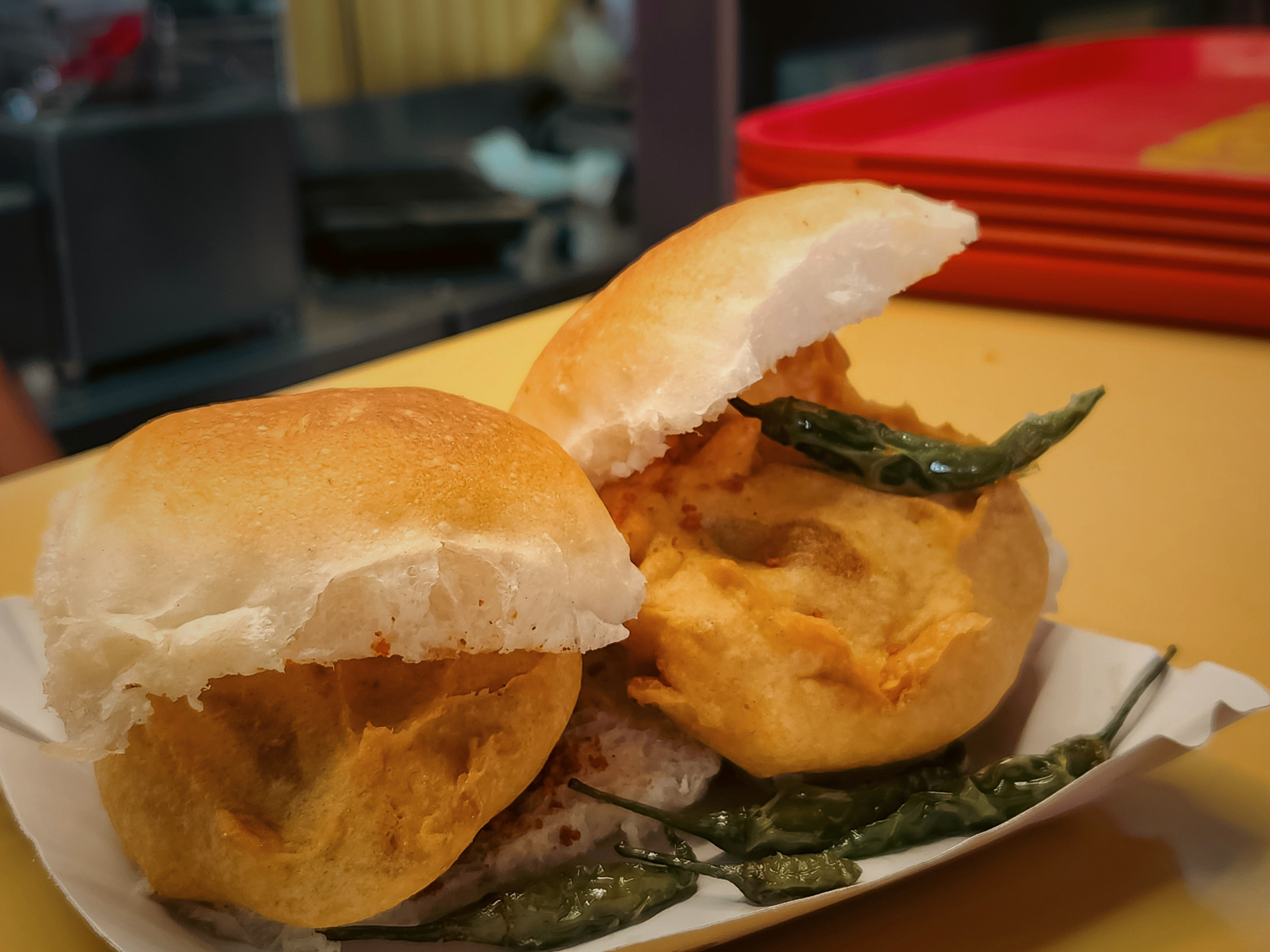
Vada pav — invented in 1966, made with ingredients the Portuguese brought. Still 20 rupees.
Vada Pav
A spiced potato fritter inside a bread roll, sold from carts throughout the city, was invented in 1966 as fast fuel for mill workers. Today, the mills are gone, but the vada pav stayed. It costs 20 rupees. Eat it at a busy cart in the morning. The pav (bread roll) is a Portuguese introduction via Goa, as are cashews and potatoes - three ingredients in Mumbai’s signature dish, all brought by colonizers. The history is inside the snack.
Trishna, Kala Ghoda
Mumbai has a way of making seafood feel like an argument it’s been winning for 200 years. Trishna is where that argument is most convincingly made. The room is small, slightly chaotic, and has not been redesigned since it became famous. Order the butter garlic crab. It arrives with no ceremony and yet requires your full attention. This is not a hotel restaurant or a tasting menu. It is a place that has been doing one thing for decades and doing it right. Book ahead. Lunch is easier than dinner.
Café Mondegar, Colaba
Opened in 1932, this is one of the oldest cafes in the city. The Mario Miranda murals here are the main draw. Caricatures of Bombay life that have been updated over decades, Cold beer, Goan food, the murals, the noise—Perfection!
Café Leopold, Colaba
Founded in 1871 by Irani Zoroastrian immigrants, Leopold sits on Colaba Causeway and has spent 150 years being the place where travelers, locals, writers, and the hungry—all end up in the same room.
On November 26, 2008, it was one of the first sites hit in the Mumbai terror attacks. Eleven people died. Four days later, the café reopened. The bullet holes in the walls and mirrors are still there. The management chose not to repaint them, and to preserve history for what it is. Ask the staff—they’ll point them out. What stays with you is that the room around those holes is full of noise and cold beer on a Tuesday afternoon. Mumbai doesn’t perform resilience. It just keeps going. Order the keema pav.
Britannia and Co., Ballard Estate
Lunch only. Cash only. Closes at 4 p.m. Open since 1923, it was founded by a Zoroastrian immigrant who fled Iran and landed in Bombay. The berry pulao - saffron rice, barberries (still imported from Iran), fried onions, cashews, chicken, or mutton folded through, was invented here by the owner’s wife and has since not been changed. The room hasn’t changed either. A portrait of the Queen shares wall space with Gandhi. Arrive early. The pulao runs out.
Need to know
Getting around: Southern Mumbai (Colaba, Marine Drive, Kala Ghoda, Fort) is walkable if you have time, flat shoes, and the capacity to thrive in chaos. The distances between major heritage sites are 10–20 minutes on foot. Taxis and auto-rickshaws are abundant, but auto-rickshaws are not permitted south of Mahim. Use Uber or Ola, the local cab service, for reliable app-based transport. The Mumbai monsoon season (June–September) is serious and unrelenting. Factor rain into any walking-heavy itinerary if you are here in the season. Pro tip: If you’re visiting in January or February, ask your advisor to arrange access to the Mahalakshmi Racecourse - one of the oldest tracks in Asia, and a window into old Bombay money that most visitors never access
When to go: November through February is the best time in this city, with manageable heat and low rainfall. March begins warming quickly. April and May are hot and humid. Avoid planning heavy walking itineraries during the monsoon (June–September) unless you specifically want to experience it. Pro tip: If you’re here in summer, don’t leave without trying an Alphonso mango. There is a reason it has its own season, its own following, and its own price. One bite and you’ll be initiated.
Accessibility: Mumbai rewards the traveler who plans for it. That applies more than anywhere to clients with accessibility needs. The southern heritage district is walkable but uneven. Temple interiors have steps. The sensory intensity of the city, like the noise, the crowds, and the heat, is its own consideration for clients with sensory sensitivities or cognitive differences. A car-based heritage route is entirely viable and, in some ways, more immersive. You move through the city at your own pace and skip nothing. Accessibility in Mumbai is a planning conversation, not a limitation. As a certified accessibility advisor, I build these itineraries as primary trips, not modified versions. Raise it early. The earlier we talk, the better the trip.
Bollywood (Indian Cinema): Mumbai is where Indian cinema rose to fame. The industry produces more films annually than Hollywood and employs more people than most cities have residents. You won’t stumble into a film set, but you will feel it everywhere—in the hoardings, the music bleeding out of autos, the way the city has always understood spectacle as a native language. For clients who want to go deeper, the Film Heritage Foundation screens restored classics for free every Wednesday at Regal Cinema in Colaba. India’s first feature film was made here in 1913, with an all-male cast, including the female roles. In Mumbai, the show must go on, and it always has.
Mumbai myth-busters
Mumbai will look at you. If you are visibly foreign, you will be noticed — at temples, in markets, occasionally asked for a photograph by a stranger who finds the whole thing entirely normal. It is curiosity, not hostility. Lean into it.
Vendors will quote you a different price than they quote the person next to you. The difference matters enormously to them and very little to you. Pay it, or negotiate gently if that’s your instinct—either is fine. What does not work is outrage.
One thing that genuinely catches people off guard: in India, making eye contact and smiling at a stranger does not mean what it means in New York or San Francisco. It reads as an invitation. Save the open smile for the people you are talking to.
None of this is a warning. It is just the city’s modus operandi. The faster you stop comparing it to somewhere else, the more you will enjoy it.


Travel Advisor
50FlyingFish

Niriha Kadambi

Get in touch with 50FlyingFish
Did you like this guide? Reach out to customize and book your own experience. Or, just to chat about travel in general.
For more travel inspiration and insider recommendations, check out our Mumbai page.