



Curator’s statement
There’s something a little disorienting when you first arrive in Budapest. Equal parts imperial grandeur and boho chic, Budapest first impresses you with its beauty but stays with you because of its depth. Split by the Danube River into the distinct neighborhoods of Buda and Pest, Hungary's capital is a blend of imperial architecture, rich cultural traditions, and resilient history. One moment you're standing inside one of Europe's grandest Parliament buildings, and the next you're reflecting at a Holocaust memorial, soaking in centuries-old thermal baths, or enjoying dinner as the city's skyline glows along the river. What surprised our family most wasn't any single landmark. It was how the city gradually revealed itself. The longer we spent there, the more we appreciated not only the experiences, but the stories behind them. Budapest rewards curiosity, and that's what makes great travel.
The Fora Difference
Book with Michele Rhudy to access exclusive perks and experiences on your trip.

Killer perks
Free upgrades, spa credits and more—we got you

Personalized recs
Customized travel planning for your style

Insider knowledge
Expert advice from people who’ve actually been there
Where to stay in Budapest
Unlock perks by contacting Michele Rhudy to book your trip.
Things to do in Budapest
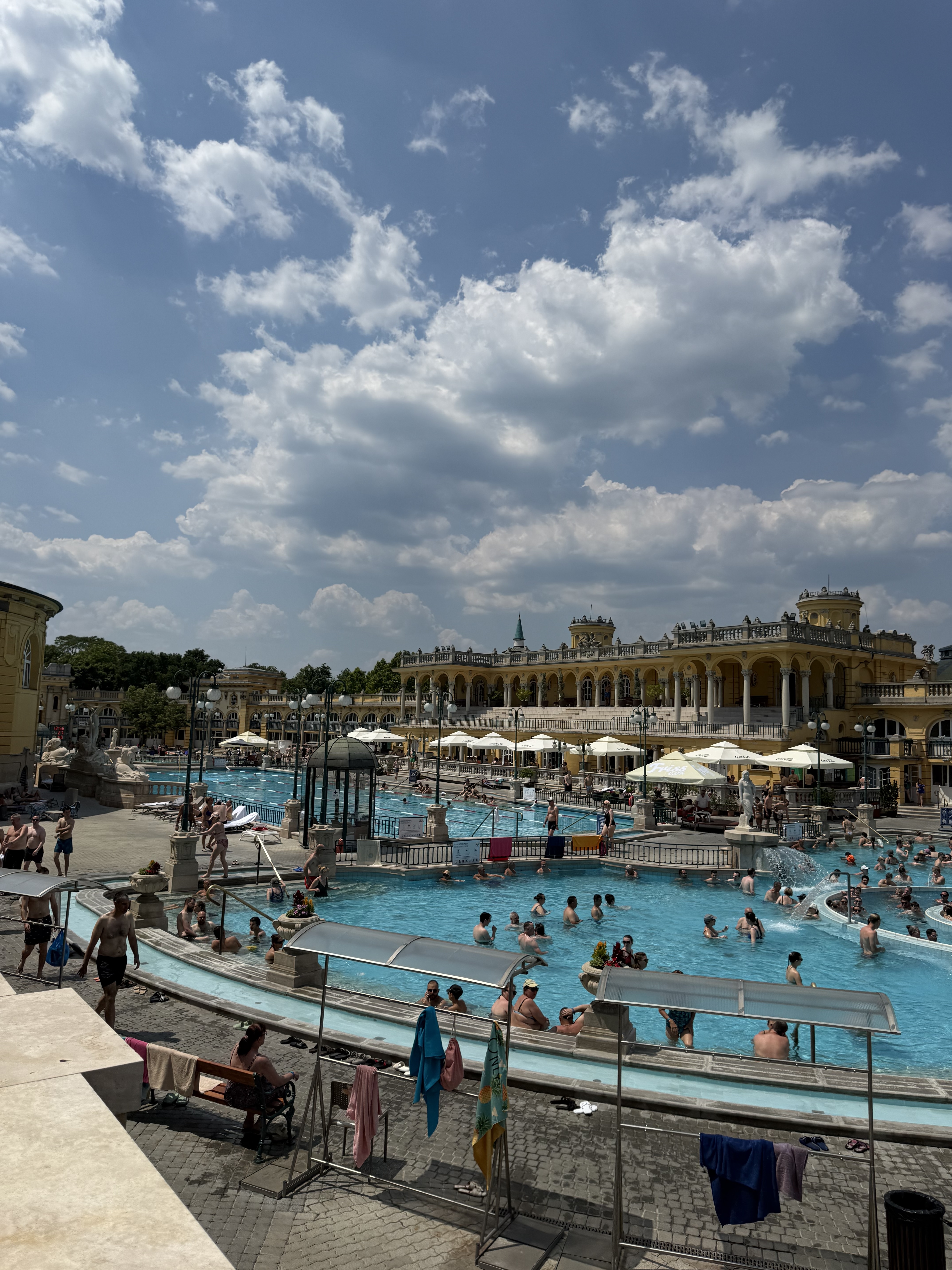
The Széchenyi Thermal Baths are a must-do cultural experience that will make you feel like a local.
First, understand Budapest
Budapest is really two cities connected by the Danube. Our guide shared a local saying that made me smile.
"There are those who live in Budapest… and those who wish they lived in Buda."
Whether or not that's true, it captures the personalities of the two sides.
Pest is lively, energetic, and home to many of the city's grand hotels, cafés, Parliament, and shopping districts. Buda feels quieter, greener, and more residential, with Castle Hill, Fisherman's Bastion, and sweeping panoramic views overlooking the river.
For first-time visitors, I recommend staying in Pest for its walkability, but don't make the mistake of skipping Buda. It is just a short walk, Uber, or bike ride away. My global-marathoning husband ran across the Széchenyi Chain Bridge at sunset, and he said it was one of his favorite travel runs ever. The bridge is just about one kilometer long. You really haven't experienced Budapest until you've seen both sides of this city.
Michele's favorite experiences
Tour the Hungarian Parliament Building
There are beautiful government buildings throughout Europe, but Hungary's Parliament is breathtaking during the day and especially so when illuminated at night from a boat on the river.
Completed in 1902, the Neo-Gothic masterpiece stretches along the Danube with soaring spires and intricate stonework. Inside, visitors explore the building through a government-operated, one-hour audio tour, learning about Hungary's history while admiring magnificent staircases, stained glass, gilded ceilings, and the country's Crown Jewels, guarded around the clock beneath the enormous central dome.
Depending on your timing, you might be in the backdrop of a government news conference as they are typically held on these iconic carpeted red steps. Look for the cigar holders and other hidden architectural gems in this working building.
Insider tip: Purchase tickets well before your visit, as summer tours frequently sell out. Your travel advisor can help you secure skip-the-line advance tickets, since buying official tickets online can be frustrating. Bathrooms inside the visitors' center complex near the café cost about a dollar or 317 HUF, and they take Apple Pay and credit cards; however, bathrooms just a few feet away at the bottom of the steps outside are free.
Visit the Shoes on the Danube Bank
The Shoes on the Danube Bank memorial is a haunting reminder that humanity is flawed at best.
Sixty pairs of iron-clad shoes line the river where thousands of Hungarian Jews were executed during World War II. Victims were ordered to remove their shoes before being shot into the river, making this simple memorial one of the city's most moving places.
It's not a place you'll spend hours, but it's one you won't forget.
Cross into Buda
One of my favorite afternoons was simply crossing the Chain Bridge and wandering Castle Hill.
The area feels worlds away from bustling Pest, with cobblestone streets, colorful buildings, and breathtaking overlooks around every corner. Castle Hill, Matthias Church, and Fisherman's Bastion offer spectacular views across the river, where the streets are quieter and the neighborhoods are more residential.
Insider tip: Take a break and pop in White Raven Skybar & Lounge inside the Budapest Hilton. The spectacular view near Fisherman's Bastion is worth the effort of the reservation you'll likely need to score a table there. White Raven opens for lunch at noon. Consider taking the free escalator to the Buda Castle district located at the Castle Garden Bazaar. The 90-second funicular nearby is fun (and can be crowded) but costs about $11 or 4,000 HUF.
Experience Budapest from the Danube
If I could encourage everyone to book one experience before arriving, it's an evening cruise on the Danube.
We sailed with Legenda on a relaxed 2.5-hour dinner cruise featuring a four-course meal, live music ("Country Roads" is a global sing-along sensation no matter where you go), and panoramic open-air views. Watching Parliament, Buda Castle, and the city's bridges illuminate as the sun set over the river became one of the highlights of our entire Central Europe journey.
The food far exceeded expectations, the atmosphere was elegant without being formal, and seeing Budapest from the water offers a completely different perspective on the city.
Spend an afternoon at Széchenyi Thermal Baths
Disclaimer: Széchenyi is a total hoot. Our family of five giggled a lot as we marinated in the famous spot in the City of Spas.
Opened in 1913 and supplied by natural thermal springs, the Neo-Baroque complex feels less like a modern spa and more like stepping into a tradition that's been part of daily life for generations. Locals read books, play chess, visit with friends, and soak in mineral-rich pools of varying temperatures. It felt, in many ways, like what I imagine the great Roman baths must have been, less about luxury and more about community.
There are dozens of indoor and outdoor pools of various temperatures. We upgraded to the Flavors of Joy DaySpalm Package, which included access to a quieter lounge, private changing rooms, and welcome shade during Budapest's intense summer heat. It also included a robe, towels, required bath sandals, and bathing cap for the outdoor lap pool.
Insider tip: Transportation can become limited late in the afternoon. Consider arranging your return ride before you arrive or risk being left on the sidewalk at the thermal spa.
Discover the Jewish Quarter and Budapest's ruin bars
Budapest's Jewish Quarter tells one of the city's most important stories.
Here you'll find the beautiful Dohány Street Synagogue, the moving Tree of Life Memorial, and streets that reflect both heartbreaking history and remarkable renewal.
The neighborhood is also home to Budapest's famous ruin bars. After the fall of Communism in 1989, abandoned apartment buildings and neglected courtyards were transformed into eclectic gathering places filled with vintage furniture, local artwork, and live music. Rather than erase the past, the city found a creative way to build on it.
Even if you're not interested in nightlife, stop by Szimpla Kert during the daytime. Unique is an understatement: you'll instantly know whether it's your kind of place.
Stop at the First Strudel House of Pest
One of my favorite discoveries wasn't a museum or monument. It was a pastry shop.
The First Strudel House of Pest celebrates a centuries-old tradition with handmade sweet and savory strudels ranging from apples and cherries to cabbage and cheese. Sampling several varieties became one of those unexpectedly delightful travel moments—the perfect stop during a walking tour and a wonderful introduction to Hungarian comfort food with amazing aromas and air conditioning.
Places to eat & drink in Budapest
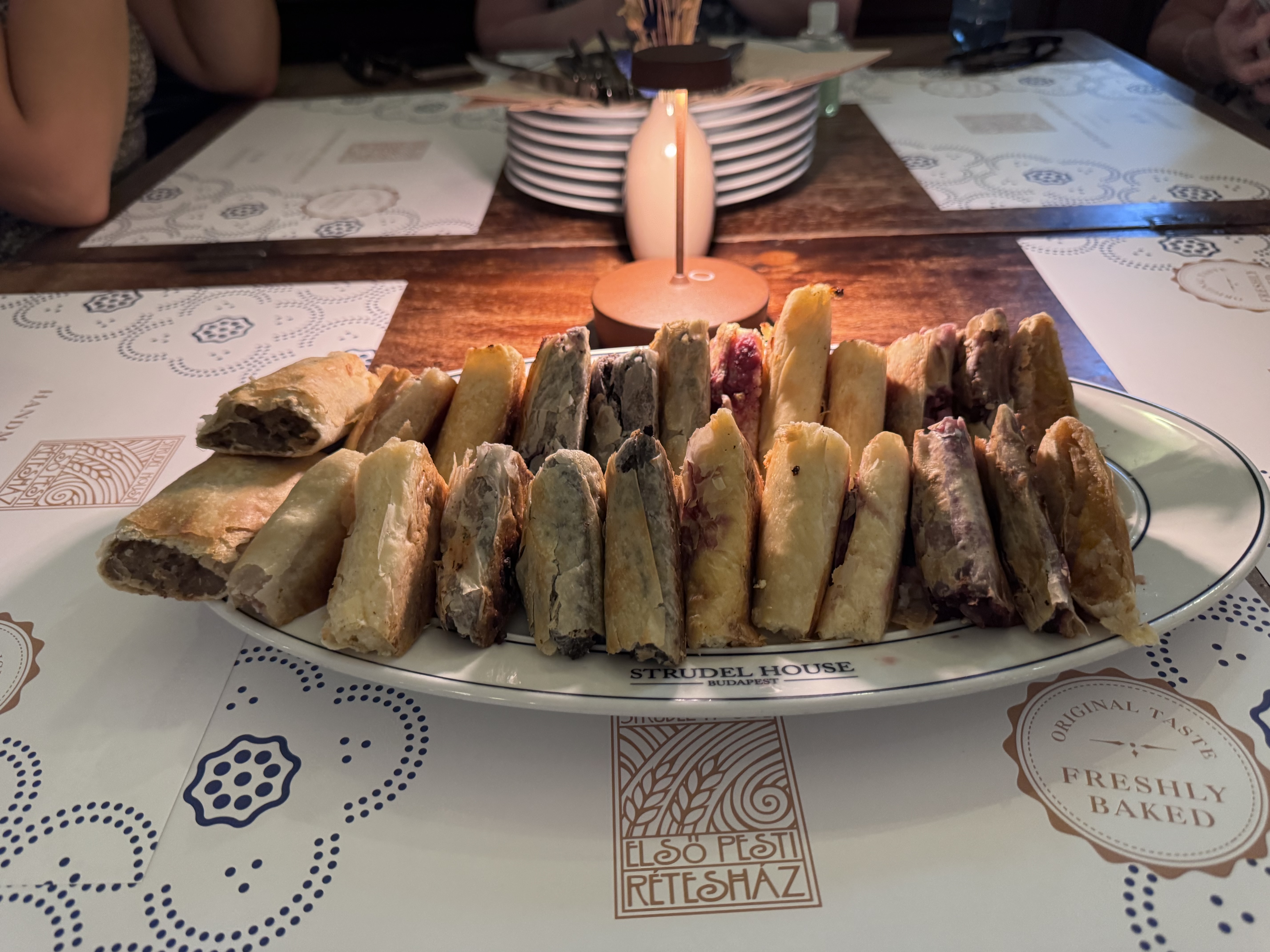
Why not try all the strudels? When in Hungary…
Trattoria Pomo D’Oro
Just steps from Prestige Hotel Budapest, Pomo D’Oro quickly became our favorite restaurant in the neighborhood. The hospitality was exceptional, and you could tell many of the staff had spent years there.
Don't miss: The Priest Choker Pasta, a memorable local specialty inspired by Hungarian folklore.
First Strudel House of Pest
A memorable and tasty introduction to one of Hungary's most beloved culinary traditions. Order both a sweet and savory strudel to appreciate the range.
New York Café
It’s a tourist haven for sure, but the opulent New York Café is worth a stop. It gets incredibly busy during the day, so morning coffee or late evening cocktails are likely the best way to experience this local institution since 1894.
Spoon the Boat
A floating restaurant located directly on the Danube, Spoon offers perfect river views and a lively atmosphere that makes it especially fun for dinner. You pay a little extra for the ambiance, but it’s worth it.
Hoppá Bistro
Traditional Hungarian flavors presented in a fresh, approachable way. This is a welcome treat after days of yummy-but-heavy Hungarian comfort food.
Urban Betyár
Urban Betyar is half restaurant and half museum, making it an excellent choice for travelers who enjoy learning about local culture through food.
Need to know
Three full days is an ideal introduction to Budapest.
Stay on the Pest side for easy access to major attractions.
Reserve Parliament tours and Danube cruises well before your trip.
Budapest is extremely walkable, and Uber makes getting between Buda and Pest simple and affordable.
During warmer months, explore the city early and late in the day, saving the thermal baths for the hottest afternoon hours.
Take time to understand Budapest's history. Knowing the stories behind its landmarks transforms a beautiful city into an unforgettable one.
Why I recommend Budapest
Budapest is so much more than a collection of beautiful buildings and river views.
It's a city that has endured, adapted, and continued to celebrate life. You see it in the cafés filled with conversation, the thermal baths that have welcomed generations of locals, the memorials that honor the past, and the creative energy found in neighborhoods that have reinvented themselves.
Budapest reminded me that the best destinations are the ones that make you curious and leave you hungry for more. Every day, we uncovered another layer of the city's story, from its grand architecture to its difficult history to the traditions that continue to shape everyday life. It's beautiful, fascinating, and unexpectedly joyful. I can't wait to go back.


Travel Advisor
Michele Rhudy

Michele Rhudy

Get in touch with Michele Rhudy
Did you like this guide? Reach out to customize and book your own experience. Or, just to chat about travel in general.
For more inspiration and insider recommendations, visit our Budapest page.