

Scotland doesn’t announce itself slowly, it hits you at once. Ruined castles, morning fog covered lochs, and jagged coastlines compliment a country that is compact enough to drive across in a few hours.
Edinburgh’s medieval Old Town is stacked against its Georgian New Town, while the Castle looms over everything. Glasgow has a music scene, restaurant culture, and arts infrastructure that would feel notable in a city three times its size. The Highlands have the deepest pull, with single-track roads, village pubs, and stunning landscapes found nowhere else. The islands bring this energy to cliffs that crash into the ocean, large bird colonies, and herds of Highland cows roaming the hills.
Scotland offers the kind of trip where an unscheduled day is remembered just as much—if not more than—a packed day of sightseeing. The weather is famously uncooperative and changes rapidly, but this is what helps make the atmosphere epic.
Need to know
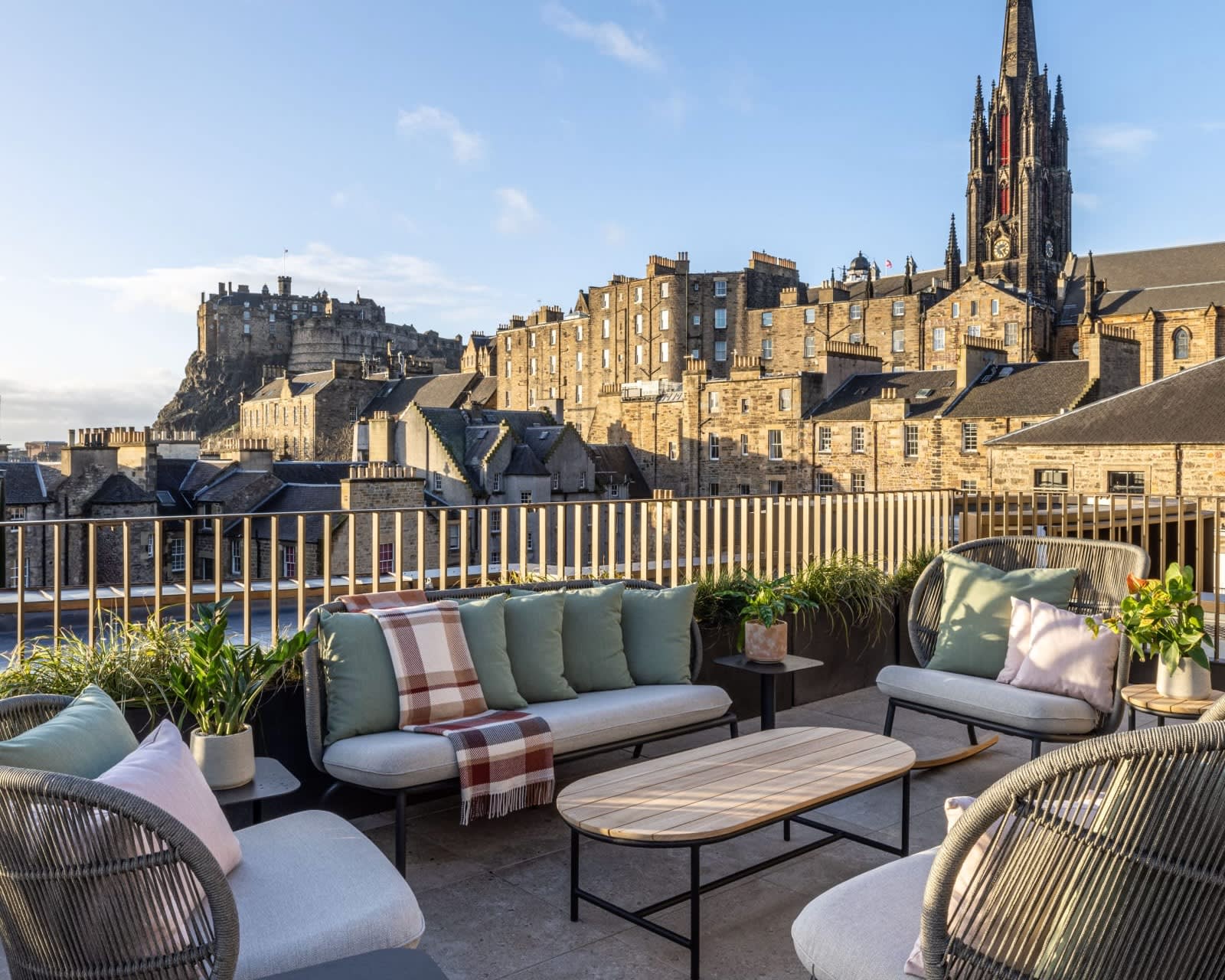
Image courtesy of Virgin Hotels Edinburgh
Scotland’s scale is deceptive—compact but complex in its weather, road conditions, and regional character that can catch unprepared travelers off guard. Knowing a few practical realities before you set out will make a world of difference, and be sure not to conflate Scotland and England as this can be offensive to many Scots.
Currency: Scotland uses the British Pound (GBP), but Scottish banknotes are different from Bank of England notes—and while technically legal tender in Scotland, many places in England refuse them. Exchanging them at a bank before crossing the border is wise if you’re continuing south. Cards are accepted at the vast majority of hotels, restaurants, and shops. That said, it’s worth carrying some cash for rural pubs, village markets, and more remote areas. Tipping around 10–12% is standard in restaurants if service is not already included, while small tips for guides, drivers, and hotel staff are appreciated.
Languages: English is the official language and spoken throughout the country. Scottish Gaelic is spoken by a small percentage, primarily in the Highlands and Islands, while Scots—a distinct Germanic language closely related to English—is widely spoken across much of the Lowland. Regional accents and local Scotticisms may take some getting used to.
Airports: Edinburgh (EDI) and Glasgow (GLA) are Scotland’s two main international gateways. Year-round connections to Edinburgh include flights to New York City, Newark, and Washington D.C., as well as additional seasonal flights to both airports from more cities.
Transportation: Trains are a dependable and scenic way to move across the country. For the Highlands and more remote corners, a rental car is the right call—just remember to keep to the left side of the road. Bus routes help reach towns and villages that trains don’t. In cities like Edinburgh and Glasgow, there is no shortage of public transit, rideshares, and walkable areas.
Best time to visit: Scotland is genuinely a year-round destination, but the right time depends entirely on what you’re after. Summer (June–August) is the peak window, with long days, mild temperatures, and purple heather blooms across the Highlands. Spring (April–May) and early fall (September–October) are solid for hiking and outdoor exploration, though Scotland’s weather shifts without warning at any time of year. Winter (November–March) strips away the crowds and leans into roaring fires inside candlelit pubs and Highland cottages.
Ideal length of stay: A long weekend works well for a focused city visit. One full week opens things up, giving you time to head into the Highlands and Islands. If you’re pairing Scotland with England, add on at least four to five days so you aren’t rushed.
Signature dishes and drinks:
Haggis: Scotland’s national dish of minced sheep’s offal, oatmeal, onions, and spices, traditionally served with neeps and tatties—mashed turnips, and mashed potatoes
Cullen Skink: A thick, smoky, deeply comforting soup of smoked haddock, potatoes, and onions that originated in the small fishing town of Cullen on the northeast coast
Scottish seafood: Among the best in the world, from plump mussels to briny oysters and Arbroath smokies—a whole haddock hot-smoked over hardwood with protected geographical status
Shortbread: A three-ingredient butter biscuit—flour, sugar, butter—that somehow becomes more than the sum of its parts
Tablet: A dense, grainy confection made from sugar, condensed milk, and butter that sits somewhere between fudge and hard candy
Cranachan: A layered dessert of whipped cream, toasted oatmeal, fresh raspberries, heather honey, and a generous pour of whisky
Scotch whisky: Produced across five distinct regions—Speyside, Islay, Highlands, Lowlands, and Campbeltown—ranging from honeyed and floral to smokey
Irn-Bru: The aggressively orange, fiercely caffeinated soft drink that outsells Coca-Cola across the country and defies easy description
Craft beer: A scene that has grown steadily, with breweries like BrewDog, Tempest, and Fallen producing everything from hoppy IPAs to barrel-aged stouts
What to wear: Scotland’s weather means sun, wind, and rain can all show up before lunch, so layers are the only real strategy. A moisture-wicking base layer, a warm mid-layer, and a waterproof outer shell cover most situations across the seasons. Sturdy, waterproof footwear is worth prioritizing, especially in the Highlands, coastal paths, or any stretch of moorland. Wool is your friend—it handles the damp and regulates temperature well when conditions shift. Cities like Edinburgh and Glasgow skew smart-casual in the evenings, with nicer restaurants and bars expecting a step up, but the overall dress code is relaxed and unpretentious. A warm hat and gloves earn their place in your bag even in summer.
Travel tips:
Driving: Beyond driving on the left side of the road, single-track roads with small pull-offs for passing cars are common. Tailgating, failing to pull over for faster traffic behind you, or stopping in passing places for photos is dangerous. Petrol stations in the remote Highlands have limited hours and are scarce.
Ferries: Car ferries to the Hebrides fill up well in advance, especially in summer. Foot passengers can usually get on, but missing a ferry may mean waiting a day or more.
Weather and hiking: The Cairngorms plateau is classified as subarctic, and snow can fall in any month. Mountain Rescue in Scotland is free—calling 999 for genuine emergencies is encouraged.
Drinking: The legal age to buy alcohol is 18, but 16 and 17-year-olds can consume beer, wine, or cider with a table meal in a restaurant if accompanied by an adult 18 or over.
Distillery visits: The “silent season” hits July–August, meaning many small distilleries shut down production for maintenance during the busy summer travel season. You can still visit, but if seeing active distillation matters, visit in autumn, winter, or spring.
Cell service: Reception is reliable in cities but can become limited in remote Highlands and island areas. Download offline maps before long drives.
Wildlife and outdoors: Midges, tiny biting insects common in the Highlands during summer, are a real thing. Insect repellent is absolutely worth packing if you plan to hike or spend time near lochs.
Shopping: Scotland is known for cashmere, Harris Tweed, tartan goods, and more. Edinburgh and Glasgow both have excellent independent boutiques, while the Highlands and islands are better for smaller artisan shops, wool mills, and distilleries.
Edinburgh
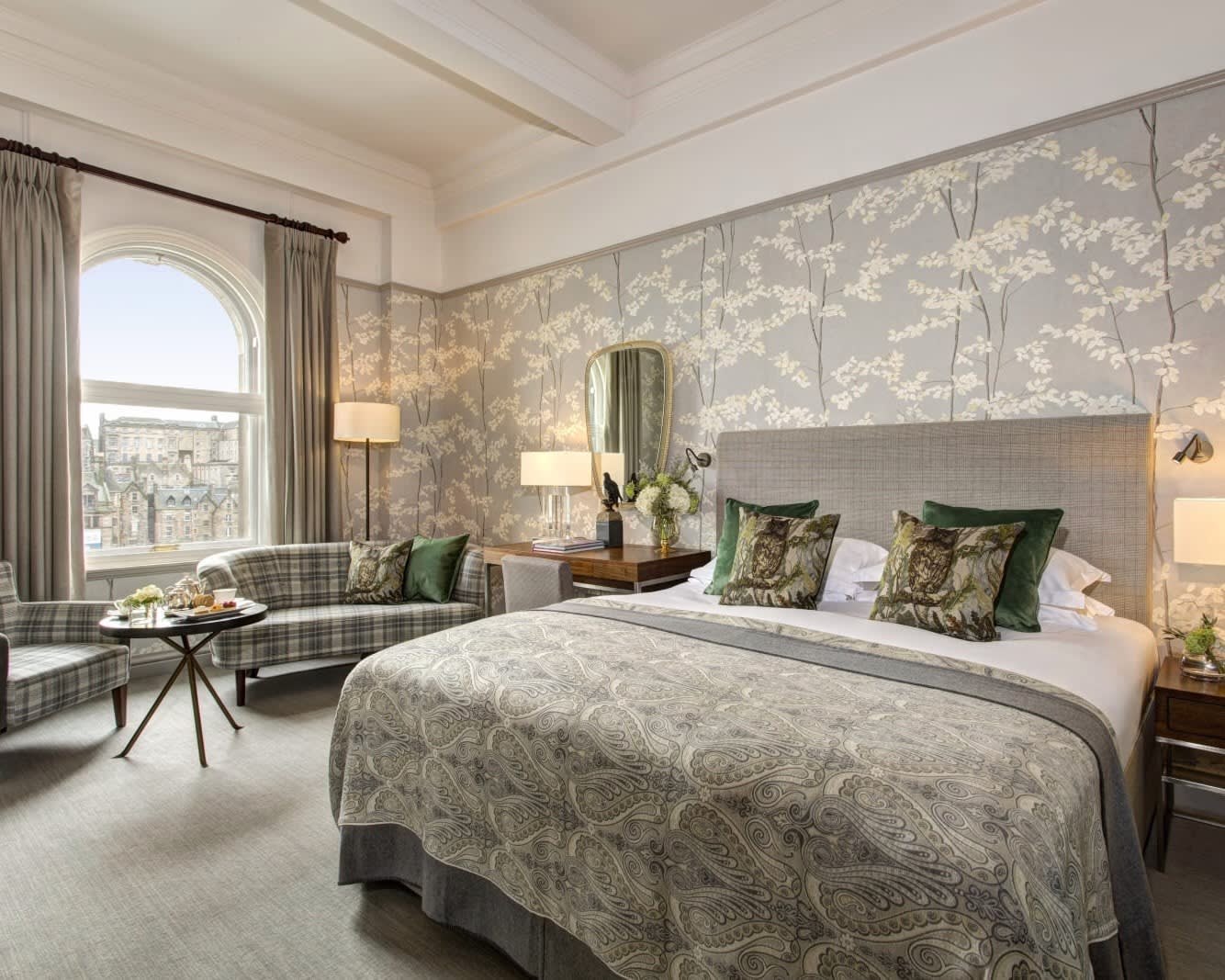
Image courtesy of The Balmoral Hotel
Edinburgh carries more history per square mile than almost any city in Europe. The Old Town climbs from the Palace of Holyroodhouse up the Royal Mile to Edinburgh Castle, a spine of medieval tenements, hidden courtyards, and some of the city’s best pubs. The New Town, built in the 18th century as a planned expansion, trades the Old Town’s drama for Georgian symmetry: wide streets, garden squares, and a concentration of independent shops and restaurants on Thistle and Rose Streets. Leith, Edinburgh’s port neighborhood, has made a sharp transition from working waterfront into one of Scotland’s best stretches for eating and drinking.
Where to stay
Gleneagles Townhouse: The beloved Perthshire resort’s Edinburgh outpost occupies a handsome George Street address. The clubby interiors—think tartan accents, taxidermy, and open fires—deliver the same country-house warmth in a decidedly urban setting.
Fora Perks include a $100 food and beverage credit, daily breakfast, an upgrade, and extended check-in/out whenever possible.
The Balmoral Hotel: The clock tower has kept time over Waverley Station since 1902—set, by tradition, three minutes fast so travelers never miss their train. Inside, expect kilted doormen, a whisky bar stocked with rare malts, and some of Scotland’s most decorated fine dining.
Fora’s Rocco Forte Knights partner perks include a $100 food and beverage credit, daily breakfast, and an upgrade whenever possible.
Kimpton Charlotte Square by IHG: A row of interconnected Georgian townhouses have been stitched together into one of Edinburgh’s most characterful hotels. Interiors nod to the city's literary and artistic heritage, while the garden is a genuine rarity in the New Town.
Fora’s IHG Destined partner perks include a $100 hotel credit, welcome amenity, daily breakfast, an upgrade, and extended check-in/out whenever possible.
InterContinental Edinburgh The George by IHG: Spread across five Georgian townhouses, the property balances period grandeur—ornate plasterwork, marble fireplaces—with a polished modern finish.
Fora’s IHG Destined partner perks include a $100 hotel credit, welcome amenity, daily breakfast, an upgrade, and extended check-in/out whenever possible.
Virgin Hotels Edinburgh: In the heart of the Old Town, this irreverent addition to the hotel scene brings with it the brand’s signature Chamber concept—spaciously dividing the sleeping and dressing areas. The rooftop is the star, though, with unobstructed views toward the Castle.
Fora’s Preferred Platinum partner perks include a $100 hotel credit, welcome amenity, daily breakfast, an upgrade, and extended check-in/out whenever possible.
Glasgow
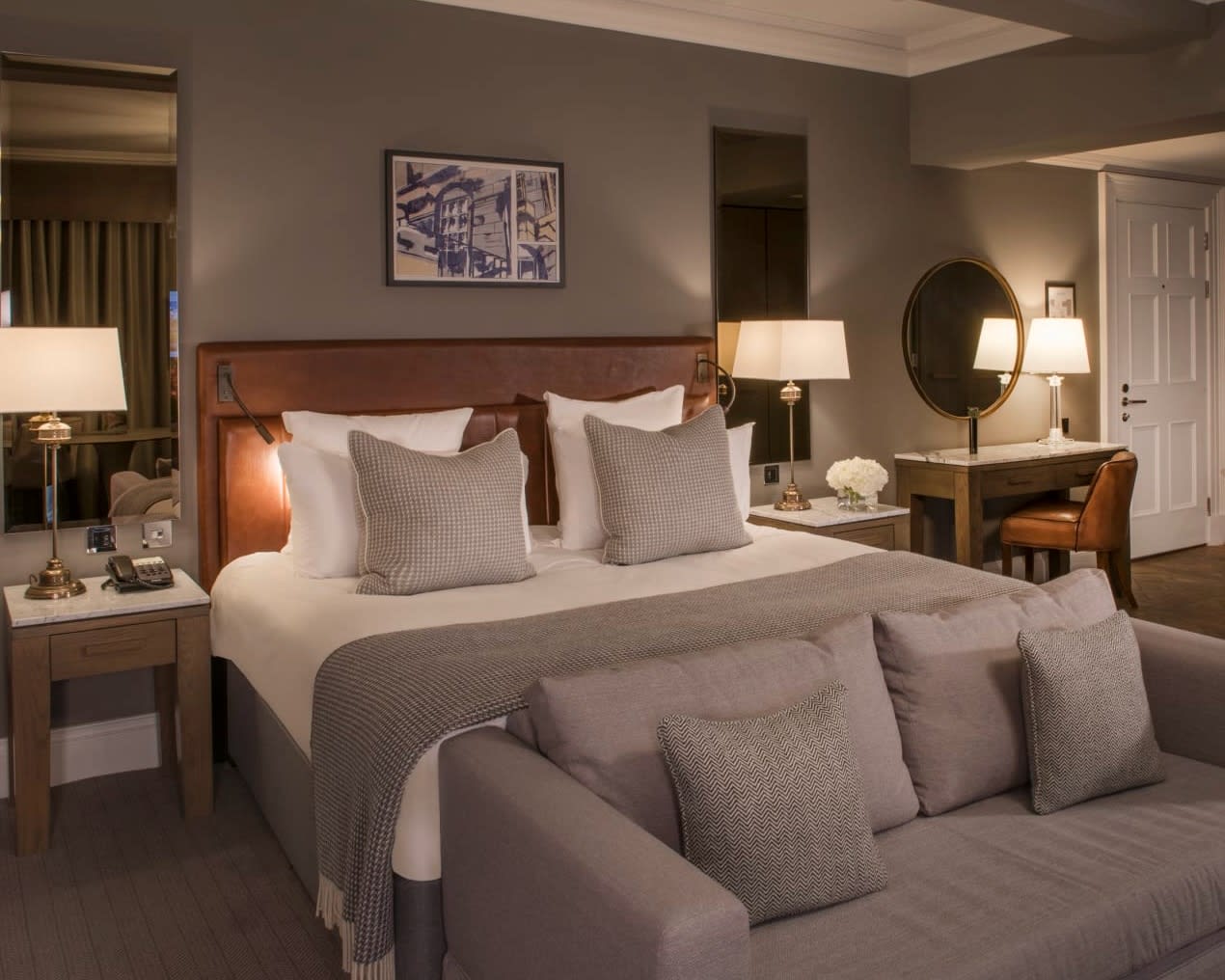
Image courtesy of Kimpton Blythswood Hotel & Spa by IHG
Glasgow has built its identity on industry, music, and galleries. The Merchant City, once the commercial heart of the tobacco and textile trade, now hosts a dense concentration of bars and restaurants that fill early and stay full, especially on weekends. The West End’s main artery, Byres Road, is lined with independent cafés, bookshops, and Ashton Lane’s cobbled mews tucked just behind it. Finnieston has become the city’s most talked-about stretch for eating and drinking, with a concentrated run of restaurants, cocktail bars, and live music venues that reflects how seriously Glasgow takes both its food scene and its nights out. Glasgow’s music credentials, built on venues like King Tuts and the Barrowland Ballroom, remain as strong as anywhere else in the UK.
Where to stay
Kimpton Blythswood Hotel & Spa by IHG: Stone columns, ornate plasterwork, and a grand staircase anchors one of Glasgow’s most elegant squares. The spa, built into the lower floors, is among the best in the city, while the bar and afternoon tea service draw a loyal local crowd.
Fora’s IHG Destined partner perks include a $100 hotel credit, welcome amenity, daily breakfast, an upgrade, and extended check-in/out whenever possible.
AC Hotel by Marriott Glasgow: A sleek addition to the Finnieston neighborhood, complete with European-influenced design. Straightforward and well-executed, it suits the area's creative, no-fuss character.
voco Grand Central Glasgow by IHG: Straddling the main concourse of Glasgow Central Station, this is one of those hotels where the building itself is the draw. Blending Victorian charm, modern design, and bright artworks, it’s a welcome offering in the city.
Highlands and islands
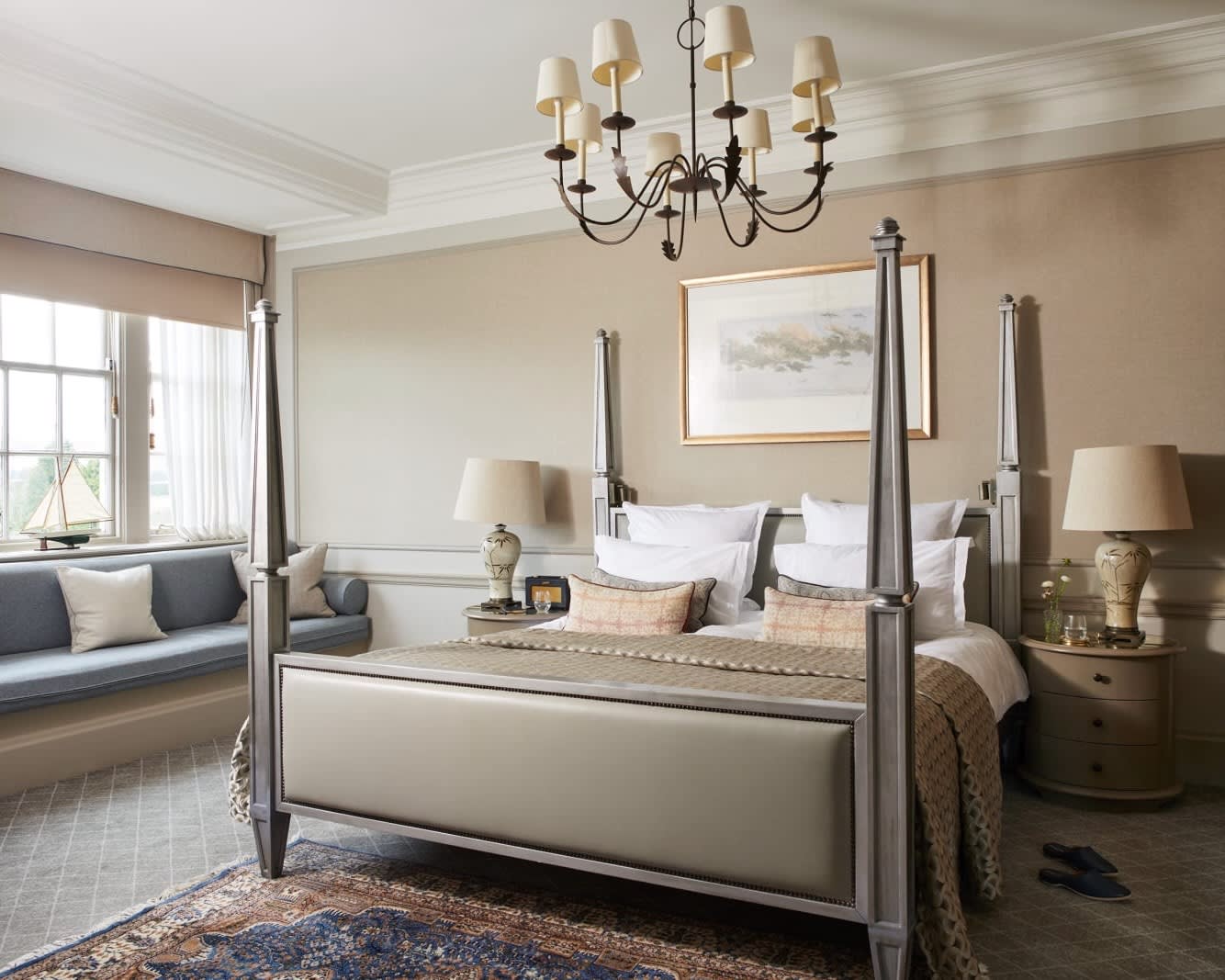
Image courtesy of The Gleneagles Hotel
The Scottish Highlands and islands don’t ease you in gently, it hits with mountains, lochs, and open moorland stretching in every direction. This is a region best measured in routes rather than cities.
The North Coast 500, Scotland’s answer to a great road trip, loops from Inverness around the top of the country past sea stacks, white sand beaches, and single-track roads. Inverness itself is a practical base more than a destination, though Loch Ness is within easy reach. The Isle of Skye is the most visited of the islands, from the Old Man of Storr to the Fairy Pools, and some serious restaurants and whisky distilleries. The Outer Hebrides—Lewis, Harris, the Uists, and Barra—are quieter and more remote, with Harris Tweed still woven in homes across the island and the beaches at Luskentyre as purely beautiful as any. Glencoe stops most people cold, with one of the most recognizable landscapes in Scotland. Oban serves as the main gateway to the inner islands, a working port town with a whisky distillery at its center and ferry connections to Mull, Islay, and beyond. Islay alone is worth the crossing for anyone serious about Scotch, with eight distilleries spread across an island small enough to visit several in a day.
Where to stay
The Gleneagles Hotel (Perthshire): Opened in 1924, this Perthshire institution remains the benchmark for Scottish country house hospitality and a gateway to the Highlands. Three championship golf courses, a falconry school, and a renowned spa mean the property functions as a small village, one that guests rarely feel compelled to leave.
Fora Perks include a $100 food and beverage credit, daily breakfast, an upgrade, and extended check-in/out whenever possible.
The Fife Arms (Aberdeenshire): As much art destination as hotel, with over 14,000 works—including pieces by Picasso and Lucian Freud—woven throughout the interiors. The two bars, the restaurant, and the wood-paneled drawing rooms each feel distinct, and the surrounding Cairngorms make it one of the most compelling bases in the Scottish Highlands.
Fora Perks include a $100 food and beverage credit, daily breakfast, an upgrade, and extended check-in/out whenever possible.
Cameron House on Loch Lomond (West Dunbartonshire): On the southern shore of Loch Lomond, this grand baronial property pairs striking water and mountain views with a full resort offering. Two golf courses, a marina, spa, and multiple dining options make for one of Scotland's best-known stays.
Fora Perks include an on-site experience, welcome amenities, daily breakfast, an upgrade, and extended check-in/out whenever possible.
Dornoch Station (Highland): Best known as the home of Royal Dornoch Golf Club, the former railway station has been converted into a small, sharply designed hotel. Exposed stone and considered interiors make it a natural base for golfers and Highlands explorers alike.
Fora Perks include daily breakfast, an upgrade, and extended check-in/out whenever possible.
Inverlochy Castle (Highland): With Ben Nevis as its backdrop and the etiquette of a private estate near Fort William, this Victorian castle was once declared by Queen Victoria as having one of the most beautiful settings she had ever seen.
Fora Perks include an on-site experience, daily breakfast, an upgrade, and extended check-in/out whenever possible.
Killiehuntly Farmhouse (Highland): This restored Cairngorms farmhouse operates more like a private home with six rooms and communal dinners. Its ethos is rooted in sustainability and simplicity, with the surrounding estate offering walking and wild swimming.
Kinloch Lodge (Highland): Built as a hunting lodge on the Isle of Skye in the 17th century, and still owned by the MacDonald clan, this retreat offers a rare personal atmosphere, with a kitchen shaped by decades of culinary leadership by the family.
Royal Scotsman, A Belmond Train: Scotland’s most storied journey unfolds aboard this restored 1960s train. Itineraries range from two to seven nights, threading through the Highlands with stops for distillery visits and castle tours.
Cruising to and around Scotland
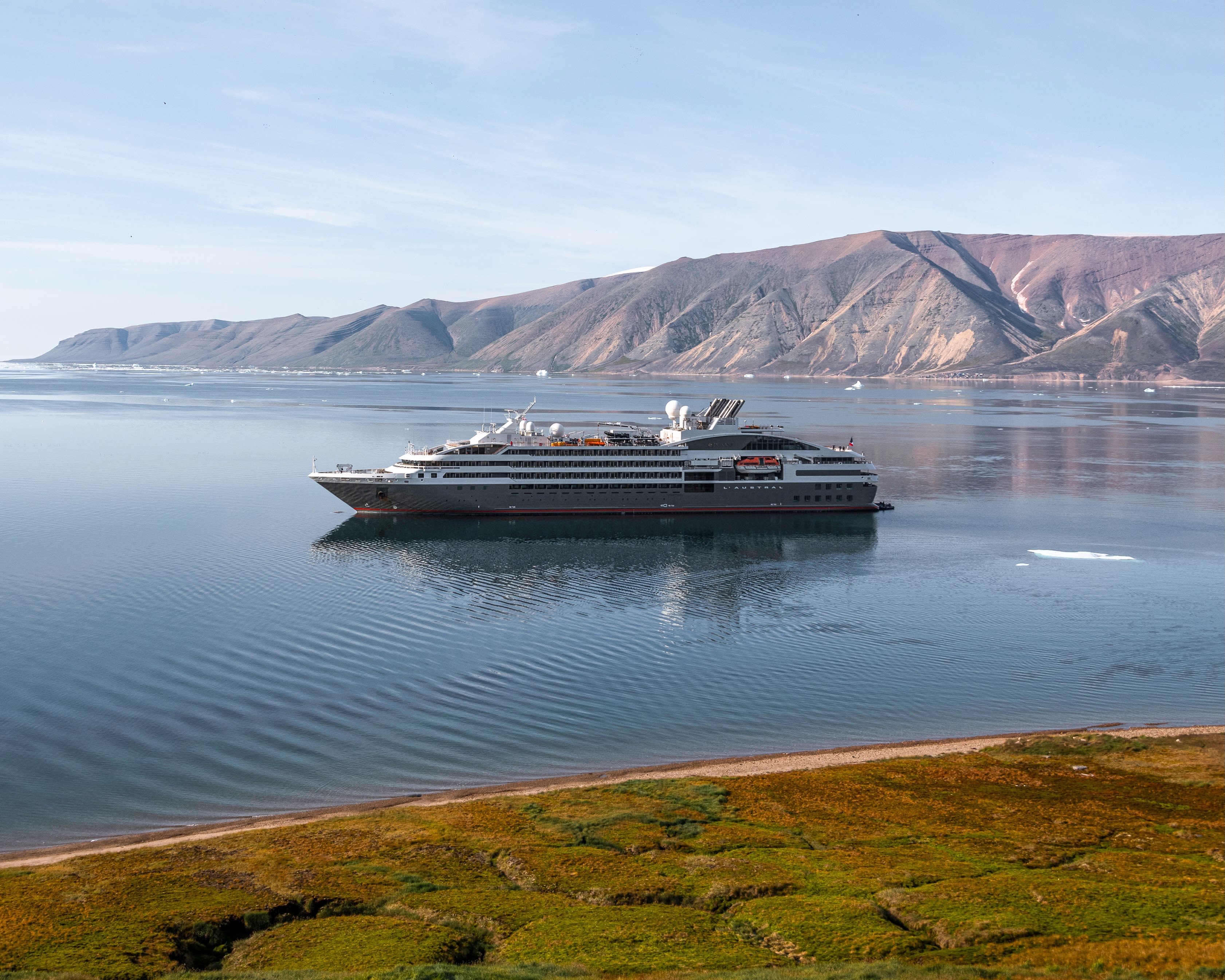
Image courtesy of Ponant Cruises
Scotland appears on itineraries, typically operating between late spring and early autumn. The country’s geography means many stops are tender ports, where passengers are ferried ashore by small boat rather than docking directly, so factor in additional time and watch for weather-related cancellations.
The main ports of call each access a different part of the country. South Queensferry and Leith both serve Edinburgh, with Leith being the closer and more commonly used cruise terminal. Invergordon acts as the gateway to the Scottish Highlands and Loch Ness. Kirkwall, on the Orkney Islands, puts passengers within reach of Neolithic sites that predate Stonehenge.
Popular itineraries
British Isles (7-14 days): Roundtrip sailings from ports like Southampton, Dublin, or Copenhagen that circle England, Scotland, Wales, and Ireland. These pair landscapes and whisky country with the castles, coastlines, and capital cities of the British Isles.
Scotland intensive (7-10 days): Dedicated sailings that linger along the Scottish coast, threading the Hebrides, Orkney, and Shetland islands. The best option for anyone who wants to go deep on imposing sea cliffs, island culture, and Highland history.
Northern Europe (10-14 days): One-way and roundtrip sailings connecting Scotland with Scandinavia, Baltic capitals, or the fjords of Norway. This is best for a broader sweep of northern coastlines, scenic sights, and historic cities.
Iceland (7-14 days): One-way routes running between Reykjavík and Southampton, or reversed, commonly include at least one Scottish port. A strong itinerary for pairing volcanic landscapes and Northern Lights with the Scottish coast.
Notable cruise lines
Azamara: A boutique premium line built around destination immersion with a PerryGolf partnership that allows guests to at championship courses around the world. The onboard atmosphere is polished but unpretentious with inclusive pricing covering drinks and gratuities.
Fora Perks include up to $200 shipboard credit per stateroom on select voyages. Virtuoso Voyages Hosted Benefits also available on select sailings.
Ponant Cruises: The French luxury line excels in understated elegance, serious culinary standards, and small ships that access remote coastlines. Onboard life is sophisticated but relatively low-key, with naturalist-led programming and included shore excursions.
Fora Perks include up to $200 shipboard credit per stateroom.
Celebrity Cruises: Sitting at the top of the premium tier, with modern, design-forward ships that emphasize food, wellness, and contemporary style. The vibe is relaxed and adult-leaning, for a reliable, well-executed mainstream experience without ultra-luxury pricing.
Fora Perks include up to $200 onboard credit per stateroom on select sailings.
Windstar Cruises: Windstar’s sailing yachts and yacht-style motor vessels create an onboard atmosphere that’s intimate, casual, and social. The experience is understated and independently minded, with attentive service and quality dining.
Fora Perks include up to $300 shipboard credit per stateroom on select voyages.
History and culture
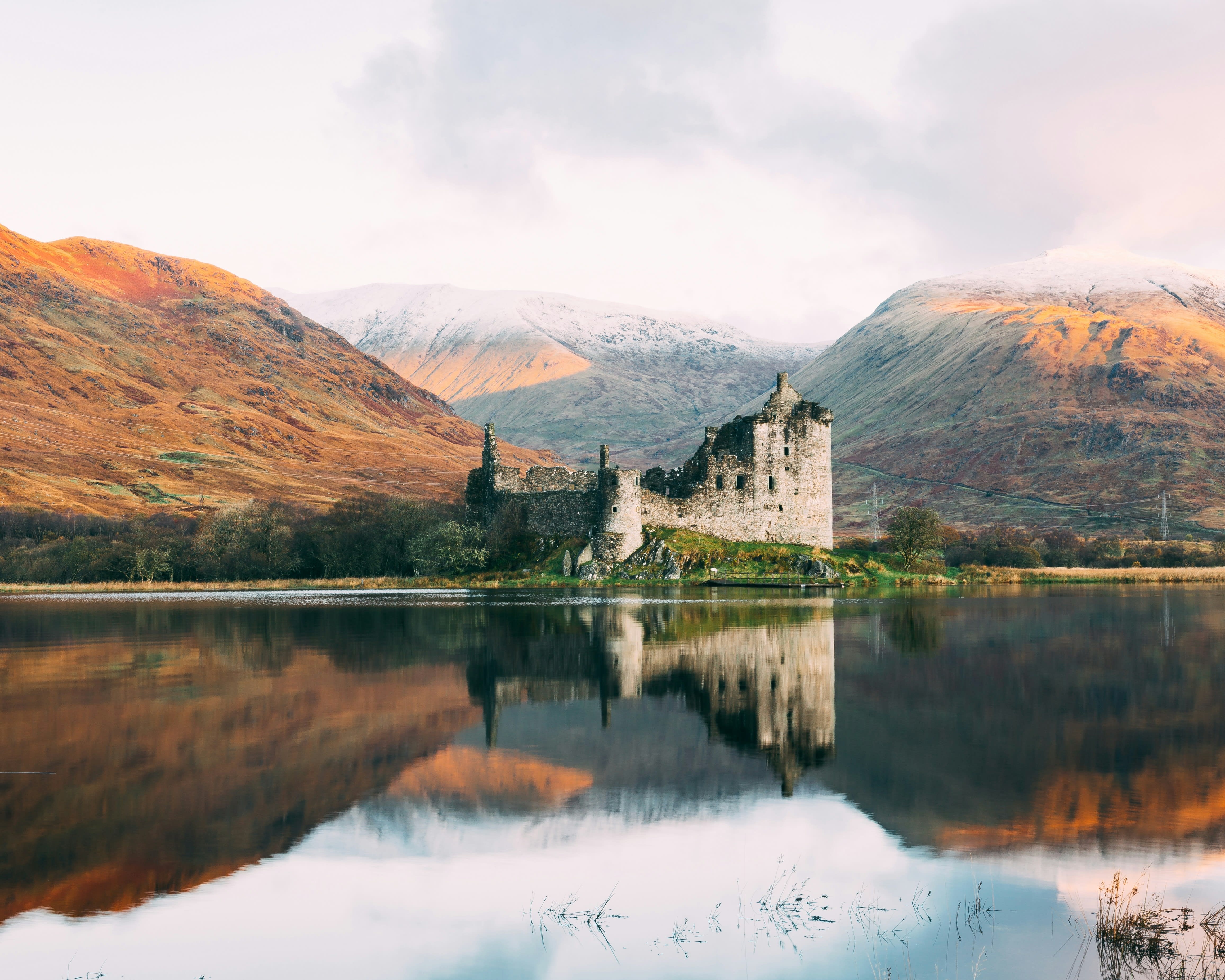
Scotland’s story stretches back to the Picts, Celts, and Norse settlers who shaped the land long before the Wars of Scottish Independence in the late 13th and early 14th centuries. Fought by figures like William Wallace and Robert the Bruce against English dominion, these remain central to how Scots understand themselves today. The Act of Union with England in 1707 was deeply contested, leaving a cultural wound that never fully closed. The Highland Clearances of the 18th and 19th centuries compounded that tension, as landlords forcibly displaced rural communities to make way for sheep farming, scattering the Scottish diaspora across North America, Australia, and beyond.
What has survived is a culture with a fierce pride in its identity, expressed through Gaelic language revitalization efforts, the poetry of Robert Burns, and the traditions of ceilidh social gatherings. The debate over independence from the United Kingdom remains live and unresolved, with an urgent political culture that visitors can feel in conversation, in the press, and in modern architecture. From Castles to clan histories, and the Highland games, these are not performances staged for tourists, they are real threads in the cultural fabric of Scotland.
Cultural celebrations and events
Burns Night (January 25, nationwide): Scotland marks the birthday of its national poet with an evening of ceilidh dancing, haggis, whisky, and recitations of Burns’ verse.
Spirit of Speyside (May, Speyside): A week built around Scotland’s national drink, with whisky distilleries, castles, and bars across the Speyside region opening their doors for tastings, tours, and live music.
Highland Games (May–September, nationwide): Held on weekends throughout summer, these gatherings combine heavy athletic competitions—caber toss, hammer throw, stone put—with pipe bands and Highland dancing. The Braemar Gathering in September is the most prominent, even drawing the Royal Family most years.
Edinburgh Festival Fringe (August, Edinburgh): The world’s largest arts festival brings three weeks of comedy, theater, dance, music, and cabaret performances across hundreds of venues, stretching from morning to well after midnight.
Royal Edinburgh Military Tattoo (August, Edinburgh): This annual series of military drills, music, and cultural performances from military bands to pipe corps, and performance groups on the esplanade of Edinburgh Castle.
St. Andrew’s Day (November 30, nationwide): Scotland pauses to mark the feast day of its patron saint with concerts, ceilidhs, and cultural events held across the country.
Hogmanay (December 31, nationwide): Scotland’s New Year’s Eve has roots going back to Viking times, with torchlit processions, street performances, concerts, and fireworks that mark the night in cities and towns across the country.
What to do in Scotland
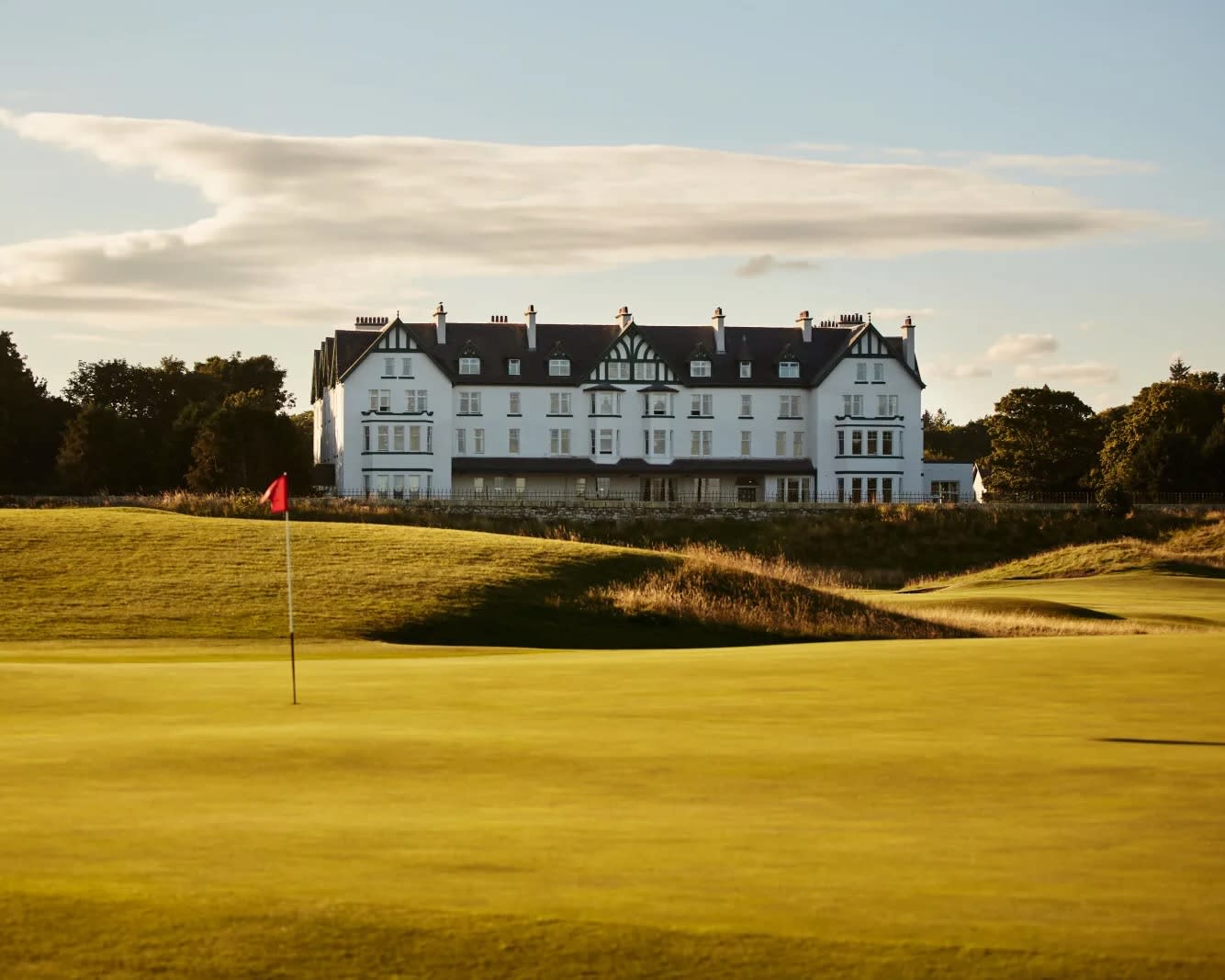
Image courtesy of Dornoch Station
Scotland packs an extraordinary range of experiences into a compact geography—medieval cities, mountainous highlands, and island archipelagos. If championship golf courses are the draw, be sure to plan 12–24 months in advance to secure tee times, lodging, and transport.
Edinburgh
Edinburgh Castle: The 12th-century fortress dominates the skyline from its volcanic rock above the Old Town. Inside, the Scottish Crown Jewels and the Stone of Destiny are draws, while the one o’clock gun fires daily—a tradition dating to 1861.
The Royal Mile: The spine of Edinburgh’s Old Town runs from the Castle esplanade down to the Palace of Holyroodhouse. The street is lined with shops, cafés, and more history per square foot than almost anywhere else in Britain.
National Museum of Scotland: Free to enter and among the UK’s best, the museum covers Scottish history, science, technology, and natural history.
Arthur's Seat: The remains of a long-extinct volcano rise 823 feet above the city, and the hike to the summit takes under an hour from the palace gates.
Real Mary King's Close: Beneath the Royal Mile, a warren of 17th-century streets was built over and sealed for centuries. Guided tours descend into the preserved underground layers, walking through rooms last inhabited during the plague years.
Royal Yacht Britannia: Moored in Leith, take a self-guided audio tour of the former royal yacht that served the British royal family for 44 years.
The Shore: Leith has built one of the city’s best dining and drinking scenes along this stretch of cobbled waterfront that draws a local rather than tourist crowd.
Glasgow
Art and museums: The Kelvingrove Art Gallery and Museum houses an eclectic permanent collection ranging from Dalí to Scottish Colourists. Zaha Hadid’s dramatic zinc-roofed Riverside Museum houses locomotives, trams, cars, and a fully reconstructed 1900s Glasgow street. The IMAX theater, planetarium, and hands-on exhibits at the Glasgow Science Centre make it a premier family destination.
University of Glasgow: The Gothic Revival towers and cloisters rank among the finest Victorian architecture in Britain. The campus is open to walk through, but the draw is the Hunterian Museum and Art Gallery, Scotland’s oldest public museum—also free.
Barras Market: The East End’s famous weekend market has been running since the 1920s, selling vintage goods and bric-a-brac, with a surrounding area dotted with independent bars and music venues.
West End: Spend time along Byres Road and Ashton Lane for cafés, bookstores, pubs, and some of Glasgow’s best everyday energy.
Glasgow Cathedral and Necropolis: The medieval cathedral is the oldest building in the city and one of the few Scottish mainland churches to survive the Reformation largely intact. Behind it, the Victorian Necropolis spreads across a hill above the city.
Highlands and islands
North Coast 500: Drive parts of this classic road trip route for dramatic coastal roads, sea cliffs, tiny villages, and long stretches where you may barely pass another car.
Glencoe: The glacier-carved valley is one of the most striking landscapes in the Highlands, and a site of historical weight—the 1692 massacre of the MacDonalds by government forces still sits uneasily in Scottish memory.
Loch Ness: The monster may be elusive, but the loch itself is genuinely impressive at 23 miles long and worth a boating trip. The ruins of Urquhart Castle on the western shore are some of the most dramatic in Scotland.
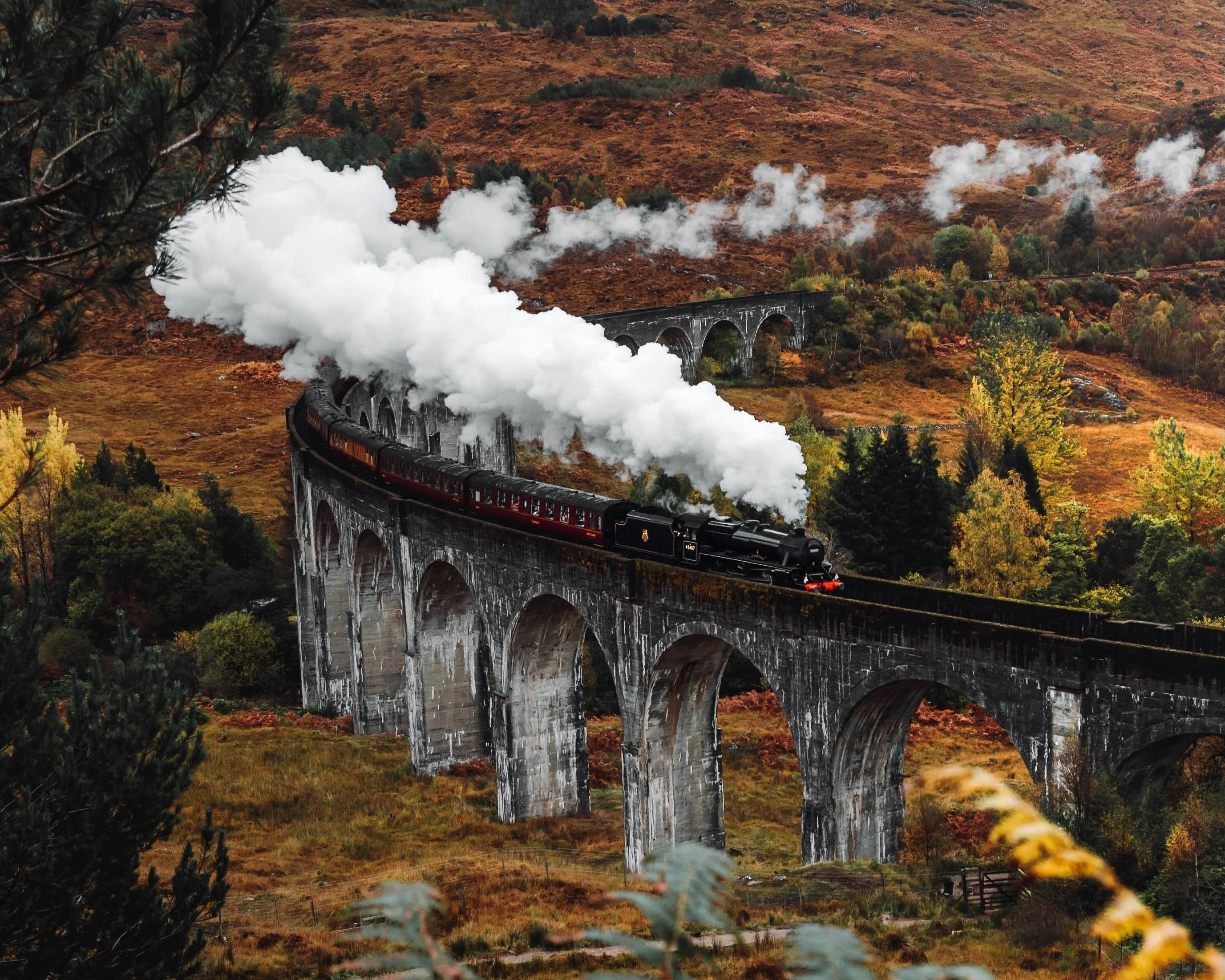
Glenfinnan Viaduct: Built in 1901 and famous thanks to the Harry Potter films, the 21-arch concrete viaduct is best seen with the Jacobite steam train crossing it between Fort William and Mallaig. The timetable runs spring through autumn; book well ahead.
Isle of Skye: The most scenic of Scotland’s accessible islands. The Old Man of Storr and the Quiraing are iconic ridges. The Fairy Pools, a series of clear mountain pools, are worth the short hike in. En route from the mainland, Eilean Donan Castle sits as one of Scotland’s most photographed sites.
Islands: The Isle of Arran’s “Scotland in miniature” reputation is well-founded thanks to its mountains, coastal villages, whisky, and wildlife. The Outer Hebrides—Lewis, Harris, North and South Uist, Barra—offer a slower pace defined by white sand beaches, Iron Age ruins, and some of the most remote landscapes in western Europe.
Whisky: Speyside is home to more distilleries per square mile than anywhere else in Scotland—Glenfiddich, Macallan, and Glenfarclas among them. The Isle of Islay produces a distinctive peated, maritime style. Laphroaig, Ardbeg, and Bruichladdich all offer tours and tastings and are well worth a visit.
Wildlife: The Isle of Staffa is home to one of Scotland’s largest puffin colonies. White-tailed sea eagles—reintroduced after a 70-year absence—are now regularly spotted on Mull and the outer islands.
Golfing
St Andrews (Fife): The Old Course is the oldest in the world, with records dating to the 15th century. The layout is famously unusual—shared fairways, massive double greens, and the Road Hole 17th among the most feared par-4s in championship golf.
Muirfield (Lothians): The links course east of Edinburgh has hosted the Open Championship 16 times but access is limited. Its strategically designed layout consists of two concentric loops running in opposite directions.
Trump Turnberry (Ayrshire & Arran): Turnberry has hosted four Open Championships, and the Ailsa Course sits on a clifftop with views to Ailsa Craig, the Isle of Arran, and the Irish coast. The lighthouse at the ninth tee is one of the most photographed spots in links golf.
Royal Dornoch (Dornoch): Consistently ranked among the top courses in the world, Royal Dornoch sits on a raised beach in the far north of Scotland. The Championship Course dates to 1877, with visitor tee times regularly scheduled.
Carnoustie Golf Links (Angus & Dundee): “Car-nasty” has a reputation as one of the sternest tests in championship golf. The Barry Burn winds through the closing holes, having ended many Open Championship campaigns.
North Berwick (North Berwick): The West Links date to 1832 with views to Bass Rock and its gannet colony. Shared greens, blind shots, a wall running through the 13th, and a layout that has changed little in over a century give it a distinctive character.
Where to eat in Scotland
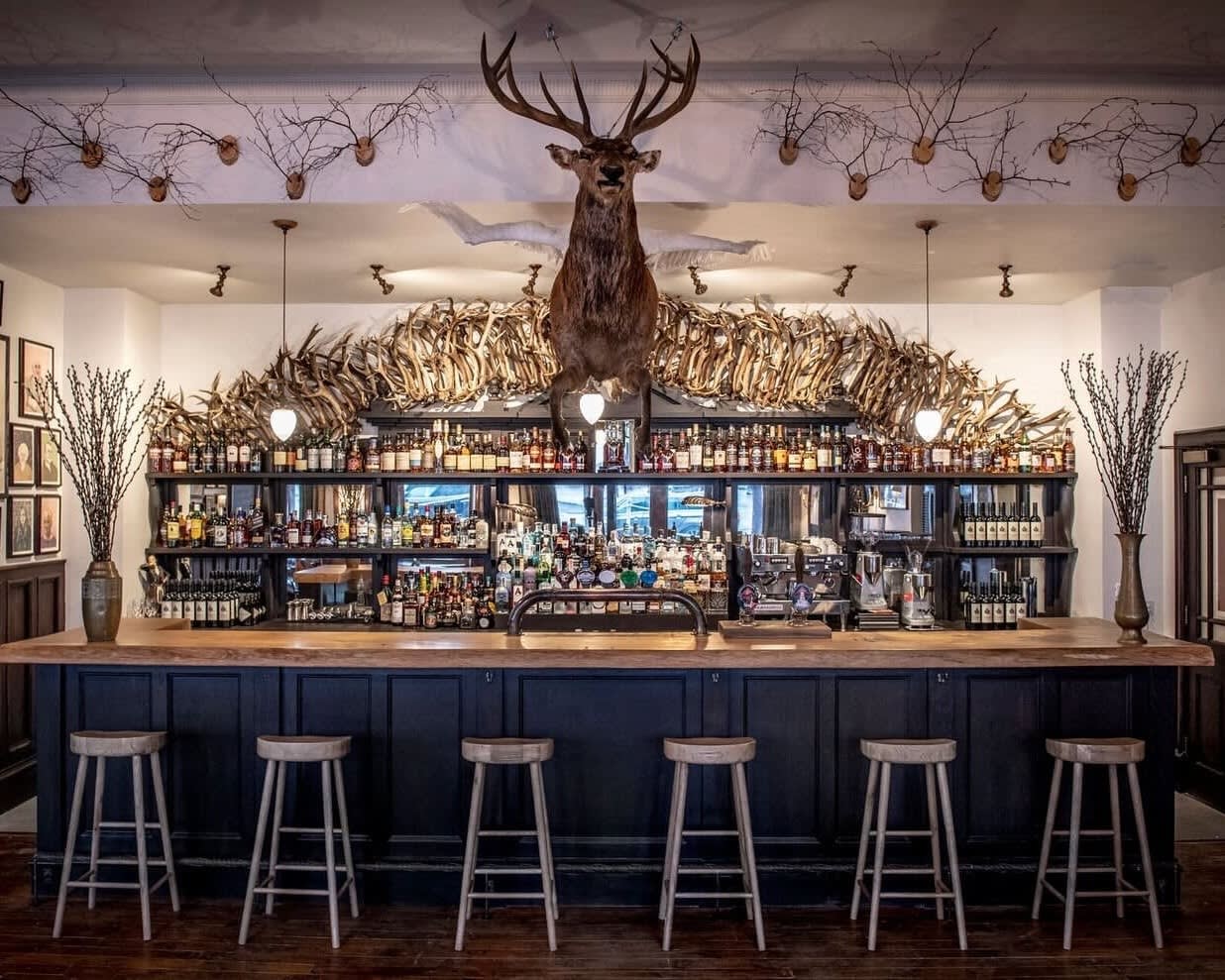
Image courtesy of The Flying Stag Pub at The Fife Arms
Scotland’s food scene has undergone a quiet revolution, expanding from homestyle Scottish dishes in farmhouse inns to global cuisine served up in Michelin-starred restaurants.
Edinburgh
Makars Mash Bar: A beloved fixture where you pick a main dish, choose from nine types of mashed potato, and eat well for very little money.
The Kitchin: This Michelin-starred “From Nature to Plate” restaurant in a converted whisky bonded warehouse on Leith’s waterfront transforms Scottish seasonal produce into technically precise, deeply satisfying cooking.
Palm Court at The Balmoral Hotel: This glass-domed tearoom is the standard-bearer for afternoon tea where a live harpist plays from the balcony and the selection runs to 88 loose-leaf teas, poured tableside.
The Dome: Graeco-Roman façade, Corinthian columns, and coffered glass dome, this bar and brasserie has been serving a reliable British menu for decades.
Heron: This Michelin-starred outfit serves a tasting menu that draws on Scotland's harvest-driven larder with restraint and precision without showmanship.
Dishoom Edinburgh: The Edinburgh outpost of the London-born institution serves the same cult menu of house black daal, bacon naan, chicken ruby, and breakfast bun that filled its original Covent Garden room.
Glasgow
Stravaigin: Glasgow’s West End institution, with a name drawn from the Scots for “wandering aimlessly with intent”—fusing Scottish produce with global techniques and flavours in a lively bar and cellar-level dining room.
Ox and Finch: The Finnieston restaurant serves a constantly evolving menu of ingredient-led sharing plates that are Mediterranean in spirit without being predictable.
Cail Bruich: The city’s only Michelin-starred restaurant, run by chef Lorna McNee, serves a tasting menu built by seasonal Scottish produce that is technically impeccable.
Number 16: A small, two-level West End bistro for modern Scottish cooking that takes international influences seriously without abandoning its neighbourhood feel.
Ka Pao Glasgow: Southeast Asian cuisine occupying the buzzing basement of the Botanic Gardens Garage, offering sharing plates with a confident, punchy heat.
The Buttery: Glasgow’s oldest restaurant, dating to 1870, focuses on Scottish seafood and harvest-driven produce in a room that wears its history in every curtain and chair.
Ardnamurchan Scottish Restaurant & Bar: A city-center restaurant named for the peninsula where the venison on the menu comes from, with a straightforward expression of Scotland’s larder without the gift-shop tartanry.
Highlands and islands
Loch Bay Restaurant (Isle of Skye): 16-seat Michelin-starred restaurant housed in a crofter’s cottage in a whitewashed fishing village. The sole offering is a multi-course Skye Fruits de Mer tasting menu with no substitutions allowed.
River House (Inverness): Chef Allan “Alfie” Little’s riverside seafood restaurant features a daily oyster happy hour and lengthy menu of Scottish shellfish and fish.
The Loft Restaurant (Pitlochry): A family-run restaurant that does Scottish Highland cooking with genuine care—like lamb with cherry and mint sauce, wild venison pheasant, and sticky toffee pudding.
The Flying Stag Pub at The Fife Arms (Braemar): Anchoring the village social life, this ground-floor pub features local musicians, honest Scottish pub food, and Cairngorm ales alongside an extensive malt list.
Inver Restaurant (Cairndow): A restored crofter’s cottage housing a Michelin Green Star restaurant with a zero-waste philosophy that extends from their own milled flour and churned butter to foraged seashore greens and heritage meat from nearby hillsides.
The Geographer (Fort William): A much-loved gluten-free-friendly kitchen serves up a menu of haggis to venison stew, but the West Highland mussels in garlic butter are the order every regular makes first.
Trips to add on
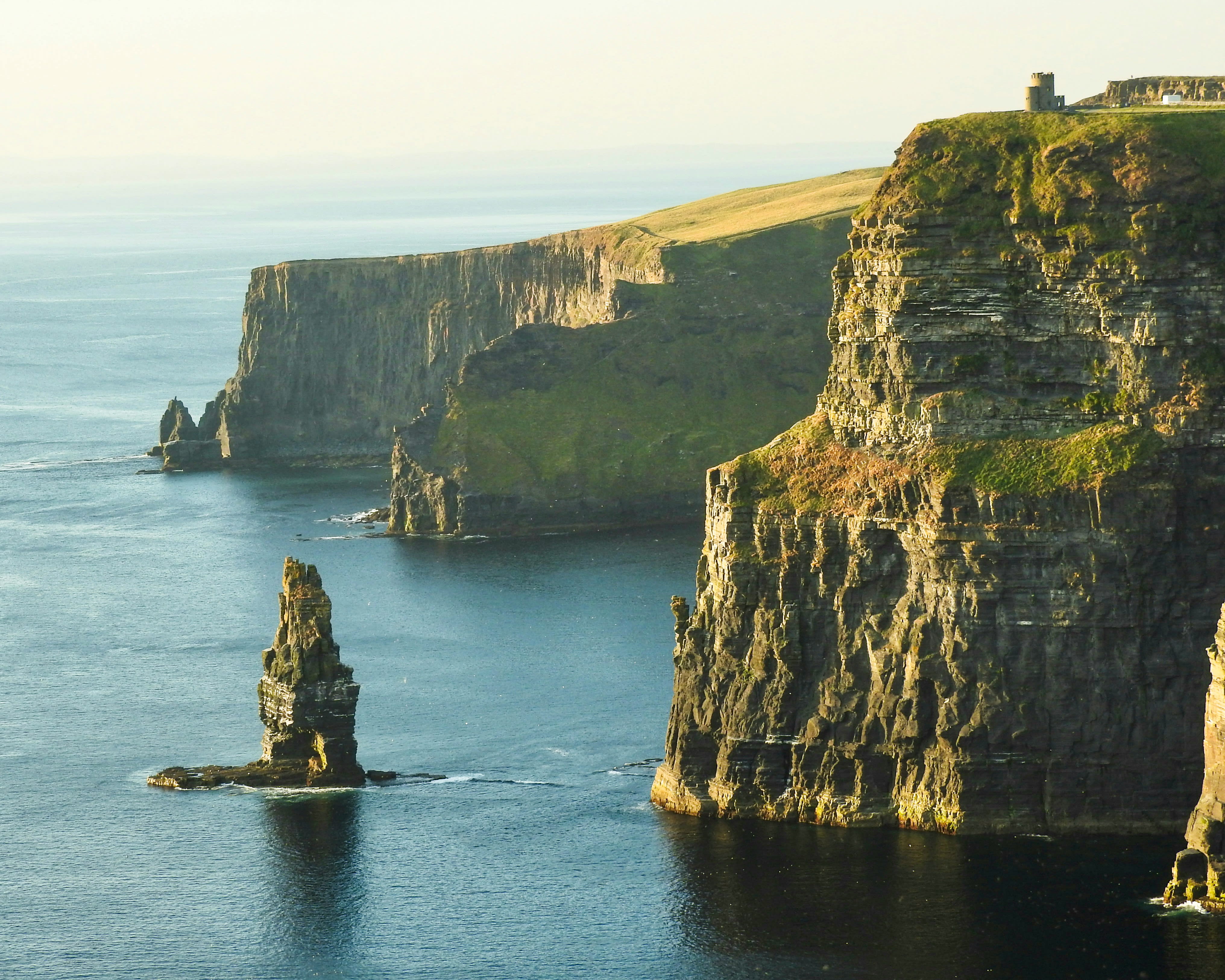
Scotland’s position at the northern edge of Britain makes it a natural start or end point for exploring neighboring destinations.
The Northern Isles (1.5-hour flight or up to 12-hour ferry): Orkney and Shetland sit at opposite ends of the Norse world. Orkney’s Neolithic landscape and seabird colonies are some of Europe’s most remarkable. Shetland is wilder—a treeless, windswept archipelago where Norse dialect persists.
England (1.5-hour flight or 5-hour train): London leads the way with historic landmarks, an array of museums, and world-renowned West End theatre. The Lake District and Yorkshire offer scenic landscapes in the north. Bath delivers Roman heritage and Georgian architecture in the south. Smaller cities like Manchester, Newcastle, and Liverpool each carry distinct industrial histories, a strong food scene, and popular music venues.
Ireland (1–1.5 hour flight): The west coast—Galway, the Aran Islands, the Cliffs of Moher, and Connemara—is scenic and dramatic. Dublin anchors the east with its literary pubs, Georgian squares, and an exciting up-and-coming food scene.
Northern Ireland (1-hour flight or 2–3 hour ferry): The Titanic Museum is world-class and the Cathedral Quarter rivals any UK neighborhood for bars and restaurants. The surrounding countryside delivers the Giant’s Causeway and the cliff-hugging Causeway Coastal Route.
If not Scotland…
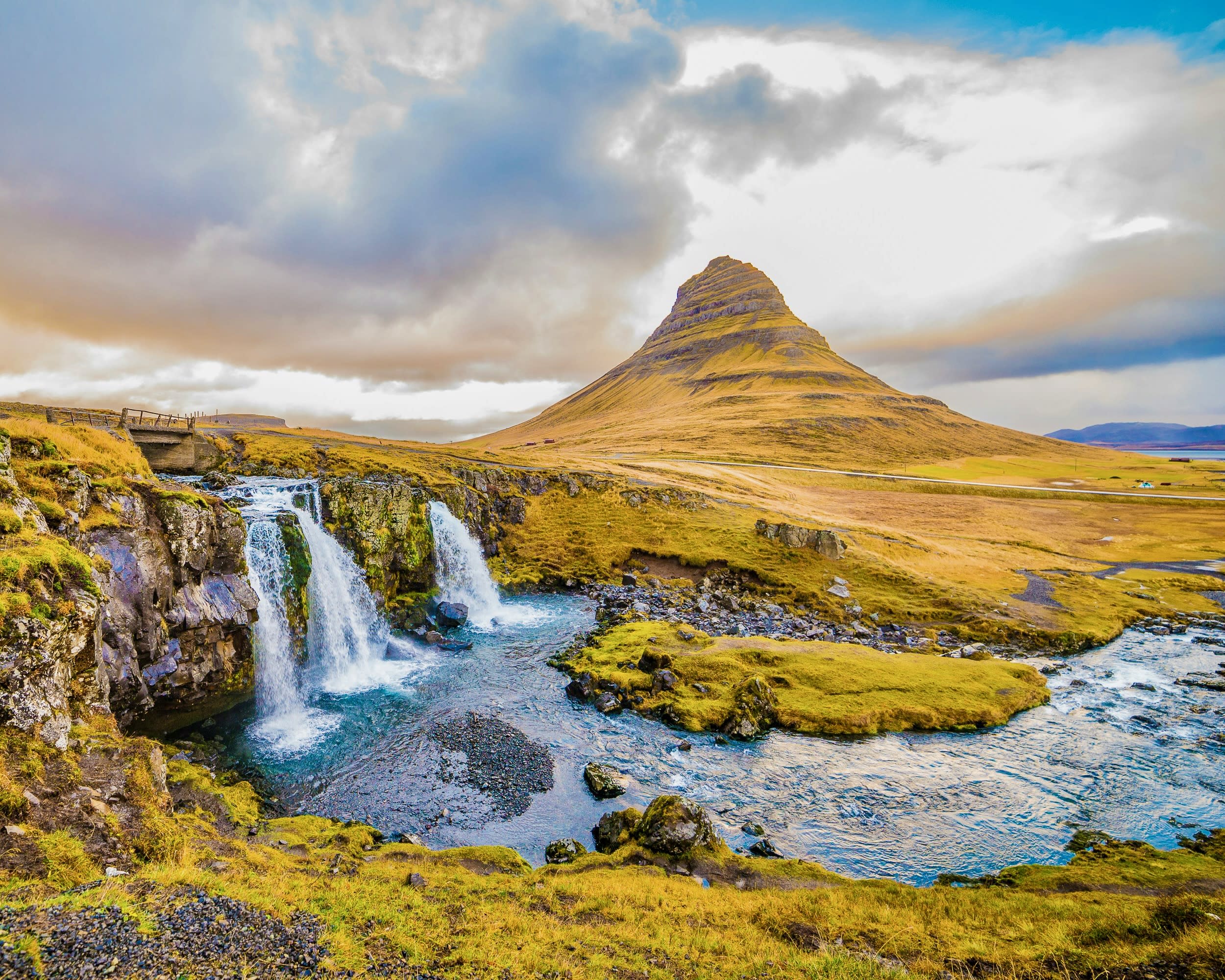
What pulls people to Scotland are its moody landscapes, ancient history, and an ever-changing coastline. If you’re looking for something different with the same spirit, these may be just what you’re looking for.
Norway: The fjords are the obvious draw, but stave churches, fishing villages that cling to the water’s edge, and a hiking culture that’s an extension of daily life add even more. Bergen and Oslo are the right entry points, but the Lofoten Islands are the reward for going further.
Faroe Islands: Eighteen volcanic islands in the North Atlantic, where waterfalls drop directly into the sea, puffins outnumber tourists, and the weather shifts fast. The scale is intimate, the isolation is real, and there’s nothing quite like it in Europe.
Iceland: Geysers, black sand beaches, lava fields, and the Northern Lights—Iceland deals in spectacle. Reykjavík’s music scene and the country’s deep literary tradition give it cultural substance. The ring road structures most visits, but the Westfjords surprises those who leave it.
New Zealand: The landscapes have the same dramatic instincts as the Highlands—mountain ranges, dramatic coastlines, moody skies—but wrapped around a Māori cultural heritage and Pacific warmth. The South Island, in particular, draws the comparison most clearly.
Asturias and Galicia, Spain: The green, rain-soaked northwest corner of Spain, much like Scotland, is characterized by Celtic roots, bagpipes, and a coastline of cliffs and fishing villages. The Picos de Europa anchors the interior; the Rías Baixas and Santiago de Compostela illustrate the spirit of Galicia.

