

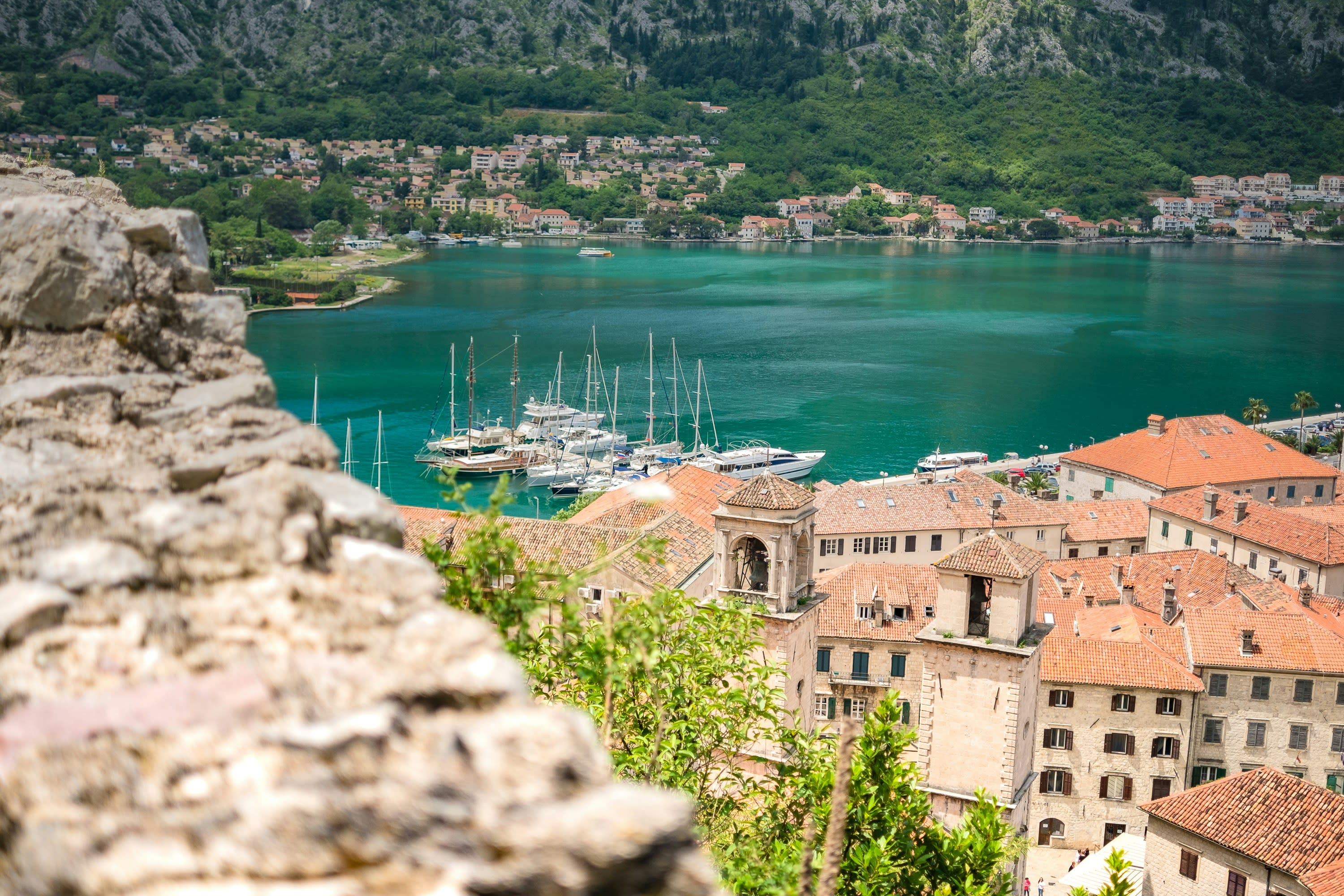
Montenegro takes a moment to place on a map, but it refuses to leave your mind once you've been. It is, by European standards, tiny—you can drive its length in under three hours—yet it compresses an unlikely range of terrain into that small frame: an Adriatic coastline of medieval walled towns and yacht-filled bays, a karst interior that drops into deep river canyons, and a mountainous north where the winters are long and the villages have been largely left to their own devices.
The country only formally became independent in 2006, and there's still something unfinished about it, in the best sense. Montenegro is a place that hasn't yet been remodeled for tourism, instead its wild beauty, historical sites, and shorelines are the reason many visitors are drawn here.
Need to know
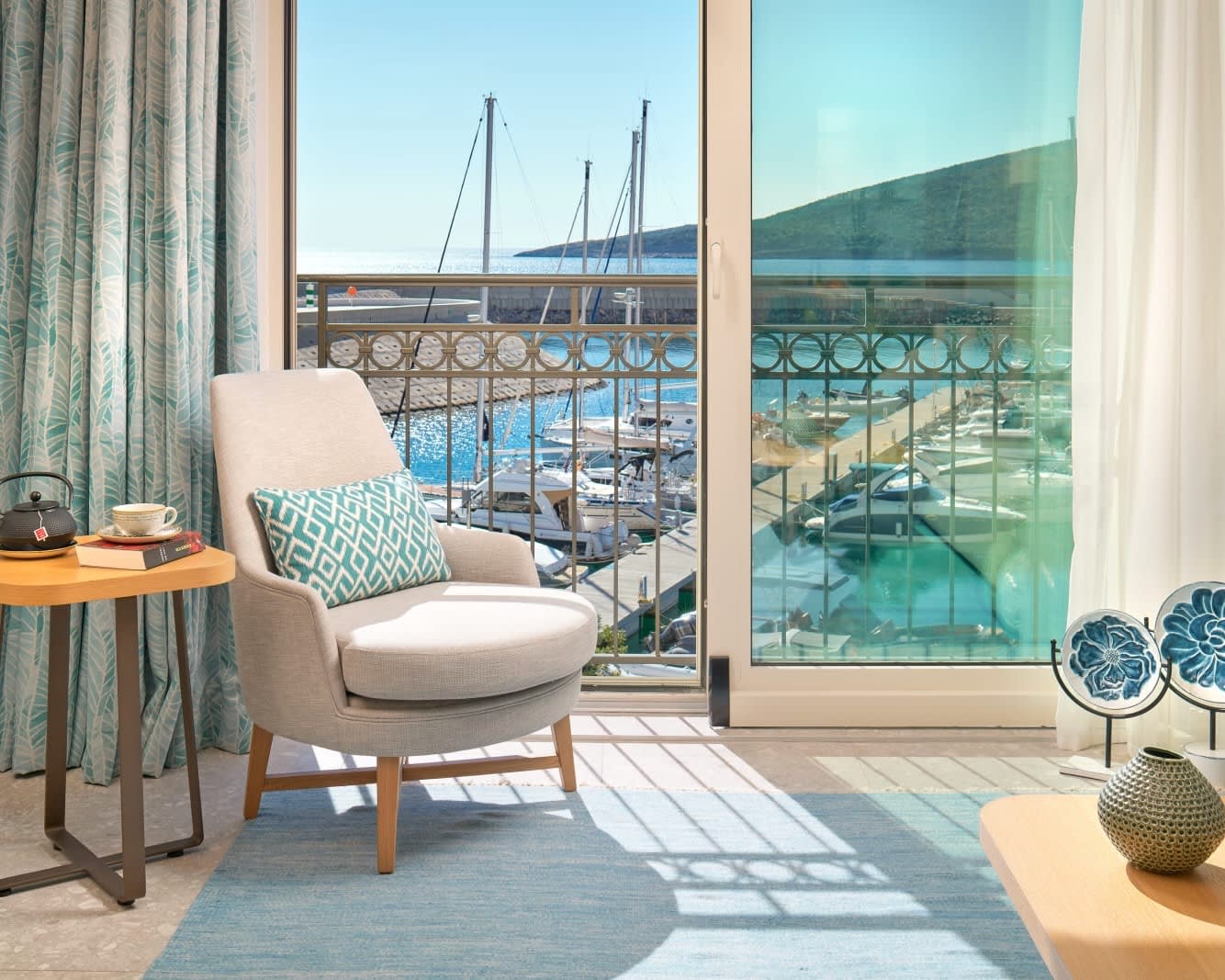
Image courtesy of The Chedi Lustica Bay
Montenegro is small but varied, making a little practical knowledge go a long way toward making the most of any time here.
Currency: Montenegro uses the Euro (EUR), despite not being a member of the European Union. Cards are accepted at most hotels, larger restaurants, and shops. However, cash remains important for local markets, smaller konobas (taverns), and inland villages.
Languages: Montenegrin is the official language, though Serbian, Bosnian, and Croatian are also recognized and widely spoken. English is spoken in most hotels and major tourist areas, but becomes less common inland and in smaller towns. Learning a few basic phrases in Montenegrin is appreciated and goes a long way outside of the common tourist spots.
Key phrases: zdravo (hello), hvala (thank you), molim (please), izvinite (excuse me), kako ste? (how are you?), da/ne (yes/no), ne govorim crnogorski (I don't speak Montenegrin), govorite li engleski? (do you speak English?)
Airports: Podgorica (TGD) is Montenegro's largest airport and primary hub, with year-round service to cities across Europe. Tivat (TIV) offers a convenient entry point for the Bay of Kotor and Budva, though with a more limited route network. Those combining Montenegro with Croatia might also consider flying into or out of Split or Dubrovnik, just across the border.
Transportation: A rental car opens up the most possibilities, but roads can be narrow and winding, and local drivers can keep you on your toes. For point-to-point trips, private drivers and taxis are a solid alternative. Buses are affordable, reliable, and connect the major towns.
Best time to visit: Montenegro runs on familiar Mediterranean seasons. Spring (April–June) and fall (September–October) are the preferred windows with comfortable temperatures, less tourists, and a more atmospheric countryside. Summer (July–August) is peak season along the ocean, when towns fill, cruises dock, and prices follow. Winter (November–March) is mild, with snow staying mostly in the highlands, and the seaside towns take on a slower pace.
Ideal length of stay: Three to four days covers the highlights—Kotor's walled old town, the Bay of Boka, and a drive along the Adriatic coast—pairing naturally as an add-on to Croatia. A full week justifies moving between a couple of different areas and resort properties.
Signature dishes and drinks:
Njeguški pršut: Air-dried, smoke-cured ham from the highland village of Njeguši, sliced thin and served with local cheese
Kačamak: A dense, stick-to-your-ribs porridge of cornmeal, potato, and cheese
Brav u mlijeku: Lamb slowly simmered in milk until tender
Raštan: Collard greens braised low and slow with smoked meat
Seafood: Along the Adriatic shores, look for black risotto made with squid ink, whole grilled octopus, and brodet—a slow-cooked fisherman's stew of mixed catch, white wine, and tomato
Burek: Flaky, oil-slicked pastry stuffed with spiced meat or white cheese
Priganice: Small, golden fried dough balls served with honey or crumbled cheese
Krempita: A custard slice of vanilla cream sandwiched between two layers of puff pastry
Wines: Vranac is the indigenous red grape of Montenegro—dark, tannic, and built for grilled meat; Krstač is its white counterpart, floral and crisp; Medovina, a traditional honey wine, is the oldest drink in the country and worth seeking out
Rakija: High-proof fruit brandy distilled from grapes (loza), plums, or herbs
What to wear: Montenegro packs a surprising range of climates into a small country. The Adriatic coast runs hot and dry through summer, making lightweight fabrics and swimwear the best starting point. Inland and into the mountains run cooler, and conditions can shift fast enough to make a packable jacket worth carrying year-round. Winters along the sea are mild but grey and rainy, while the interior sees snowfall that demands proper cold-weather gear. Comfortable walking shoes are a must anytime of the year. The overall dress is relaxed but smart-casual, and modest dress is expected when visiting religious sites.
Travel tips:
Cruise schedules: Check port times for cruises and plan around them as tourists and buses can fill popular cities like Kotor.
Croatia border: Croatia is an E.U. country while Montenegro is not, meaning they have a proper border crossing. There are only two border crossing options, so don’t expect a day trip between countries. Expect long wait times on weekends and holidays.
Cell reception: Mobile coverage drops completely in the mountainous north. Download offline maps and share your itinerary with someone before heading out.
A closer look at Montenegro
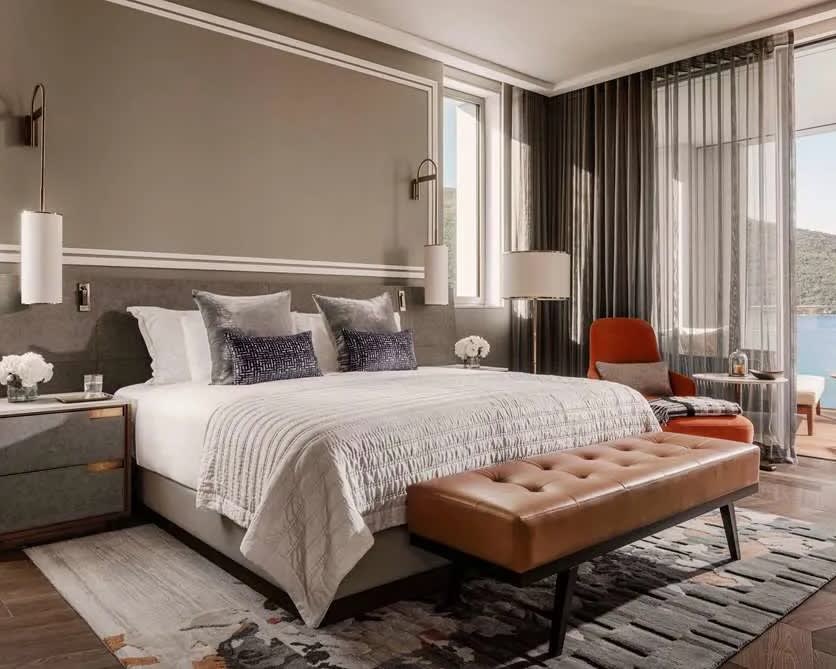
Image courtesy of One&Only Portonovi
Montenegro is one of Europe's smallest countries and one of its most varied. The Bay of Kotor alone contains enough to justify the trip, and the interior adds an entirely different argument.
Kotor’s walled medieval city sits at the foot of steep limestone karst, with cobblestone streets and Venetian-style squares lined with churches and cafes. Perast, a short drive north, is smaller and more composed with a single main street of Baroque palaces facing two small islands. Herceg Novi sits at the bay's entrance, with a well-preserved old town and the Portonovi resort development just outside it. Tivat, on the southern side of the bay, is home to Porto Montenegro, a superyacht marina that has pulled serious money and restaurants into what was once a modest naval town. Budva is Montenegro's most developed resort stretch—a medieval old town surrounded by beaches that get crowded in peak summer.
Inland, the capital of Podgorica is more of a transit point but holds enough character with the Ottoman quarter of Stara Varoš, while the Durmitor massif offers some of the Balkans' best hiking and skiing, and the Tara River Canyon draws rafters from across the region.
Where to stay
One&Only Portonovi (Herceg Novi): Anchoring the contemporary Portonovi marina development, this is Montenegro's most polished resort offering. A full thalassotherapy spa, multiple restaurants, and a beach club all deliver with characteristic precision.
Fora Perks include a $100 hotel credit, daily breakfast, an upgrade, and extended check-in/out whenever possible.
Lazure Hotel and Marina (Herceg Novi): A former Yugoslav royal residence on the Herceg Novi waterfront, restored into a boutique hotel and private marina. The scale is intimate, the history is genuine, and the position makes it one of the more strategically situated addresses.
Fora Perks include a €85 spa credit, daily breakfast, welcome amenity, an upgrade, and extended check-in/out whenever possible.
Mamula Island by Banyan Tree (Herceg Novi): A 19th-century Austro-Hungarian fortress on its own island at the bay's entrance is reached by a short boat transfer. It houses 32 suites within the circular stone ramparts, a rooftop pool, and open water in every direction.
Fora’s Accor Preferred partner perks include a $100 hotel credit, daily breakfast, an upgrade, and extended check-in/out whenever possible.
SIRO Boka Palace (Tivat): A restored palace on the Tivat waterfront, pairing its signature performance recovery programming—cold plunge, infrared sauna, serious nutrition menus—with a setting that requires no additional justification.
Fora Perks include a welcome amenity, spa services discount, an upgrade, and extended check-in/out whenever possible.
Regent Porto Montenegro (Tivat): This former Austro-Hungarian naval base has converted its dry docks and torpedo boat halls into restaurants, retail, and a beach club. Rooms look out over the Porto Montenegro superyacht marina, with some of the largest vessels in the Med.
Fora’s IHG Destined partner perks include a $100 hotel credit, welcome amenity, daily breakfast, an upgrade, and extended check-in/out whenever possible.
The Chedi Lustica Bay (Radovici): A low-rise, design-led resort that’s part of an ambitious master-planned development on the Lustica Peninsula. The spa and multiple dining options are oriented around a marina and private beach.
Fora Perks include a $100 resort credit, daily breakfast, an upgrade, and extended check-in/out whenever possible.
Heritage Grand Perast By Rixos (Perast): This retreat occupies a series of stone palaces in car-free Perast. Its pool sits above the water, with direct views of the famous Our Lady of the Rocks island church, and a village best explored on foot gives it vibes closer to Lake Como.
Aman Sveti Stefan: A 15th-century fortified fishing village on its own tidal island that houses stone cottages now functioning as suites. Villa Miločer, a former Yugoslav royal residence, provides additional rooms and a private beach on the mainland.
Cruising to Montenegro
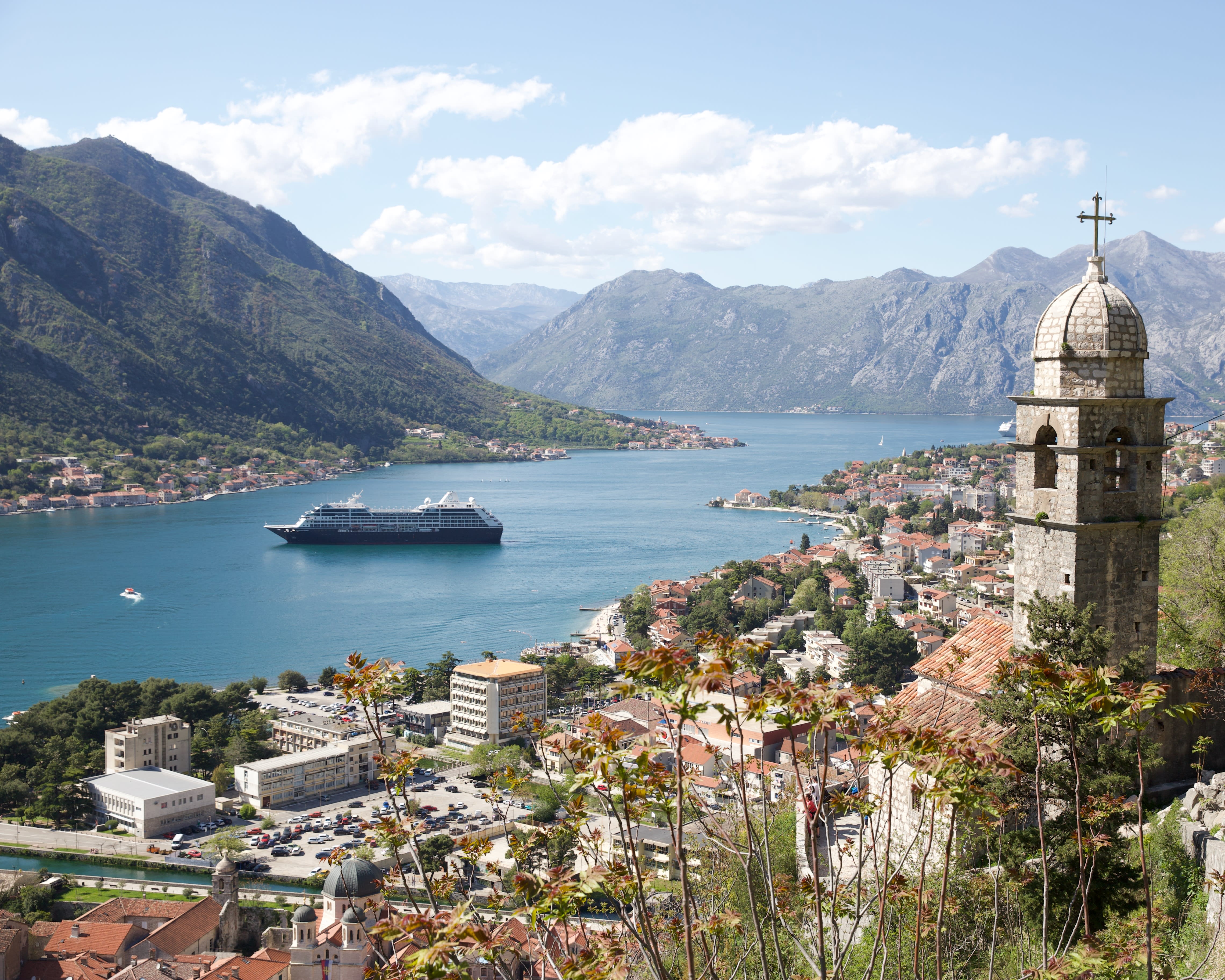
Image courtesy of Azamara Cruises
Most itineraries stop in Montenegro as part of broader Adriatic or Mediterranean sailings. Kotor is the headline port, a walled medieval city sitting at the end of a dramatic fjord-like bay that ships navigate slowly on approach, making the sail-in one of the most scenic. Smaller vessels often secure a berth, while larger ships anchor in the bay and tender passengers ashore. Bar appears less frequently on itineraries but offers a mountain-backed Old Town and access to sites in the south of the country.
Popular itineraries
Croatia and Montenegro (7–10 days): Sailings that move between Dubrovnik, Kotor, and smaller ports along both shores. This is the most focused way to cover two of the Adriatic's strongest destinations in a single trip.
Adriatic and Dalmatian Coast (10–14 days): Broader itineraries, typically between Venice or Trieste in the north and Athens or Rome. Montenegro's Bay of Kotor typically appears mid-route along with ports in eastern Italy, Albania, and western Greece.
Eastern Mediterranean (14–21 days): Wide-ranging itineraries connecting the Adriatic with the Greek Isles, Turkey, Egypt, and more. Classical antiquity, vibrant cultures, and island hopping define this broader Eastern Mediterranean circuit.
Notable cruise lines
Azamara: A boutique premium line that’s more inclusive and intimate than mass-market lines, but without the formality of ultra-luxury lines. Ships carry around 700 guests, offer personal service, and programming leans toward cultural enrichment.
Fora Perks include up to $200 shipboard credit per stateroom on select voyages. Virtuoso Voyages Hosted Benefits also available on select sailings.
Seabourn: One of the benchmark names in ultra-luxury ocean cruising, with small, all-suite ships. The onboard atmosphere is intimate, evening dress is refined but not rigidly formal, and intellectual programming features historians, chefs, and explorers as guest speakers.
Fora Perks include up to $250 shipboard credit per person.
Oceania Cruises: Oceania has built its identity squarely around food with some of the finest dining at sea, all included in the fare with no formal nights on the schedule. This adults-only line features well-stocked libraries, cooking classes, and artist workshops.
Virtuoso Voyages Hosted Benefits available on select sailings.
MSC Cruises: The Italian-rooted line brings a European character to large-ship cruising with family-friendly programming, an international clientele, and affordable base fare. The MSC Yacht Club suites operate with butler service, a dedicated pool deck, and exclusive dining that delivers a more boutique experience on a much larger ship.
Emerald Cruises: These superyachts carry a maximum of 100 guests each, with a relaxed, social atmosphere that feels closer to a private charter than a conventional cruise. The ships are modern and design-forward, with a marina platform, and casual vibe.
History and culture
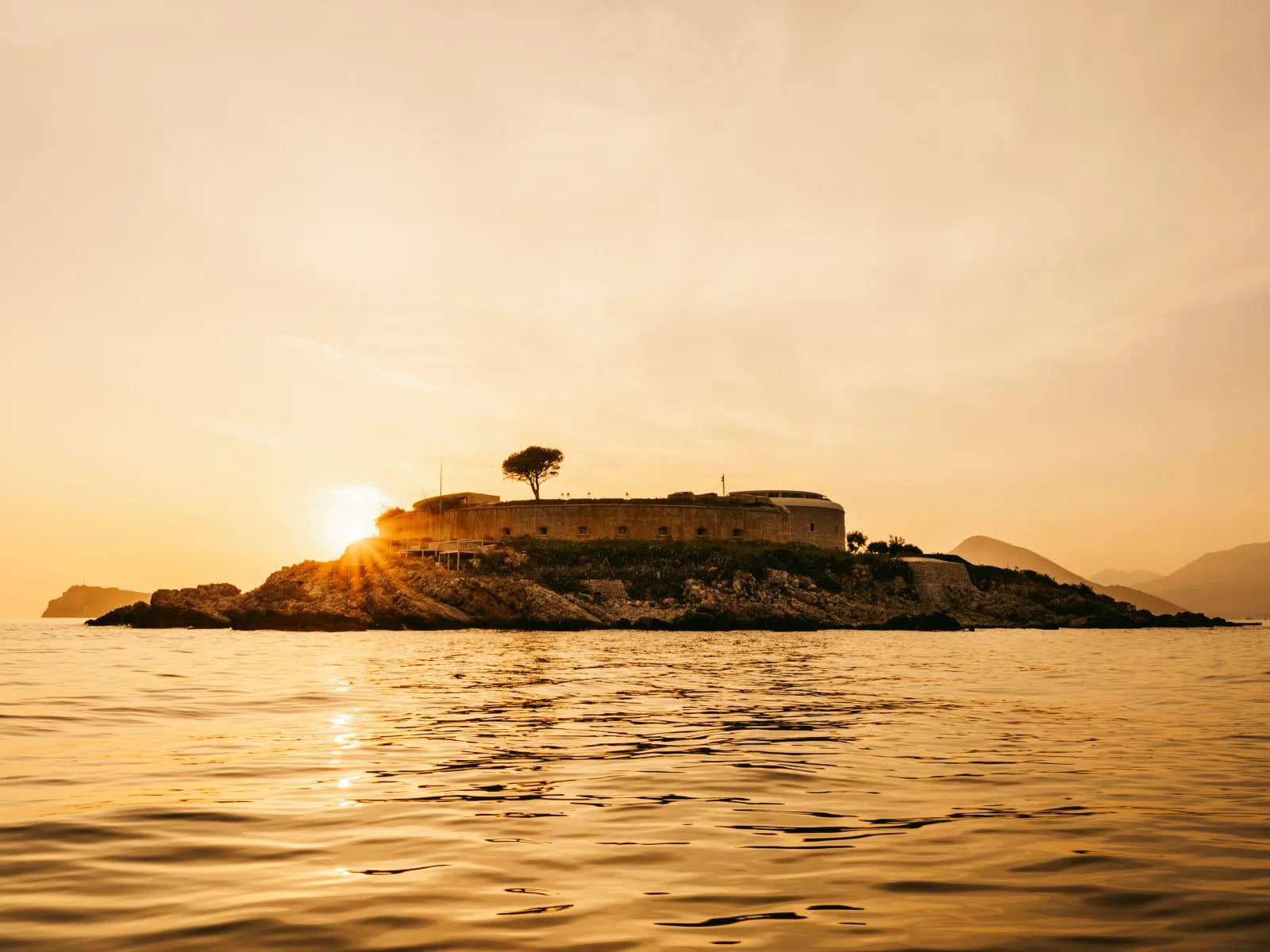
Image courtesy of Mamula Island by Banyan Tree
Montenegro's history is defined by an extraordinary resistance to conquest. While much of the Balkans fell under Ottoman rule for centuries, the mountain clans maintained autonomy, helping to shape Montenegro’s modern-day national character. The name itself, meaning “Black Mountain” in Venetian, reflects the landscape that made that resistance possible. Montenegro was recognized as an independent principality in 1878 and a kingdom in 1910, before being absorbed into Yugoslavia following World War One—a union that brought stability and infrastructure but dislodged its distinct national identity.
The collapse of Yugoslavia in the 1990s pulled Montenegro back into the question of self-determination. After a referendum in 2006, it became one of Europe's newest independent nations, but it passed by only 55% of the vote. The country's cultural identity has a particular intensity as a result, even with competing Serbian and Montenegrin Orthodox Churches reflecting this divide playing out in politics and in everyday dialogue. Seaside towns like Kotor bear the layered architectural evidence of Venetian, Ottoman, and Austro-Hungarian influence, while the highlands preserve a way of life and pride that outside influence never erased.
Cultural celebrations and events
Winter Carnival (February, Kotor): The walled city of Kotor leans into its Venetian past with a week of masked balls, theatrical performances, and costumed parades.
Independence Day (May 21, nationwide): Montenegro marks the 2006 restoration of its independence with concerts, public gatherings, and official ceremonies.
Kotor Summer Festivals (May–September, Kotor): Through the warmer months, Kotor hosts a steady program of free concerts, theater, and arts events in its squares and outdoor spaces.
MadeinNY Jazz Festival (June, Porto Montenegro and Podgorica): International jazz artists take the stage at the superyacht marina at Porto Montenegro and the capital, Podgorica—for a festival that brings a cosmopolitan program to the Adriatic coast.
Fašinada (July 22, Perast): Our Lady of the Rocks is on an artificial island that was built by generations of sailors who dropped a stone into the water every time they passed. The tradition (Fašinada) continues annually on July 22nd, when locals row out and throw stones into the water in a torchlit ceremony.
Bokeljska Noć (August, Kotor): Kotor's biggest night opens with an illuminated flotilla of boats before giving way to a large open-air concert near the Old Town.
What to do in Montenegro
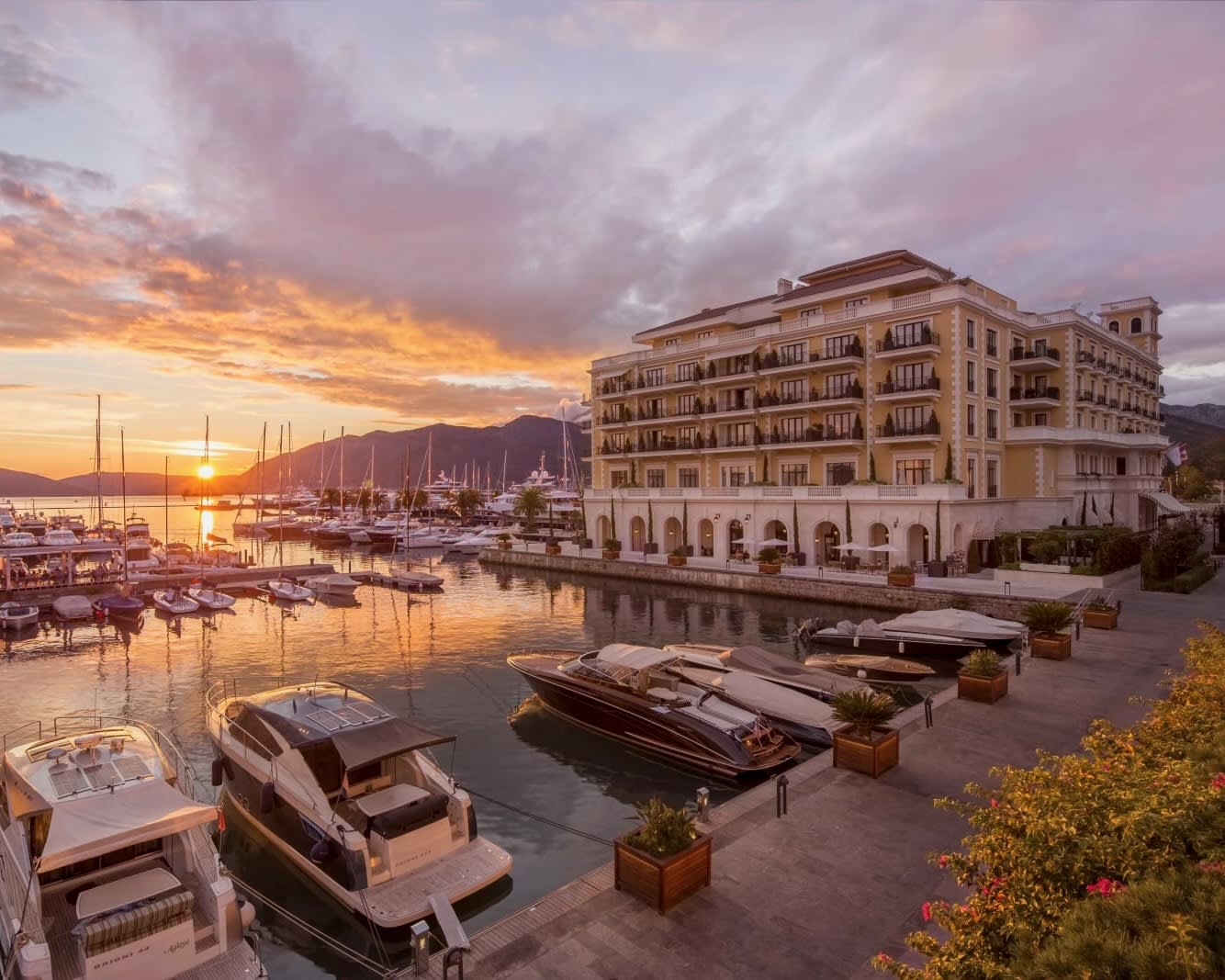
Image courtesy of Regent Porto Montenegro
Adriatic coastline, karst mountains, glacial lakes, and river canyons that rank among the deepest in Europe. Montenegro compresses a surprising range of terrain into a country smaller than Connecticut.
Boating: Private boat charters out of Kotor or Tivat can reach secluded coves, the island church of Our Lady of the Rocks, and villages inaccessible by road. Rent a small boat or join a guided tour to Lake Skadar, the largest in the Balkans, where over 270 bird species share a landscape of floating water lilies and medieval monastery islands.
The San Giovanni Fortress (Castle of St. John): Climb the Ladder of Kotor, an ancient mule path, to the fortress of San Giovanni. The ascent—roughly 1,400 steps cut into the karst—takes under two hours and delivers panoramic views. For those who want the views without the climb, there’s also a cable car at the edge of the Old Town.
Bay of Kotor villages: The medieval walled towns ringing the bay—Kotor, Perast, Herceg Novi, and others—are best explored on foot without an agenda.
National Parks: Durmitor in Montenegro's northeastern highlands contains 18 glacial lakes, a high plateau, and serious hiking and mountain biking trails. Lovćen, near Kotor, sees a serpentine road cutting through it, an alpine coaster, and the Njegoš Mausoleum at its summit—a monument to the 19th-century poet-prince Petar II Petrović-Njegoš. Biogradska Gora contains one of the last three primeval forests in Europe, with some trees dating to over 500 years old.
Tara River Canyon: At over 80 miles long and 4,300 feet deep, the Tara cuts the deepest canyon in Europe, with white-water rafting and zip-lining for adrenal junkies.
Ostrog Monastery: Built into a near-vertical cliff face at 3,000 feet above the Zeta Valley in the 17th century, Ostrog is one of the most visited pilgrimage sites in the Orthodox world.
Cetinje: Montenegro's old royal capital inland from Kotor holds an outsized concentration of museums, monasteries, and late 19th-century diplomatic buildings.
Lipa Cave: Take a guided tour of one of the largest cave systems in Montenegro, filled with stalactites, stalagmites, and underground halls developed over millions of years.
Wine tasting: Montenegro's indigenous grapes don’t travel widely enough to have much international profile. The wineries around Lake Skadar, particularly in the Crmnica wine-growing area, are the most established.
Budva Riviera: Budva's walled Old Town sits on a small peninsula that was settled by the Greeks in the 5th century BC and later held by Venice. The surrounding riviera has the liveliest beach and nightlife scene. Continuing south, the islet of Sveti Stefan is one of the most recognizable images in Adriatic travel.
Spa and wellness: Montenegro's top-end hotels have invested heavily in wellness facilities in recent years, from the One&Only Portonovi’s thalassotherapy center to the SIRO Boka Place’s fitness-forward approach.
Where to eat in Montenegro
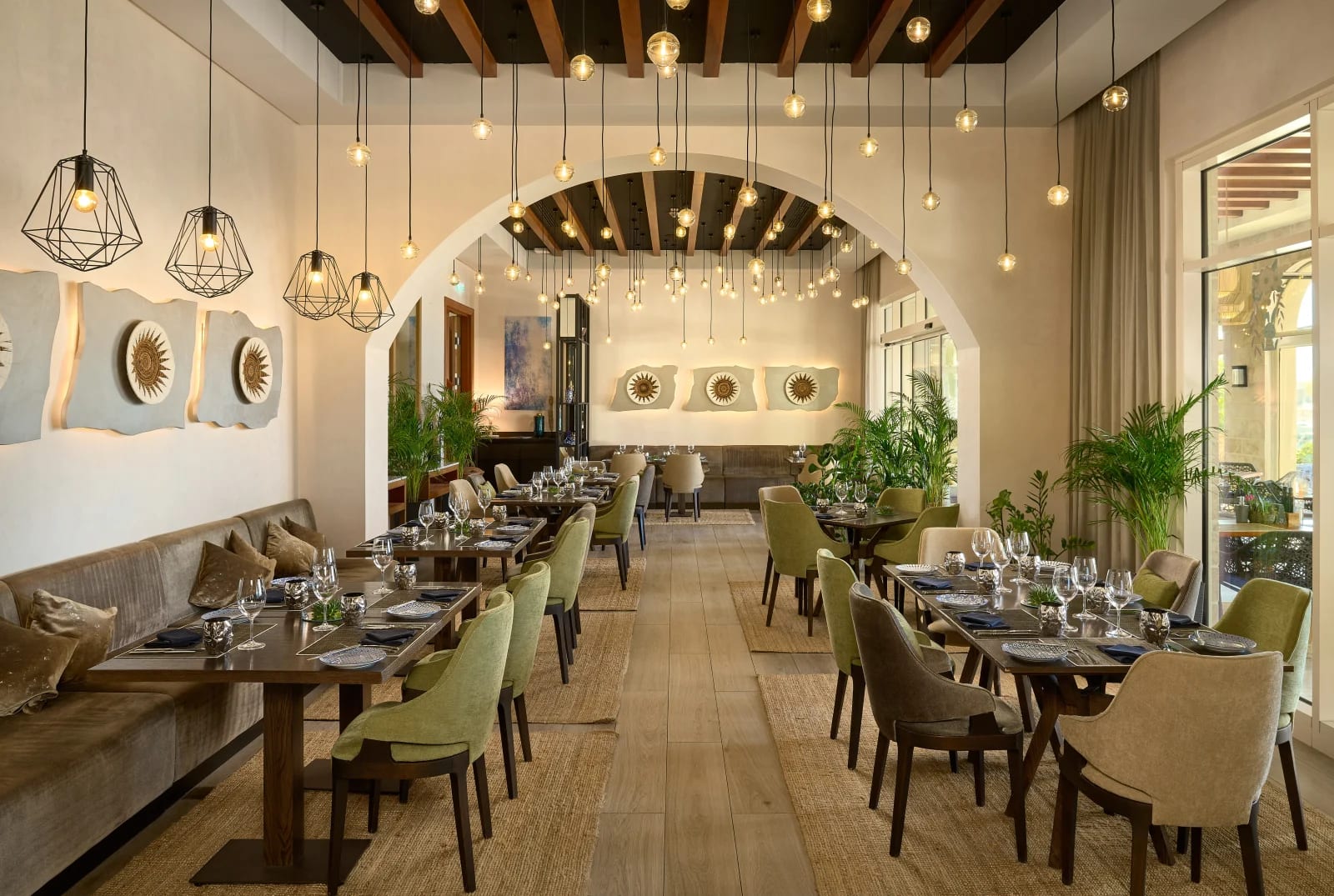
Image courtesy of The Spot at The Chedi Lustica Bay
Montenegro's cuisine sits at a crossroads of Venetian, Ottoman, and Balkan traditions, with the coast delivering grilled seafood, while the interior leans toward slow-roasted meats. The country's best eating often happens in small, family-run konobas—stone walls, no-frills menus, produce from nearby farms—where the cooking is honest and the bill unlikely to cause alarm.
Verige65 (Kostanjica): A modern Mediterranean restaurant and bar at the narrowest point of Boka Bay, with floor-to-ceiling glass framing direct views across the water.
Catovica Mlini (Morinj): A 300-year-old family flour mill that’s transformed into a stone-walled konoba with tables spilling across small bridges over a freshwater stream, and a kitchen focusing on traditional Boka Bay seafood.
Konoba Bonazza (Kotor): A waterfront restaurant just outside the historic city walls, with a focused menu of fresh Adriatic seafood and grilled meats.
The Spot at The Chedi Lustica Bay (Radovici): All-day brasserie overlooking the marina, running a menu of Adriatic-inspired dishes built on locally sourced, seasonal ingredients.
NOA Portonovi (Herceg Novi): An Asian fusion restaurant in the Portonovi Marina, run by chef Chris Mare, whose shareable, colour-forward menu spans high-quality sushi, steaks, and signature cocktails.
Marenda Steak House (Kotor): This all-day grill house builds its reputation on dry-aged beef sourced from domestic farms and hearty breakfasts.
Restaurant Conte (Perast): Occupying a restored baroque palazzo on Perast's car-free waterfront, the kitchen revives old Montenegrin recipes with quality sourcing.
Konoba Scala Santa (Kotor): A small family-run tavern with live music, a menu centered on Adriatic catch, and characterful indoor/outdoor seating.
Rosemarine at Lazure Hotel and Marina (Herceg Novi): The flagship restaurant serving upscale Mediterranean fare on a marina-facing terrace and in a stone-walled dining room with fireplaces.
Konoba Portun (Dobrota): A small seafood and wine restaurant on the waterfront with terrace tables at the edge of the bay with a kitchen that keeps the menu built around the morning's catch.
Trips to add on
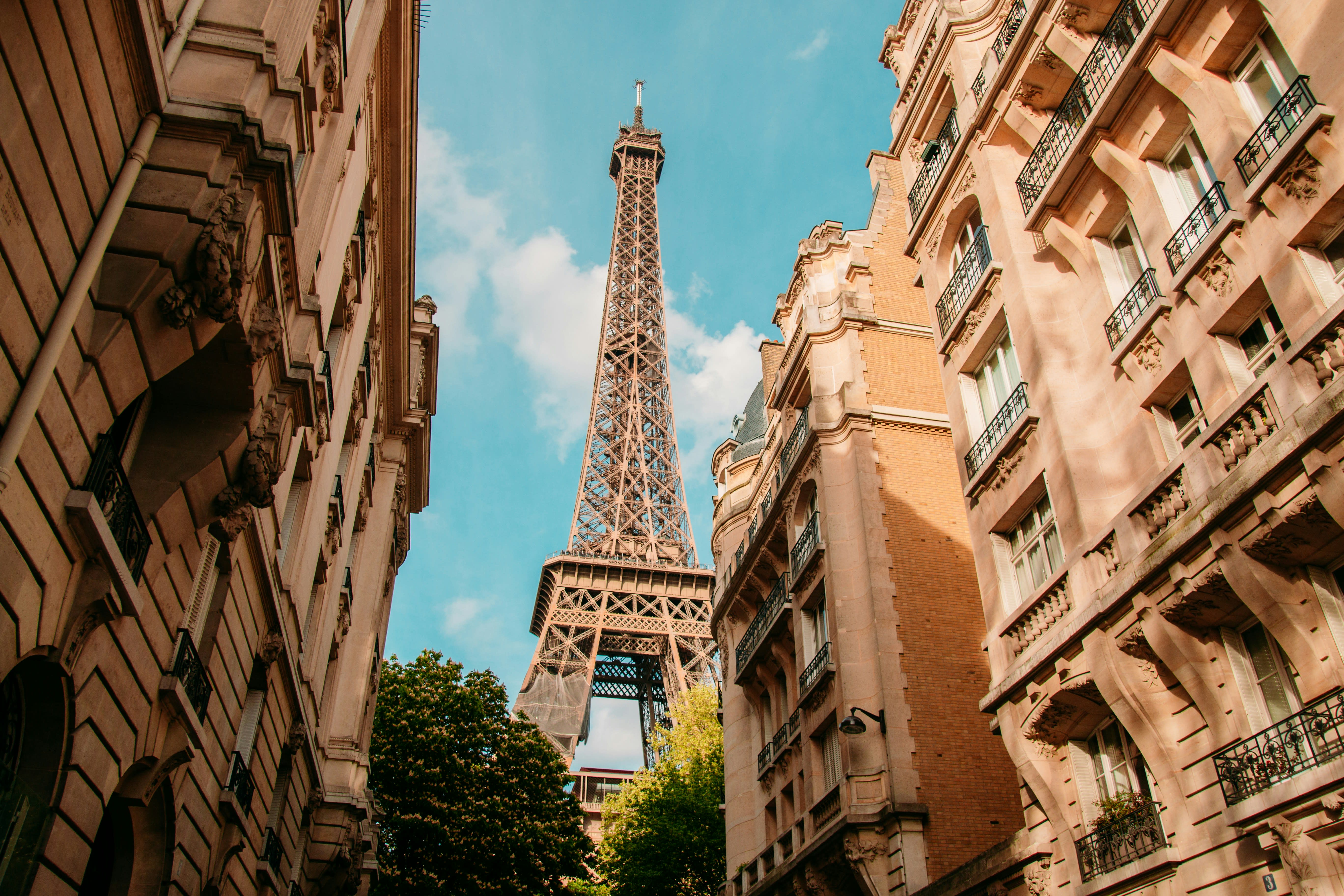
Montenegro's limited air connectivity makes stopovers a practical necessity, and a convenient excuse to layer in another destination based on where your flights connect.
Croatia (2–4 hour drive): The most natural extension, and in the south, barely a border crossing away. Dubrovnik’s walled Old Town is among the most dramatic in the Mediterranean. The Dalmatian Coast offers island-hopping to Hvar, Brač, and Korčula. Medieval towns like Split and Trogir share the same Adriatic DNA as Montenegro but completely different scenery.
Belgrade, Serbia (1-hour flight): Architecturally layered, affordable, and driven by a creative energy, Belgrade is one of Europe's most underrated city breaks. Its nightlife scene—centered on floating river clubs called splavovi—and an old fortress at Kalemegdan that overlooks the confluence of the Sava and Danube rivers add to its energy.
Rome, Italy (1.5-hour flight): Few cities demand as little justification. The Forum, the Colosseum, and the Vatican represent the obvious first pass, but the neighborhoods of Trastevere, Pigneto, and Prati are where the city's daily rhythms reveal themselves.
Vienna, Austria (1.5-hour flight): A city that wears its imperial past with confidence—the Habsburgs left behind a collection of palaces, museums, and concert halls that still anchor daily life here. The city's coffee house culture, its wine taverns, and food scene make it worth more than a rushed transit stop.
Istanbul, Turkey (2 hour flight): The historic peninsula is home to the Hagia Sophia, Blue Mosque, Topkapı Palace, and the Grand Bazaar—all within walking distance of each other. The food scene, the Bosphorus, and the sheer density of history make it a compelling stopover.
Zurich, Switzerland (2-hour flight): Zurich's historic quarter, its lake, and its museum scene give it genuine appeal as a short stay. The Swiss rail network makes day trips to Lucerne, the Rhine Falls, or the Alps straightforward and easily expands any stopover here.
Paris, France (3-hour flight): The seasonal flights make timing the deciding factor, but when the connections align, Paris is a strong add-on. The Marais, Saint-Germain, and Montmartre each offer a different identity, and the food scene is reason enough to build in extra days.
If not Montenegro…
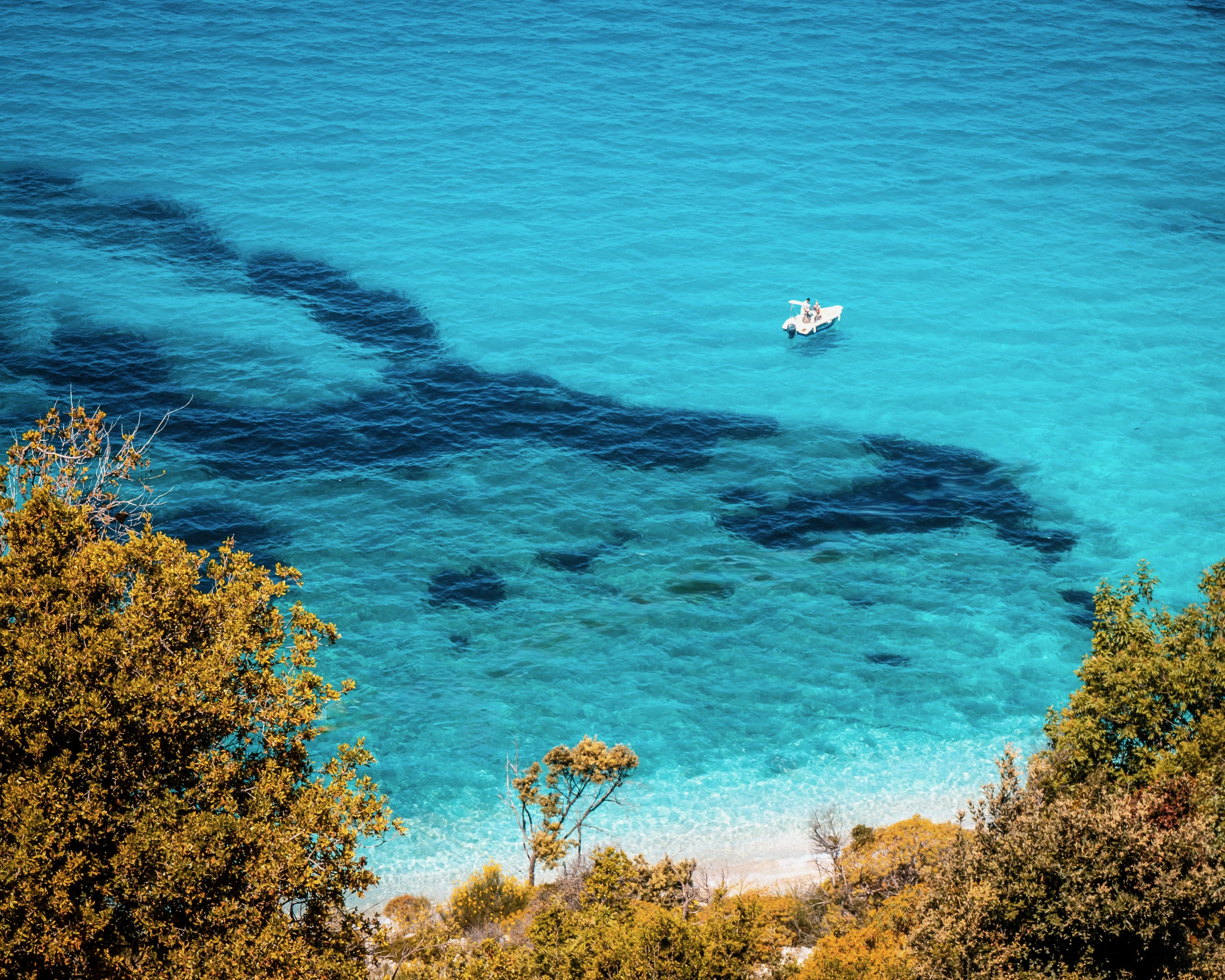
What makes Montenegro compelling—medieval walled cities, mountains that drop sharply toward the sea, and a sense of Europe before it got too familiar—runs through each of these, at different scales and latitudes.
Albania: Montenegro's southern neighbor shares similar jagged mountains, clear water, and old towns. The Albanian Riviera's beaches rival Montenegro’s, while the UNESCO-listed Gjirokastër makes a strong cultural counterpart with Ottoman-era stone architecture.
Slovenia: For travelers drawn to Montenegro's rugged interior, Slovenia delivers comparable alpine drama with a greener, more accessible character. Lake Bled is the iconic image, but the Soča Valley, with its impossible turquoise river cutting through limestone gorges, is where the scenery gets serious.
Santorini, Greece: Where Montenegro offers history and mountains alongside its shores, Santorini’s whitewashed villages on volcanic cliffs, deep blue water, and colorful sunsets have made it a travel hotspot. Smaller in scope, higher in polish, and worth it for those who want a slice of classic Aegean energy.
Maine, U.S.A.: A different ocean entirely, but the same combination: a rocky, dramatic shores, dense forests pressing down to the water, and historic towns with a strong maritime character. Acadia National Park anchors the landscape, while Portland anchors the food scene.
New Zealand: The South Island in particular shares Montenegro's instinct for placing forests and peaks directly against water. The fjords of Milford Sound and the lakes of Queenstown make the geographic case, while the Māori cultural heritage adds cultural depth and dimension.