
Bhutan doesn't work like most destinations. There are no mass-market resorts, no billboards, and no particular interest in becoming the next big thing. The country has spent decades making deliberate choices about how it engages with the outside world, and it shows. What you get instead is a kingdom where monasteries cling to cliff faces, farmers still rotate crops by the lunar calendar, and the national philosophy measures progress in happiness rather than output. Travel here moves valley by valley, each one separated by distinct landscape and character.
The logistics require planning, the flight connections require patience, and the daily sustainable development fee requires a budget—but none of it feels like an obstacle once you're on the ground. Bhutan rewards the effort with something increasingly rare: a place that feels entirely, unmistakably itself.
Need to know
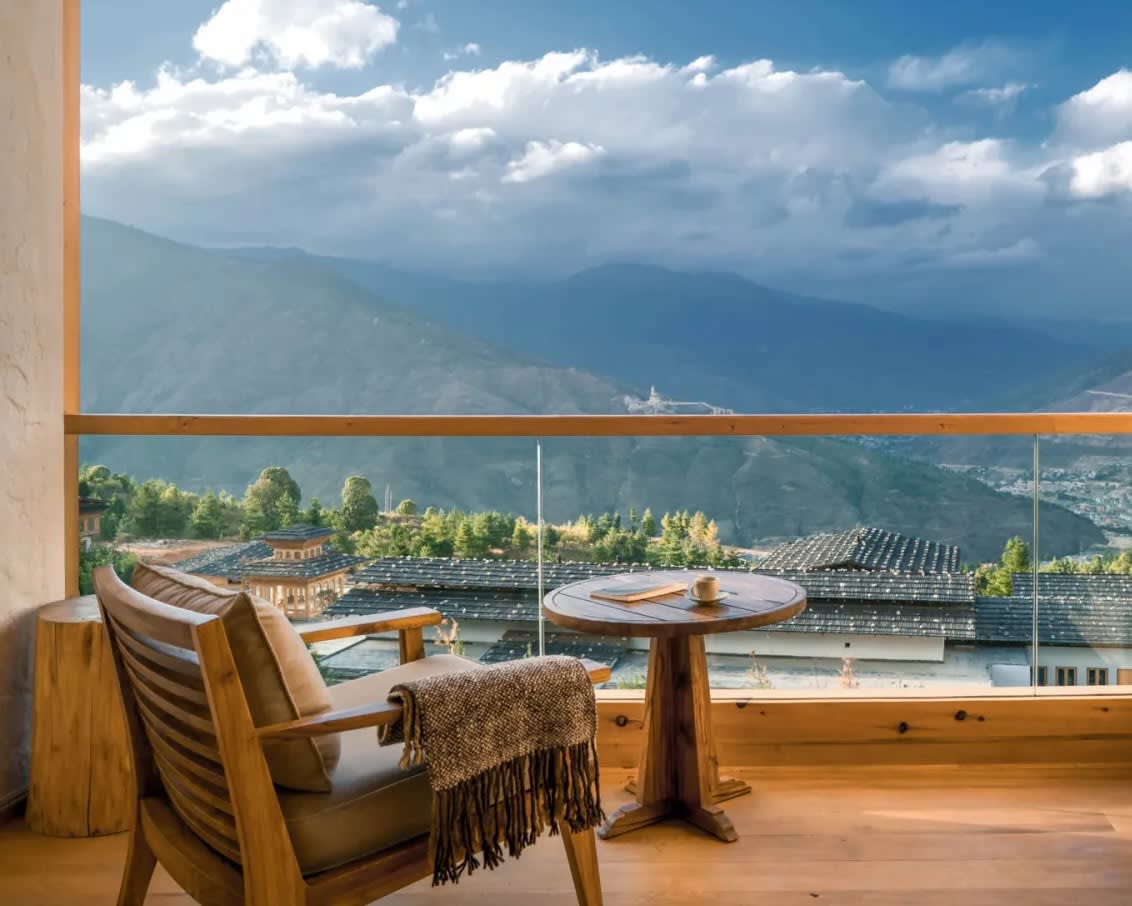
Image courtesy of Six Senses Thimpu Lodge
Bhutan requires more logistical groundwork than most destinations, but the planning is straightforward once you understand how the country works.
Currency: Bhutan uses the Ngultrum (BTN), pegged at par to the Indian Rupee—also widely accepted. Cash is essential outside of hotels, but reliable ATMs are only in Thimphu and Paro, so plan to arrive with sufficient cash. Tipping guides, drivers, and lodge staff is customary and genuinely appreciated.
Languages: Dzongkha is Bhutan's official language, though over 20 regional dialects are spoken. English is widely used in schools, government, and tourism, making communication straightforward for most. Learning a few basic phrases in Dzongkha will be warmly received.
Key phrases: kuzuzangpo le (hello), kadrinche (thank you), gwe la (please), tsip maza (sorry/excuse me), ing/men (yes/no), chö gi in ked shey ga? (do you speak English?).
Airports: Paro International Airport (PBH) is Bhutan's only international gateway. Operated by Drukair or Bhutan Airlines through hubs like Bangkok, Singapore, and Dubai, flights into Paro operate during daylight hours only, so check connection logistics with other airlines.
Transportation: Bhutan's mountain roads are scenic but winding, and visitors mostly travel by pre-arranged car with a driver. Walking is best for exploring towns, monasteries, and local sites. Domestic flights are rarely needed, mostly for reaching more remote regions quickly.
Best time to visit: Spring (March–May) and fall (September–November) are the prime seasons, bringing clear skies and mild temperatures for trekking and mountain views. Spring brings rhododendron blooms across the hillsides, while fall offers crisp air. Summer (June–August) brings the monsoon, with green landscapes and limited visibility. Winter (December–February) is cold, especially at altitude, but quieter and rewarding for those willing to layer up.
Ideal length of stay: Six to seven nights gives enough time to move through Bhutan’s valleys, engage with the culture, and settle into the unhurried pace. Factor in a buffer day on each end for flight connections, bringing the total trip to around 10 days from departure to return.
Signature dishes and drinks:
Ema datshi: Bhutan's national dish of green or red chilies cooked down with local cheese into a rich, fiery stew
Phaksha paa: Dried pork stewed with radishes, spinach, and red chilies
Momos: Steamed dumplings filled with cheese, cabbage, or minced meat, served with a spiced chili dipping sauce
Shakam datshi: A robust stew of dried beef, local cheese, and butter
Jasha maru: A spiced chicken stew loaded with ginger, garlic, and onion
Kewa datshi: The milder cousin of ema datshi—potatoes, cheese, and chilies in a comforting, straightforward stew
Red rice: A nutty, slightly chewy high-altitude staple that accompanies most meals and is one of the few varieties grown at Bhutan's elevations
Hoentay: Buckwheat dumplings filled with spinach or turnip greens
Jaju: A light, traditional soup of milk, butter, and leafy green
Ara: Bhutan's national spirit, distilled or fermented from rice, maize, millet, or barley, and often served warm with butter or egg
Suja: Butter tea brewed with salt and yak butter
What to wear: Bhutan is an active, outdoor destination—comfortable hiking clothes, sturdy walking shoes, and reliable layers are the foundation of any packing list. Temperatures shift between valleys and hilltops, so versatile layers work best. A rain jacket is essential for mountain showers. When visiting monasteries and dzongs, modest dress that covers shoulders and knees is required, and shows cultural respect.
Travel tips:
Visa & entry: Requirements vary by nationality, but most travelers will need to arrange a visa in advance of arrival.
Cultural customs: Bhutanese culture is rooted in Buddhism. Remove shoes before entering monasteries, dzongs, and private homes; dress modestly; and follow any photography restrictions at sacred sites—many prohibit cameras inside.
Smoking & drinking: The legal drinking age is 21. Smoking is banned in most indoor spaces—follow posted signage.
Altitude & sun: Strong mountain sun requires staying hydrated, wearing a hat, and applying sunscreen. Adjust to Bhutan’s high altitude and changing elevations gradually.
Medications: Bring prescriptions in their original packaging. Pharmacies in Thimphu and Paro are reliable; rural access is limited, so arrive with everything you need.
Bhutan
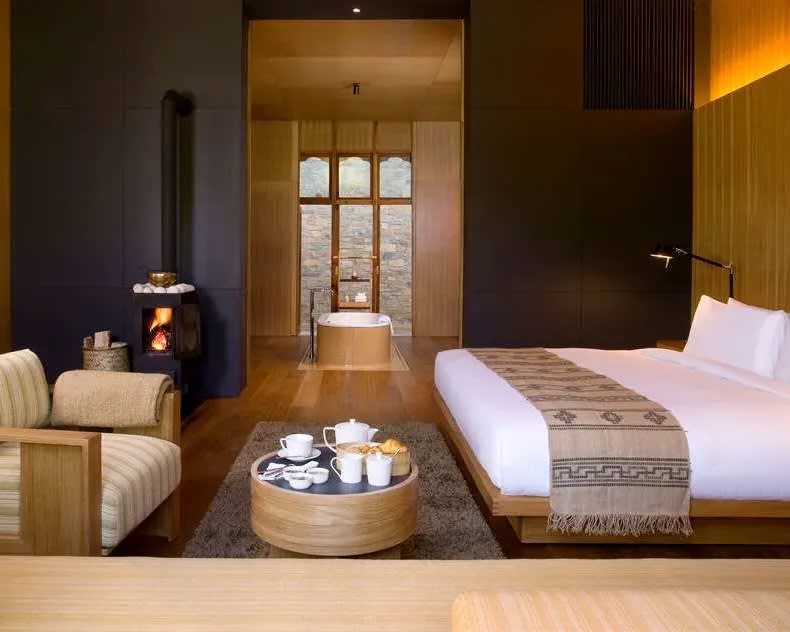
Image courtesy of Amankora
Bhutan unfolds valley by valley, each one distinct in character and separated by mountain passes. Paro is a broad, fertile valley, home to the iconic Tiger's Nest monastery, and some of Bhutan's most significant historical sites. Thimphu, the capital, balances its role as the country's urban center with an unhurried pace, monasteries, and markets that anchor the carefully modernized city. Punakha sits lower and warmer, its river confluence dominated by the most beautiful dzong in the kingdom, surrounded by rice terraces and subtropical forest. Gangtey opens into the wide, glacial stillness of the Phobjikha Valley, where black-necked cranes winter and the 16th-century Gangteng Gompa watches over the wetlands below. Bumthang, further east, is Bhutan's spiritual heartland filled with ancient temples, apple orchards, and a quietness that feels different even by Bhutanese standards.
Where to stay
Amankora: Five intimate properties are positioned across Paro, Thimphu, Punakha, Gangtey, and Bumthang—designed as a single, flowing journey through the kingdom. Stone and timber architecture accompanies Amankora’s approach to spiritual renewal across the experience.
Fora Perks include a $100 hotel credit, daily breakfast, an upgrade, and extended check-in/out whenever possible.
COMO Uma Paro: Refined hillside retreat where clean-lined design, a destination wellness program, and mountain views create a well-regarded stay. COMO's signature approach to health and cuisine translates naturally to the altitude and pace of life here.
Fora Perks include a hotel credit or on-site experience, daily breakfast, welcome amenity, an upgrade, and extended check-in/out whenever possible.
COMO Uma Punakha: Intimate riverside refuge set in the warmer, subtropical Punakha valley—a counterpoint to the cooler mountain lodges. Terraced rice fields, river views, and easy access to the Punakha Dzong make it a natural midpoint in any multi-lodge itinerary.
andBeyond Punakha River Lodge: Boutique lodge on the banks of the Mo Chhu river, seven elegant tents combine andBeyond's safari-honed hospitality with rural landscapes. Intimate, personal, and well-positioned for white-water rafting, village walks, and monastery visits.
Six Senses Bhutan: Five lodges across Bhutan's valleys—Thimphu, Punakha, Gangtey, Paro, and Bumthang—are each anchored by Six Senses' approach to wellness and hospitality. Stays can be built around one lodge or all five, accompanied by a dedicated guide and driver.
Fora’s IHG Destined partner perks include a $100 hotel credit, welcome amenity, daily breakfast, an upgrade, and extended check-in/out whenever possible.
History and culture
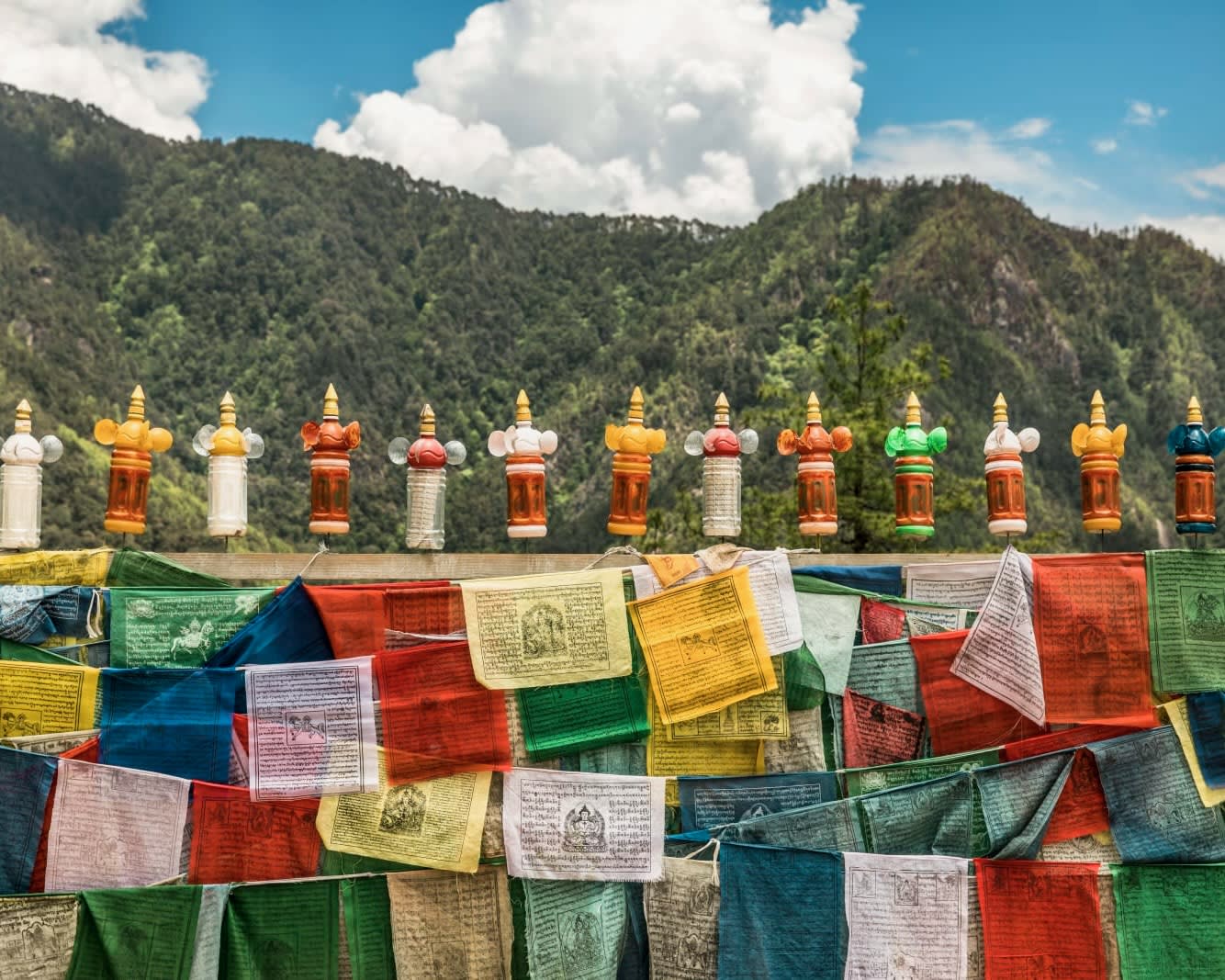
Image courtesy of COMO Uma Paro
Bhutan's history is inseparable from its spiritual identity. The earliest communities practiced Bön, an animist tradition rooted in a deep reverence for the natural world. Tibetan Buddhism arrived in the 7th century and became the defining force in Bhutanese life. The legendary Guru Rinpoche (Padmasambhava) is credited with bringing Buddhism to Bhutan, and his presence is felt across the country in sacred sites and festivals. The dzong—a fortress-monastery hybrid unique to Bhutan—became both the administrative and spiritual center of each valley, and still function in that dual role today.
Bhutan unified as a nation in the 17th century, with today’s monarchy founded in 1907. The royal family has remained central to Bhutanese identity and genuinely revered ever since. The current king, Jigme Khesar Namgyel Wangchuck, introduced the concept of Gross National Happiness as a governing philosophy, prioritizing cultural preservation, environmental sustainability, and community wellbeing over GDP. Bhutan remains the only carbon-negative country in the world, and travelers encounter this living philosophy everywhere. From the prayer flags strung across mountain passes to the tsechu festivals where masked dances carry centuries of spiritual teaching, Bhutan is a country that has chosen, quite deliberately, to remain itself.
Cultural celebrations and events
Paro Tshechu (March): One of Bhutan's most celebrated festivals honoring saints and deities in the courtyard of Paro Dzong. Sacred cham masked dances, traditional music, and crowds in ceremonial dress gather to receive blessings.
Summer village festivals (June–August): Monsoon season brings fewer large festivals but more intimate local celebrations tied to agriculture and sacred anniversaries that offer a window into rural Bhutanese life.
Thimphu Tshechu (October): The capital's most important cultural event, spanning several days of masked dances, painted scroll unfurlings, and rituals honoring Guru Rinpoche—set against the dzong’s dramatic architecture and the autumnal hills.
Seasonal rituals year-round: Butter lamps, morning prayers, prayer flag hoistings, and household observances punctuate daily life throughout the year. Even outside the major festivals, the country's spiritual rhythm is visible and worth paying attention to.
What to do in Bhutan
Ancient monasteries, high-altitude valleys, and a pace of life shaped more by the farming and Buddhist calendars than by anything else.
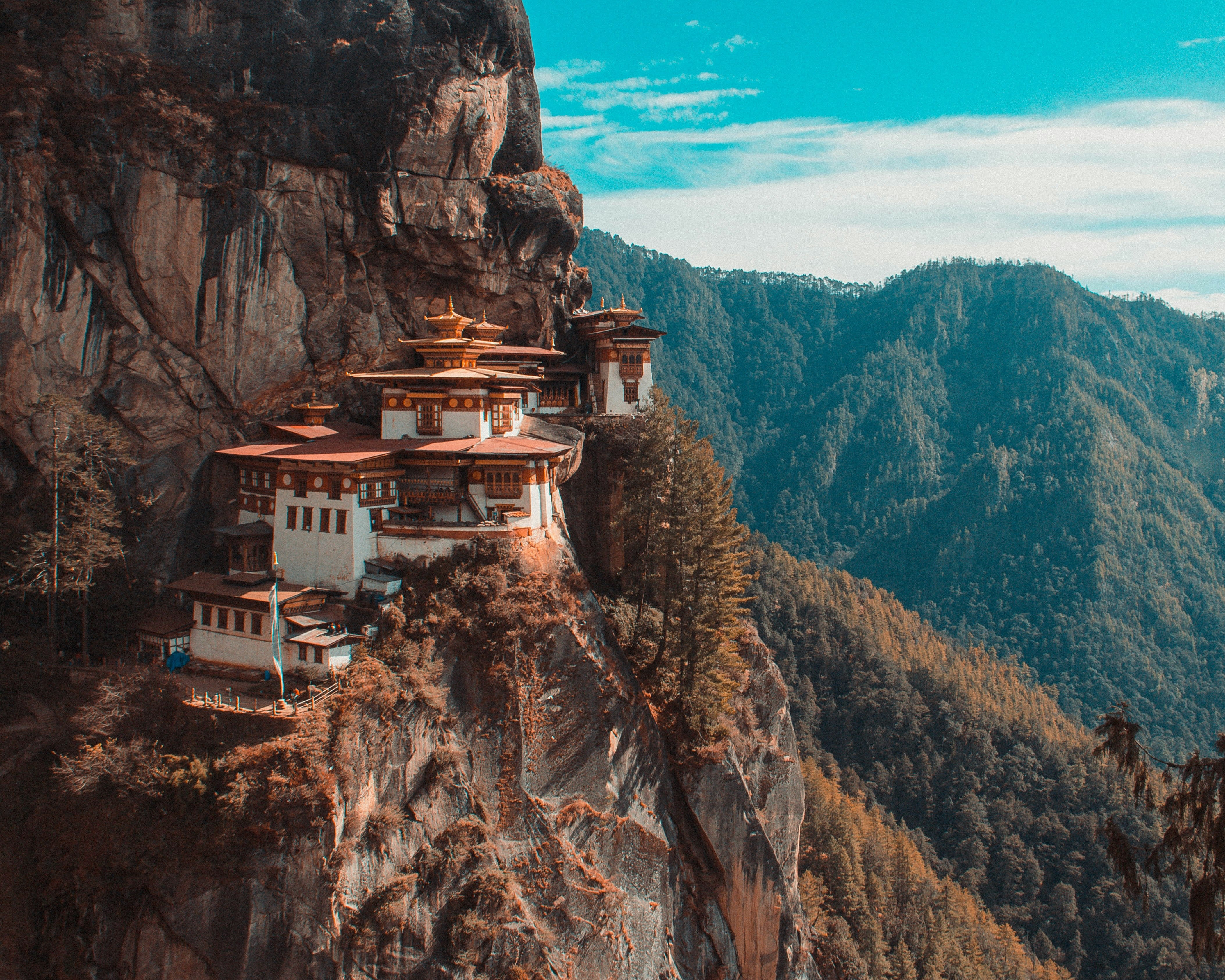
Tiger's Nest Monastery (Paro Taktsang): Iconic cluster of sacred temples built into a sheer cliff face, a two-hour hike up above the Paro valley floor.
Punakha Dzong: A 17th-century fortress-monastery at the confluence of two rivers, widely considered the most beautiful dzong in the country.
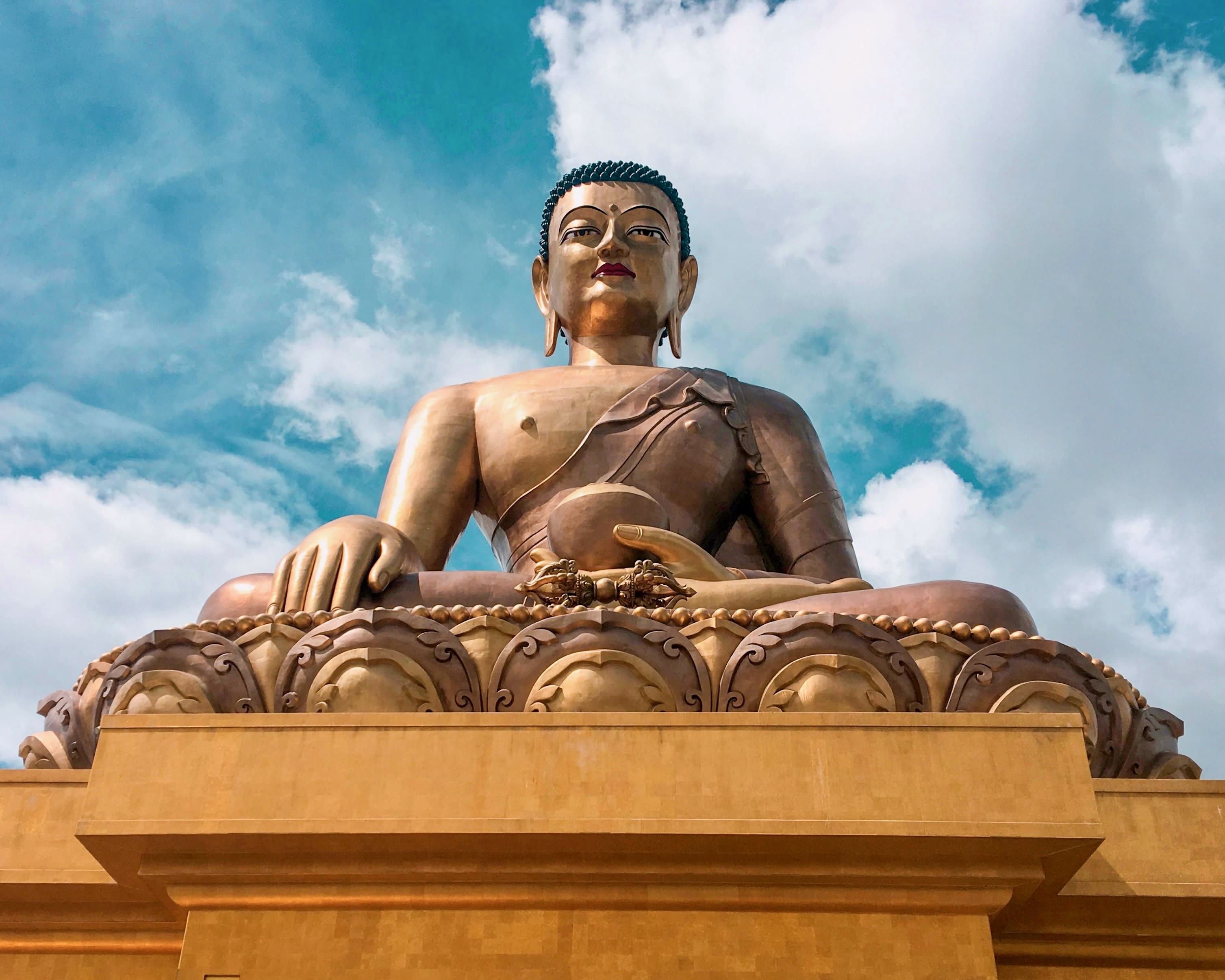
Buddha Dordenma: A 169-foot bronze Buddha overlooking Thimphu from a forested hillside—one of the largest in the world, and housing 125,000 smaller Buddhas within.
Dochula Pass: A high mountain pass dotted with 108 Tibetan Buddhist monuments with sweeping panoramic views across the eastern Himalayas.
Phobjikha Valley: A wide glacial valley known as the winter home for black-necked cranes from Tibet, surrounding wetlands, and the 16th-century Gangtey Monastery.
National Museum of Bhutan: Set in a restored watchtower above Paro, offering a thoughtful introduction to Bhutanese history, art, and material culture.
Trekking: Bhutan's trails are uncrowded and extraordinary—the Jomolhari Trek passes lakes and remote villages, while the Snowman Trek is demanding but rewarding.
Archery: Bhutan's national sport, played with traditional bamboo bows—watch a local match or take lessons to try it for yourself.
Punakha Suspension Bridge: A 160-meter bridge strung with prayer flags above the Mo Chhu river with panoramic views of the valley below.
Hot stone bath: A traditional Bhutanese wellness ritual using river stones heated in fire to warm the water, often infused with medicinal herbs.
White-water rafting: The Mo Chhu river in Punakha offers rafting through forested gorges for an unforgettable, thrilling experience.
Chimi Lhakhang: A fertility temple a short walk across rice fields from the road, associated with the eccentric 15th-century saint Drukpa Kunley.
Royal Takin Preserve: Home to the takin—Bhutan's unusual national animal.
Where to eat in Bhutan
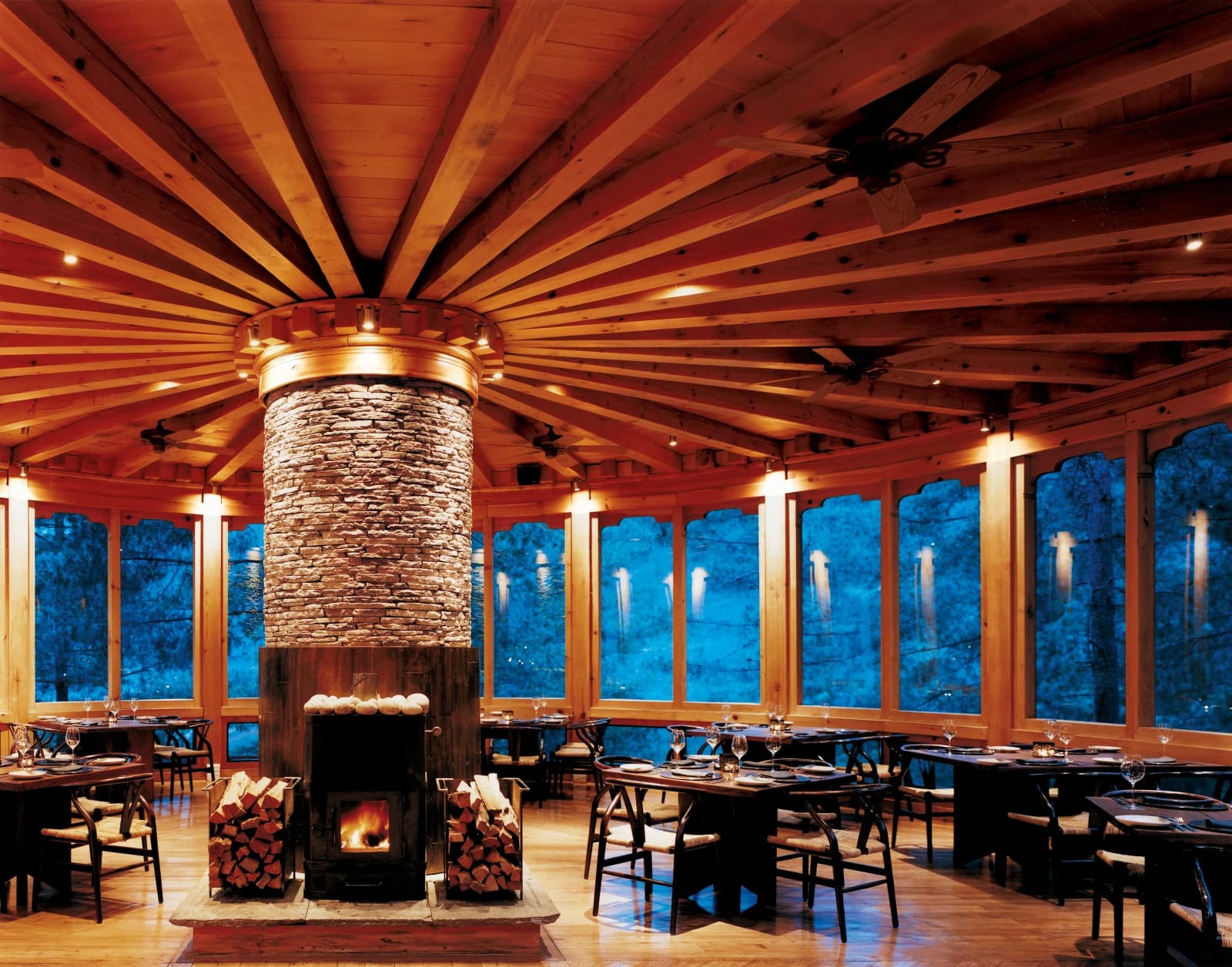
Image courtesy of Bukhari at COMO Uma Paro
Bhutan's dining scene is modest in scale but deeply rooted in local ingredients and tradition.
Bukhari at COMO Uma Paro: Open-fire Himalayan cooking perched above the Paro Valley, offering one of the most refined dining experiences in the country.
Sonam Trophel Restaurant (Paro): A warm, unpretentious local favorite serving authentic Bhutanese home cooking.
Folk Heritage Museum Restaurant (Thimphu): Set inside a traditional Bhutanese farmhouse serving food that is as much a cultural experience as a meal.
Chh'a Bistro and Bar (Thimphu): A lively, casual spot serving Bhutanese and Asian fusion dishes in a relaxed, friendly setting with scenic views.
Chimi Lhakhang Restaurant (Punakha): A simple, well-positioned spot serving local cuisine near the fertility temple, complete with riverside views.
Trips to add on

Limited flights make stopovers a necessity, but it opens the doors to additional destinations well worth the long flight time.
Northern India (2.5-hour flight to New Delhi): Tracing a circuit through Delhi, Agra, and Jaipur for architecture, bustling markets, and centuries of history in India’s Golden Triangle.
Thailand (3-hour flight to Bangkok): Bangkok's energy, Chiang Mai's temples, and the relaxing beaches of Phuket and the southern islands make for a dynamic addition.
Dubai, U.A.E. (5.5-hour flight): Striking architecture, excellent dining, and desert excursions that offer a dramatic geographic contrast to Bhutan's Himalayan valleys.
Singapore (7–8 hour flight): World-class food, a compact city center, and one of Asia's best hotel scenes make a stopover feel entirely worthwhile rather than merely convenient.
If not Bhutan…
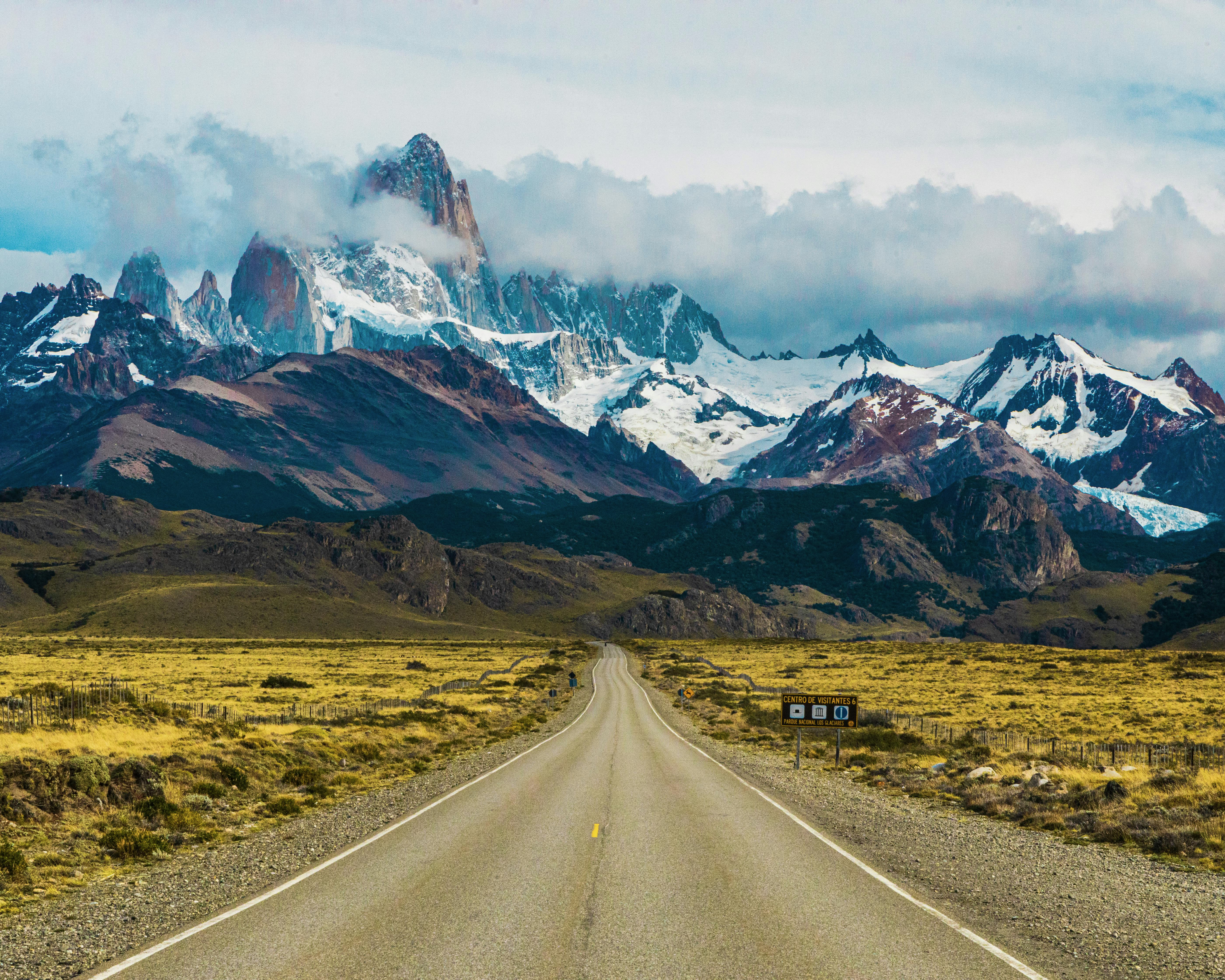
Just like Bhutan, these destinations offer raw landscapes, spiritual depth, and travel that feels genuinely removed from the everyday.
Nepal: Himalayan peaks, ancient temple complexes, and an adventurous trekking culture. Kathmandu's layered history and Pokhara's lakeside calm offer cultural grounding. More accessible, and equally rewarding for those drawn to altitude and Buddhist tradition.
Mongolia: Nomadic culture, horse trekking, and traditional ger camps deliver a unique sense of remoteness. The Gobi Desert and the grasslands of the north offer dramatically different landscapes, while the capital of Ulaanbaatar is a city of contrasts and cultural richness.
Patagonia, Chile and Argentina: The southern extreme of South America, where glacier fields, granite towers, and windswept plains create vivid scenery. Torres del Paine in Chile and Los Glaciares in Argentina anchor the remote, physically engaging adventure.
