




Curator’s statement
Few islands in the Mediterranean can match Crete for sheer range—of landscape, of food, of experience—and fewer still manage to deliver something genuinely meaningful to every kind of traveller without compromising the quality of the encounter. Young families, discerning couples, and multi-generational groups all find their version of it here, and all leave equally convinced they have discovered something the others haven’t. The food alone is worth the journey; the culture, expressed through its fishermen, village cooks, and small-batch producers, is worth staying for. It is the type of place people leave already thinking about when they might come back.
The Fora Difference
Book with Melanie Larson to access exclusive perks and experiences on your trip.

Killer perks
Free upgrades, spa credits and more—we got you

Personalized recs
Customized travel planning for your style

Insider knowledge
Expert advice from people who’ve actually been there
Where to stay in Crete, Greece
Unlock perks by contacting Melanie Larson to book your trip.
Things to do in Crete, Greece
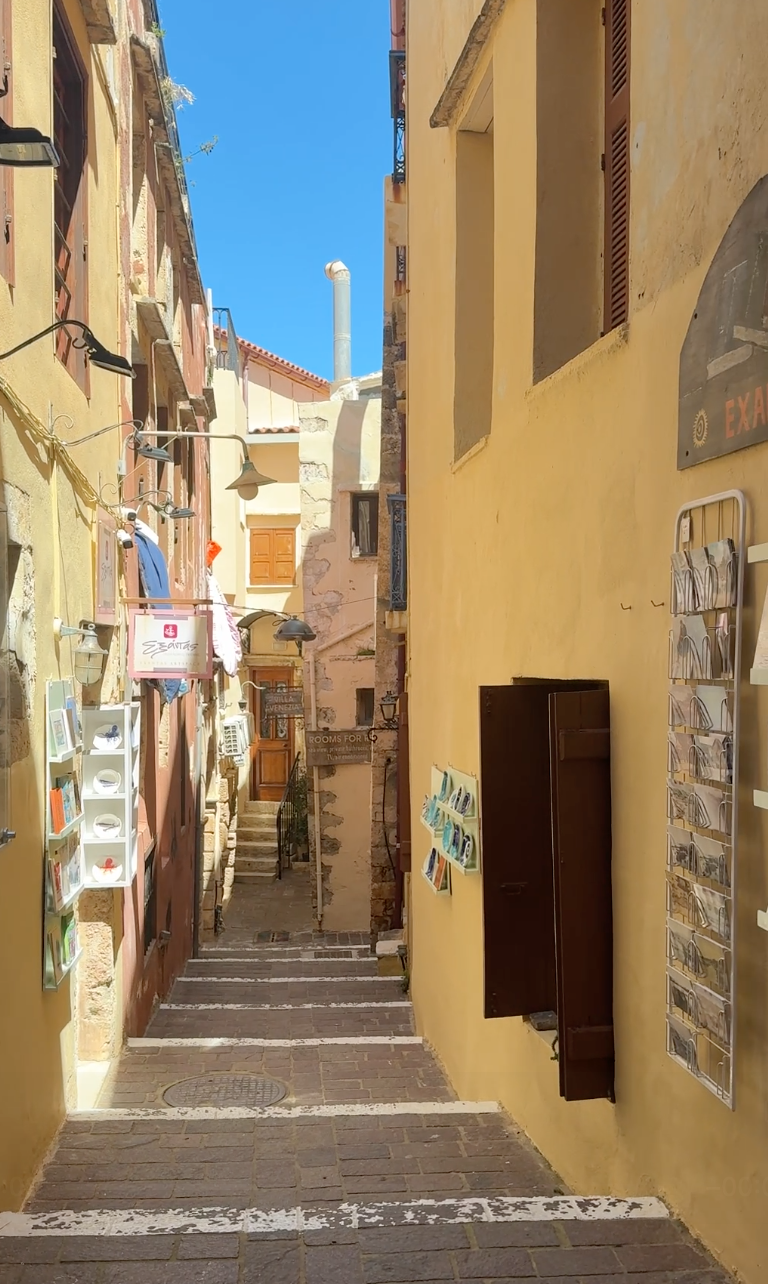
Shopping in Chania's Old Town
Balos Beach: One of the most otherworldly coastal scenes in Europe—a pale lagoon of shallow turquoise water fringed with sand that shifts between white and the faintest blush of pink—accessible only by a clifftop hike or by boat, which keeps it, just about, from being loved to death. Arrive on the first boat of the morning and you may have it almost entirely to yourself.
Elafonisi Beach: At the southwestern tip of the island, Elafonisi’s shallow, pink-tinged lagoon is as beautiful in person as it is in every photograph you have ever seen of it. It is a drive from Chania, but the journey through the island’s dramatic interior is reward enough in its own right.
Plaka Village for lunch on the water: A quietly beautiful village on the shores near Elounda that hasn’t quite decided to become a destination yet—which is, of course, precisely its appeal. Settle into a waterfront taverna for fresh fish and simple Cretan food, and let the afternoon take care of itself.
Spinalonga, the island that holds its history lightly: The uninhabited island of Spinalonga, reached by a short boat crossing from Plaka or Elounda, served as one of Europe’s last functioning leper colonies until 1957—and walking through its Venetian walls and abandoned streets is as moving as it is beautiful.
Shopping in Chania’s Old Town, the edited version: Navigating Chania’s Old Town well means knowing where to look. Eyemazing for exceptional optical design; En Gallery for artisan jewellery and ceramics from makers across Greece; Aggma for beautifully hand-painted ceramics that stand well apart from the surrounding souvenir trade; and The Grocery Store—its name underselling it considerably—for top-quality Cretan olive oil, local honeys, wines, and produce that make for the most intelligent souvenirs you will find on the island.
Places to eat & drink in Crete, Greece
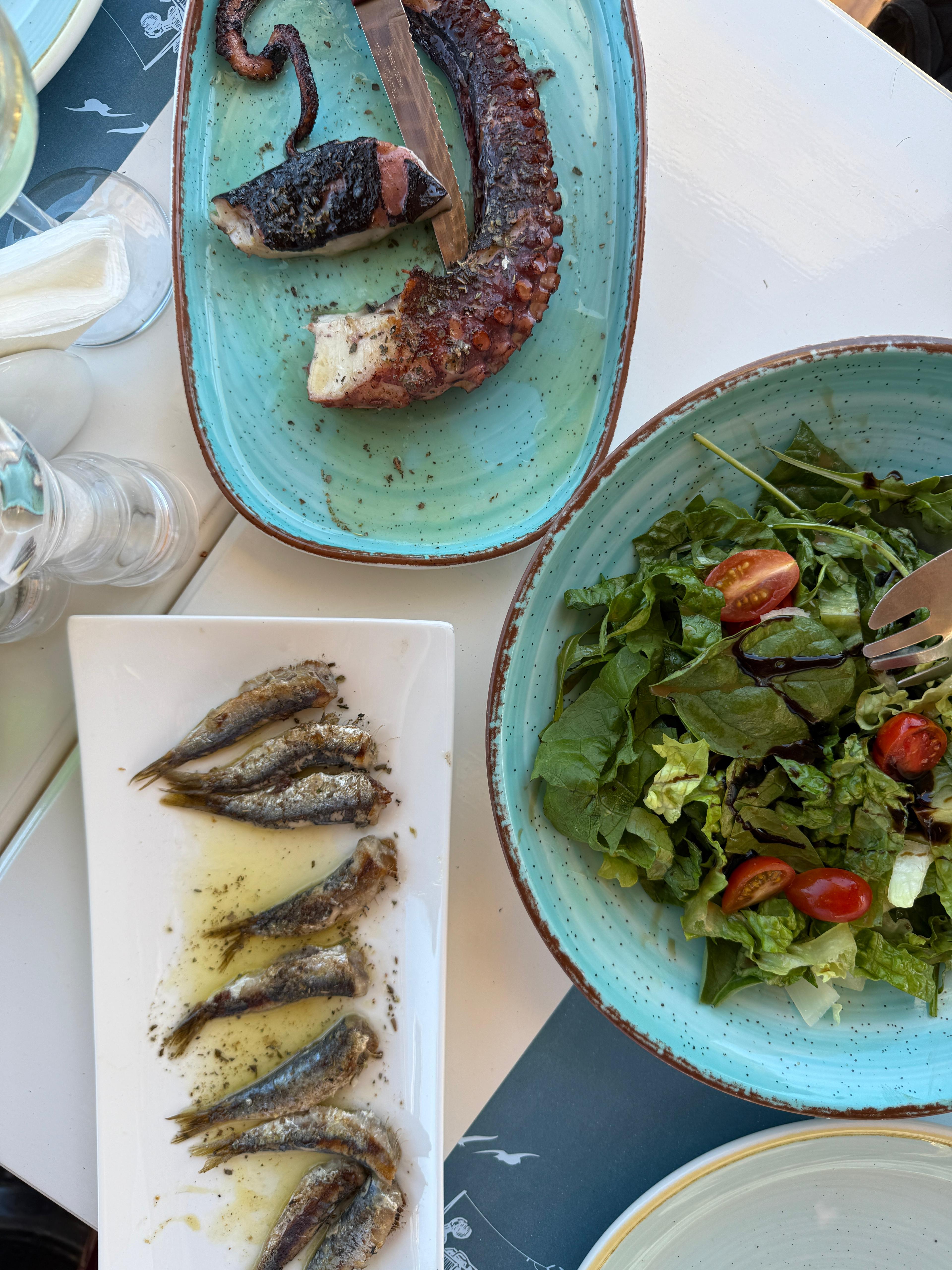
Freshly caught and grilled sardines at Nikos Fish Tavern
Taverna Agia Paraskevi (Village of Christos)
The dish: Whatever Yiannis Karalakis is cooking that day.
The experience: This is the soulful, authentic heart of Crete. Watching Yiannis cook out back and present his dishes is unforgettable.
Salis (Chania waterfront)
The vibe: Approachable, top quality meal you talk about on the flight home.
The dish: Octopus with pickles and seasonal wild greens.
Periplous (Chania)
The vibe: Directly on the water on the western edge of Chania with sunsets that justify the visit on their own.
The dish: Smoked sashimi with burnt citrus that will leave you thinking about your next return.
Nikos Fish Tavern (Elounda)
The dish: Grilled sardines and mussels (you’ll want to drink the broth).
The secret: It’s family-run, and the fish comes straight off their own boats. The starters are handmade by grandma. Wash it all down with iced ouzo.
Zana Restaurant (Rethymnon Old Town)
The vibe: A 2025 newcomer that is already a favorite.
The dish: Incredible fresh fish and homemade baklava. You can feel the family pride in every plate.
Need to know
Ideal for travel in the shoulder season: April through early June, and again in September, represent Crete at something close to its ideal—fully operational, reliably warm, and retaining an atmosphere that the wall-to-wall density of high summer can significantly diminish. To experience the island as it should be experienced, the shoulder season is recommended.
Top value-to-value in Greece: Having travelled with some seriousness across Athens, Mykonos, Santorini, and the Halkidiki region, the quality-to-value equation in Crete is the one of most favorable of any destination in Greece—extraordinary ingredients, cooking deeply rooted in tradition, and prices that continue to astonish anyone familiar with the tariffs now routinely charged at the more internationally fashionable Greek addresses.
Allow yourself at least a week: Crete is the largest island in Greece, and a week is the minimum needed to divide meaningfully between east and west and begin to feel you have understood something of its character. Two weeks allows the trip to breathe properly, and that quality of ease, ultimately, is what Crete is most generously offering.


Travel Advisor
Melanie Larson

Melanie Larson

Get in touch with Melanie Larson
Did you like this guide? Reach out to customize and book your own experience. Or, just to chat about travel in general.
For more inspiration and insider recommendations, visit our Crete page.