

Curator’s statement
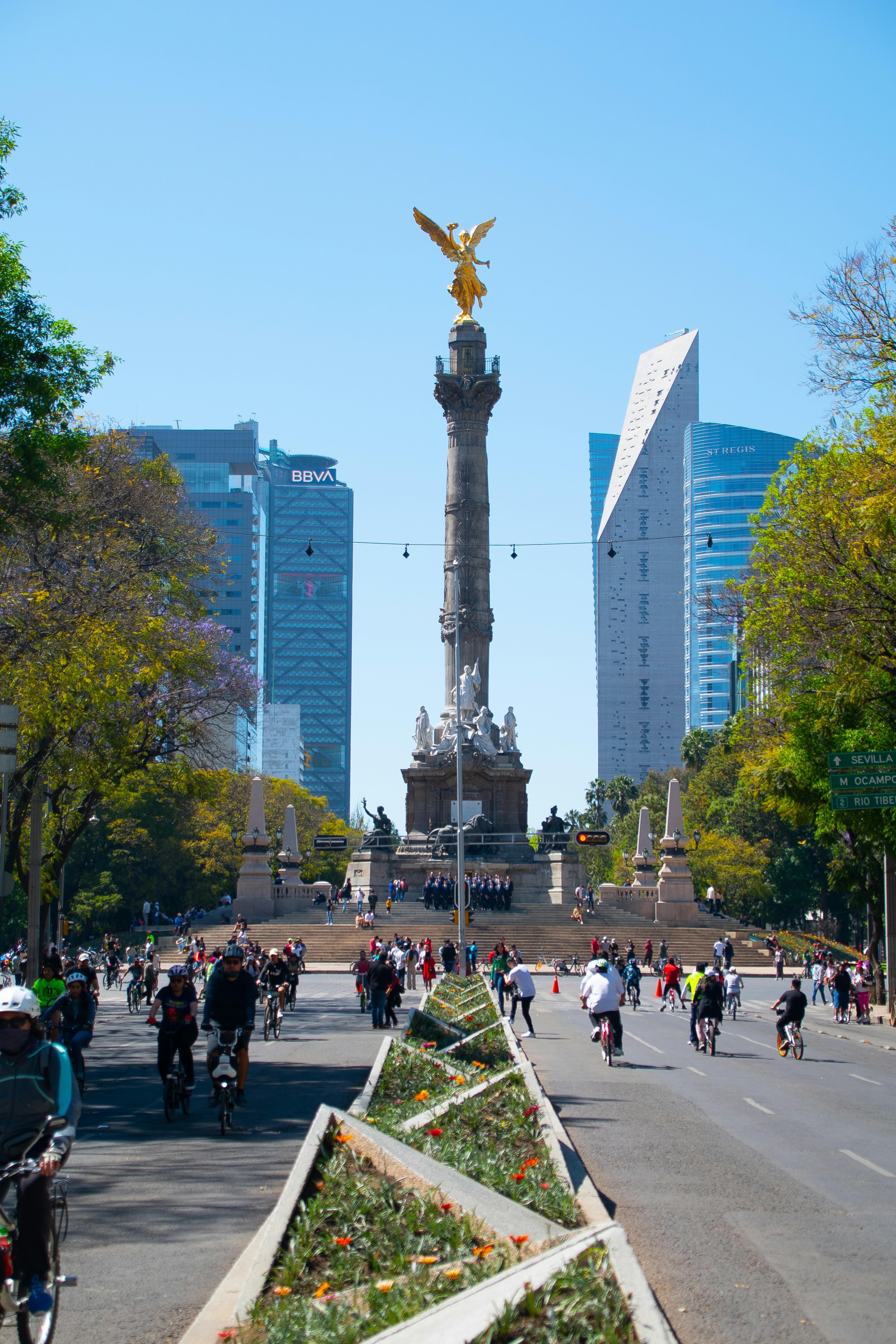
This is a megacity, with more than 20 million people in the metro area—but you won’t feel it if you’re staying in the city center or the charming, walkable neighborhoods that surround it (Polanco, Roma Norte, Condesa). You’ll want to spend at least a few days here to allow time for learning about the area’s rich history, engaging in cultural experiences, and savoring the unrivaled food and drinks the city offers.
The Fora Difference
Book with Elizabeth, Your Travel Planner to access exclusive perks and experiences on your trip.

Killer perks
Free upgrades, spa credits and more—we got you

Personalized recs
Customized travel planning for your style

Insider knowledge
Expert advice from people who’ve actually been there
Where to stay in Mexico City
Unlock perks by contacting Elizabeth, Your Travel Planner to book your trip.
Things to do in Mexico City
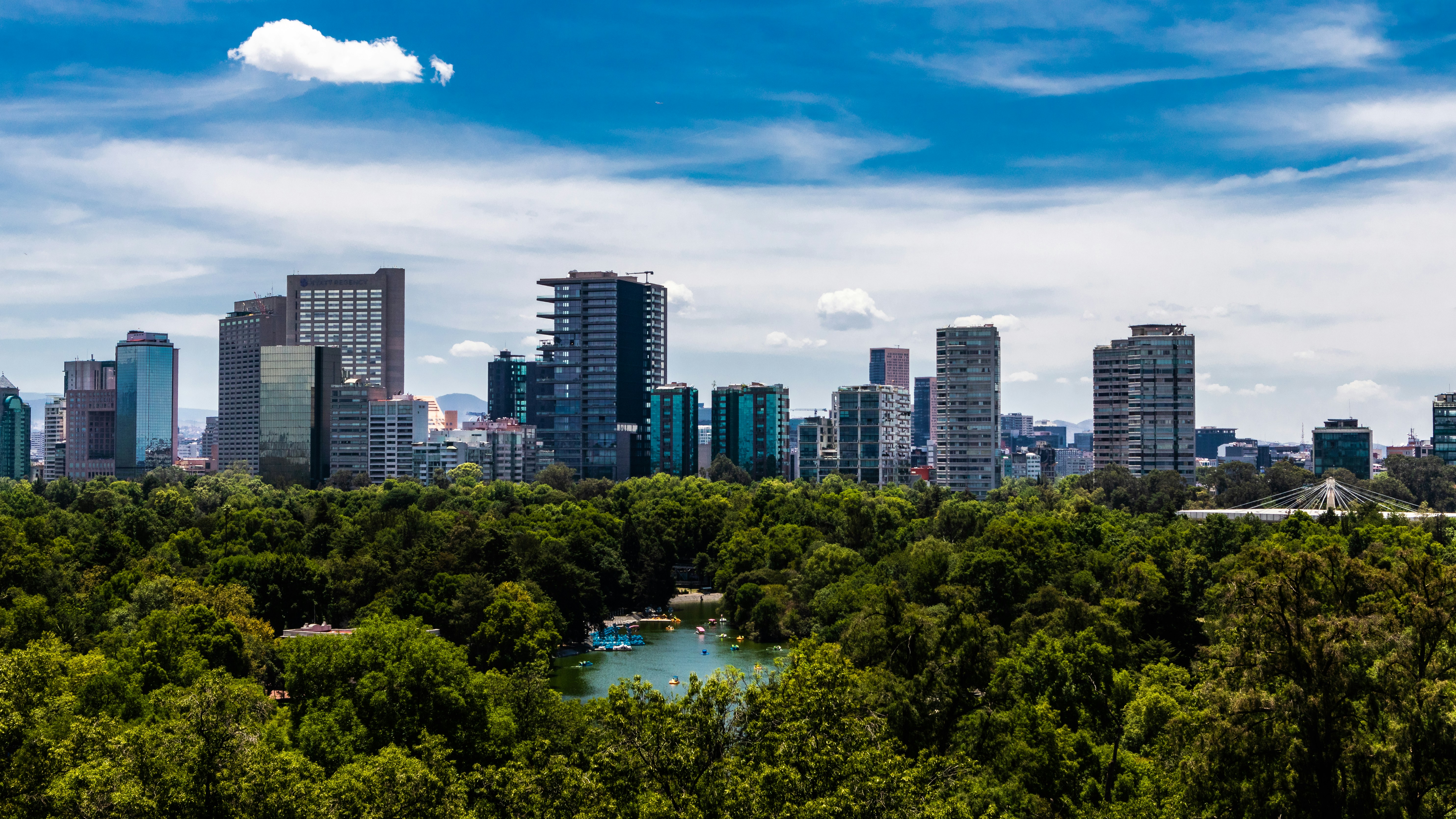
The view from Chapultepec Castle
Frida Kahlo
Experiences celebrating the life and art of Frida Kahlo are a banner attraction in the city. Among these, Casa Azul is the most sought-after. Tickets sell out the day they are released—usually at the beginning of each month for the following month—but it is possible to book a guided tour that includes admission tickets. Located close by in the Coyoacan neighborhood is Casa Roja, which was the residence of her sister and caregiver and contains more information about the Kahlo’s origins and development as an artist. At Museo Casa Estudio in San Angel, you can see the side-by-side houses where Kahlo and Diego Rivera lived and worked—connected by a bridge. All three are worth seeing for anyone interested in the artist’s life and personal effects, but those interested in her art will also want to be sure to visit the modern art museum in Chapultepec Park, which houses the iconic Two Fridas painting, and Museo Dolores Olmedo in Xochimilco (scheduled to reopen in 2026 after renovations), which has the largest collection of Kahlo’s work.
Xochimilco
Whether or not you’re visiting Museo Dolores Olmedo, don’t skip Xochimilco—it is far from the city center, but well worth the trip. In this neighborhood, you can see an earlier version of life in Mexico City by taking a canal cruise on one of the traditional trajinera boats. Get ready for a bit of sensory overload, as each boat plays its own soundtrack, from pumping beats for bachelorette and birthday parties to live mariachi music, and food vendors also selling their offerings as they float by. It’s all in good fun, and you can’t help but have your spirits lifted by the celebratory mood of everyone on the water. Mexico City was founded at a lake between mountains, and the whole city looked more or less like this before it was filled in to make a foundation for roads and skyscrapers. Keep a keen eye on the shoreline to spot the homes of residents who still live here. Another fun fact is that much of the produce for the city’s restaurants is still grown here. For a more tranquil experience, take an early morning kayak tour to get out on the canals before the boats start running for the day, and learn about ecological preservation and restoration efforts in the area.
Teotihuacan
Located about an hour’s drive outside the city, the pre-Columbian pyramids at Teotihuacan are also well worth a day trip. Find a tour with a knowledgeable guide who can educate you about what the pyramids reveal about the people who built them, predating Aztecs’ arrival in the area. Look for a tour that includes lunch or dinner at Restaurant La Gruta, where you can have a meal featuring traditional local ingredients in a stunning setting inside a cave. The cave setting provides natural air conditioning since the rocks stay cool and provide welcome shade after the pyramid tour, which is entirely outside. (Don’t forget sunscreen on this day!)
National Anthropology Museum
Back in the city, the National Anthropology Museum houses the world’s largest collection of pre-Columbian Mexican artifacts. History lovers will want to plan for an entire day (including lunch at the museum café, which features traditional dishes from six different regions of Mexico). The museum is organized geographically, offering a window into the lives of the people who lived in the country’s various regions before Europeans arrived.
Chapultepec Park
You’ll probably walk through Chapultepec Park to get to and from the museum; come back to the park for beautiful nature and excellent people-watching. Located inside the park, Chapultepec Castle is also worth visiting. Billed as “the only European castle in North America,” the former residence of Maximilian I and Charlotte is now devoted to telling the story of this Austrian archduke and his Belgian wife, who were emperor and empress of Mexico from 1864 until his execution (and her exile) in 1867. Through the lens of this ill-fated emperor’s story, the museum offers plentiful insight into Mexico’s political and social history. A captivating mural that fills an entire room chronicles the entire history of the country. Take a tour with a guide who has a deep understanding of these factors to help you truly grasp the mural’s significance.
Explore the city center
During your stay in Mexico City, allow plenty of time to stroll around the city center’s neighborhoods—especially Condesa, Roma Norte, and Polanco. In the city center, make sure to go inside Palacio de Bellas Artes as well as admiring the building’s stunning exterior. In addition to the architecture museum on the building’s top floor, the building has murals by Diego Rivera and José Clemente Orozco—plus Art Deco interiors that are stunning in their own right.
Casa Estudio Luis Barragan
Lovers of architecture will want to visit Casa Estudio Luis Barragan, just outside Chapultepec Park. The home and studio of the first Mexican architect to win the Pritzker Prize have been preserved exactly as they were when he lived there. Marvel at how Barragan used the interplay of light and color to allow the house, garden, and terrace to transform throughout the day. The architect’s personal art collection, including works by Picasso and Diego Rivera, is also on display.
Lucha Libre
Lucha Libre is a combination of sports and theater that is hard to fully explain. It’s a wrestling show, but choreographed, with a predetermined storyline—including acrobatics and plenty of dramatic flair for the spectators’ benefit. While you can buy the tickets on Ticketmaster, I recommend a guided experience that includes a meet-and-greet with one of the luchadores (wrestlers) beforehand to help you understand the context and get the most out of the experience. (For kids, these experiences can offer a chance to try on the luchadores’ colorful masks or even decorate one of their own to take home.)
Places to eat & drink in Mexico City
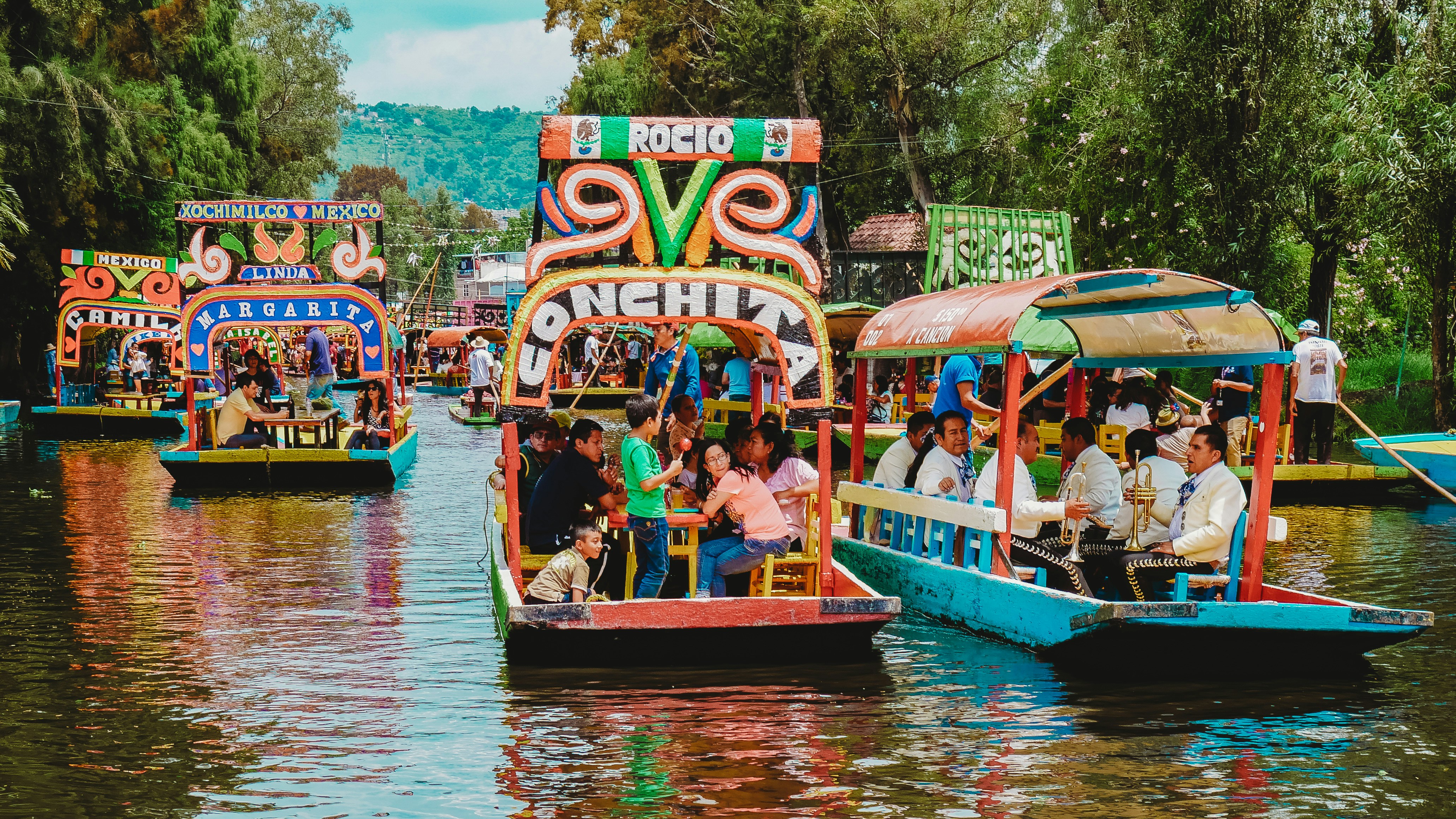
Xochimilco trajineras
First, let me say that Mexico City is absolute heaven for foodies. You can’t go wrong by wandering around and trying whatever you stumble upon. That being said, I can recommend a few standouts based on my own and clients’ experiences.
At Casa de las Sirenas, try the chicken in mango mole—and be sure to request a table on the rooftop terrace for views of Templo Mayor, a 700-year-old temple built by the Mixteca people that sits in the heart of the modern city. Also located in the Centro district, Masala y Maíz offers Mexican-Indian fusion with inventive flavor combinations, and comes in at a reasonable price point relative to some other Michelin-starred restaurants. (Just make sure to book online well in advance—time slots tend to fill up shortly after they are posted for booking.)
Some restaurants’ appeal lies as much in the setting as the food. For this, check out Azul Historico, offering Mexican comfort food classics, done well, in the open-air courtyard of a 17th-century building. In Roma Norte, Blanco Colima serves elevated bistro fare amid the high ceilings and intricate details of a restored Porfirian mansion. At Taverna, in the Juarez neighborhood, the candlelit setting of a restored hacienda is almost enough to distract from the real star of the show: a Mediterranean-inspired menu with unexpected twists on indulgent dishes with fresh, high-quality ingredients.
Vegetarian options
Although the food culture overall is heavily meat-centric, Mexico City has fantastic options for vegetarians if you know where to look. Chui, the beloved vegetarian restaurant in Buenos Aires, has opened an outpost in Mexico City’s Roma Norte neighborhood. Also in Roma Norte, Plantasia serves up an entirely plant-based menu with flavors from China, Indonesia, Japan, and Thailand. In the Condesa neighborhood, Veguisima offers vegan takes on Mexican classics like enchiladas and quesabirria.
Casual eats
Don’t plan out all of your meals—make sure to leave time for casual eats like the legendary chilaquiles at Chilpa in Condesa. For tacos, you have many wonderful options on just about every block of the city; among these, Taqueria El Califa is a reliable institution with multiple locations. On the sweeter side, El Moro (with locations in Condesa, Roma Norte, the Centro, and beyond) is the place to stop for churros and hot chocolate.
The city also has a vibrant, creative cocktail scene. It’s also worth experiencing the tradition of a mezcal tasting (we enjoyed the one at the Camino Real hotel).
Need to know
Environment
Mexico City sits at 7,350 feet of elevation, so you are likely to feel the altitude if you live closer to sea level. Be sure to stay hydrated and not push yourself too hard physically in the first few days of your trip while your body is adjusting. Also pay attention to air quality alerts; you may want to time your walks around lower-pollution times of day or wear a mask that filters for fine particles while outside.
Transportation
Although a secondary airport was built an hour outside the city in 2022 to relieve congestion, most people (and airlines) still use MEX airport. If you don’t mind a longer ride to reach your hotel, you may want to compare airfares flying into NLU just to consider all the options. Once in the city, you can easily get around via Uber or bike share. The city is also very walkable.
Day trips
If time allows, many fascinating day trips exist near the city. On the city’s outskirts to the north is the Basilica Santa Maria de Guadalupe, the most-visited Catholic shrine in the world. Each year, about 20 million people travel here to view a 16th-century cloak with the Virgin Mary’s image. On the way is Tlatelolco, where you can see Aztec ruins, a 17th-century colonial church, and modern apartment complexes all together on one plaza, bringing together different eras of Mexico’s history; this town was the site of the Aztecs’ last stand against the Spanish in 1621.
Several of the nearby towns are part of the government’s Pueblos Mágicos recognition program for historic and cultural preservation. About an hour to the north (and accessible by train from the city) is Tepotzotlan, where you can walk among ancient aqueducts and visit a museum in an intricately carved former Jesuit school (and find fantastic food).
Two hours east of Mexico City is Puebla, not a Pueblo Mágico itself, but a gateway to many nearby towns that are. Puebla’s city center is a UNESCO World Heritage Site; the city is known for its unique style of handpainted ceramic tiles and is also home to the first public library in the Americas as well as a Baroque museum and another featuring pre-Hispanic art. In nearby Cholula, you can see an ancient pyramid topped by a colonial church and experience one of the oldest continuously inhabited cities in the Americas. Also nearby is Tonantzintla, whose cathedral is a dazzling specimen of indigenous baroque art in Mexico. You’ll find particularly memorable food in this region—said to be the birthplace of mole. If you have more time in the area, you can also visit Zacatlan de las Manzanas—where you can sample the town’s legendary apple cider, apple wine, apple bread, and other apple products and can also take in canyon and waterfall views—and Chignahuapan, known as the Christmas capital for its production of handcrafted glass ornaments (and also the site of natural hot springs).
Less than two hours to the south of Mexico City is Tepoztlan, where you can see an ancient temple honoring the god of fertility (alongside stunning sunset views, excellent restaurants, and artisan shops). Nearby Tlayacapan has been a cultural crossroads for hundreds of years, and has cuisines, traditions, and architecture that speak to this history.
The area around Mexico City is also home to many remarkable natural attractions. A visit to the terraced thermal pools at Grutas de Tolantongo makes for a very long (but still possible) day trip; for a more leisurely experience, you can stay overnight there, but be warned that the lodging options are rustic. Just 45 minutes from the city, you can take a hike through a high-altitude pine and oak forest and see the ruins of a 17th-century convent inside Desierto de Los Leones National Park. Just over an hour from the city is Cumbres del Ajusco National Park, boasting two peaks that are each about 13,000 feet. Easier hikes are also possible within the park, which has a garden labyrinth and an entry road lined with rustic cabins serving traditional Mexican foods. Nevado de Toluca (about two hours outside the city) is even higher at about 15,000 feet; the crater is accessible by car, meaning you can view the turquoise lakes on a guided tour even if you are not up for a strenuous hike.
About two hours outside the city in the opposite direction, you can take a walk among prismatic formations of basalt volcanic stone at Huasca de Ocampo, a colorful small town that was the very first Pueblo Mágico inaugurated into the program when it was introduced in 2001. On the way back to the city, stop in Real del Monte, another Pueblo Mágico that is known for its “pastes” (a localized version of the empanada-style snacks the British call pasties). In this town, you can tour a 17th-century mine as well as sampling the snacks the gold and silver miners favored due to the ease of bringing them along for a lunch on the go.


Travel Advisor
Elizabeth, Your Travel Planner


Elizabeth Gudrais

Get in touch with Elizabeth, Your Travel Planner
Did you like this guide? Reach out to customize and book your own experience. Or, just to chat about travel in general.
For more inspiration and insider recommendations, visit our Mexico City page.