



Curator’s statement
Merida is one of the safest cities in Mexico… and one of its most overlooked. The U.S. State Department currently rates Yucatán as Level 1, “Exercise Normal Precautions,” the same classification given to Japan, Switzerland, and Iceland. Only two Mexican states hold this distinction. CEOWorld Magazine, one of the world’s leading publications for business executives and high-net-worth individuals, ranked Merida the second safest city in the entire Americas in 2024, behind only Quebec City, Canada. You feel all of it within the first few hours of wandering around. The streets are clean, the police presence is visible without being heavy, and there’s a ease to daily life here that’s difficult to describe until you’ve experienced it. Mérida is the cultural and culinary epicenter of Mexico’s Mayan heritage, and you’ll experience it largely through its cuisine, which is a world apart from what most people picture when they think of Mexican food. Outside of Mexico City, no city in the country has more colonial architecture, and nowhere is it more elegantly displayed than along Paseo de Montejo, where 19th-century mansions line a boulevard the city’s founders deliberately modeled on the Champs-Élysées. The city moves between extremes with remarkable ease: chaotic and deeply local around the sprawling market, upscale and quietly refined along Montejo, and cobblestoned and unhurried in neighborhoods like La Ermita. It is also one of the most strategically placed cities in the country. An ideal base for the Yucatán’s ruins, cenotes, and coastline alike. Flamingo-filled mangroves at Celestún are 90 minutes west. Uxmal and the Ruta Puuc are 90 minutes south. Dozens of cenotes are within an hour in every direction. The only question is why it took you this long to hear about it.
The Fora Difference
Book with Matt Bell to access exclusive perks and experiences on your trip.

Killer perks
Free upgrades, spa credits and more—we got you

Personalized recs
Customized travel planning for your style

Insider knowledge
Expert advice from people who’ve actually been there
Where to stay in Merida, Mexico
Unlock perks by contacting Matt Bell to book your trip.
Things to do in Merida, Mexico
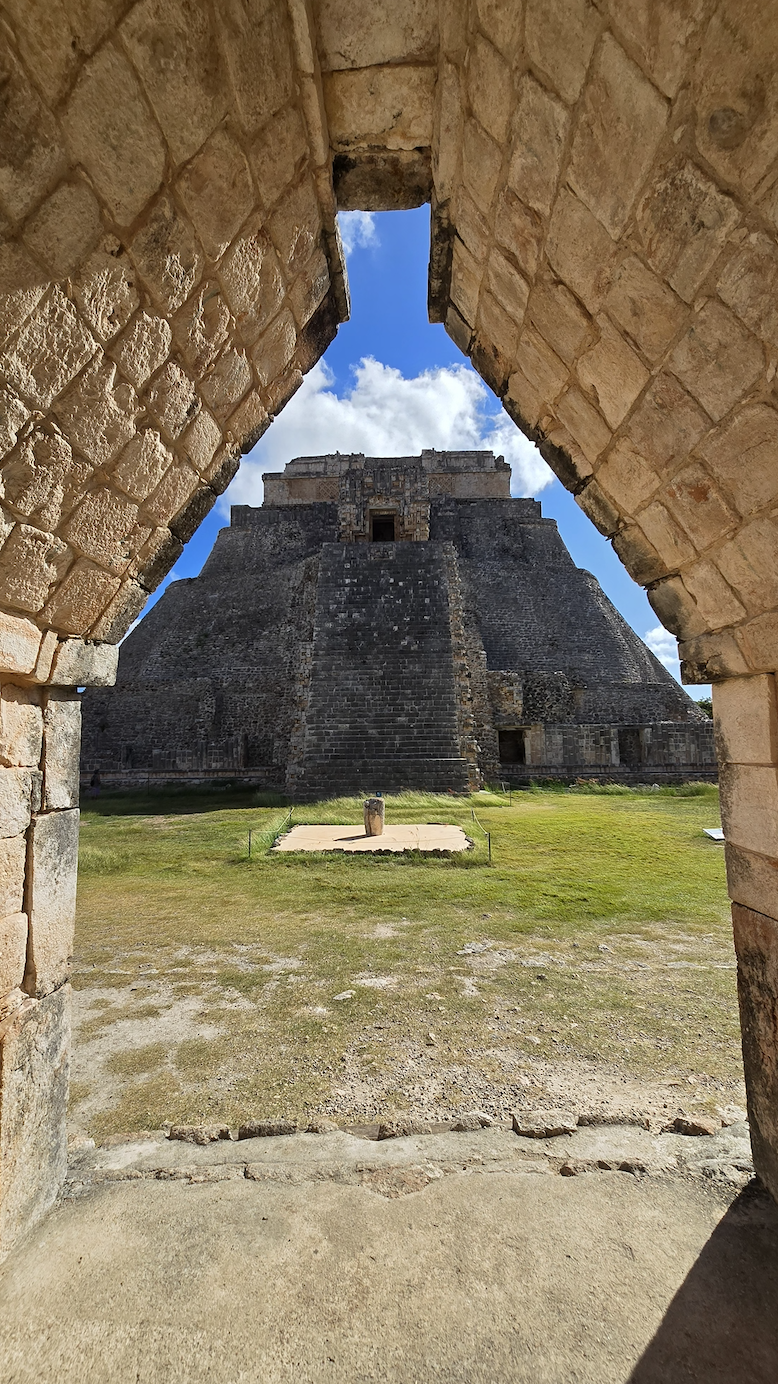
Uxmal is just as impressive as Chichen Itza but with fewer crowds.
The Market: Mercado Lucas de Gálvez is Mérida’s main market, a few blocks from Plaza Grande, and it is everything a market should be: loud, chaotic, colorful, and completely indifferent to whether you’re having a good time. If you spot something in a fishbowl that looks like a rhinestone-encrusted beetle, that’s the makech, a centuries-old Yucatecan tradition of turning the wingless wood beetle Zopherus chilensis into living jewelry, worn on a tiny gold chain, pinned to clothing, and tied to a Mayan princess legend.
House and garden tours: Every Friday morning, the Mérida English Library runs a guided tour of privately owned colonial homes and gardens in the historic center. These are actual residences, not museums, and the owners open their doors for the occasion. Some properties date to the 16th century. Some have been restored by Mexican architects with international reputations.
Gran Museo del Mundo Maya: The building itself stops you before you even get inside. Designed by four Yucatecan architects and opened in 2012, it’s built in the form of a ceiba tree, the sacred Maya tree that connects the underworld, the earth, and the sky. Inside, four permanent galleries hold over 1,160 artifacts, with exhibit labels in Spanish, English, and Yucatec Maya.
Museo de Antropología e Historia (Palacio Canton): The opposite of the Gran Museo in almost every way. Where the Maya World Museum is a bold architectural statement in the north of the city, the Palacio Canton is an ornate French Beaux-Arts mansion on Paseo de Montejo that feels more like walking into a private home than a museum.
Galería Secreta. This one takes some effort to find, and that’s entirely the point. Mario Torre converted his family’s former auto parts shop in the historic Centro into a five-room contemporary art space that operates entirely by appointment. Inside, you’ll find rotating exhibitions from artists across Mexico in a raw, warehouse-scale space that functions as part gallery, part cultural laboratory, part experiment in what a non-elitist art institution can look like.
Celestún Flamingo Reserve: About 90 minutes west of Mérida on Highway 281, Celestún is a small Gulf Coast fishing village sitting at the edge of the Ría Celestún Biosphere Reserve, a protected wetland corridor of mangroves, dunes, and shallow lagoons that shelter up to 23,000 Caribbean flamingos during peak season from November through March.
The ruins: Uxmal or Chichén Itzá?: Both are day trips from Mérida. Chichén Itzá is 2.5 hours east and one of the most visited archaeological sites in the world, but the crowds can be overwhelming, particularly between 10 a.m. and 2 p.m. when tour buses arrive in force. Uxmal and the Ruta Puuc are 90 minutes south, and the difference in atmosphere is significant. The site sees a fraction of Chichén Itzá’s visitors. The Ruta Puuc extends the day to include nearby secondary sites like Kabah, Sayil, Labná, and the Loltún Caves, all linked by a single road through the Puuc Hills.
Homun Cenotes. About an hour southeast of Mérida sits the small Maya village of Homún, ground zero for the “Anillo de Cenotes”, the Ring of Cenotes. The area holds over 20 swimmable sinkholes, each with its own character: some open-air with beams of light cutting through the water, some partially cave, some deep and dramatic with platforms for jumping. The most organized and popular entry point is the Santa Bárbara Cenotes complex, which links three distinct cenotes on a well-marked flat circuit.
Places to eat & drink in Merida, Mexico
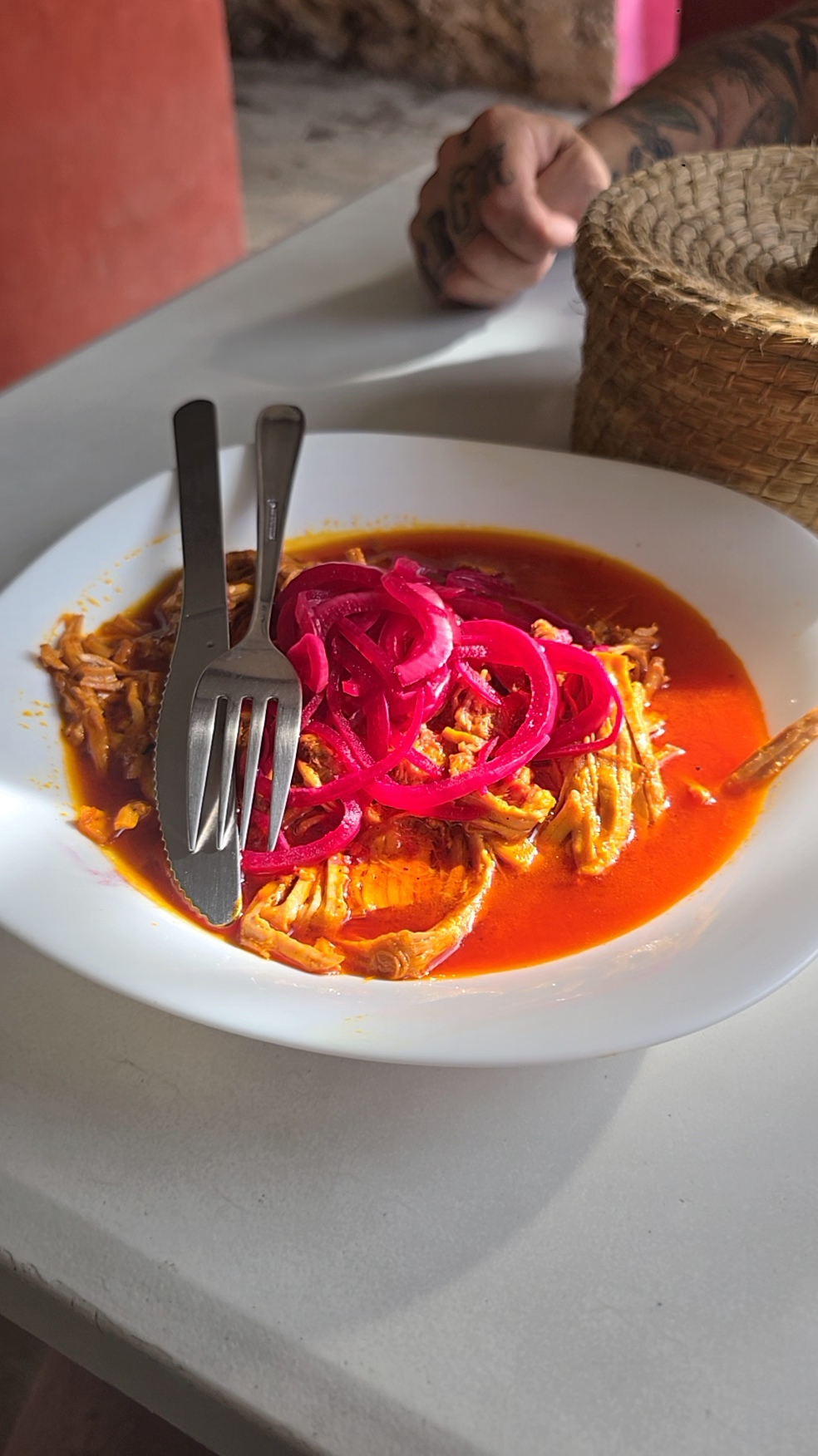
Cochinita pibil is a traditional slow-roasted pork dish, known for its tender, fall-apart texture and earthy, tangy flavor.
Taqueria La Lupita: Try lunch inside Mercado de Santiago, at the corner of Calle 57 and Calle 70, a third-generation family operation that has been running since 1967. Cochinita pibil, lechón al horno, relleno negro, salbutes, panuchos, polcanes, it's all here.
Mercado Santa Ana for Sopa de Lima: Mercado Santa Ana is the low-key counterpart to the main Lucas de Gálvez market. The food stalls ring a shaded park, with competing loncherías side by side, all serving the same canon of Yucatecan classics at prices that haven’t adjusted much for tourists.
Museo de la Gastronomía Yucateca (MUGY): On Calle 62 near Parque Santa Lucía, MUGY is a 19th-century casona that holds both a restaurant and a culinary museum with a collection of over 3,000 pieces: cooking tools, regional ingredients, historic recipes, and photographs tracing the arc of Yucatecan food culture from pre-Hispanic times through the colonial period and beyond.
K'u'uk: On Avenida Rómulo Rozo near the Monumento a la Patria, in a grand colonial mansion that’s been making the rounds on every serious food list since it opened in 2012. Chef Pedro Evia calls it “vanguardia Yucateca”... traditional Yucatecan ingredients pushed through a lens of molecular gastronomy and modern technique. I recommend the tasting menu. It’s been recognized by the World’s 50 Best Discovery list, Food & Wine, Wine Spectator, and Travel + Leisure, among others.
Ramiro Cocina: Two blocks east of Paseo de Montejo on Calle 41, a tiny courtyard restaurant with a chalkboard menu that changes completely every day based on what came in fresh that morning. Counter seating at the open kitchen, a shaded garden in the back, small plates, and some of the most thoughtful mole you’ll have in Mexico.
Dzalbay: The jazz bar that has anchored the city’s nightlife for locals and traveling musicians alike since reopening in 2018 in a building that’s been on Calle 64 since 1929. Craft beers, mezcals, signature cocktails named after musicians, tacos and quesadillas, and live music every single night, never with a cover charge.
El Gato: Named for a novel by Mérida’s own Juan García Ponce, one of the towering figures of 1960s Mexican literature, El Gato is a speakeasy bar with a mid-century in feel and dimly lit. The cocktails are excellent. On weekends, DJs take over and the whole thing tilts from intimate literary homage to the best kind of late-night Mérida. Check their Instagram for the current DJ schedule before you go.
Need to know
Best time to visit: The sweet spot for visiting Mérida is November through March. The dry season, offering low humidity, little rainfall, and temperatures ranging from 64°F to 91°F (18°C to 33°C). The city is at its most comfortable and walkable. Outside of this window, the heat and humidity can be quite uncomfortable.
It’s not really called Day of the Dead here....
In Mérida and throughout the Yucatán Peninsula, this famed holiday isn’t called Día de los Muertos. It’s called Hanal Pixán (pronounced han-awl pish-aan), a Mayan phrase that translates to “food of the souls.” While it shares some similarities with Day of the Dead celebrations elsewhere in Mexico, it has its own distinct character, traditionally more reverent and family-centered than the colorful street parties you might associate with Oaxaca or Mexico City, although things are changing and festivities have become a part of the tradition in recent years.

Travel Advisor
Matt Bell

Matt Bell

Get in touch with Matt Bell
Did you like this guide? Reach out to customize and book your own experience. Or, just to chat about travel in general.
For more inspiration and insider recommendations, visit our Mexico page.