



Curator’s statement
This itinerary is personal for me because it connects so many places that are already part of my life. I live in Thunder Bay, travel regularly to Duluth, and have spent time in Sault Ste. Marie, Toronto, Detroit, Niagara Falls, and Silver Islet. This isn’t just a cruise route to me. It’s a collection of places I genuinely know and care about. There’s something different about seeing the world from the water. It slows you down. It feels calm and steady, and you notice shoreline details and wild spaces you simply can’t reach by car. The Great Lakes feel bigger and more powerful when you approach them this way—and that perspective is what makes this sailing so special to me.
The Fora Difference
Book with Heather Genik to access exclusive perks and experiences on your trip.

Killer perks
Free upgrades, spa credits and more—we got you

Personalized recs
Customized travel planning for your style

Insider knowledge
Expert advice from people who’ve actually been there
Where to stay
Unlock perks by contacting Heather Genik to book your trip.
Days 1–2: Toronto arrival
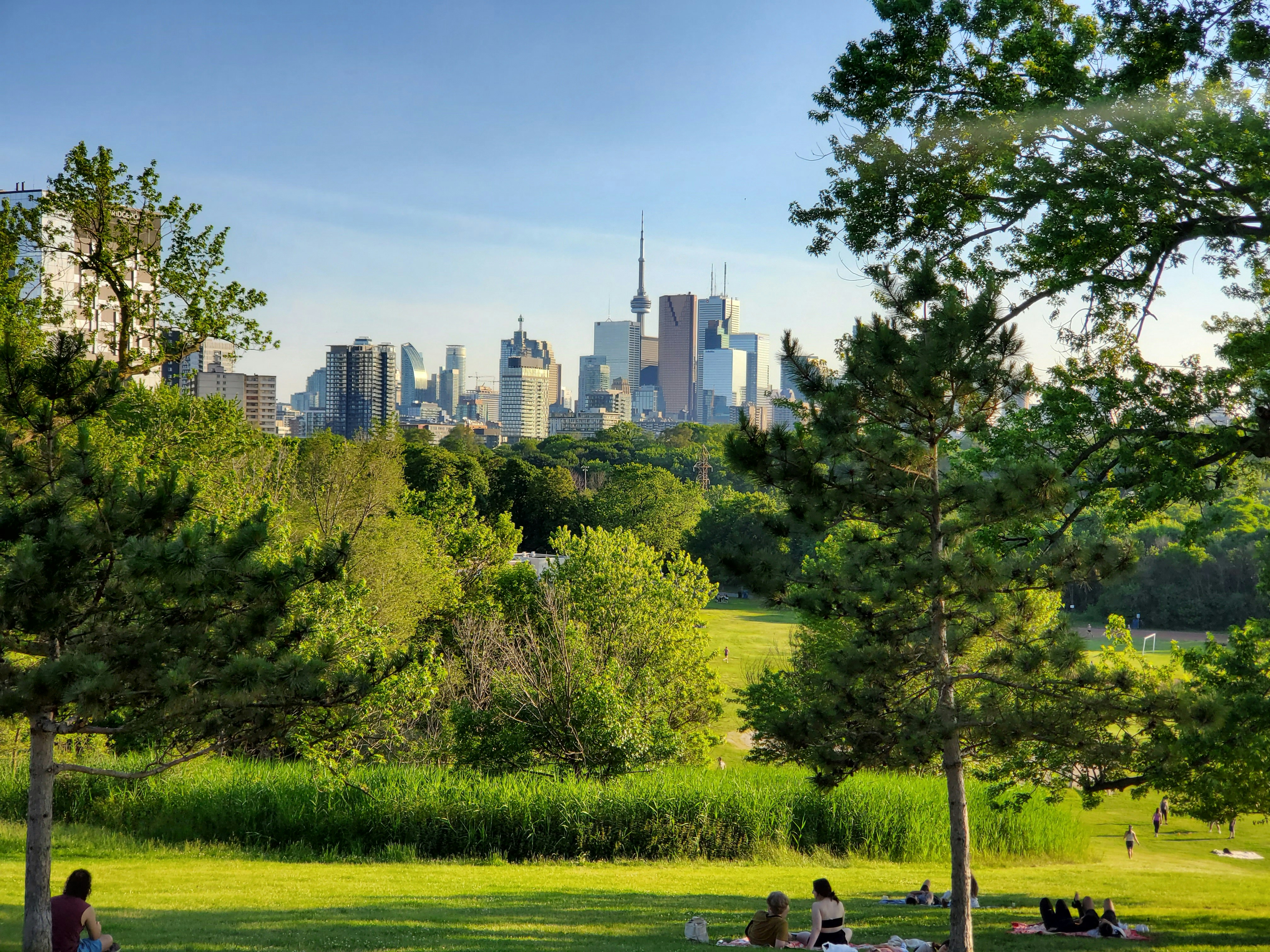
Toronto is polished but relaxed. It doesn’t try too hard. I always tell clients to skip the obvious dinner near the CN Tower. Walk a bit.
Go to Bar Raval and sit at the bar. It feels like you’re inside a piece of art. Catch sunset from Riverdale Park East. Locals bring wine and just sit on the hill. It sets the tone for the cruise: urban, but connected to the water. You are starting your journey in this global city without the chaos of New York or London. It eases you into the voyage.
Day 3: Niagara Falls, Port Colborne
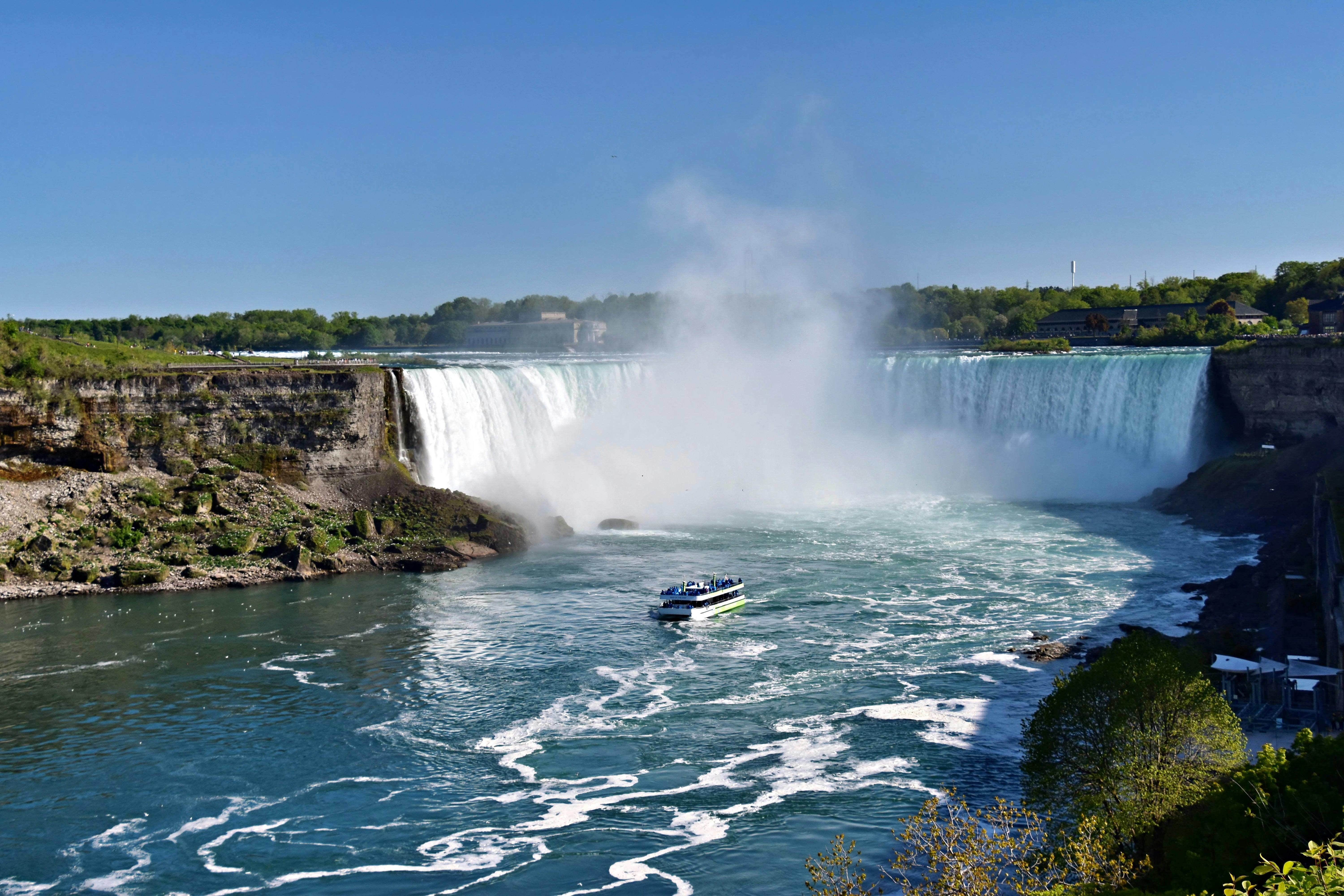
Yes, it’s iconic. Yes, it’s busy. But here’s what most visitors miss—hiking Niagara Glen. It’s quiet, wooded, and you see the power of the river without the crowds.
Or do a wine tasting in Niagara-on-the-Lake and skip the main strip entirely. This stop is about contrast—the raw power of nature and then the calm vineyard countryside.
Day 4: Cleveland

Inside West Side Market
Cleveland surprises people. Every time.
Sunset at Edgewater Park feels almost coastal, especially when the light hits Lake Erie just right. Wander through West Side Market—even if you’re not hungry, go inside. The arched ceilings, tiled floors, and historic clock tower make it feel like you stepped into an old European market hall.
Grab lunch at Larder Delicatessen. It feels like you’ve found something on your own.
This stop is a reminder that Great Lakes cities have history, architecture, and culture that most people completely overlook.
Day 5: Detroit
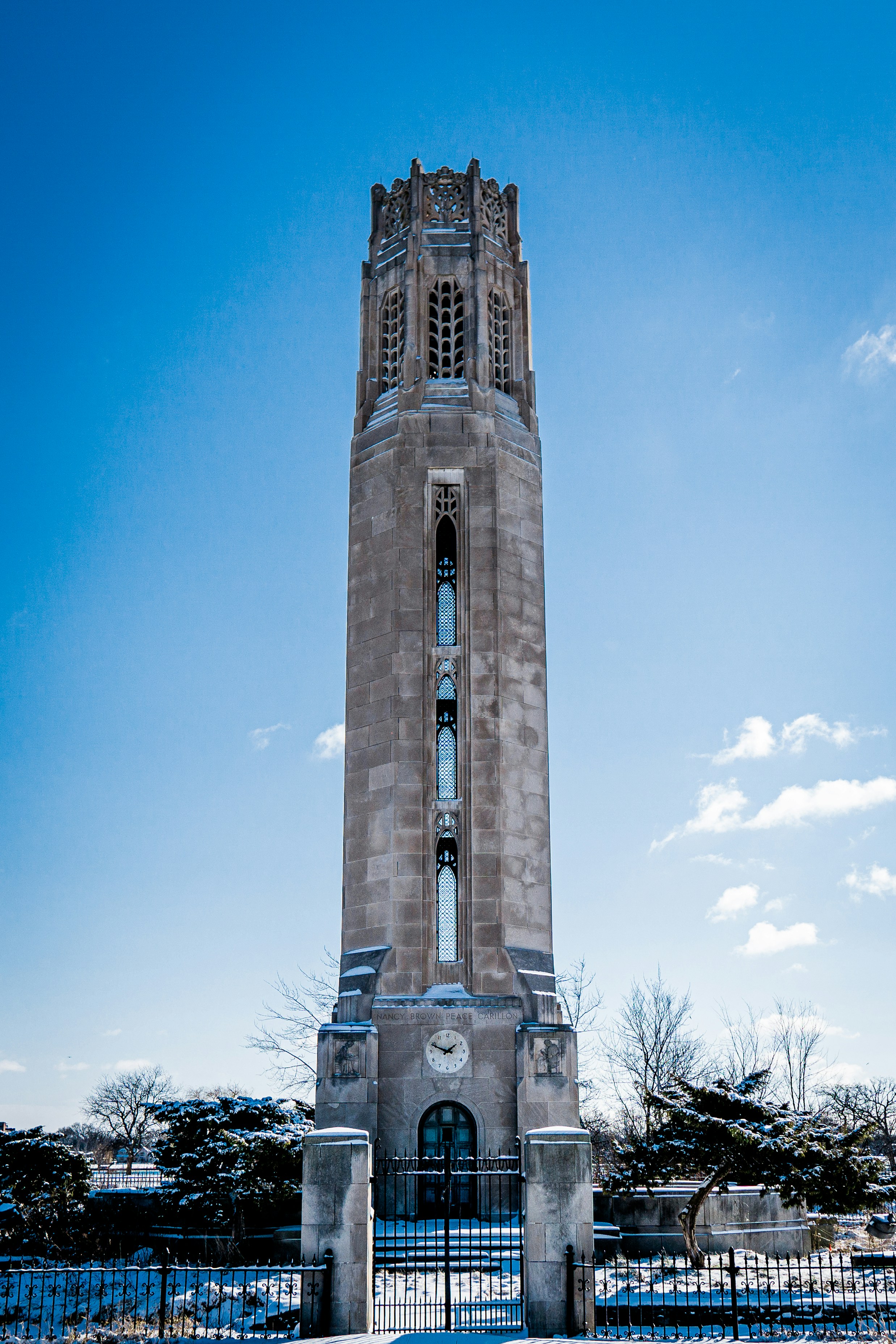
Belle Isle, Detroit
Detroit has grit, but in a good way. It’s creative, rebuilding, and proud of its story.
Walk through Eastern Market for murals, food vendors, and a real sense of community. Spend some time on Belle Isle—the views back toward the Detroit skyline are underrated, and the James Scott Memorial Fountain gives it that grand, almost European feel right in the middle of the river.
Architecture lovers will notice the Art Deco details throughout downtown, especially inside the Guardian Building. Dinner at Selden Standard is simple, seasonal, and consistently excellent.
This is usually the stop where clients say, “I didn’t expect to like Detroit this much.” And that’s exactly why it works so well on this itinerary.
Day 6: The rocky shoreline of Alpena
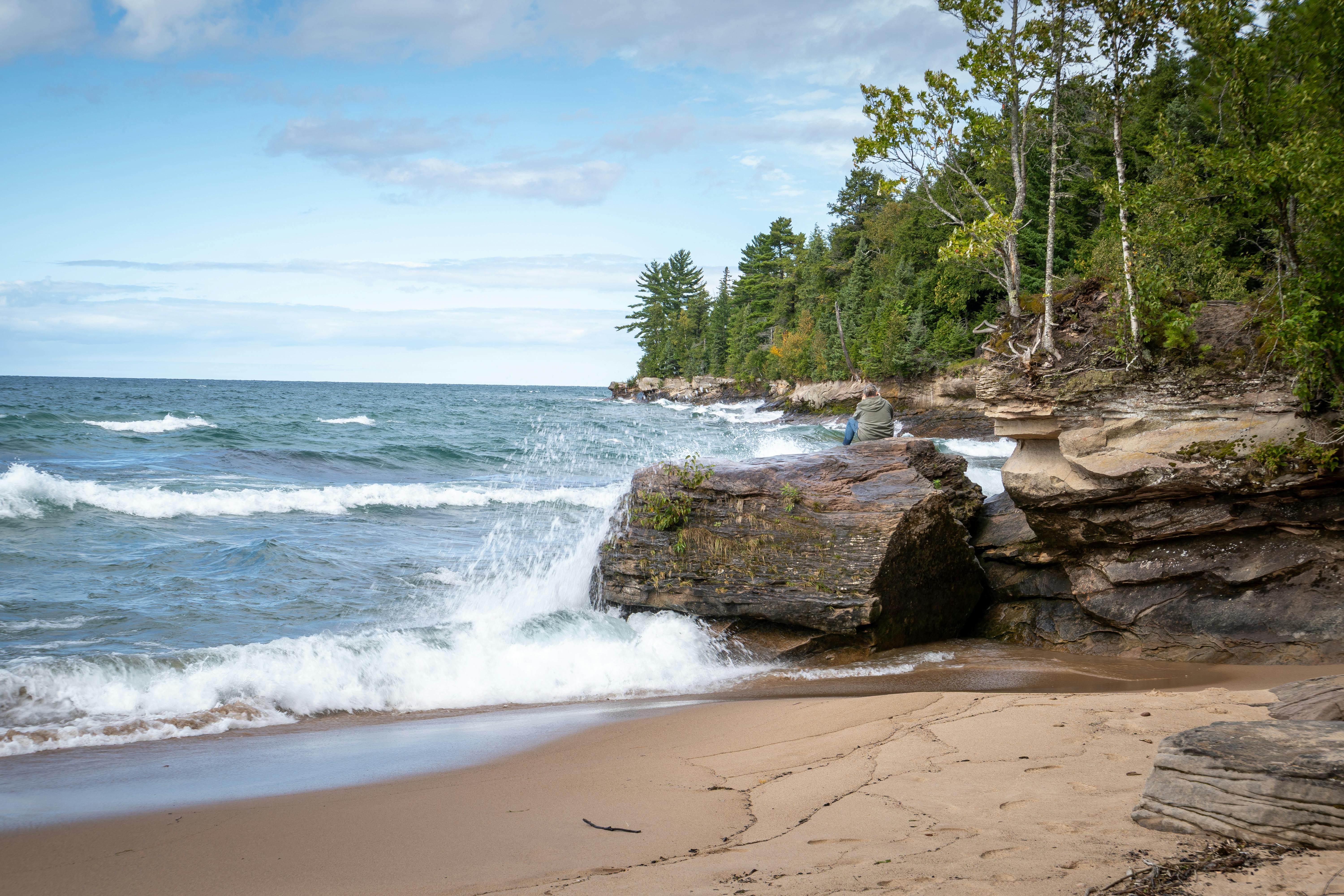
Now it starts to slow down. Rocky shoreline. Clear water. Fewer people. If timing allows, explore Rockport State Recreation Area—limestone, fossils, big sky. This is the shift from cities to the wilderness.
Day 7: Algoma & the Door Peninsula
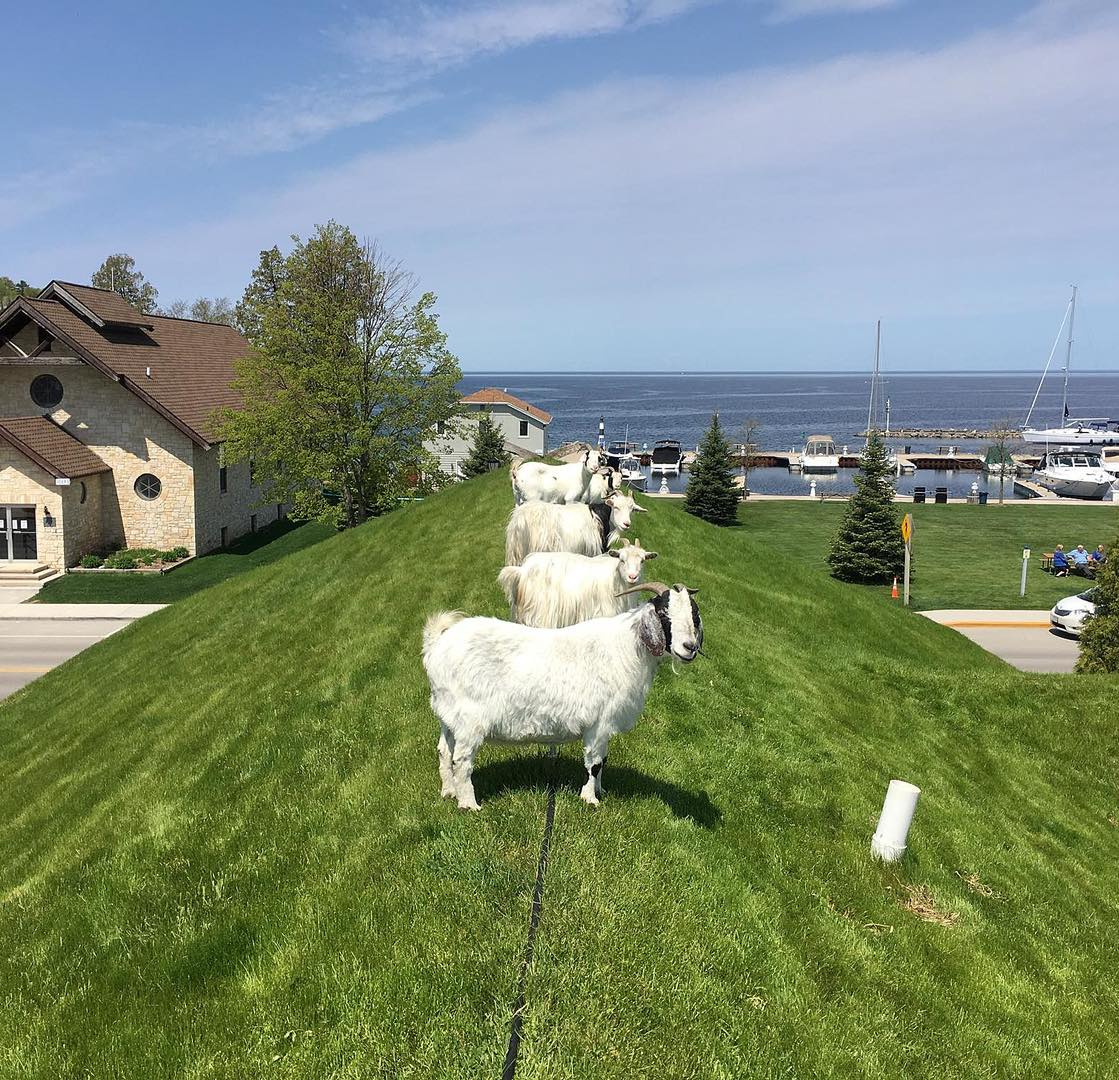
Al Johnson's Swedish Restaurant
Algoma is one of those small Great Lakes harbor towns that feels authentic the moment you arrive. Fishing boats still come and go from the marina. The lighthouse marks the entrance to the harbor, and the pace here is noticeably slower than the bigger ports on this itinerary.
If you have time to venture out, this is your gateway to the scenic Door Peninsula—often called the “Cape Cod of the Midwest.” The drive north is beautiful, passing cherry orchards, farm stands, and quiet shoreline villages that sit between Green Bay and Lake Michigan.
One quirky local stop that travelers love is Al Johnson’s Swedish Restaurant, famous for the live goats grazing on its grass roof. It’s about an hour’s drive from Algoma into the heart of Door County, but the drive itself is part of the experience as the road winds through small harbor towns and orchards that make this region so charming. If you go, order the Swedish pancakes with lingonberries—it’s the classic dish and part of what made this spot a Midwest legend.
Even if you stay closer to port, Algoma itself offers a relaxed stop to walk along the lakeshore, watch charter boats heading out for salmon fishing, and enjoy the quiet character of a working Great Lakes community. This is one of those ports where slowing down and simply taking in the lake life is part of the experience.
Day 8: The magic of Mackinac Island
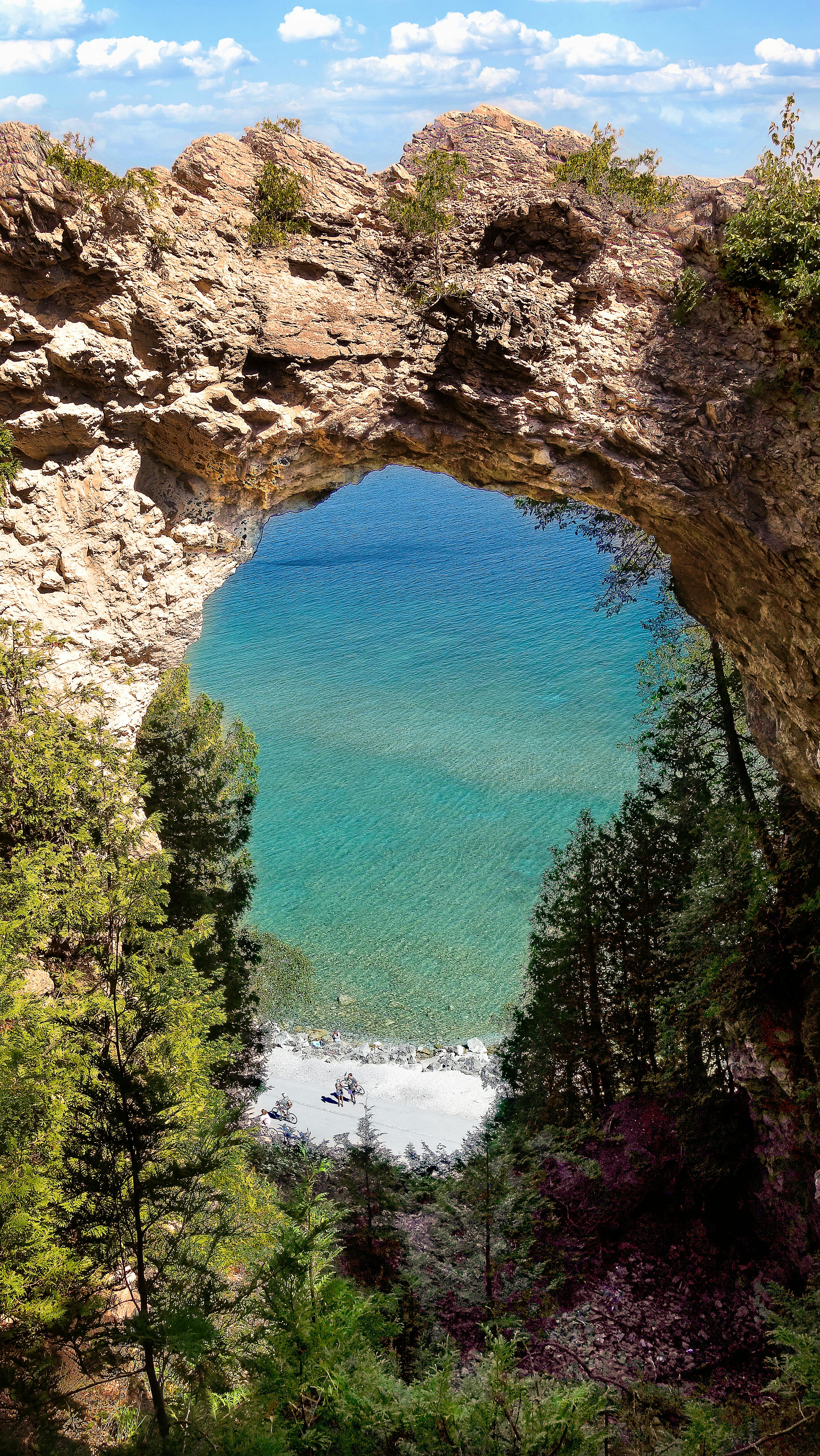
Arch Rock at Mackinac Island State Park
No cars. Just bikes and horse-drawn carriages. The second you step off the ship, it feels like time has slowed down.
Rent a bike early—before the ferry crowds arrive—and ride the full 8-mile loop around the island. The shoreline views back toward the Mackinac Bridge are wide open and peaceful, and you’ll pass quiet stretches that most day-trippers never see. Stop at Arch Rock, but also wander into the residential streets where the grand old summer cottages sit tucked behind lilac hedges.
Grab a drink at The Pink Pony for the classic waterfront view, but don’t rush off the island too quickly. Mackinac is best experienced slowly—fudge shops, porch swings, and that slightly nostalgic feeling you don’t get in many places anymore. This is one of those stops where simplicity is the luxury.
Day 9: Fathom Five National Marine Park
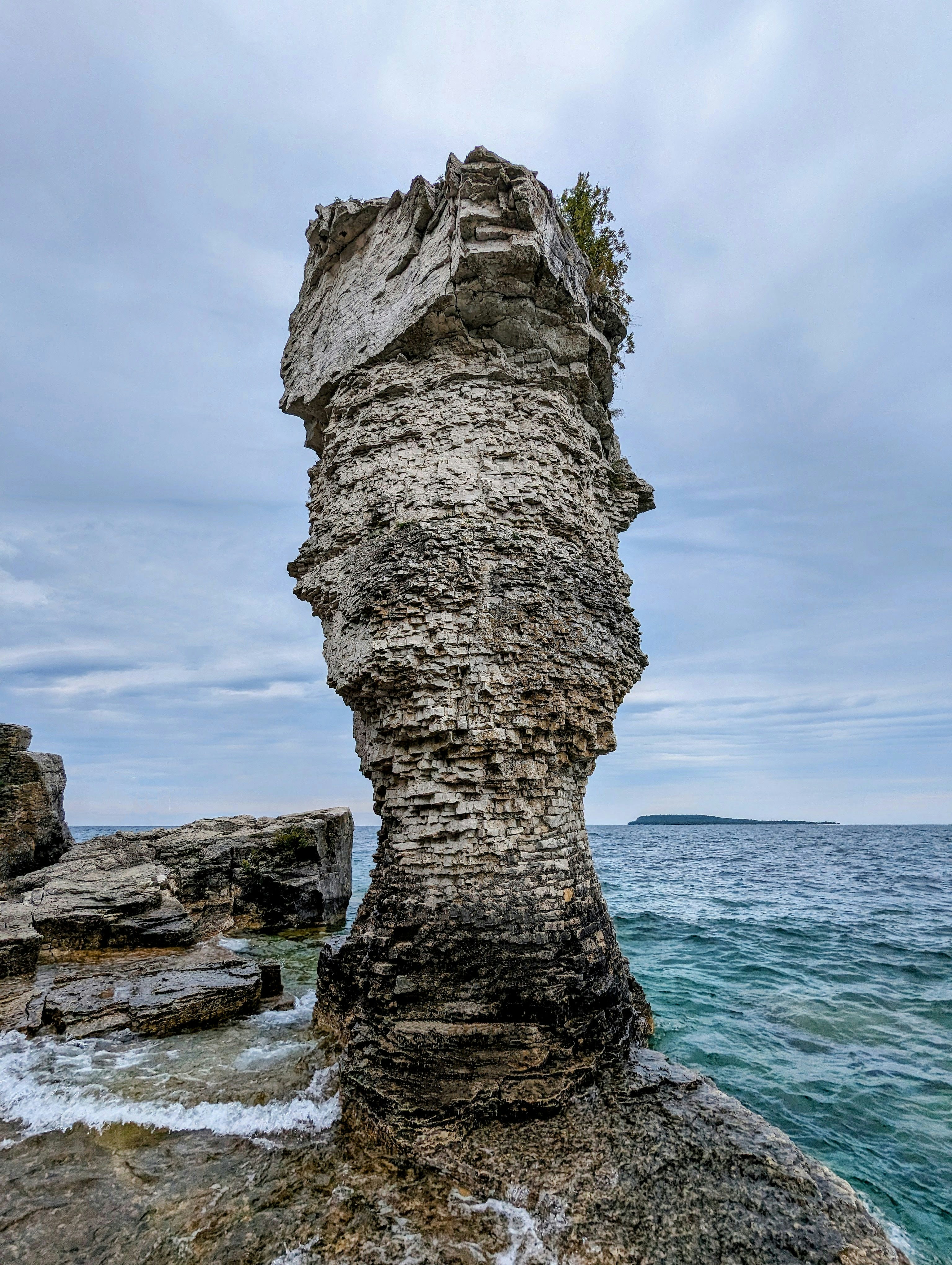
Flower Pot Island
This is where the water turns impossibly clear and the landscape starts to feel dramatic.
If you visit Flowerpot Island, walk past where most people stop for photos—the back trails are quieter and give you that windswept, Georgian Bay feeling. The shipwrecks below the surface are part of what makes this park so special. On a calm day, you can sometimes see straight down into the water.
It’s peaceful in a different way than the city stops. Fewer buildings, more rock and pine and open sky. This is when you really start to understand why seeing the Great Lakes by ship feels so different than driving past them.
Day 10: Georgian Bay, Killarney
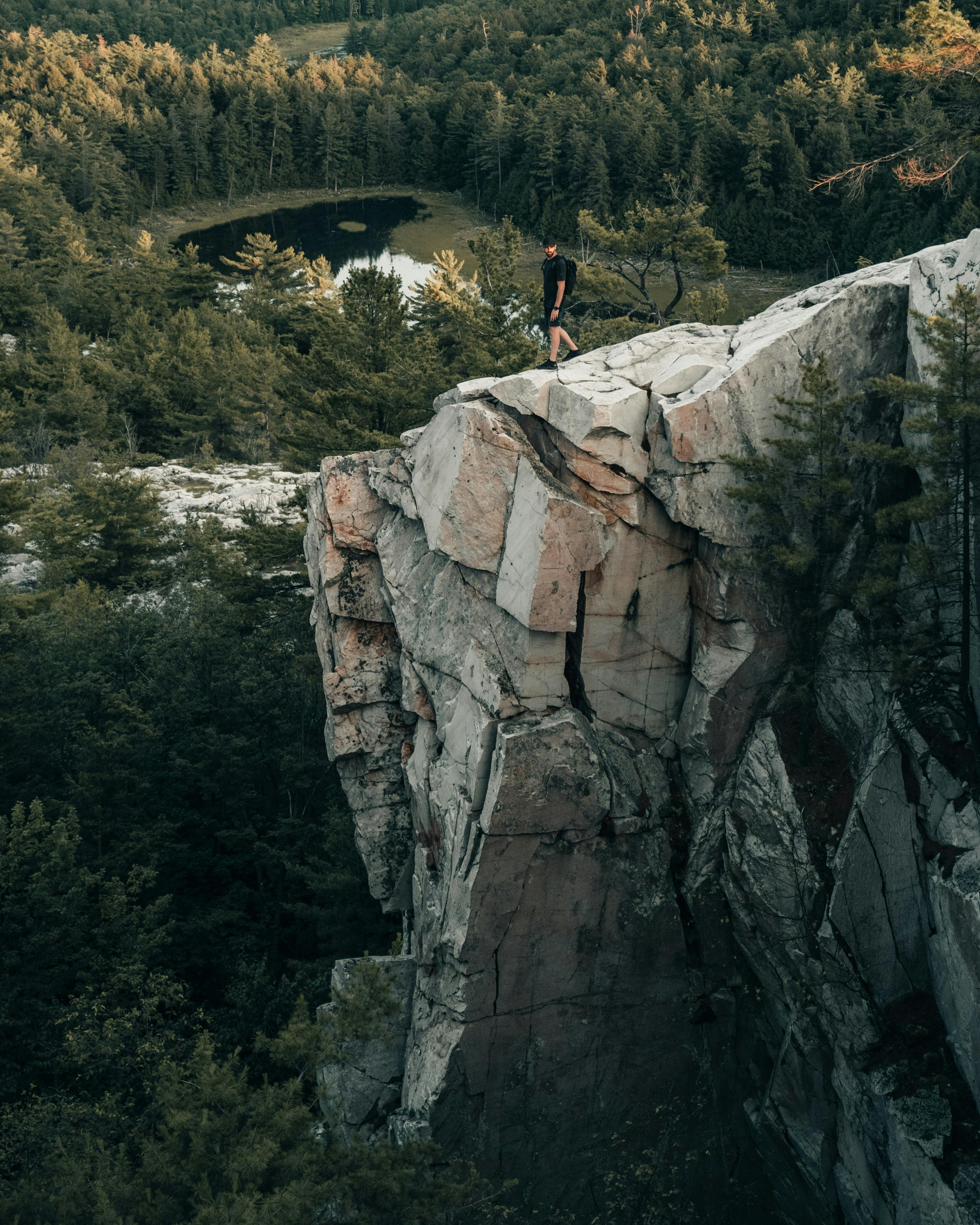
Killarney, Ontario
Pink granite, wind-shaped pines, and that wide-open Georgian Bay light that photographers love.
While near the village of Killarney, grab fish and chips at Herbert Fisheries—simple, no-frills, and exactly right after a morning outside. If timing allows, even a short walk into Killarney Provincial Park gives you a glimpse of the La Cloche Mountains and that white quartzite ridge line that feels almost northern and alpine.
This stop feels rugged but peaceful—the kind of landscape that reminds you how much untouched shoreline still exists in Canada.
Day 11: Frazer Bay
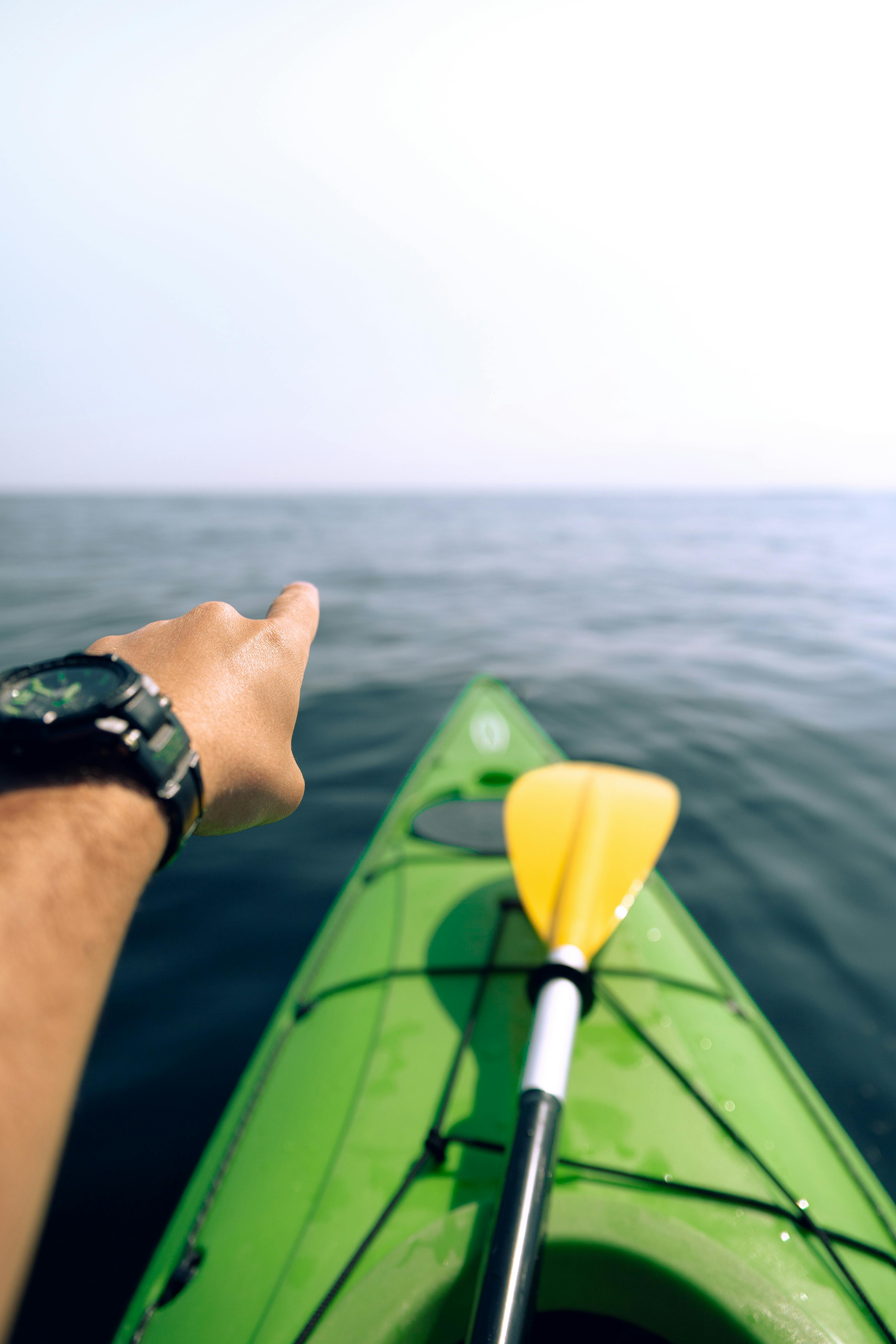
Frazer Bay is quiet in a way most travelers rarely experience anymore. There are no big attractions here—and that’s exactly the point. It’s sheltered water, rocky shoreline, wind-shaped pines, and the kind of stillness where you hear loons calling across the bay. This is also an ideal stop for kayaking—the protected inlets and calm water make it approachable, and being that close to the granite shoreline gives you a completely different perspective than viewing it from the ship.
Early morning on deck with coffee feels different here—softer, slower, almost private-yacht quiet. This is the reset day, and it’s something you simply can’t replicate by car.
Day 12: Sault Ste. Marie
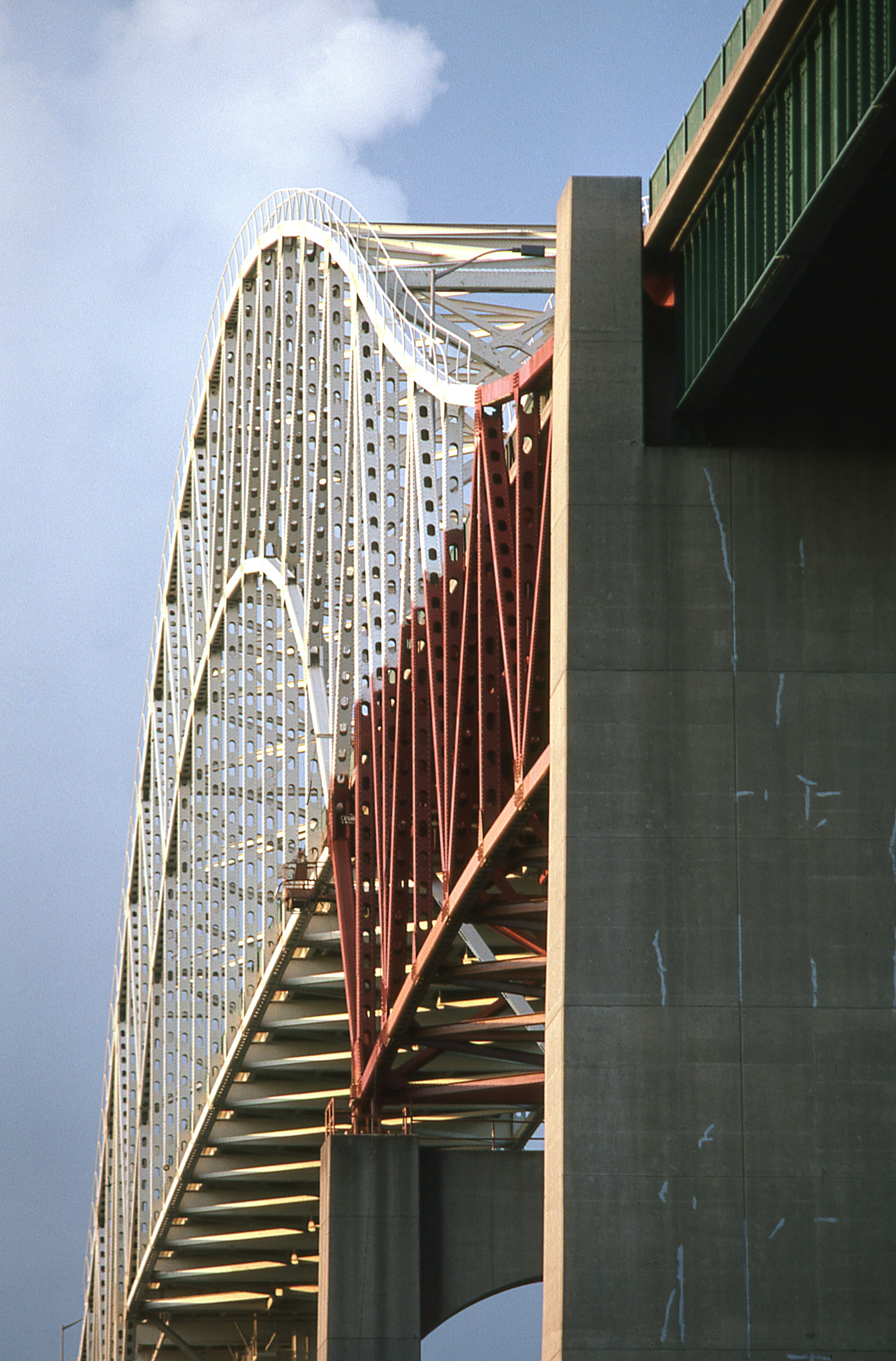
Bridge from Canada to USA at Sault Sainte Marie
Sault Ste. Marie isn’t just another port—it’s the gateway to Lake Superior.
This is where the Great Lakes system physically changes. Watching ships move through the Soo Locks is surprisingly powerful—massive freighters rising and lowering between Lake Huron and Superior, connecting the entire inland sea network. There’s real scale and history here.
If you have time, walk or cycle part of the Hub Trail along the St. Marys River. It gives you that mix of industry, forest, and open water that defines Northern Ontario. The river feels alive—steady currents, working ships, deep channels.
To me, this is the turning point of the itinerary. After this, Lake Superior takes over—bigger horizons, colder water, a more dramatic shoreline. And you feel it.
Day 13: Thunder Bay
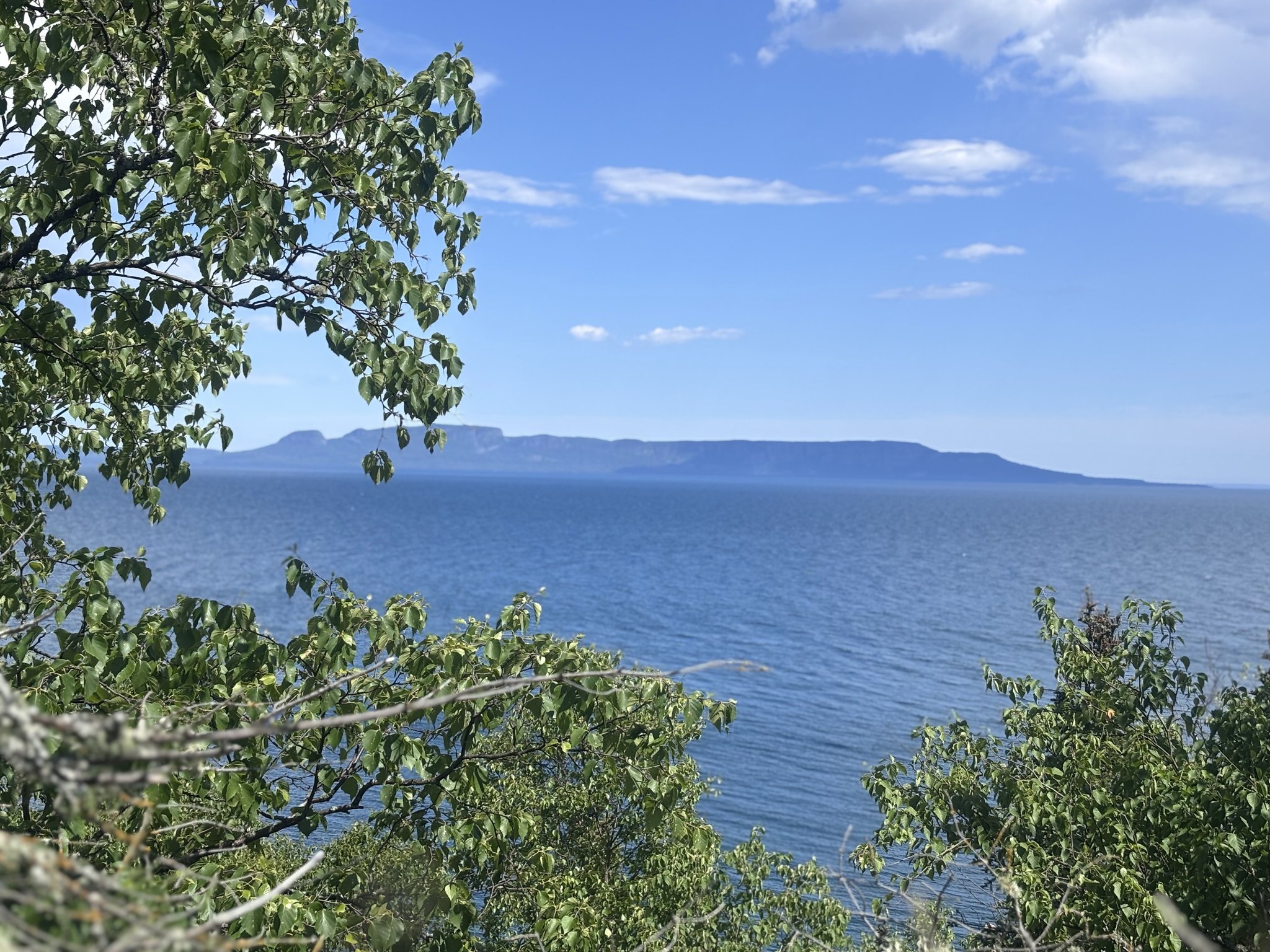
The Sleeping Giants from the Welcome Islands
Arriving in Thunder Bay means you’ve reached the true scale of Lake Superior. The water feels colder, the horizons wider, and the rugged outline of Sleeping Giant Provincial Park stretching across the lake reminds you just how powerful this place really is.
Thunder Bay has a proud northern character shaped by shipping, forestry, and generations of cultures that built the city along this working harbor. If you want to explore a bit, you can rent an e-bike right from the Delta Hotels by Marriott Thunder Bay at the marina and cruise the waterfront path into the downtown core—it’s an easy way to see more of the city in a short amount of time.
For a dependable local favorite, stop at Rooster’s Bistro and order the Monte Cristo—indulgent in the best way and exactly the kind of meal that feels right after a cool morning along Superior’s shoreline. Watching the big freighters move through the harbor gives you a sense of how connected these lakes really are—and how important Thunder Bay has been to that story for more than a century.
Day 14: Duluth

Downtown Duluth, MN
Duluth feels like the natural finale to this journey across the Great Lakes. The city climbs up the hillside above Lake Superior, giving it sweeping views of the water you’ve been traveling to for the past two weeks.
Spend some time walking around Canal Park, where you can watch massive freighters pass beneath the famous Aerial Lift Bridge as they enter the harbor. It’s one of those places where people naturally stop, lean on the railing, and just watch the lake for a while. The Lakewalk runs right along the shoreline and is perfect for a relaxed walk with constant views of Superior.
As someone who lives in Thunder Bay, I make the drive down to Duluth fairly regularly. It’s only about 3.5 hours, making it one of the closest larger U.S. cities for shopping, restaurants, and events. Because of that, it’s a place I’ve explored many times—and seeing it from the perspective of arriving by ship instead of by car is a completely different experience.
If you have time before heading home, grab a meal at Duluth Grill—a local favorite known for hearty breakfasts and locally sourced ingredients.
After days of quiet islands, historic ports, and remote stretches of shoreline, Duluth feels both lively and fitting. You end the journey still on Lake Superior, watching the same freighters that connect all the places you’ve just visited—a reminder that these lakes truly function as one enormous inland sea.
Need to know
Cruising the Great Lakes is very different from ocean cruising. The pace is quieter, the scenery constantly changes, and much of the magic happens while you’re sailing between ports.
Pack layers, even in summer. The weather across the lakes can shift quickly, sometimes even within the same day. Mornings on deck can feel crisp, especially once you reach Lake Superior, where cool lake air is common even in July and August. A light jacket, sweater, and comfortable walking shoes will likely be your most-used items on the trip.
Each lake has its own personality. Early in the journey, you’ll spend time on Lake Ontario and Lake Erie, which tend to feel a bit calmer and more developed along the shoreline. As the voyage continues through Lake Huron and into Georgian Bay, the scenery becomes more rugged, dotted with granite islands and wind-shaped pines.
Then comes Lake Superior. Superior is colder, deeper, and more dramatic than the others. Even on calm days, there’s a sense of scale that feels almost ocean-like. By the time the ship approaches places like Thunder Bay and Duluth, you really understand why it’s often called the most powerful of the Great Lakes.
Expect to spend time outdoors. Many travelers find themselves gravitating to the open decks throughout the voyage. The shorelines are constantly changing—from city skylines to quiet fishing harbors to remote islands that can’t be reached by road. Sunrise and sunset over the water are often highlights of the day.
This cruise attracts curious travelers. Guests tend to be people who enjoy learning about places, landscapes, and history. It’s less about nightlife and more about experiencing the unique character of each port, from historic locks and working harbors to remote stretches of wilderness.
What makes this itinerary special is that you truly see the Great Lakes as a connected inland sea system. By the end of the journey, after sailing through canals, islands, and some of the largest freshwater lakes on earth, you start to understand just how vast and varied this region really is.
The Great Lakes Collection Cruise is one of the most unique cruise itineraries in North America, and it’s currently only offered by Viking Cruises. Instead of tropical beaches and resort ports, this journey explores the inland seas of the Great Lakes—connecting historic cities, quiet harbor towns, and remote natural landscapes that most travelers never see.
Because only a small number of ships are allowed to operate in the Great Lakes each season, departures are extremely limited. These sailings often sell out years in advance, and many guests book the next available season while they’re still on board. In fact, many departures are already booking into 2028, which speaks to just how popular and unique this itinerary has become.
For travelers looking for something different from the typical cruise experience—quieter, scenic, and deeply connected to the landscape—this route has quickly become one of the most sought-after voyages in North America.


Travel Advisor
Heather Genik

Heather Genik

Get in touch with Heather Genik
Did you like this guide? Reach out to customize and book your own experience. Or, just to chat about travel in general.
For more travel inspiration and insider recommendations, check out our Cruises page.