

Curator’s statement
Iceland is the only destination I’ve seen consistently transform people—not just impress them. There’s something about being surrounded by forces completely outside your control—glaciers, volcanic landscapes, unpredictable weather, auroras that appear on their own terms—that strips away the noise and forces you to be fully present. I’ve guided groups here and watched people arrive with checklists and leave with perspective. It’s the place I keep coming back to, and the one I’m most passionate about designing experiences for.
The Fora Difference
Book with Ariadna Garduno Martinez to access exclusive perks and experiences on your trip.

Killer perks
Free upgrades, spa credits and more—we got you

Personalized recs
Customized travel planning for your style

Insider knowledge
Expert advice from people who’ve actually been there
Where to stay in Iceland
Unlock perks by contacting Ariadna Garduno Martinez to book your trip.
Things to do in Iceland
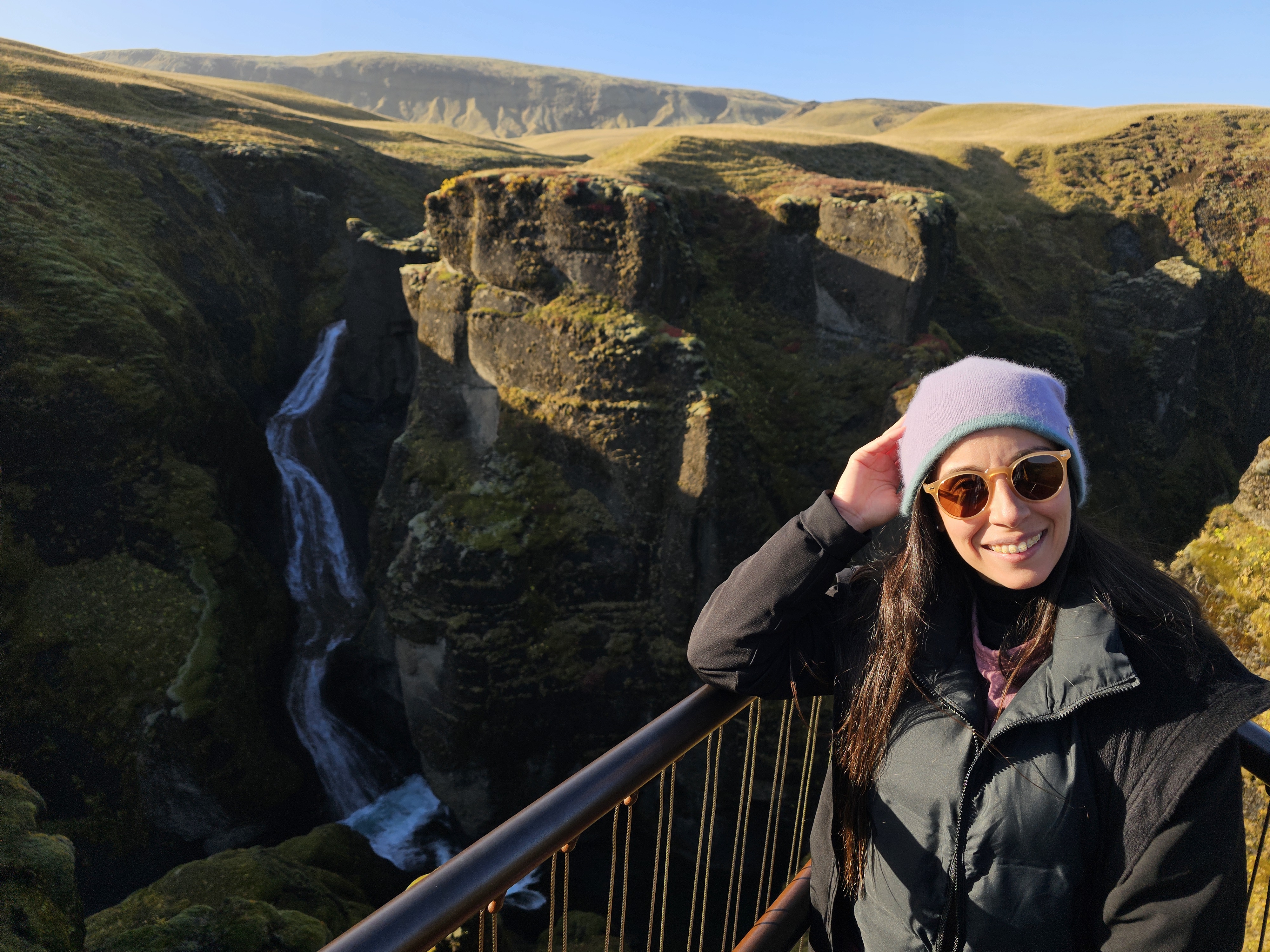
Fjaðrárgljúfur Canyon walk
Glacier hiking on Sólheimajökull
Walking on millennia-old ice is something you can’t fully describe until you’ve done it. The silence, the blue formations, the sheer scale of it—it rewires something in you.
Ice caves in Vatnajökull
Only accessible in winter, these natural cathedrals of crystalline ice change every single year. No two visits are ever the same, and the blue light inside is unlike anything else on the planet.
Chasing the Northern Lights
This isn’t a passive experience—it’s a strategy. Monitoring KP index, cloud cover, solar activity, and positioning yourself in the right spot at the right moment makes the payoff exponentially more rewarding.
Snorkeling at Silfra
Swimming between the North American and Eurasian tectonic plates in glacial water with 100-meter visibility is as surreal as it sounds. It’s cold, it’s otherworldly, and it’s completely unforgettable.
Þórsmörk Valley hiking
Reachable only by super Jeep or on foot, this glacier-framed valley is where serious hikers come to feel truly remote. The connection point to the Laugavegur trail makes it one of the great trekking experiences in the world.
Fjaðrárgljúfur Canyon Walk
Walking the rim of this 2-million-year-old canyon at sunrise, with mist rising from the river below, is one of those moments that makes you forget you were ever in a hurry. Raw, quiet, and completely humbling.
Zodiac tour at Jökulsárlón Glacier Lagoon
Navigating between floating icebergs while seals rest nearby is cinematic in the most literal sense—several major films have been shot here. Right next door, Diamond Beach will stop you completely.
Whale watching from Húsavík
Considered the whale-watching capital of Europe, Húsavík offers some of the highest sighting rates on the island. Humpbacks, minkes, and white-beaked dolphins are regular visitors in summer.
Hveradalir Geothermal Valley
Hidden in the Kerlingarfjöll highlands, Hveradalir is one of Iceland’s most dramatic and least-crowded geothermal areas—steaming vents, boiling mud pools, and vivid mineral colors set against a backdrop of snow-capped mountains. Getting there requires effort, which is exactly why it feels like a discovery every single time.
Hjörleifshöfði Inselberg at golden hour
This ancient volcanic formation rising from the black sand plains near Vík is short to climb but massive in payoff. The panoramic view across the south coast—glaciers behind you, Atlantic in front—is the kind of thing you photograph and still can’t believe you saw.
Places to eat & drink in Iceland
Monkeys Food & Wine (Reykjavik)
A Nikkei restaurant in downtown Reykjavik serving small plates that blend Peruvian and Japanese culinary traditions using fresh Icelandic ingredients—a cuisine born when Japanese immigrants settled in Peru in the late 19th century and fused two culinary worlds into something completely new. The fact that this level of creativity exists in the middle of the North Atlantic is exactly what makes Reykjavik endlessly surprising. Book ahead—this place fills up fast.
Bæjarins Beztu Pylsur: The famous hot dog stand (Reykjavik)
This is Iceland’s most iconic street food, and it costs almost nothing. Order it “with everything”—remoulade, raw onion, crispy fried onion, ketchup, and mustard—and eat it standing outside like a local. Bill Clinton did. You should, too.
Hákarl at Íslenski Barinn (Reykjavik)
It smells like ammonia, it tastes like a challenge, and yes, you should absolutely try it. Íslenski Barinn serves hákarl—fermented, rotten shark—in small cubes alongside a shot of Brennivín schnapps, the traditional Icelandic chaser. This is the right setting to try it: a warm, buzzy gastropub where the staff won’t judge you for making a face.
Slow-cooked lamb at Íslenski Barinn (Reykjavik)
Icelandic sheep roam free across volcanic highlands all summer, eating wild herbs and grasses, which gives the lamb a flavor unlike anything you’ll find elsewhere. Íslenski Barinn serves a slow-cooked lamb shank with mashed potatoes, caramelized red cabbage, rhubarb jam, and beer sauce—hearty, deeply Icelandic, and worth every króna.
Midgard Base Camp Restaurant (Hvolsvöllur)
Located near Þórsmörk on the South Coast, Midgard’s kitchen focuses on local Icelandic produce—pasture-raised lamb, freshly caught fish, and craft beers from regional breweries. Their burger made with local Icelandic beef is the perfect reward after a day hiking the valley—one of those meals that just tastes better after you’ve earned it.
MAR Seafood (Reykjavik)
Located in the heart of Reykjavík, MAR Seafood celebrates Iceland’s rich culinary traditions through fresh, locally-sourced seafood, with a focus on innovative fish pan dishes. The halibut and arctic char are standouts, the atmosphere is warm and unpretentious, and the seafood soup with coconut cream and sourdough bread is a meal in itself. Reservations recommended.
Skyrland (Reykjavik)
The place is dedicated entirely to skyr—Iceland’s thick, protein-rich dairy staple that’s been part of the Icelandic diet for over a thousand years. Try it in its classic form or in any of the creative combinations they serve. It’s simple, authentic, and genuinely delicious.
Skúli Craft Bar (Reykjavik)
Skúli Craft Bar has 14 taps, most of which are Icelandic, with a strong focus on Borg Brewery, the highest-rated brewery in Iceland.
Fun fact: beer was actually illegal in Iceland until March 1, 1989—the country had maintained prohibition for decades while wine and spirits were eventually allowed back in. Today, every pint here feels like a small celebration of that hard-won freedom. Order one and appreciate it accordingly.
Need to know
The weather is the plan. Iceland’s climate doesn’t care about your itinerary. You can have sun, rain, wind, and snow in the same afternoon—and the wind is the real protagonist. Come mentally prepared to adapt, and pack accordingly. A good layering system and a windproof outer shell are non-negotiable.
You need a 4x4 in winter. If you’re traveling between October and April, or venturing off the Ring Road at any time of year, a small 2WD car is not enough. Don’t cut corners here—road conditions can turn extreme fast, and Iceland’s F-roads are legally restricted to 4x4 vehicles only.
Iceland is cashless. You can pay by card virtually everywhere—restaurants, gas stations, remote parking lots, even public bathrooms. Visa and Mastercard work without issues. You likely won’t need cash at all.
The Blue Lagoon requires advance booking. It’s not a spontaneous stop. Reserve your slot weeks ahead, especially in peak season, or you simply won’t get in.
Auroras are never guaranteed. They require darkness, clear skies, and solar activity all aligning at once. Travel between October and March for the best chances, monitor the KP index and cloud cover daily, and go in with patience rather than expectations.
Respect the landscape—seriously. Iceland’s nature is fragile, and the authorities take it seriously. Never drive off-road, stay on marked trails, and always follow ranger and guide instructions. Fines are steep and the damage to the terrain can last decades.
ETIAS is coming. Iceland is part of the Schengen Area, and the new ETIAS electronic travel authorization will soon be required for visa-exempt travelers, including Americans. It’s not a visa—it’s a quick online process—but verify the current requirements before you travel.
The sun doesn’t set in summer. In June and July, it stays light essentially around the clock. Bring a sleep mask if you’re sensitive to light, and don’t be surprised if you look at your watch at 11 p.m. and it feels like 4 in the afternoon.


Travel Advisor
Ariadna Garduno Martinez

Ariadna Garduno Martinez

Get in touch with Ariadna Garduno Martinez
Did you like this guide? Reach out to customize and book your own experience. Or, just to chat about travel in general.
For more inspiration and insider recommendations, visit our Iceland page.