
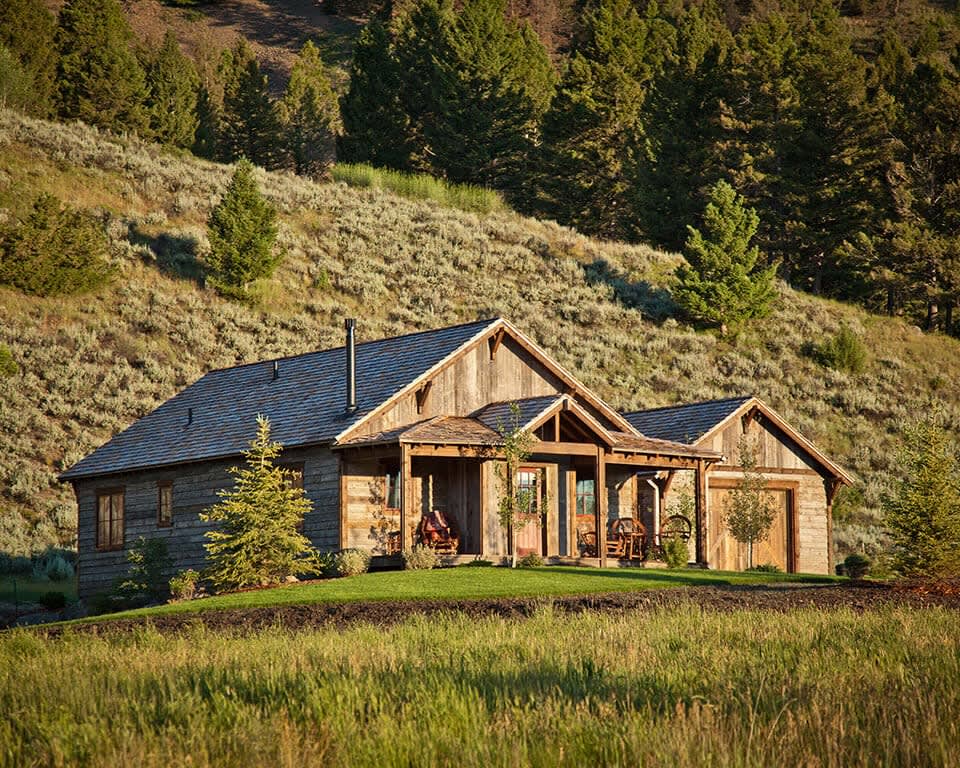


Curator’s statement
I can tell you right now that Lofoten isn’t just a place you visit—it’s a landscape that imprints itself on your soul, especially when you see it through your children’s eyes. I immediately fell in love with how the sheer, dramatic mountains meet the turquoise water right next to charming red rorbuer cabins where my family and I felt completely at home. This archipelago offers the perfect blend of jaw-dropping, raw arctic scenery and accessible adventures that make for truly unforgettable family-bonding moments.
The Fora Difference
Book with Hans Christian Berge to access exclusive perks and experiences on your trip.

Killer perks
Free upgrades, spa credits and more—we got you

Personalized recs
Customized travel planning for your style

Insider knowledge
Expert advice from people who’ve actually been there
Where to stay
Unlock perks by contacting Hans Christian Berge to book your trip.
Day 1: Your Norwegian adventure
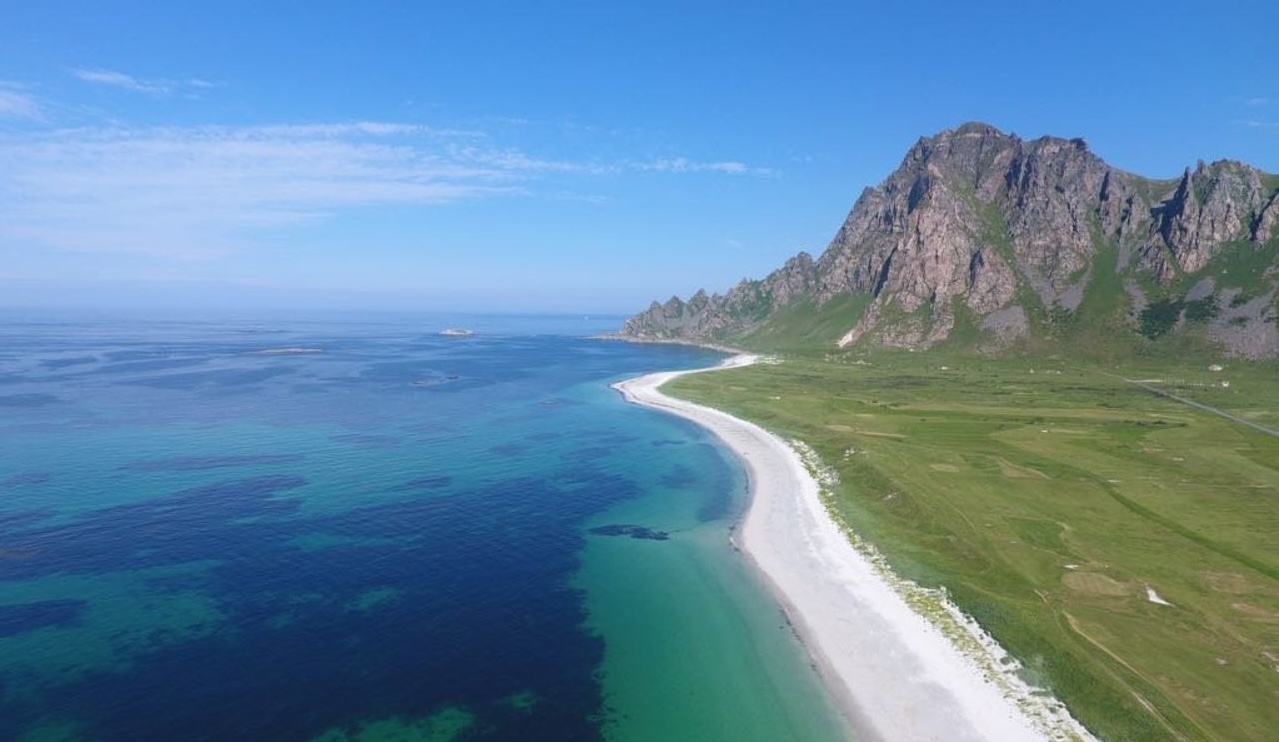
The beaches of Bleik
Your Norwegian odyssey begins at the top of Vesterålen, where the road ends and the wild Norwegian Sea begins. Landing at Harstad/Narvik Airport, you collect your rental car and drive north, the kids pressing noses to the window as snowy peaks and island-dotted fjords zip by. The route to Andenes is itself an adventure: you meander along the National Scenic Route Andøya, a roadway draped between moors and the sea. In summer, purple wildflowers and peat bogs line the asphalt. You pause at a sandy cove—perhaps the unique Bleik Beach—so the children can scamper on the dunes and you can all stretch your legs. Keep an eye out for sea eagles overhead and, if luck permits, a distant spout or fin in the waves foreshadowing the excitement to come.
By early evening you arrive in Andenes, the northernmost village of Andøya, greeted by its candy-striped lighthouse guarding the harbor. The family-owned Thon Partner Hotel Andrikken welcomes you with simple Scandinavian comfort—and after the long journey, nothing beats a hearty Norwegian dinner at a local eatery. Try out Arresten, a quirky restaurant in a former jailhouse, where you dine on fish soup in a cell-turned-dining room (a novelty sure to delight the kids).
Outside, the Arctic summer daylight refuses to fade. In June and July the sun literally never sets, hovering low and golden through the “night.” You might all take an after-dinner stroll along the harbor under the midnight sun, casting an otherworldly glow on the water. It’s a surreal bedtime backdrop—one you’ll get used to in the coming days—as you draw the blackout curtains and settle in for the night.
Day 2: Whale Safari & Andøya Adventures
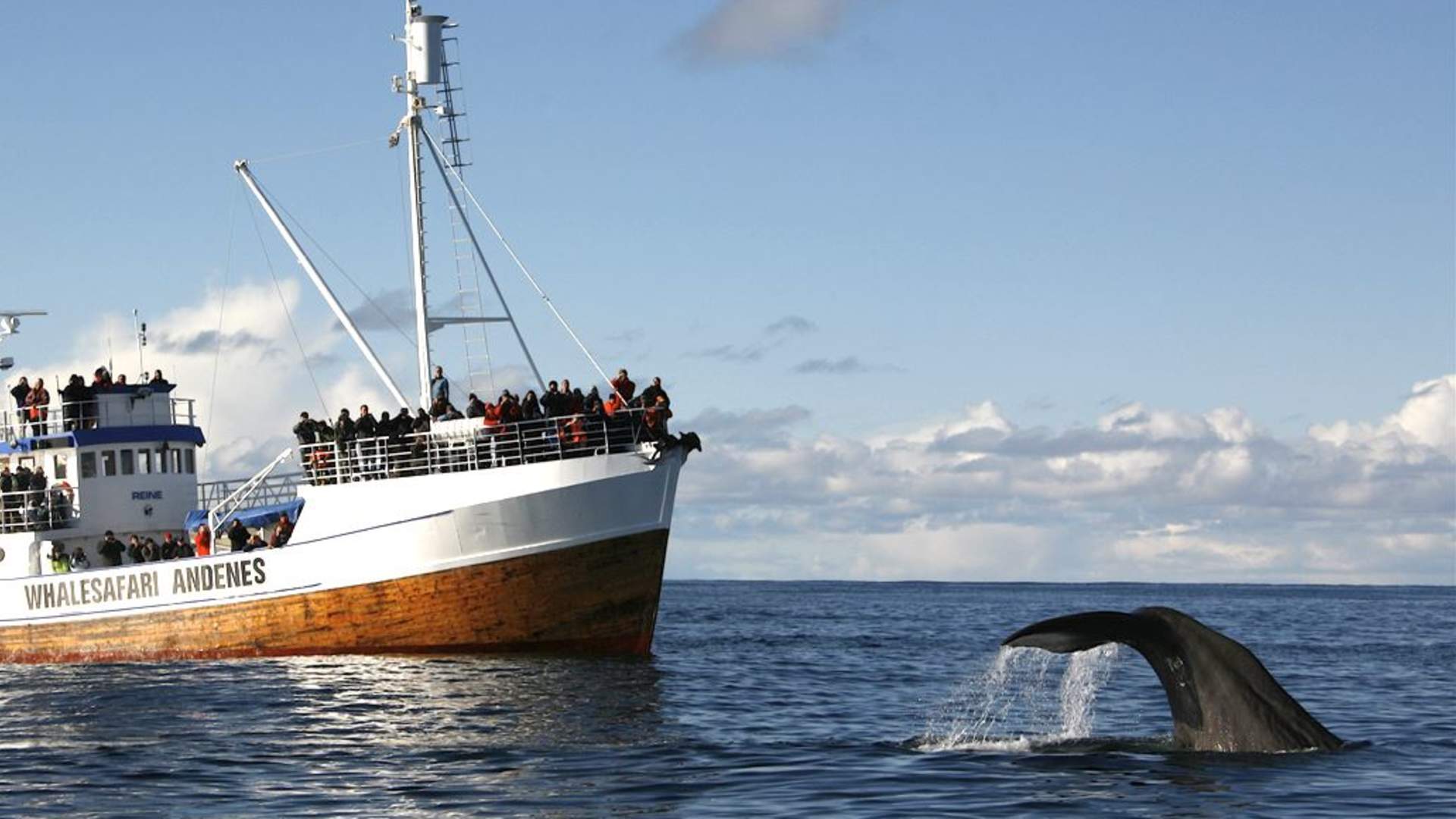
Whalesafari Andenes provides a unique experience
Morning in Andenes brings a special thrill—today you embark on a whale safari, a must-do highlight of this region. After a robust hotel breakfast, your family walks to the nearby Whale Center to meet the crew. The kids buzz with excitement as they don bright orange survival suits, practically bouncing at the prospect of seeing the giants of the deep.
Andenes is one of the world’s most reliable whale-watching spots—situated near the deep undersea canyon of Bleik, it offers summer sightings of several species. Boarding a sturdy vessel, you venture into the open North Atlantic. Salt spray kisses your cheeks and seabirds wheel overhead as the boat cuts through the blue. Before long, the captain cries, “Hval!” and everyone falls silent. A towering column of vapor rises in the distance—a sperm whale has surfaced! You edge closer, and suddenly a leviathan’s tail majestically flips into view and then disappears with a splash. The children’s eyes are as wide as saucers. The whale’s tail vanishes beneath the waves off Andenes, a moment of pure Arctic wonder that leaves the whole family breathless.
During these summer months, Andenes’ waters host sperm whales—the planet’s largest toothed whale—and if you’re lucky, playful orcas or even humpbacks might also make an appearance. Indeed, “summer is one of the best times to see whales such as orcas, sperm whales, and more” along the Vesterålen coast, so chances are high you’ll meet these gentle giants. For a few magical hours, you all share in the wonder of watching whales spout and dive, their tail flukes silhouetted against the endless horizon.
Back on shore, the excitement is still palpable. Warm up with mugs of rich hot chocolate at a harborfront café—a well-earned treat after the bracing sea air. The afternoon offers a choice of easygoing activities. One option is a visit to Spaceship Aurora, the interactive space museum at Andøya Space Center just outside town. Here, the kids can play trainee astronauts—launching model rockets, experimenting with a digital climbing wall, and learning about the Northern Lights and Norway’s role in space exploration. It’s a hands-on, brain-on experience that balances out the morning’s wildlife with a dose of science and imagination.
Alternatively, nature beckons for a slower pace: you could drive to the nearby village of Bleik and hike a short trail to Røyken viewpoint, where tufts of cotton grass sway in the breeze. From this cliff you can gaze down on sparkling surf and the pyramid-shaped islet of Bleiksøya—home to thousands of puffins. The children might spot the comical birds zooming back to their burrows with beaks full of fish.
Whether you spend the afternoon chasing space fantasies or puffin sightings, be sure to end day two with a simple pleasure: an evening on Andenes’ shoreline. Let the kids comb for seashells in the lingering light while you reflect on the day’s wonders—from the deep ocean to outer space—all under that never-setting sun.
Day 3: The Lofoten Islands
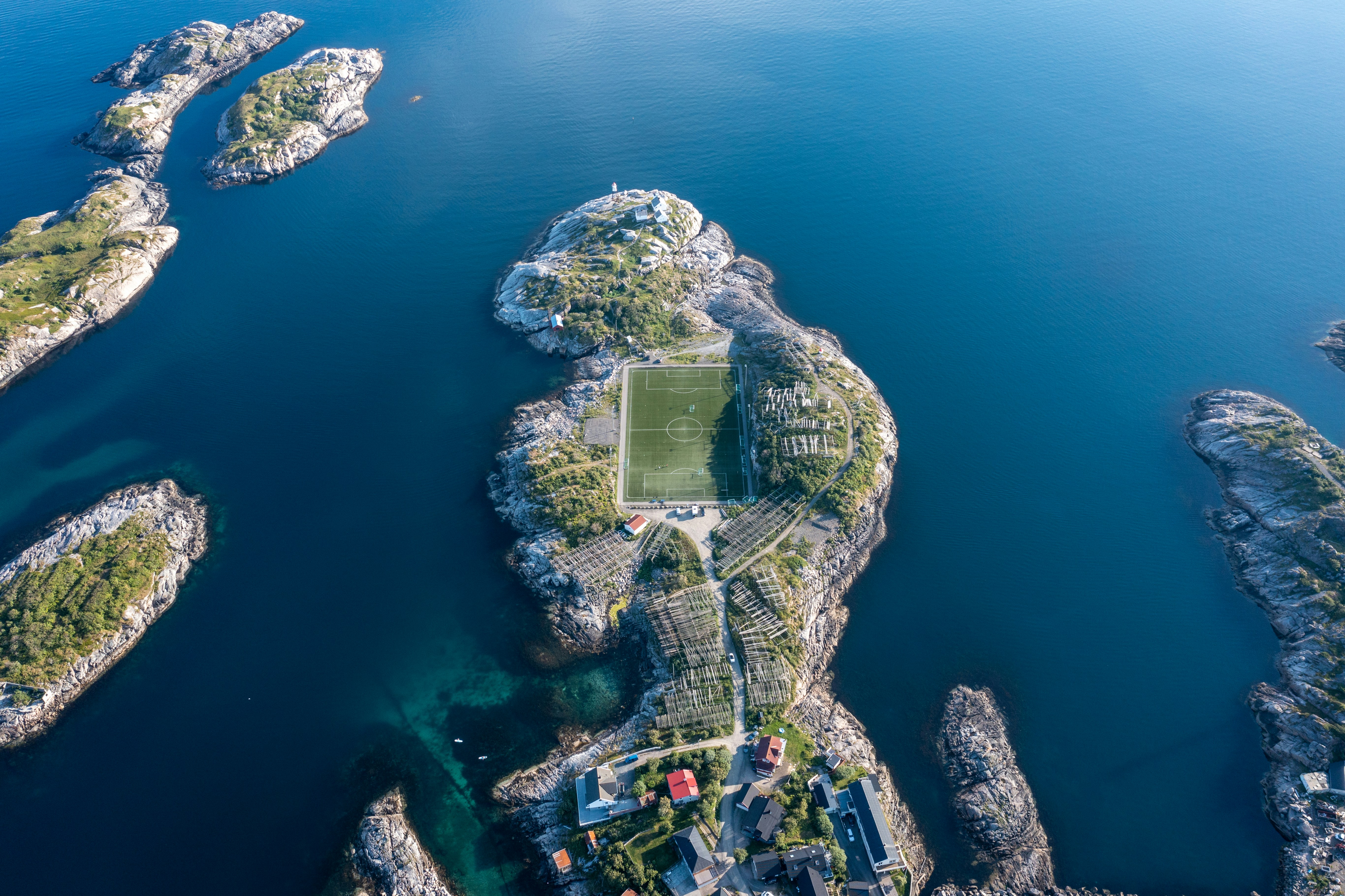
Maybe the most iconic football field in the world
Say farewell to Andenes and get ready for a stunning drive into the Lofoten Islands proper. Day three is a travel day doubling as a scenic tour, so pile into the car, cue up a favorite road-trip playlist, and hit the road south. The route threads back along Andøya and into mainland Hinnøya before crossing bridges and causeways onto the Lofoten archipelago. Craggy peaks begin to burst forth dramatically from the sea as you enter Nordland County.
You might break up the ~4-hour drive with a lunch stop in Svolvær, Lofoten’s gateway town, to let the kids run around and for your first taste of Lofoten life. Perhaps grab fish and chips, or a quick pizza in the colorful harbor—energy for the final leg. By late afternoon, you reach the end of a winding spur road and voilà: the fairytale fishing village of Henningsvær appears, sprawled across a sprinkling of islets like a painter’s palette. Red and white clapboard houses perch over emerald water, and drying racks of cod (the famed stockfish) stand as rustic sculptures in the salty air.
Your home for the next three nights is Henningsvær Bryggehotell, a stylish harborside inn converted from an old wharf. From your window you might see fishing boats bobbing and hear the laughter of locals and visitors strolling the docks. After settling in, take an early evening wander through Henningsvær’s car-free lanes. The village is tiny and safe for kids to roam a bit on foot. Pop into Henningsvær Lysstøperi & Cafe to savor decadent cinnamon buns and artisanal ice cream in a cozy candle factory setting—a sweet welcome to Lofoten.
Don’t miss a peek at Henningsvær’s now-famous football field: an astroturf soccer pitch improbably built on a rocky islet, surrounded by nothing but ocean and mountains. Your children might be stunned at the sight of it—a real-life “island arena” where local kids play matches with arguably the world’s wildest backdrop. (It’s often dubbed one of the world’s most scenic football fields, and seeing it in person, you’ll instantly know why.)
As the sun hovers low, casting a soft glow on Mt. Vågakallen looming above, you enjoy a simple dinner of bacalao (salted cod stew) at Fiskekrogen or wood-fired pizza at the hip Trevarefabrikken cultural hub. Henningsvær’s artistic, laid-back vibe seeps into your bones. After two busy days up north, it feels great to have a homey base for a while—and the Bryggehotell’s snug duvets and harbor lullaby quickly send the whole family off to dreamland.
Day 4: Sea Eagle Safari & Arctic Aquarium
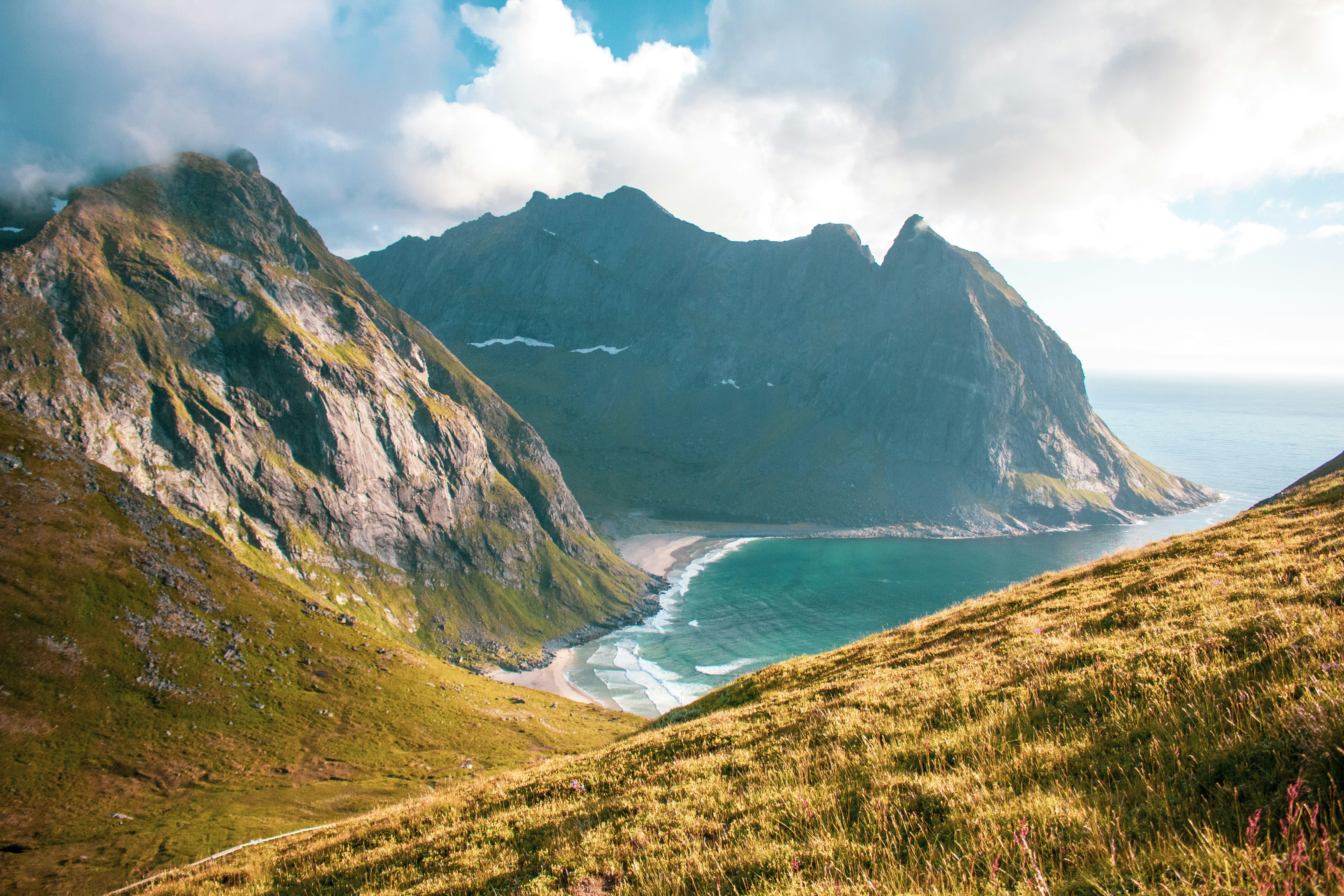
Landscape like this is all around you
Wake up in Henningsvær to the cry of gulls and the smell of fresh waffles (the hotel’s breakfast spread includes Norwegian heart-shaped waffles with berry jam—sure to win over the kids!). Today’s agenda is one of high adventure. Just after breakfast, you stroll a few steps to the pier to join a RIB boat sea safari into the iconic Trollfjord. RIB boats are high-speed inflatable vessels—thrilling yet safe—and the excursion is tailored to families (children are fitted with flotation suits and secure seating is provided).
With an expert skipper at the helm, you zoom across glassy waters, weaving through skerries and into the narrow mouth of Trollfjord, a dramatic gorge flanked by 1,000-meter cliffs. The scenery alone is goosebump-worthy, but the stars of this show are the archipelago’s famed sea eagles. These majestic birds—Europe’s largest—soon appear, circling overhead with piercing cries. Your guide cuts the engine and tosses fish into the water. Suddenly a white-tailed eagle plummets from the sky, talons forward, snatching a fish mere meters from the boat! The kids whoop with astonishment as one eagle after another swoops down, nine-foot wingspans flaring. It’s a jaw-dropping encounter with Lofoten’s wild side. The crew shares how these raptors recovered from near extinction and now flourish here. You all watch, rapt, as the eagles wheel back to their roosts. The RIB safari also blends thrills with a bit of local lore—along the way, you hear tales of the old Trollfjord battle and Viking legends linked to these fjords.
After two hours, you return salt-sprayed and exhilarated, with plenty of close-up eagle photos as souvenirs.
Come afternoon, shift gears to a slower pace. A 20-minute drive west (or optional short boat ride) brings you to Kabelvåg, home to the Lofoten Aquarium (Lofotakvariet)—a perfect follow-up for your little wildlife enthusiasts. This small, kid-friendly aquarium showcases the marine life of these northern waters. The children delight in seeing seals and otters up close, watching native fish like halibut and cod in big tanks, and even getting to touch crabs and sea stars in the hands-on pools. It’s an educational break that lets everyone stay warm and dry after the morning’s sea spray.
Right next door are two more pint-sized attractions: the Lofoten Museum, which offers a glimpse of 19th-century fishermen’s cabins, and the Espolin Gallery of Art. You can pick and choose based on attention spans—perhaps a quick look at the old wooden boats in the museum’s boathouse, or let the kids create their own art at a craft corner if available.
Another fun option back in Svolvær (10 minutes further east) is Magic Ice, an otherworldly ice sculpture gallery. Stepping inside, you’re handed down jackets to wear in the sub-freezing hall where everything—walls, the bar, sculptures—is made of ice. The children are wide-eyed, wandering among glistening ice Vikings and polar bears lit in neon colors. They can even sled down a mini ice slide and sip a non-alcoholic drink from a glass made of ice (which they find hilarious to bite into!). It’s a short visit but one that leaves a big impression (and fun photos).
This evening, back in Henningsvær, you seek out a casual family dinner. Klatrekaféen, the local climbing café, hits the spot with its laid-back atmosphere—walls decorated with mountaineering mementos and a menu of hearty burgers, soups, and waffles. The kids recount their favorite moments of the day between bites—“the eagle that dove the fastest”, “the otter doing flips”—and you realize how the day balanced adrenaline and education in perfect measure.
Take a post-dinner stroll to walk off the meal: the village is quiet now, the midnight sun casting long shadows. Maybe you’ll challenge the kids to a quick soccer kick-around on that famous field (if no one’s playing, visitors sometimes wander onto the edges) or skip stones by the pier. However you unwind, Henningsvær’s easy charm makes you feel right at home. Tomorrow promises new adventures on land, so you tuck in for another restful night by the sea.
Day 5: Vikings & beaches—living history & lazy afternoons
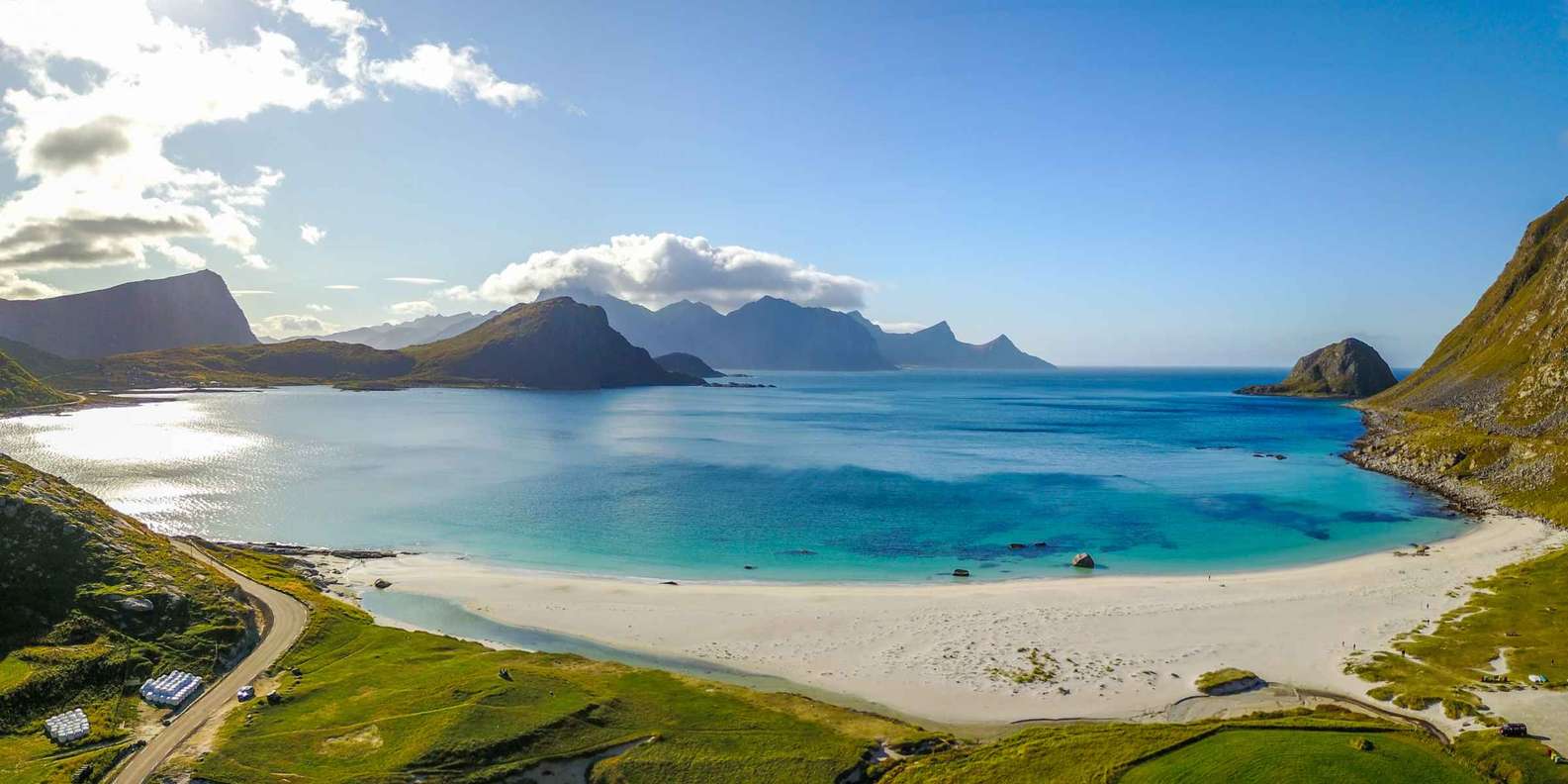
Haukland Beach
After two active days, day five introduces a mix of cultural discovery and relaxed beach time. In the morning, set out on a drive about 45 minutes west to the village of Bøstad in Vestvågøya. Here, in rolling green farmland, lies the Lofotr Viking Museum, a place where history truly comes alive for young and old. The museum is built around the excavated remains of an actual Viking chieftain’s village, and its centerpiece is an immense reconstructed longhouse—83 meters of smoky, tar-scented Viking Age grandeur.
Stepping through its doors is like stepping 1,000 years back in time. Costumed re-enactors welcome you into the chieftain’s hall, where a crackling fire illuminates intricate wood carvings. Your kids are handed bows and (blunt) arrows to try their hand at archery outside, and even Mom and Dad can test their Viking skills in axe-throwing (under supervision!). Lofotr truly caters to families with interactive fun—in summer, they often launch a replica Viking ship on the lake and invite visitors to help row or hoist the sail. Imagine your little ones’ pride as they grab an oar alongside the crew, grinning from ear to ear.
Inside the longhouse, Viking games are set up for children to play, and there’s Viking costume dress-up—cue adorable photos of your kids in helmets brandishing (wooden) swords. All the while, friendly “Vikings” share stories about old Norse myths and everyday life on the farmstead. It’s living history at its best—engaging, hands-on, and exceedingly family-friendly (the museum is “highly recommended for families with children”).
Before departing, you might feast like Vikings too: the café serves a delicious lamb stew cooked over open fire, and you can all sip sweet Viking berry juice (or even sample mead, the honey-wine of the gods, for the adults) in the grand hall—a lunch to remember!
Leaving the realm of Odin and Thor, you drive just 10 minutes to another kind of Nordic legend: Aalan Gård, a charming organic goat farm tucked in the hills. This family-run farm is a surprise hit with kids—a chance to meet the resident goats, who eagerly trot up for a pet or a nibble of feed. The aroma of herbs greets you—Aalan is famous for its herb gardens and creamy goat cheeses. In the tiny café shop, you can taste a variety of their homemade cheeses (the brown caramelized goat cheese is a Norwegian classic) and tangy goat’s milk ice cream.
The children giggle as they help churn some cream or try to call over a particularly friendly goat. This working farm actively welcomes visitors to share its lifestyle—it’s “a diverse farm with cheese production, herb garden and many animals,” recommended especially for families with children. While you savor a slice of their feta infused with home-grown herbs, the kids might explore the herb maze or watch farmhands milking goats. It’s an idyllic slice of rural Lofoten that provides a nice contrast to the salt and sea of the coast.
By early afternoon, it’s time to reward the kids (and yourselves) with some free play at one of Lofoten’s unbelievable beaches. A short drive north across Vestvågøya brings you to Haukland Beach, often hailed as one of the most beautiful beaches in Norway (if not the world). As you crest the last hill, Haukland’s crescent of sugar-white sand and translucent aquamarine water appears like a tropical mirage—except those towering granite mountains remind you you’re still in Arctic Norway.
Park the car and let the kids kick off their shoes. The sand is powdery soft beneath little toes. You spend a blissful few hours here: the children build driftwood forts and dig moats in the sand, your partner braves a quick (and bracing!) dip in the shallows, and you simply bask in the scenic grandeur. In truth, the water is chilly, but on a sunny day you’ll see local kids splashing with glee as if it were the Med. The surrounding grassy dunes make a perfect picnic spot—perhaps you picked up some sandwiches or pastries on the way (the bakery in Leknes makes mean cinnamon rolls).
Framed by green-cloaked peaks, with sheep sometimes wandering near the shore, Haukland feels straight out of a storybook. If energy allows, you can take the easy coastal path to Uttakleiv—a flat gravel trail suitable for all ages that hugs the shoreline to another gorgeous beach. But no agenda is needed: the aim is simply to relax. After all the structured activities, an afternoon of unstructured beach play is just what the kids need.
When you’ve had your fill of sun (the Arctic sun that kindly won’t set until late evening), drive back to Henningsvær for your final night in the Bryggehotell. Tonight, maybe try Tapperiet Bistro, known for its fish burgers and casual local vibe, or enjoy takeaway fish ‘n’ chips on the docks—the kids swinging their feet over the water as fishing boats come and go. As you stroll back to the hotel in the lingering dusk, Henningsvær bids you a warm farewell. Over three days you’ve become part of the village’s rhythm—waving to the same shopkeeper each morning, watching the midnight sun from the same little jetty each night.
Tomorrow, new horizons await to the southwest. You pack up (a now well-practiced routine) and everyone goes to bed a bit sandy, a bit sun-kissed, and very content.
Day 6: Deep into Lofoten’s timeless scenery
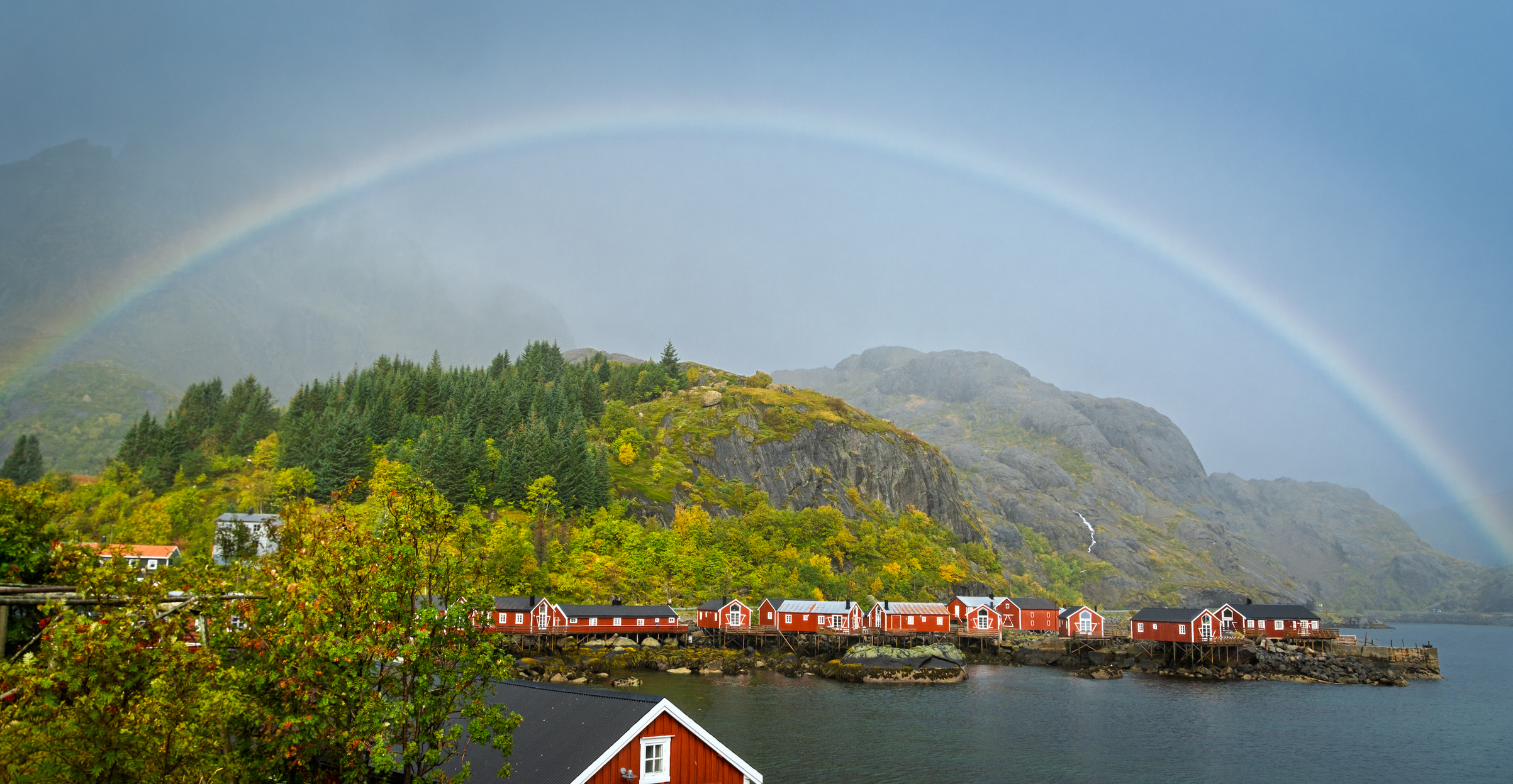
Nusfjord
On day six, you continue your family’s southbound odyssey, heading deeper into Lofoten’s timeless scenery. The drive from Henningsvær to Nusfjord takes barely 1.5 hours, but allocate extra time for impromptu stops—this stretch of E10, Lofoten’s backbone road, is lined with temptations.
Perhaps pull over at the Vikten Glass Studio in Vestvågøya: a family-run glassblowing workshop where the artist is often at his forge. Through the studio window, the kids’ jaws drop as they watch molten glass being blown and shaped into swans and vases—bright blobs of orange turning gradually transparent and solid. “It’s like magic!” they exclaim, noses nearly pressed to the glass (pun intended). The adjacent café offers cinnamon buns and coffee, so you can enjoy a treat while chatting with the friendly glassblower about his craft.
A bit further along, as you enter Flakstadøya island, you might detour to the tiny village of Sund. Here, a one-of-a-kind blacksmith holds court in a quayside smithy—known for forging iron cormorants. You step into the dim workshop filled with the scent of coal and metal, and soon the forge is roaring. The blacksmith, muscles rippling, pulls out a heated rod and begins hammering. Sparks fly—ting! ting!—as an iron bird slowly emerges under his skilled blows. The children watch, utterly fascinated by this noisy, glowing spectacle, as the blacksmith crafts a graceful cormorant sculpture from raw iron. It’s an insta-lesson in old-school craftsmanship that even screen-addicted kids can’t resist. The adjacent Sund Fiskerimuseum displays antique boat engines chugging away and other fishing village artifacts—a quick walk-through gives context, but the highlight was certainly seeing a true artisan at work. You leave with a small iron figurine (and a newfound appreciation for Lofoten’s handmade traditions).
Arriving in Nusfjord feels like stepping into a living postcard—or perhaps a film set from the 19th century. Tucked in a protected inlet, Nusfjord is one of Norway’s oldest and best-preserved fishing villages, now carefully maintained as an open-air museum and resort. A cluster of wooden rorbuer cabins, painted ochre-yellow and red, cling to the rocky shore on stilts above emerald-green water.
Your accommodation, Nusfjord Arctic Resort, has restored these historic cabins with cozy luxe touches: expect driftwood-paneled walls, plush bedding, and windows overlooking the little harbor where fishing boats once unloaded their catch. After check-in, wander the boardwalks with your kids and greet Nusfjord’s local “residents”: the racks of drying cod that rustle gently in the breeze. They wrinkle their noses at the faint fishy smell—an authentic Lofoten memory—but soon get distracted by the massive tame codfish lazily swimming near the docks. (Nusfjord’s harbor often has giant cod looking for a handout—the kids might even name one and return to visit it later.) The entire village is a pedestrian-safe playground in a sense—car traffic is limited, so you can let the little ones explore the nooks and crannies: old boathouses, a charming general store from 1907, maybe even an outdoor art installation or two (Nusfjord hosts creative residencies).
In the late afternoon, consider a gentle hike to stretch your legs. One lovely option is the Nusfjord to Nesland trail, and you can just do a portion to suit young legs. Even a 30-minute walk up the marked path behind the village yields splendid views down onto Nusfjord’s golden huts and the glistening fjord beyond. The path is lined with heather and blueberry bushes—in late summer, the kids can forage sweet wild blueberries by the handful. They feel like little pioneers, trekking where Vikings and fishermen once trod. Satisfied with a panorama and perhaps a selfie from a rocky outcrop, you turn back toward the village as the sun starts dipping.
For dinner, Restaurant Karoline—Nusfjord’s renowned eatery—awaits with a family table. Housed in a rustic timber building on the water, Karoline serves up Arctic char and lamb with modern flair. But they also have kid-friendly favorites (the kitchen can whip up fish and chips, or meatballs), so everyone leaves happy and well-fed.
After dinner, bundle up and step outside to experience Nusfjord’s unique evening tranquility. With so little light pollution, the sky is vast and crystal clear—if you’re later in the season (late August), you might even catch the first whispers of the Northern Lights dancing pale green overhead. But in high summer, it’s the midnight sun’s pastel afterglow that reflects off the still harbor. Your cabin’s deck provides front-row seats to this nightly show. Lantern light flickers on the wooden docks, and the only sounds are distant seabird calls and your kids’ giggles as they recount the blacksmith’s flying sparks or the funny codfish by name. Nusfjord lulls you into deep, contented sleep.
Day 7: Beach day at Ramberg & life in a fishing village
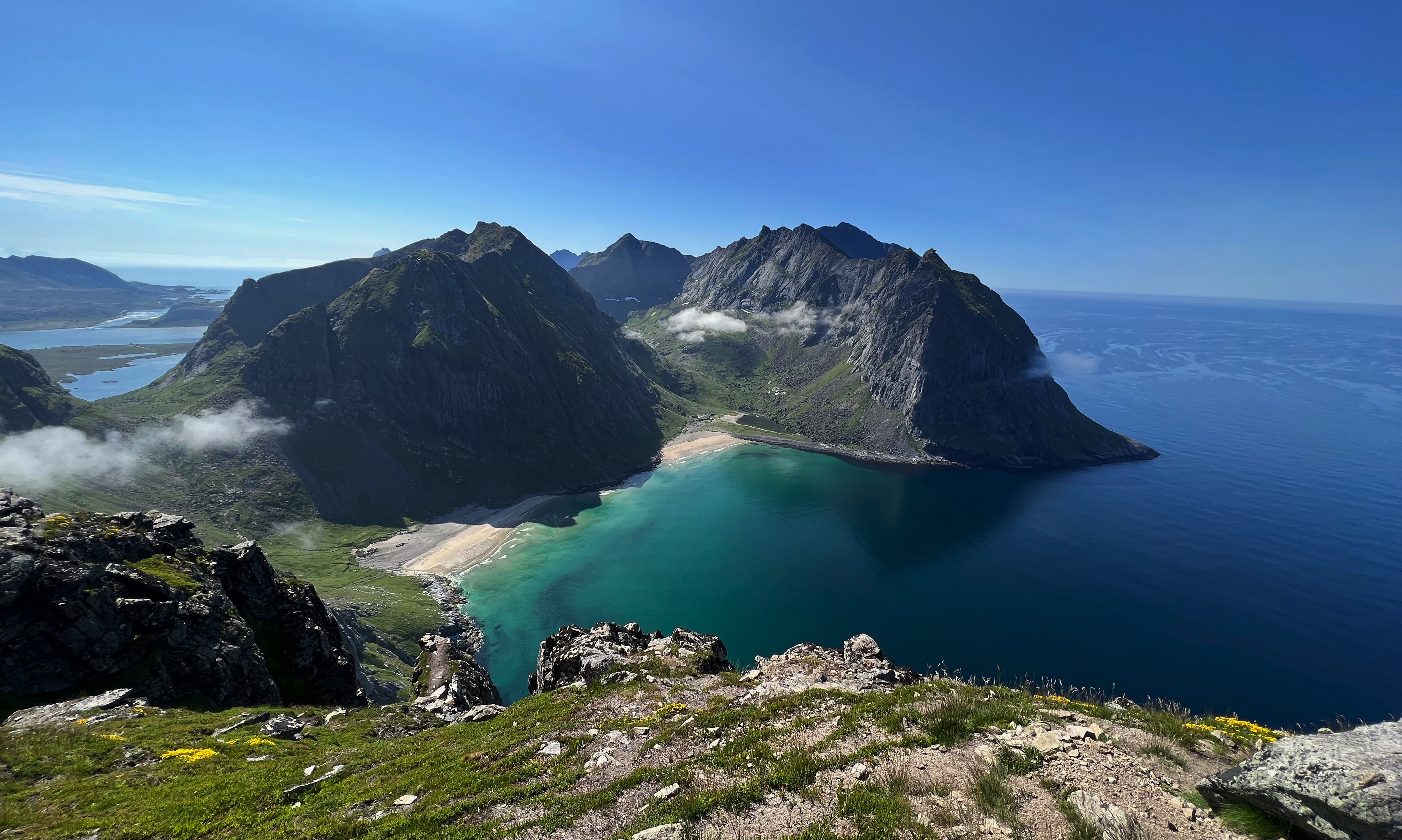
Flakstad Beach
After a snug night in your rorbu cabin, wake to the cries of gulls and a fresh Arctic breeze. This morning, take things slow. Perhaps wander over to Nusfjord’s historic bakery, where the aroma of sweet dough wafts through the door. They bake cinnamon “snurr” buns in an original stone oven dating to 1878, claiming they might be the world’s best—and after one bite of the gooey, walnut-studded roll, your family just might agree. Enjoy your pastries al fresco with a cup of coffee or juice, the kids licking sticky cinnamon glaze from their fingers, as you soak in the nostalgia of this place. Wooden trollers creak softly at anchor and the morning sun lights up the towering granite walls encircling the fjord. It’s easy to imagine the scene a century ago, when Nusfjord bustled with fishermen prepping lines and salting cod. For you, though, the plan is far more leisurely.
In late morning, pack a beach bag and drive 20 minutes to Ramberg Beach, one of Lofoten’s most accessible family beaches. The road suddenly opens up to a vista of white sands and turquoise shallows so bright you’d think someone turned up the color saturation. A quaint village hugs one end of the bay, complete with a charming white church, but the star attraction is the beach itself—a long stretch of soft sand perfect for an old-fashioned day of play.
You set up “camp” with towels and perhaps a windbreak (the breezes can be brisk). The kids tear off to find pretty shells and build sandcastles decorated with kelp. While they amuse themselves, you take a mindful stroll along the water’s edge, barefoot in the surprisingly fine sand, letting the gentle surf lap at your toes. It’s invigorating—a reminder that this is the Arctic Ocean (for the bold, a quick plunge can be exhilarating and will certainly impress the kids!).
Ramberg’s backdrop of jade-green mountains completes the scene; one peak even has a bit of year-round snow clinging to a crevice, a cool sight on a summer beach day. If hunger calls, the nearby café at Ramberg Gjestegård offers soft-serve ice cream and waffles, or you can nip into the Co-op market for snacks—a picnic of local cloudberry jam on crackers, anyone? A few hours at Ramberg let everyone unwind. The kids mingle with local children kicking a football around or wading in tide pools looking for tiny fish. You realize that balancing active days with these relaxed moments was exactly the right approach—the whole family seems recharged by the sun and scenery.
On the way back to Nusfjord, make a quick stop at the Flakstad Church just off the road. This deep-red wooden church from 1780, with its Russian-influenced onion dome, is a photogenic little detour and a quiet slice of local culture. Stepping inside (if open) you’ll find a simple, serene interior that has served generations of fishing families—a short, thoughtful visit that perhaps sparks a question from the kids about why it looks different from other churches.
By mid-afternoon, you return “home” to Nusfjord for more village exploration. The museum buildings are open for a self-guided peek: your family wanders into an old boathouse where traditional Nordland wooden boats are stored, and into the Trandamperi—the cod liver oil factory. The kids’ faces scrunch up at the thought of smelly cod liver oil production, but they are oddly intrigued by the huge wooden barrels and the tale of how fish livers were boiled to liquid gold. In the general store, which looks straight out of 1900 with its jars of candy and racks of old-fashioned provisions, let the children pick a small souvenir (a postcard, or a bag of locally dried fish snacks if they dare). Chat with the friendly staff who can share a story or two about Nusfjord’s heyday. This gentle immersion in village life—no formal tour, just free discovery—lets your kids absorb history in the most natural way.
As evening falls on day seven, consider an outdoor barbecue if the weather is fair. Nusfjord Resort offers grill rentals, so you can cook up fresh fish (maybe even something you bought directly from a fisherman that day) on a deck by the sea. Imagine savoring char-grilled cod with buttered potatoes as the kids toast marshmallows over the coals, all with the sun’s late rays illuminating the fjord in soft oranges and pinks.
If dining out is preferred, the resort’s rustic Oriana Tavern serves casual fare—think fish stew or reindeer burgers in a cozy pub atmosphere where families are welcome. One last quiet stroll around the boardwalk as gulls settle down on pier posts, and it’s back to your cabin to pack up for the final leg of the journey. Nusfjord’s spell has worked its charm—you depart with a genuine sense of what a traditional fishing village feels like, the slower rhythm and simple pleasures now part of your family’s story.
Day 8: Grand finale of your Lofoten adventure
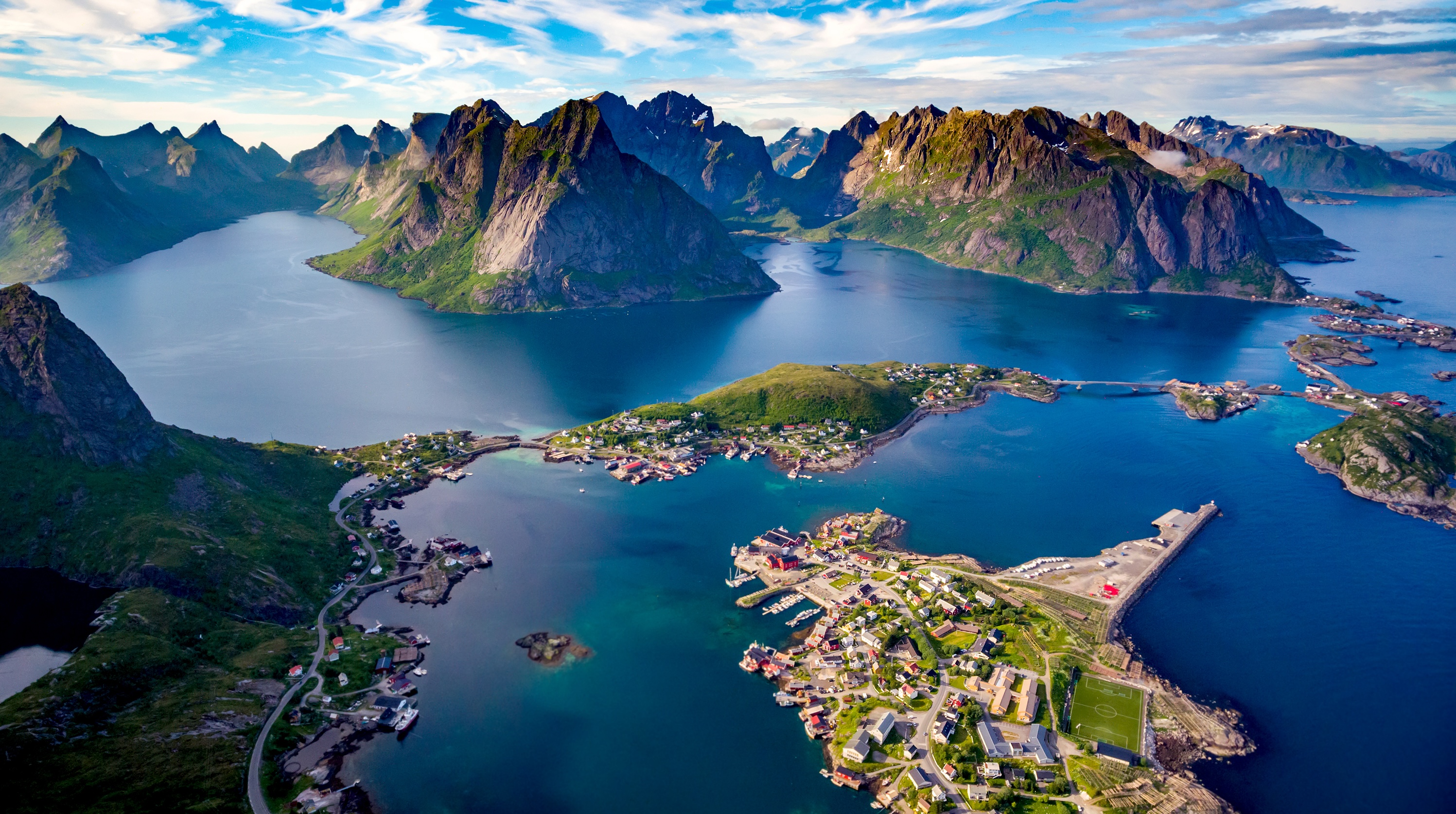
Reine seen from Reinebringen
The grand finale of your Lofoten adventure takes place in the islands’ far southwest, often considered the most jaw-droppingly beautiful area of all. Day eight has you traveling from Nusfjord to Reine, which is only about one hour by car—but expect it to take longer because around every bend is another panorama begging you to stop.
You drive through the town of Leknes (stock up on snacks or picnic supplies here if needed), then cross the lofty bridge onto Moskenesøya, the last island. As you approach Reine, the landscape grows increasingly dramatic: granite peaks thrust into the sky like dragon’s teeth, and little hamlets with red cabins huddle in coves. One of those picture-perfect hamlets is Sakrisøy, where a canary-yellow fish warehouse houses Anita’s Sjømat, a famed seafood snack shop. Pull in here for an early lunch—their fish burgers are legendary, piled high with super-fresh fish filet, tangy sauce, and crunchy lettuce. The kids might prefer crispy fish nuggets and fries, and that’s fine—all plates come with a view! Dine on picnic tables overlooking the vivid aquamarine shallows, while curious seagulls circle hoping for a dropped fry. Don’t leave without browsing the little shop selling dried stockfish chips and other ocean delicacies—your children may turn up their noses at the smell, but it’s all part of the Lofoten experience.
A few minutes down the road, you roll into Reine, often dubbed the crown jewel of Lofoten. And it’s immediately evident why: a collection of red-and-white rorbuer cabins dotting tiny islands, connected by bridges, with a backdrop of soaring peaks that mirror in the glassy water. It’s a scene straight off a postcard (in fact, you likely have seen it on postcards!).
Your lodging, Reine Rorbuer, places you right in that postcard—the resort’s traditional cabins, painted deep red with white trim, are clustered along Reine’s shoreline. From your cabin porch, you might have a front-row view of Olstinden, the most iconic cone-shaped mountain that dominates the skyline. Settle in and let the kids choose their bunks in the loft—each cabin is a cozy mix of old fishing cottage charm and modern comfort. Perhaps there’s an old rowboat outside or a drying rack—these details make it fun for the young ones to imagine life as a fisher-kid.
With a full afternoon ahead, delve into Reine’s adventures. One unbeatable way to experience this area is from the water. Sign up for a family kayaking tour in Reinefjord—even 6-year-olds can participate in a tandem kayak with a parent on special family tours. After being outfitted with mini life vests and given a quick paddling lesson, you push off into the crystal-clear fjord, each kayak slicing through the water in unison.
The fjord is calm like a lake on most summer days, and you feel utterly enveloped by nature: sheer mountains rise on all sides, their green slopes dotted with grazing sheep that you can hear bleating across the water. The kids dip their hands in to feel how surprisingly cool it is (some claim you can drink this fjord water it’s so clean!). Your guide shares local legends—like the tale of the mountain maiden of Olstinden—and points out a sea eagle perched high above, as you quietly glide along. The serenity and grandeur are awe-inspiring, even normally squirmy kids grow silent, busy spotting jellyfish and curious porpoises that sometimes pop up. By the end of the 2–3 hour paddle, your arms are a bit tired, but your hearts are full. This close encounter with Lofoten’s fjord landscape is often a trip highlight for families—a true bonding experience in one of Earth’s most beautiful classrooms.
Back on land, reward yourselves with an afternoon treat at Bringen Kaffebar in Reine. This cozy café has goodies like homemade chocolate cake and steaming lattes for the grown-ups, plus juice and waffles for the littles. Enjoy them on the deck overlooking the harbor where red fishing boats are moored—the kids might spot large jellyfish pulsing near the dock or small fish darting around the pilings.
For those still itching to explore, a short drive (10 minutes) to the village of Å at road’s end is well worthwhile before dinner. Yes, the village is called “Å”—the last letter of the Norwegian alphabet, fitting for the last stop on Lofoten’s highway. In Å, wander the grounds of the Norsk Fiskeværsmuseum (Norwegian Fishing Village Museum). Even if you don’t do the full tour, there’s plenty to see: old rorbuer, a forge, a boathouse with impressively large oars and 1800s fishing equipment. But the surprise hit here is the Bakery at Å, famed for perhaps the world’s best cinnamon buns baked in a wood-fired oven from 1878. The scent alone will lead you down a little lane to its historic storefront. Still warm from the oven, the buns are melt-in-your-mouth soft, with caramelized sugar and cinnamon layers that have you buying a second round “for tomorrow” (though they may not last that long!). Enjoy them at picnic tables with a view of the stockfish racks and the sea. The kids, sticky with cinnamon, might proclaim this the best snack ever—and you won’t disagree.
As dinner time nears, head back to Reine. Dine at Gammelbua Restaurant, a venerable eatery set in what was once the old general store (built in the 18th century) and now part of Reine Rorbuer. With rough-hewn timbers and fishing relics on the walls, it oozes character. Feast on local delicacies like bacalao or pan-fried Arctic char. The restaurant is family-friendly and they’ll happily do simpler dishes for kids (one can only have so much fish—they do a mean reindeer meatball with lingonberries, which tends to vanish quickly from young plates). As you exit the restaurant, you’re greeted by the surreal late-night light one last time.
Why not cap the day with a quick jaunt up to Reinebringen Viewpoint?—actually, scratch that, Reinebringen’s 1,500 stone steps to the top are far too strenuous for ages 6 and 8 tonight! Instead, drive a couple minutes to Reinehalsen, the curve of E10 just outside town, which is a famous viewpoint over Reine. Park safely and take in the classic vista as seen in countless photographs: red cabins on stilts, mirrored water, and spiky peaks encircling it all. In the gentle nightless night, with your kids leaning sleepily against you, it’s a perfect, peaceful moment to imprint in memory.
Back in your rorbuer, you prep for departure tomorrow. It seems unbelievable that ten days have flown by so fast. The kids are asleep before their heads hit the pillows, dreaming perhaps of Viking ships or whales waving tails.
Day 9: Island explorations & farewell feast
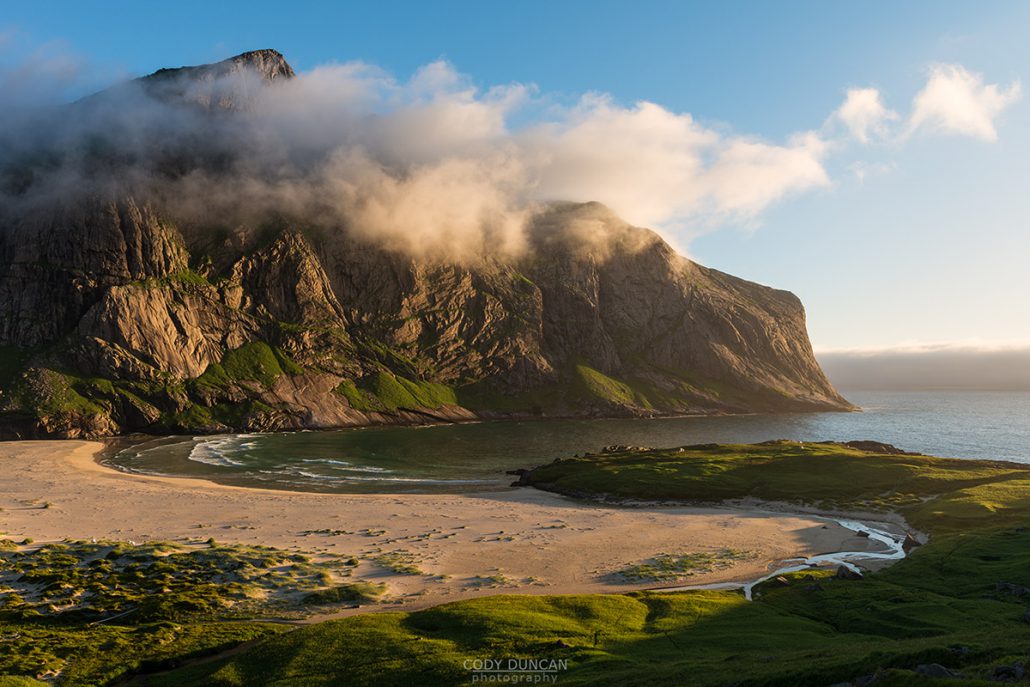
Horseid Beach
Savor your final full day in Lofoten by choosing a mix of activity and relaxation that best suits your family’s mood (and energy level). One enticing option: take an electric bike ride around Reine and its neighboring villages. Several places rent e-bikes with child seats or trailers, making it a fun way to cover a bit more ground. You could easily pedal across the bridges to Hamnøy, another impossibly scenic fishing hamlet, and onward to Sakrisøy (perhaps for another crack at those fish burgers or their delectable fish soup). With the e-bike’s boost, even uphill sections are a breeze, and the kids love the novelty of whizzing around, wind in their hair, pointing out every lamb and sea bird they notice. Each village has its own photogenic charm—bright rorbuer, reflective lagoons, peaks looming—and because you’ve settled in, the family has become adept at appreciating these views (and taking goofy selfies with them as backdrop!).
For a truly memorable adventure, you could also take a boat trip to Bunes Beach or Horseid Beach, two remote sand beaches accessible only by ferry from Reine. The local ferry (really just a rugged water taxi) puts across Reinefjord to the tiny settlement of Vindstad. From there, a straightforward 2 km trail (about one mile each way) leads to Bunes Beach, a hidden expanse of sand wedged between towering cliffs on the wild ocean side of Moskenesøya. It’s a bit of a trek for small kids, but if yours are up for it, the rewards are huge: an endless beach likely all to yourselves (save a few hardy campers), dramatic dunes and a stream for splashing, and a real feeling of “end of the world” splendor.
Pack a picnic and plenty of water, and spend the afternoon as castaways—building sandcastles, beachcombing for unusual shells and driftwood, and gazing out at the vast Norwegian Sea knowing the next stop west is basically Greenland. Do mind the time to hike back for the return ferry (there’s usually one late afternoon). The hike, while not difficult, does involve some rocky sections, and a sturdy carrier might be needed for the 6-year-old at times. But the bragging rights your kids earn from reaching such a wild place will be worth a bit of effort.
If this sounds too ambitious, no worries—there are many other low-key delights: maybe visit a nearby Lofoten farm like Livland Gård (about 40 minutes away on Vestvågøya) which has horses and its own ice-cream shop, or stay local and pop into Galleri Eva Harr in Reine to see beautiful paintings of Lofoten’s landscapes (perhaps inspiring some artwork from your kiddos later).
However you spend the day, aim to reconvene in Reine for a special farewell dinner. A great pick is Krambua Restaurant, a tiny harborside spot known for its ultra-fresh seafood—and they grill a mean steak for any pint-sized carnivores not in the mood for fish. Clink your glasses of lingonberry soda and local beer in celebration: skål to a journey well-traveled! The setting sun (if one can call it that—in August it’s more like an elongated sunset) paints the mountain peaks in rose and gold as you walk back to your cabin. One last evening of that delicious routine: cozy family time in a rorbuer. Perhaps you all play a round of cards at the cabin’s little table, or step out to watch fishermen unload a late catch. The kids linger outside, not wanting this to end—they’ve grown accustomed to stepping out of their front door and seeing fish dart under the dock, to the gentle rocking of boats as their bedtime soundtrack.
Day 10: Farewell to Lofoten’s shores
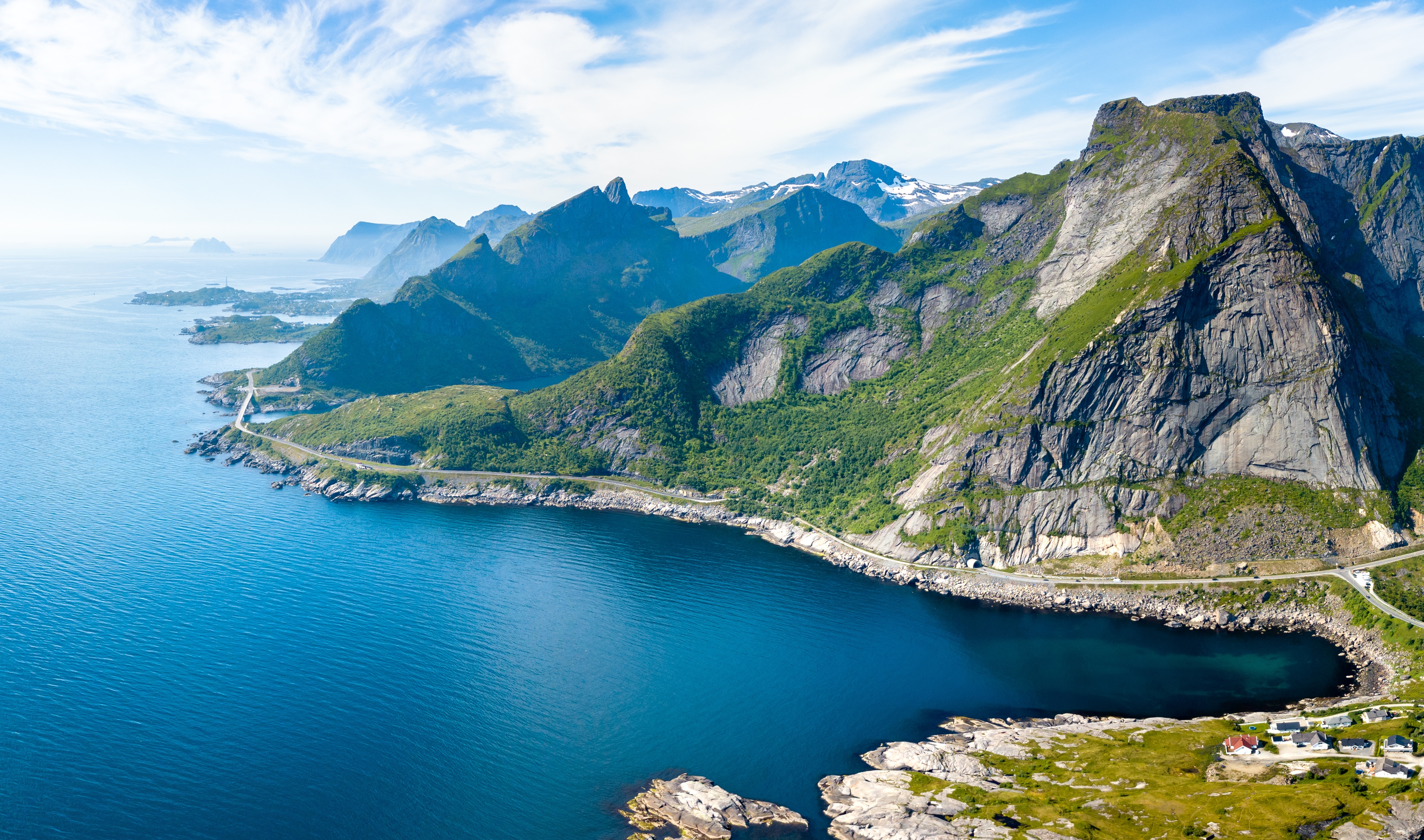
Bye bye Lofoten
All adventures must eventually find their conclusion, and today you bid farewell to Lofoten’s shores—but not before one more memorable experience. In the morning, you pack up the car and drive 10 minutes to Moskenes ferry port. Boarding the ferry to Bodø feels like a fitting finale, a mini-cruise through the same majestic seascapes you’ve been exploring.
Find a spot on deck as the ship’s horn bellows and you slowly glide away from Moskenesøya. The kids wave at Lofoten shrinking behind—those dagger-like peaks of Reine fading into the distance. During the 3–4 hour voyage, your family relaxes together, reflecting on favorite moments. Perhaps the kids trade the last of their souvenirs (a polished piece of quartz from the beach, a postcard from the Viking museum) or scribble in a travel journal. Keep your eyes on the sky and sea—often, white-tailed eagles will escort the ferry part of the way, and occasionally dolphins play in the wake. It’s like Lofoten’s gentle way of saying “ha det bra” (goodbye). As the mainland comes into view, the bustling town of Bodø heralds a return to modernity. You disembark, return the trusty rental car, and just like that—your Arctic road trip concludes.
Yet the journey’s memories will live on in your family’s lore: the time you all laughed in the rain wearing Viking helmets, the gasp when a whale fluked its tail, the taste of cinnamon and salt on your tongue, the late-night sun that felt like a friendly ghost following you. Lofoten has a way of connecting with the soul, enchanting adults, and igniting children’s imaginations in equal measure. You’ve not just seen this iconic corner of Norway—you’ve experienced it deeply, at a pace and style perfect for a young family. In years to come, don’t be surprised if your kids suddenly recall “that summer in Lofoten” and smile—the magic of these islands has a habit of staying with those who journey through.
Need to know
Book early, especially in summer: June to August is peak season in Lofoten, and accommodations, car rentals, and popular activities (like whale safaris and ferries) fill up months in advance. Reserve key services as early as possible to avoid disappointment.
Pack for all weather, even in summer: Lofoten’s weather can change rapidly—sunny one moment, misty and cool the next. Bring layers, waterproof outerwear, and sturdy shoes for hiking. Even summer temperatures rarely exceed 20°C (68°F).
Driving is scenic but slow-going: Expect narrow roads, bridges, and frequent photo stops. Always allow extra time between destinations, especially if traveling with kids. Driving is safe, but be mindful of sheep in the road and ferry timetables.
Shops and restaurants have limited hours: Many small-town groceries and eateries close early (often by 6–7 pm), especially on Sundays. Stock up on essentials during the day and make dinner reservations where possible. Some remote rorbuer offer kitchenettes for self-catering.
Credit cards are widely accepted, but cash is rare: Norway is a cashless society—even small purchases (like ice cream or parking) can be paid by card or mobile app. Carrying Norwegian krone is not necessary for most travelers.


Travel Advisor
Hans Christian Berge

Hans Christian Berge

Get in touch with Hans Christian Berge
Did you like this guide? Reach out to customize and book your own experience. Or, just to chat about travel in general.
For more inspiration and insider recommendations, visit our Norway page.