





Curator’s statement
This spot was totally unexpected, but one of my favorites. I was traveling through South America for six months before I decided I was going to go to Brazil. As a U.S. citizen, we need a visa to get into Brazil. While I was waiting for my visa to be approved, I decided I was going to go up to Iguazú Falls in the meantime. I was blown away by how beautiful this area is!
The Fora Difference
Book with Brooke Dowden to access exclusive perks and experiences on your trip.

Killer perks
Free upgrades, spa credits and more—we got you

Personalized recs
Customized travel planning for your style

Insider knowledge
Expert advice from people who’ve actually been there
Where to stay at Iguazú Falls
Unlock perks by contacting Brooke Dowden to book your trip.
Things to do at Iguazú Falls
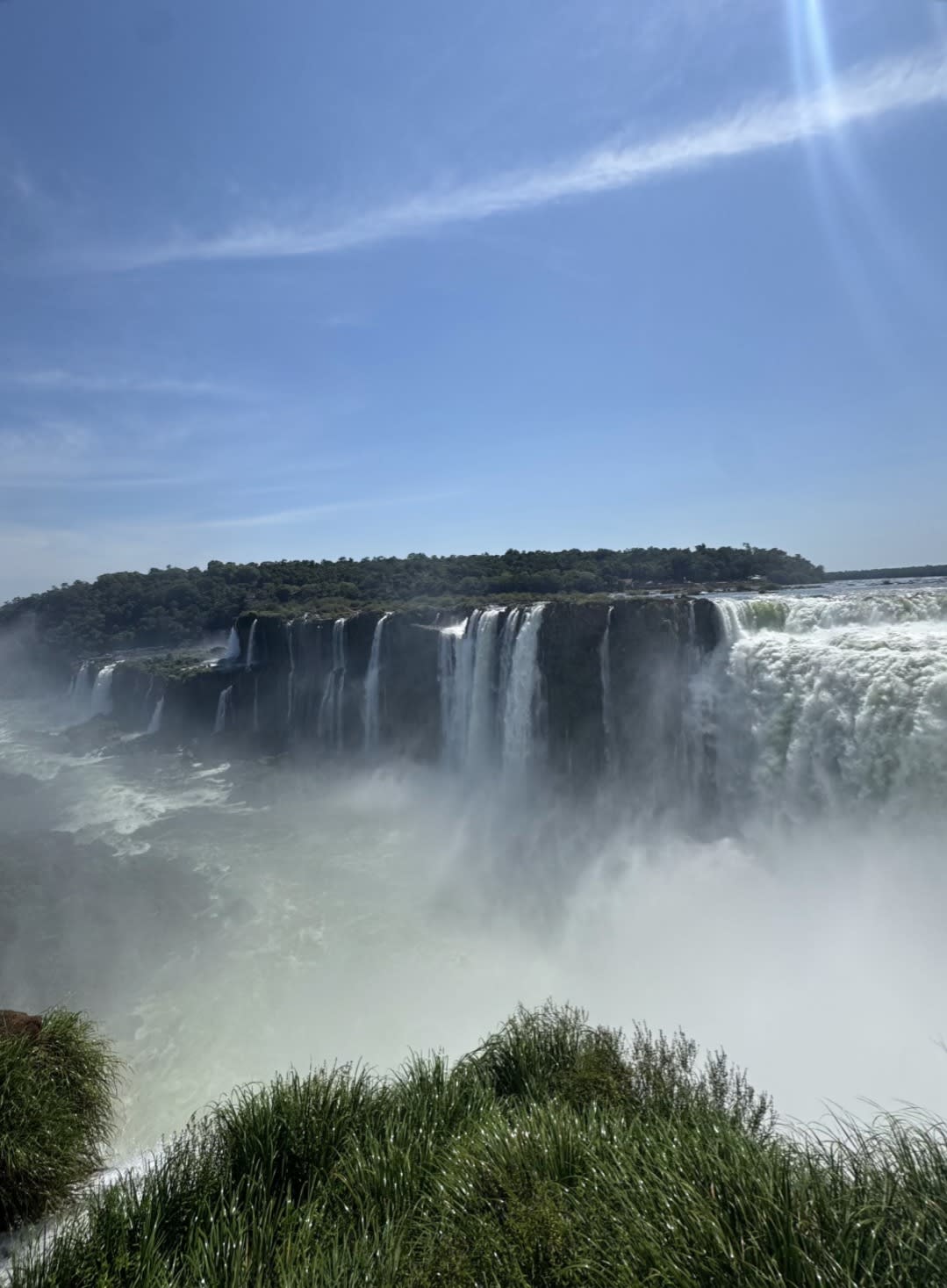
The largest waterfall, Devil's Throat. This photo is taken from the Argentinean side.
The Argentinean side
On the Argentinean side, you must go and walk Iguazú National Park. There are 275 waterfalls within the park, and it is about 4.3 miles long. It is ~$45 to enter, and I suggest going early to beat the crowds.
When you enter the park, take the train to Devil’s Throat, the largest waterfall in the park. It pours roughly 400,000 to 460,000 U.S. gallons of water per second. In the summer, the splashing of the waterfall feels great against the stifling heat. Bring a rain jacket if you think getting wet will be uncomfortable.
If you have time, take the Gran Aventura boat ride to get up close to the waterfall. The boat tickets do cost extra outside of the park fee.
After a day in the park, make sure you walk to Triple Frontier for sunset in the town of Iguazu. Not only will you catch a great view, but you’ll see all three countries—Argentina, Brazil, and Paraguay—from one viewpoint.
The Brazilian side
If you stay on the Argentinean side, take a transfer over to the Brazilian side of the waterfall, Iguaçu National Park. If you are a U.S. citizen, you do need a visa to enter Brazil. It is ~$80. The Brazilian side of the waterfall was my absolute favorite. It felt as though you were in the waterfall.
The park entrance fee is ~$24 (prices may vary based on exchange rates). This part was spectacular. The bus will drop you off a short distance from the waterfall, which is significantly less walking than on the Argentinian side. You’ll then walk out onto planks that allow you to see the bottom of Devil’s Throat.
Again, if you have time, and want to get a glimpse into what it’s like to experience a waterfall up close, opt for the boat.
Places to eat & drink at Iguazú Falls
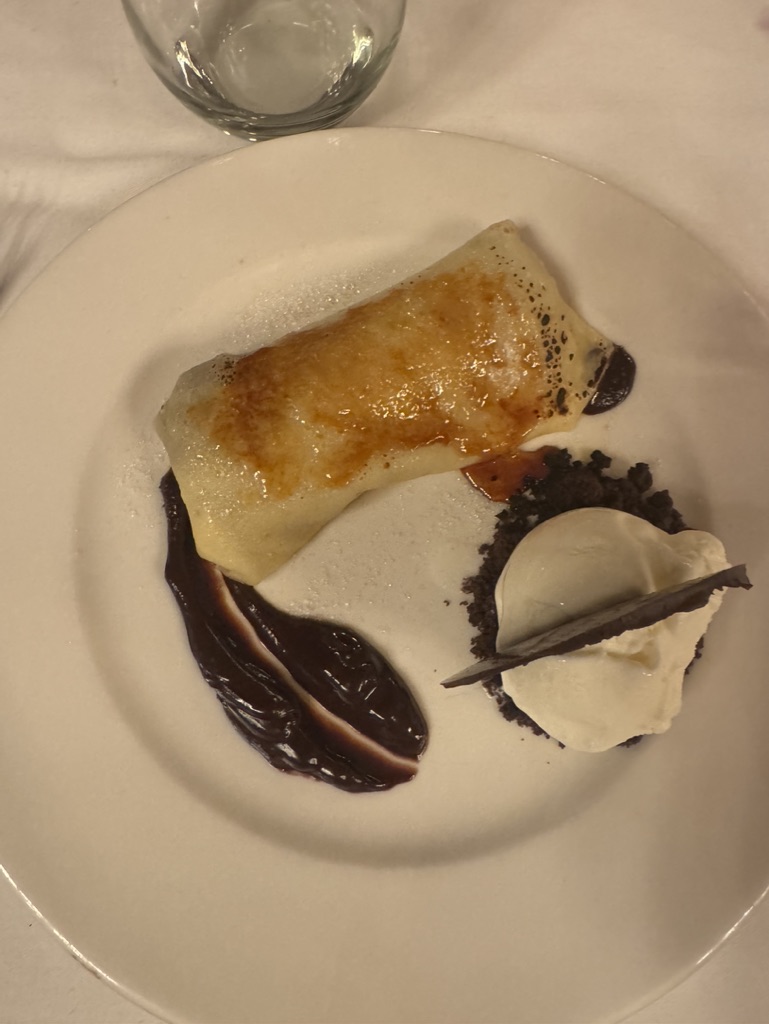
Not only was the steak delicious at Jungle Restaurante, so was the dessert.
My favorite place for dinner in Puerto Iguazú is Jungle Restaurante. I don’t know what’s better: their service or their steak!
If you’re looking to be in more of the action in Puerto Iguazú, go to Patagonia Brewery and sit out on their patio.
After dinner, stop and have a glass of wine—or two—on the outdoor patio at Argentinean Wine.
By the Triple Frontier, grab a sunset drink at El HITO Restaurante Mirador.
If you’re looking for a different experience a bit outside of town, check out Icebar Iguazú. No need to bring your jacket. They’ll provide you with one as the bar is set to 50 degrees Fahrenheit.
Need to know
Puerto Iguazú (Argentina) and Fox do Iguazu (Brazil) are two of the three largest waterfalls in the world. These two parks are an incredible addition to your trip. If you’re in Argentina and looking for something other than mountains and cities, or if you’re in Brazil looking for an additional-add on, don’t miss Iguazú!
Note, these parks are easiest to get to by plane. There are airports in both cities.


Travel Advisor
Brooke Dowden

Brooke Dowden

Get in touch with Brooke Dowden
Did you like this guide? Reach out to customize and book your own experience. Or, just to chat about travel in general.